
Publication date: 19 April 2021
DOI: https://doi.org/10.14324/111.9781787355088
Number of illustrations: 76

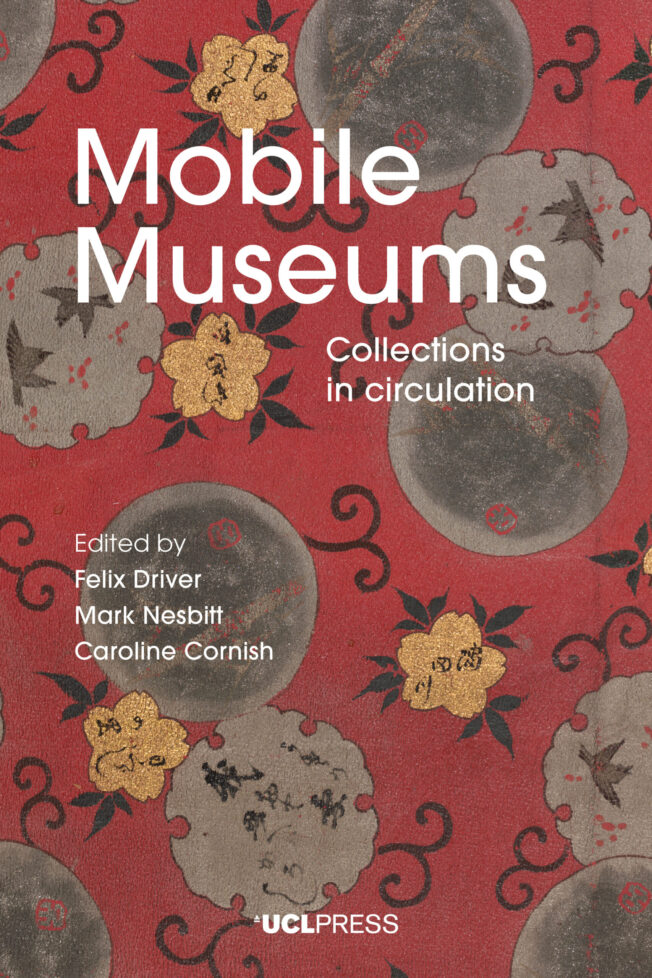
Mobile Museums
Collections in circulation
Felix Driver (Editor), Mark Nesbitt (Editor), Caroline Cornish (Editor)
Mobile Museums presents an argument for the importance of circulation in the study of museum collections, past and present. It brings together an impressive array of international scholars and curators from a wide variety of disciplines – including the history of science, museum anthropology and postcolonial history – to consider the mobility of collections. The book combines historical perspectives on the circulation of museum objects in the past with contemporary accounts of their re-mobilisation, notably in the context of Indigenous community engagement. Contributors seek to explore processes of circulation historically in order to re-examine, inform and unsettle common assumptions about the way museum collections have evolved over time and through space.
By foregrounding questions of circulation, the chapters in Mobile Museums collectively represent a fundamental shift in the understanding of the history and future uses of museum collections. The book addresses a variety of different types of collection, including the botanical, the ethnographic, the economic and the archaeological. Its perspective is truly global, with case studies drawn from South America, West Africa, Oceania, Australia, the United States, Europe and the UK. Mobile Museums helps us to understand why the mobility of museum collections was a fundamental aspect of their history and why it continues to matter today.
Related titles
Mobile Museums
Collections in circulation
Publication date: April 19, 2021
Open Access PDF ISBN: 9781787355088
Paperback ISBN: 9781787355149
Hardback ISBN: 9781787355200
Trim size (hardback): 23.4cm x 15.6cm
Trim size (paperback): 23.4cm x 15.6cm
Mobile Museums presents an argument for the importance of circulation in the study of museum collections, past and present. It brings together an impressive array of international scholars and curators from a wide variety of disciplines – including the history of science, museum anthropology and postcolonial history – to consider the mobility of collections. The book combines historical perspectives on the circulation of museum objects in the past with contemporary accounts of their re-mobilisation, notably in the context of Indigenous community engagement. Contributors seek to explore processes of circulation historically in order to re-examine, inform and unsettle common assumptions about the way museum collections have evolved over time and through space.
By foregrounding questions of circulation, the chapters in Mobile Museums collectively represent a fundamental shift in the understanding of the history and future uses of museum collections. The book addresses a variety of different types of collection, including the botanical, the ethnographic, the economic and the archaeological. Its perspective is truly global, with case studies drawn from South America, West Africa, Oceania, Australia, the United States, Europe and the UK. Mobile Museums helps us to understand why the mobility of museum collections was a fundamental aspect of their history and why it continues to matter today.
‘A generously varied and purposeful testament to the importance of conversations between disciplines, institutions and cultures.’ Journal of the History of Collections
‘A rich and fascinating picture of the circulation of collections through time in a style accessible to a broader scientific audience. The message of the value of researching mobility and putting it to valuable purpose is clear and provides much food for thought.’ Archives of Natural History
‘In light of [the] broad disciplinary scope and attention to diverse collections—as well as its theoretical attention to circulation beyond individual objects—Mobile Museums will be of use to anyone who needs to follow a collection on the move.’
Museum Worlds
‘This edited volume opens the potential of an examination of the history of scientific knowledge that goes beyond circulation and shifts to the milieu-dependent values of the “mobility turn.”’
Nuncius
‘An important new volume shakes up how we think about museums and their collections… This…is surely one of the best recent books published on the history of museums, collections, and exchange… An impressive and wide-ranging study…featuring an accomplished roster of international authors… Spectacularly illustrated, with well-selected historical and contemporary visual materials, the book provides abundant opportunities to teach about the history of collections. It is highly recommended for historians of science, museums, and collecting. The book is further recommended for graduate courses on the history of science, museums, and cultural exchange in the nineteenth and twentieth centuries.’
Isis