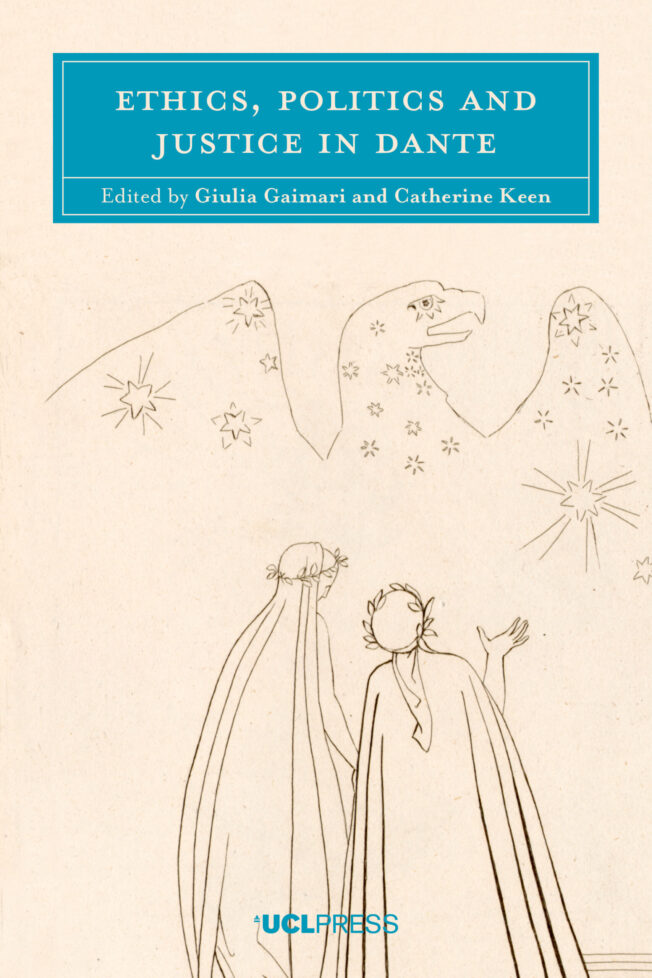

Ethics, Politics and Justice in Dante
Giulia Gaimari (Editor), Catherine Keen (Editor)
Ethics, Politics and Justice in Dante presents new research by international scholars on the themes of ethics, politics and justice in the works of Dante Alighieri, including chapters on Dante’s modern ‘afterlife’.
Together the chapters explore how Dante’s writings engage with the contemporary culture of medieval Florence and Italy, and how and why his political and moral thought still speaks compellingly to modern readers. The collection’s contributors range across different disciplines and scholarly traditions – history, philology, classical reception, philosophy, theology – to scrutinize Dante’s Divine Comedy and his other works in Italian and Latin, offering a multi-faceted approach to the evolution of Dante’s political, ethical and legal thought throughout his writing career.
Certain chapters focus on his early philosophical Convivio and on the accomplished Latin Eclogues of his final years, while others tackle knotty themes relating to judgement, justice, rhetoric and literary ethics in his Divine Comedy, from hell to paradise. The closing chapters discuss different modalities of the public reception and use of Dante’s work in both Italy and Britain, bringing the volume’s emphasis on morality, political philosophy, and social justice into the modern age of the nineteenth, twentieth, and twenty-first centuries.

Hosts, Hospitals and Hospitalities
Susana Araújo, Catarina Nunes de Almeida, Santiago Pérez Isasi,
27 July 2026
Creative Critical Interventions for Social Justice
Natasha Tanna, Abeyamí Ortega Domínguez, Hakan Sandal-Wilson,
04 February 2026

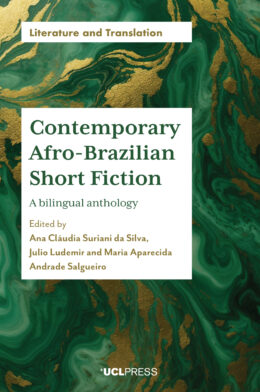
Contemporary Afro-Brazilian Short Fiction
Ana Cláudia Suriani da Silva, Julio Ludemir, Maria Aparecida Andrade Salgueiro,
03 September 2024
Gabriel Harvey and the History of Reading
Anthony Grafton, Nicholas Popper, William H. Sherman,
08 January 2024
Júlia Lopes de Almeida, Ana Cláudia Suriani da Silva, Cintia Kozonoi Vezzani, Jason Rhys Parry,
17 July 2023
Drama, Poetry and Music in Late-Renaissance Italy
Virginia Cox, Lisa Sampson, Anna Wainwright,
08 June 2023
Ethics, Politics and Justice in Dante
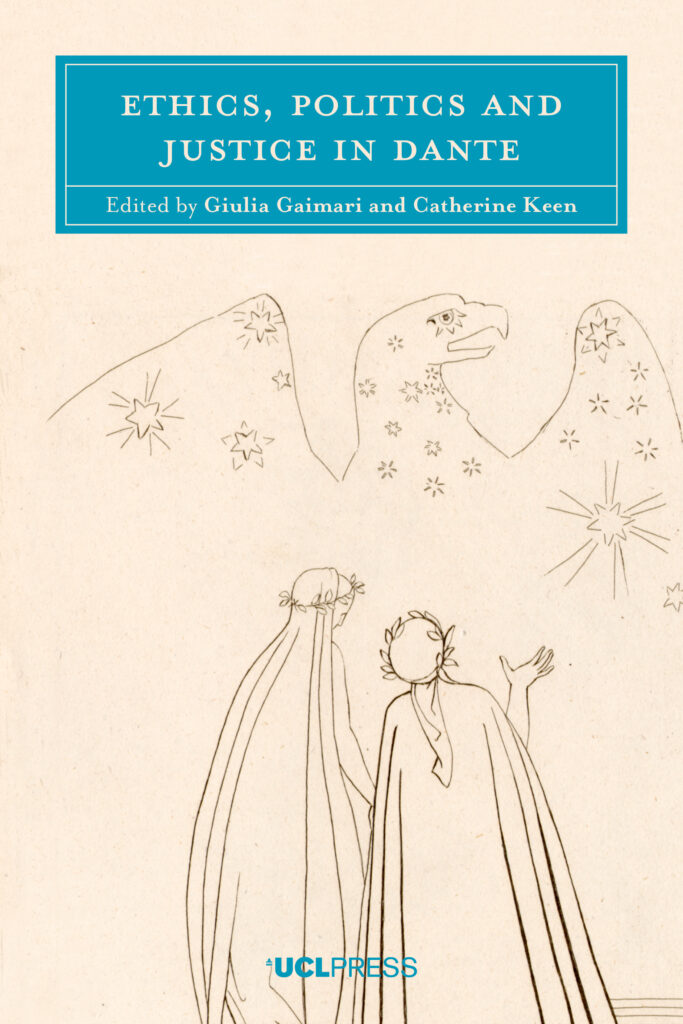
Ethics, Politics and Justice in Dante presents new research by international scholars on the themes of ethics, politics and justice in the works of Dante Alighieri, including chapters on Dante’s modern ‘afterlife’.
Together the chapters explore how Dante’s writings engage with the contemporary culture of medieval Florence and Italy, and how and why his political and moral thought still speaks compellingly to modern readers. The collection’s contributors range across different disciplines and scholarly traditions – history, philology, classical reception, philosophy, theology – to scrutinize Dante’s Divine Comedy and his other works in Italian and Latin, offering a multi-faceted approach to the evolution of Dante’s political, ethical and legal thought throughout his writing career.
Certain chapters focus on his early philosophical Convivio and on the accomplished Latin Eclogues of his final years, while others tackle knotty themes relating to judgement, justice, rhetoric and literary ethics in his Divine Comedy, from hell to paradise. The closing chapters discuss different modalities of the public reception and use of Dante’s work in both Italy and Britain, bringing the volume’s emphasis on morality, political philosophy, and social justice into the modern age of the nineteenth, twentieth, and twenty-first centuries.
‘[The] two culminating chapters offer stimulating reflections on Dante’s enduring accessibility and how he can still speak to audiences today. …The volume offers new methodological approaches to consider Dante’s depictions and understandings of ethics, politics, and justice, offering fresh readings on both popular and less widely considered passages of Dante’s poetic works.’ Bibliotheca Dantesca: Journal of Dante Studies
‘Excellent essays on a number of themes and specific instances related to education, law, speech, private and public moral codes, current events, and book learning in Dante’s own historical context and beyond.’
Speculum