We are currently upgrading our shopping cart; in the interim all orders are being diverted to Waterstones. If you would like to redeem a promotional code, or are an author wanting to place an order, please email us.
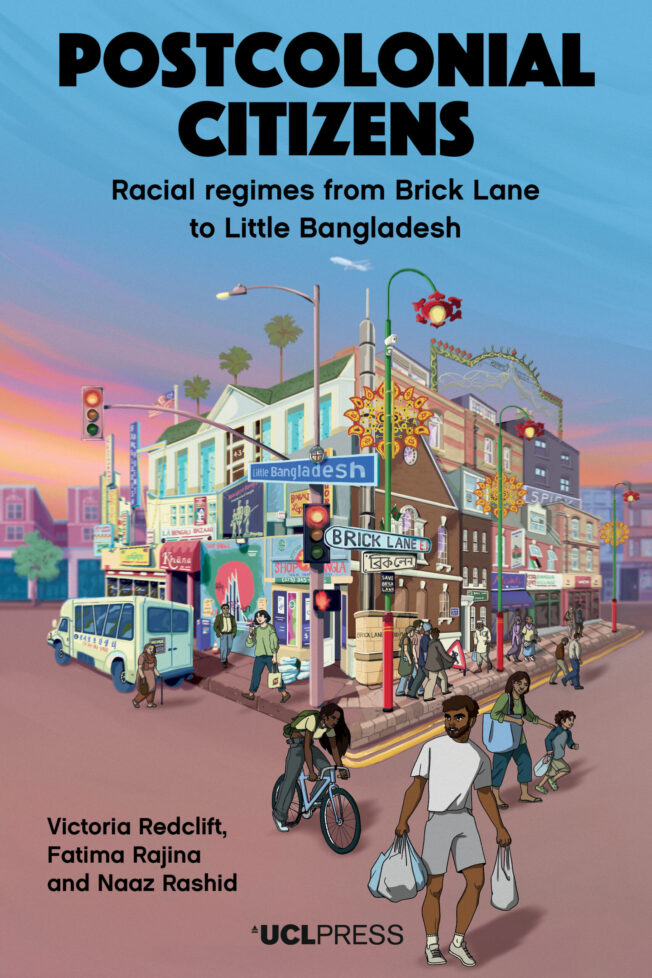
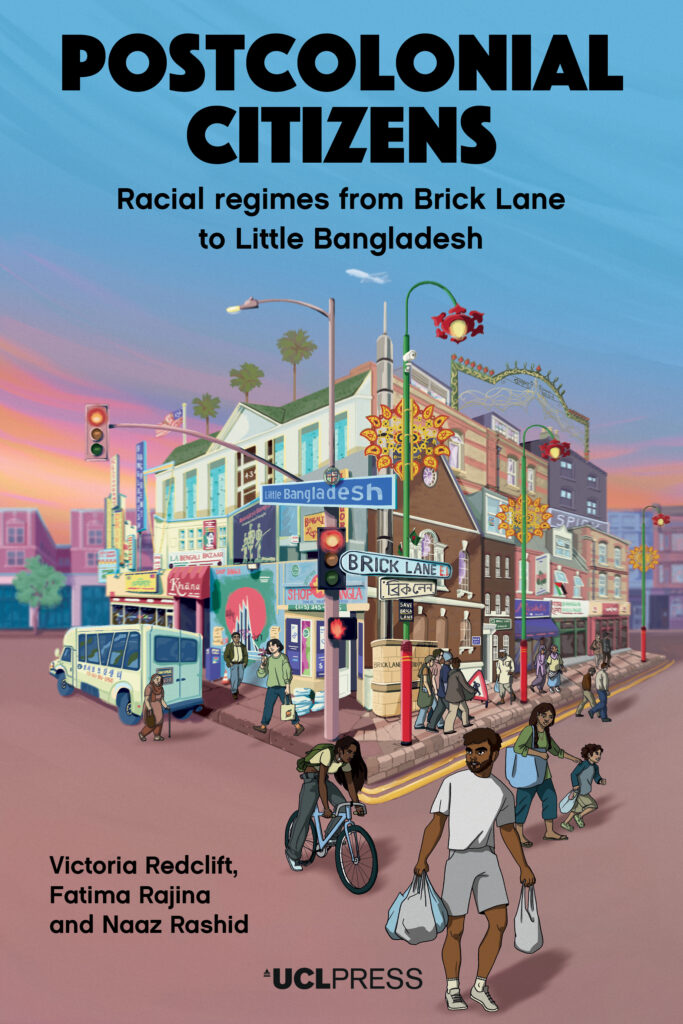
According to the International Organisation for Migration, the Bangladeshi diaspora is one of the world’s largest with around 2.4 million members, and the United Kingdom and the United States are two of the primary countries of settlement. *Postcolonial Citizens *examines the experiences of several generations of Muslim Bangladeshis in London and Los Angeles. Although narratives of globalisation suggest increasing homogeneity, this book shows how the Bangladeshi diaspora experience has been shaped by their cities of settlement. Crucial to this analysis is the concept of ‘racial regimes’ developed by Cedric Robinson which considers how ‘race’ reworks itself in different historical and geographical circumstances.
Since 9/11, the transnational practices of diasporic Muslims have received significant negative attention, as both security threats and impediments to citizenship. *Postcolonial Citizens *unpacks the relationship between citizenship and transnationalism by focusing on three transnational domains – remittances, religion and investment – in relation to Muslim Bangladeshis in the US and the UK. It is a tale of two cities separated by the Atlantic, and by the respective, albeit interconnected, histories of colonialism and settler colonialism through which different racial practices have emerged and are legitimated as a result.
According to the International Organisation for Migration, the Bangladeshi diaspora is one of the world’s largest with around 2.4 million members, and the United Kingdom and the United States are two of the primary countries of settlement. *Postcolonial Citizens *examines the experiences of several generations of Muslim Bangladeshis in London and Los Angeles. Although narratives of globalisation suggest increasing homogeneity, this book shows how the Bangladeshi diaspora experience has been shaped by their cities of settlement. Crucial to this analysis is the concept of ‘racial regimes’ developed by Cedric Robinson which considers how ‘race’ reworks itself in different historical and geographical circumstances.
Since 9/11, the transnational practices of diasporic Muslims have received significant negative attention, as both security threats and impediments to citizenship. *Postcolonial Citizens *unpacks the relationship between citizenship and transnationalism by focusing on three transnational domains – remittances, religion and investment – in relation to Muslim Bangladeshis in the US and the UK. It is a tale of two cities separated by the Atlantic, and by the respective, albeit interconnected, histories of colonialism and settler colonialism through which different racial practices have emerged and are legitimated as a result.
Victoria Redclift (Author)
Victoria Redclift is an Associate Professor of Political Sociology at UCL. Her first book, Statelessness and citizenship: Camps and the creation of ‘political space’, was shortlisted for the British Sociological Association Phillip Abrams Memorial Prize. Her work has been funded by UKRI, the Leverhulme Trust, the British Academy and the NIHR and focuses on spatial formations of political exclusion, the long-term impact of historical displacement, and the negotiation of transnational citizenship. She has worked at the LSE, the University of Manchester and the University of Surrey, and joined UCL in 2018.
Fatima Rajina (Author)
Fatima Rajina is a Senior Legacy in Action Research Fellow at the Stephen Lawrence Research Centre at De Montfort University. After completing her PhD, she published the monograph British Bangladeshi Muslims in the East End: The Changing Landscape of Dress and Language. Her work pays particular attention to the ways in which socio-political moments that impact Muslims globally shape how Muslims negotiate belonging at the micro level. She has worked at SOAS, University of Surrey, University of Cambridge, Kingston University London, and UCL.
Naaz Rashid (Author)
Naaz Rashid is an independent scholar and writer. She has previously worked at the University of Sussex, the University of Manchester and the London School of Economics, where she obtained her PhD. She is the author of Veiled Threats: Representing the Muslim Woman in Public Policy Discourses (Policy Press, 2016) and has written extensively about changing representations of Muslim women in the UK's counter-terrorism agenda. Her research is broadly focused on the intersections of race, religion, gender and class. She has written for the Guardian, the New Statesman and Open Democracy.
Sign up to our newsletter
Don't miss out! Subscribe to the UCL Press newsletter for the latest open access books, journal CfPs, news and views from our authors and much more!