We are currently upgrading our shopping cart; in the interim all orders are being diverted to Waterstones. If you would like to redeem a promotional code, or are an author wanting to place an order, please email us.
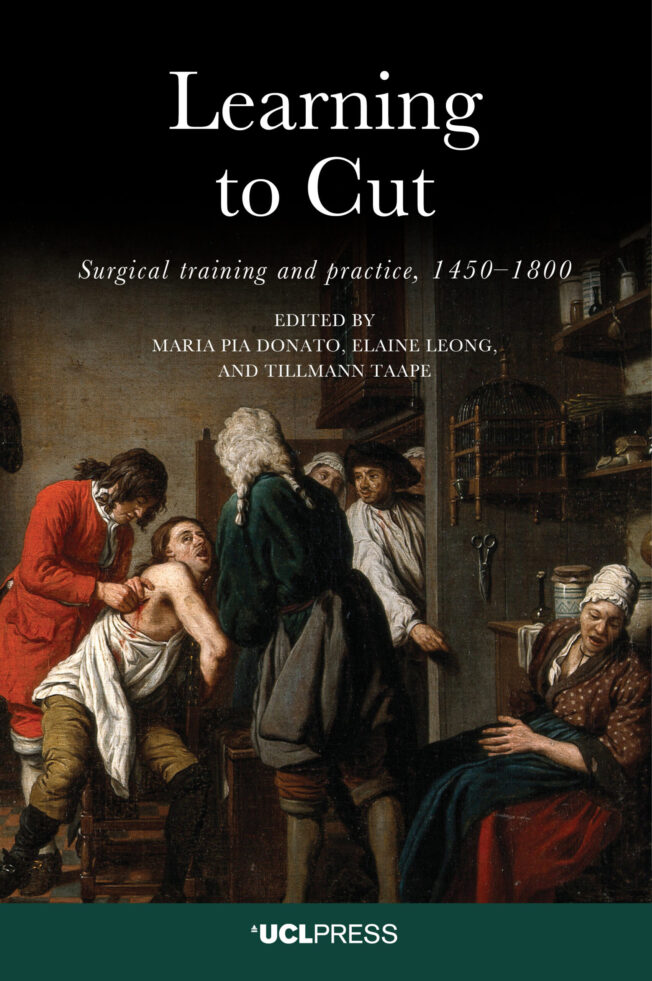
Across early modern Europe, surgeons played a key role in the provision of everyday healthcare. They dressed wounds, lanced boils, set bones, treated tumours, as well as performing specialist operations such as couching cataracts or cutting for the stone. They carried out anatomies and autopsies, prepared corpses for embalming, and, if they were entitled to do so, occasionally performed major operations such as removing cancers, amputating limbs, and trepanning skulls. Yet, while recent studies have done much to elucidate the work of surgeons, little has been published about how they were trained.
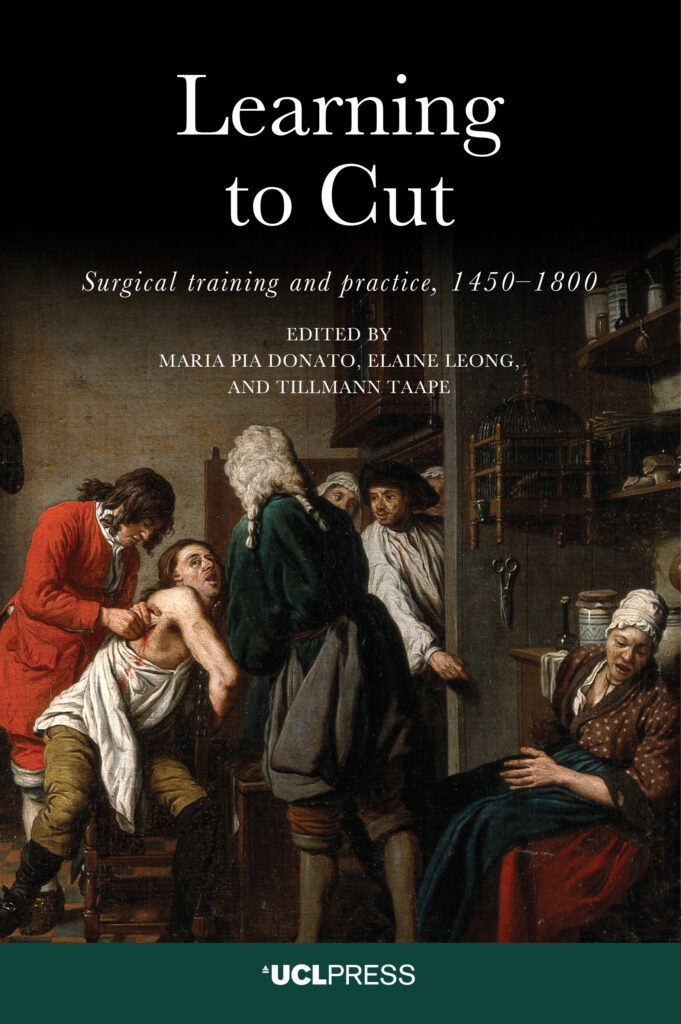
Learning to Cut fills this significant gap. A range of case studies from the French, Italian, German, and English contexts reveal diverse modes of surgical teaching and learning in early modern towns and cities, and how they were shaped by existing social, economic, and occupational structures. Equally varied were the spaces and institutions where prospective practitioners learned and experienced surgery. Thus, the shop, the patient’s house, the hospital, the guild hall, and the anatomy theatre were all sites for learning, teaching – and cutting. The chapters present rich narratives of education and, together, shed new light on the practice of early modern surgery.
Across early modern Europe, surgeons played a key role in the provision of everyday healthcare. They dressed wounds, lanced boils, set bones, treated tumours, as well as performing specialist operations such as couching cataracts or cutting for the stone. They carried out anatomies and autopsies, prepared corpses for embalming, and, if they were entitled to do so, occasionally performed major operations such as removing cancers, amputating limbs, and trepanning skulls. Yet, while recent studies have done much to elucidate the work of surgeons, little has been published about how they were trained.
Learning to Cut fills this significant gap. A range of case studies from the French, Italian, German, and English contexts reveal diverse modes of surgical teaching and learning in early modern towns and cities, and how they were shaped by existing social, economic, and occupational structures. Equally varied were the spaces and institutions where prospective practitioners learned and experienced surgery. Thus, the shop, the patient’s house, the hospital, the guild hall, and the anatomy theatre were all sites for learning, teaching – and cutting. The chapters present rich narratives of education and, together, shed new light on the practice of early modern surgery.
‘This impressive collection of essays paints a picture of surgical education that was at once bookish and hands-on, oral and written, visual and material, traditional and innovative… [it] offers significant new scholarship on the diversity of surgical pedagogical practices, while also insisting on the importance of paying attention to local contexts.’ Annals of Science
Maria Pia Donato (Editor)
Maria Pia Donato is CNRS Research Professor of History at the Institut d’Histoire Moderne et Contemporaine in Paris, France. She teaches the history of medicine and science at École Normale Supérieure in Paris. She is a specialist in early modern cultural history and she has written extensively on medicine and surgery, particularly in Italy, and on medicine, science and religion, especially in Catholic contexts. Her publications include Sudden Death. Medicine and Religion in Eighteenth-Century Rome (2014) and Medicine and the Inquisition in the Early Modern World (ed. 2019).
Elaine Leong (Editor)
Elaine Leong is Associate Professor of History at University College London. Her research is centred upon medical and scientific knowledge transfer and production with a particular focus on gender and the everyday. She is the author of Recipes and Everyday Knowledge: Medicine, Science and the Household in Early Modern England (Chicago 2018) and the editor of a number of essay volumes and journal special issues, including Working with Paper: Gendered Practices in the History of Knowledge (Pittsburgh, 2019); “Learning by the Book: Manuals and Handbooks in the History Science” (BJHS Themes, 2020) and “Translating Medicine Across Premodern Worlds” (Osiris, 2022).
Tillmann Taape (Editor)
Tillmann Taape is a Research Fellow and Lecturer in the History of Medicine at the Charité Medical School, Berlin, Germany. His work explores the relationships between artisanal, alchemical, and medical forms of knowledge in the early modern period. His monograph Crafting Medicine, explores how the artisan-author Hieronymus Brunschwig and his works on surgery and distillation shaped early modern understandings of medical practice and the body. Tillmann has co-edited a special issue on premodern Fire Arts for Ambix.
Sign up to our newsletter
Don't miss out! Subscribe to the UCL Press newsletter for the latest open access books, journal CfPs, news and views from our authors and much more!