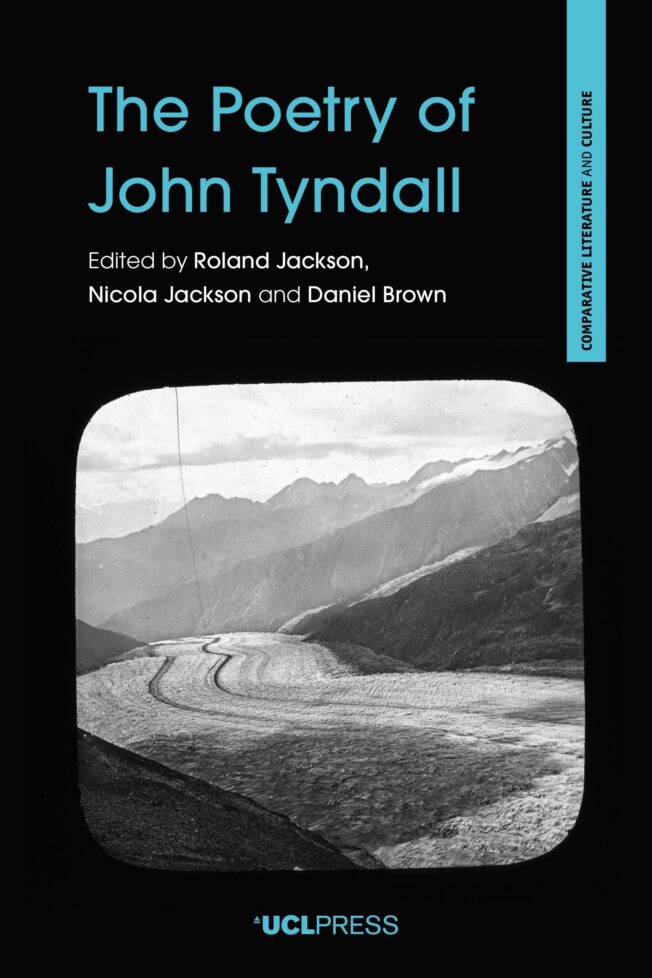

The Poetry of John Tyndall
Roland Jackson (Editor), Nicola Jackson (Editor), Daniel Brown (Editor)
John Tyndall (1822–1893) is best known as a leading natural philosopher and trenchant public intellectual of the Victorian age. He discovered the physical basis of the greenhouse effect, explained why the sky is blue, and spoke and wrote controversially on the relationship between science and religion. Few people were aware that he also wrote poetry. The Poetry of John Tyndall contains his 76 extant poems, the majority of which have not been transcribed or published before, and are succinctly annotated in a style similar to that used for the letters published in The Correspondence of John Tyndall.
The poems are complemented by an extended introduction, which was written by the three editors together as a multidisciplinary analysis. The essay aims to facilitate readings by a range of people interested in the history of Victorian science and of Victorian science and literature. It explores what the poems can tell us about Tyndall’s self-fashioning, his values and beliefs, and the role of poetry for him and his circle. More broadly, the essay addresses the relationship between the scientific and poetic imaginations, and wider questions of the nature and purpose of poetry in relation to science and religion in the nineteenth century.
Related titles
Medical Humanity and Inhumanity in the German-Speaking World
Mererid Puw Davies, Sonu Shamdasani,
15 April 2020
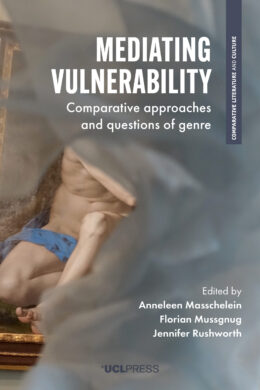
Anneleen Masschelein, Florian Mussgnug, Jennifer Rushworth,
25 November 2021
Comparative Perspectives on the Rise of the Brazilian Novel
Ana Cláudia Suriani da Silva, Sandra Guardini Vasconcelos,
14 May 2020
The Poetry of John Tyndall
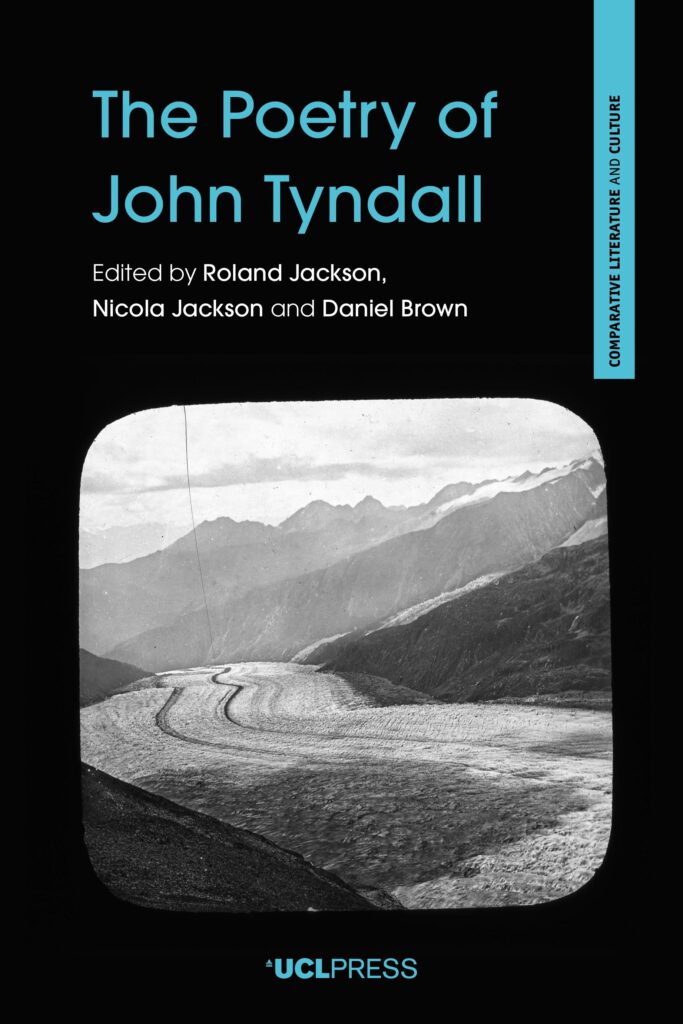
John Tyndall (1822–1893) is best known as a leading natural philosopher and trenchant public intellectual of the Victorian age. He discovered the physical basis of the greenhouse effect, explained why the sky is blue, and spoke and wrote controversially on the relationship between science and religion. Few people were aware that he also wrote poetry. The Poetry of John Tyndall contains his 76 extant poems, the majority of which have not been transcribed or published before, and are succinctly annotated in a style similar to that used for the letters published in The Correspondence of John Tyndall.
The poems are complemented by an extended introduction, which was written by the three editors together as a multidisciplinary analysis. The essay aims to facilitate readings by a range of people interested in the history of Victorian science and of Victorian science and literature. It explores what the poems can tell us about Tyndall’s self-fashioning, his values and beliefs, and the role of poetry for him and his circle. More broadly, the essay addresses the relationship between the scientific and poetic imaginations, and wider questions of the nature and purpose of poetry in relation to science and religion in the nineteenth century.
‘A great value of this collection is its comprehensiveness—all the poems are here. They should be read by Tyndall scholars alongside his journals and correspondence and by scholars of working-class poetry’
ISIS
‘This volume is a welcome addition to the recent burst of scholarly interest in the Victorian physicist John Tyndall, popularizer of science, critic of Christian theology, key contributor to climate science, and avid mountain climber. Those interested in nineteenth-century history, literature, and science will be fascinated by the new insights to be found looking at Tyndall through his poems. Readers will also appreciate the superb scholarly apparatus accompanying the poems, including an informative introduction, helpful editorial notes, and a comprehensive bibliography.’
Bernard V. Lightman, York University, Canada