We are currently upgrading our shopping cart; in the interim all orders are being diverted to Waterstones. If you would like to redeem a promotional code, or are an author wanting to place an order, please email us.
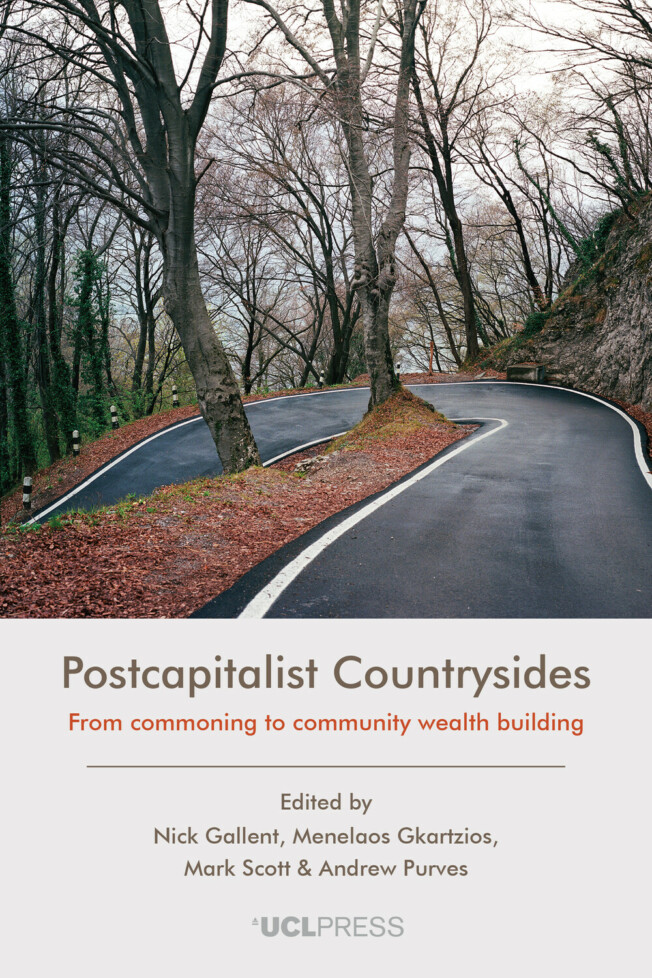
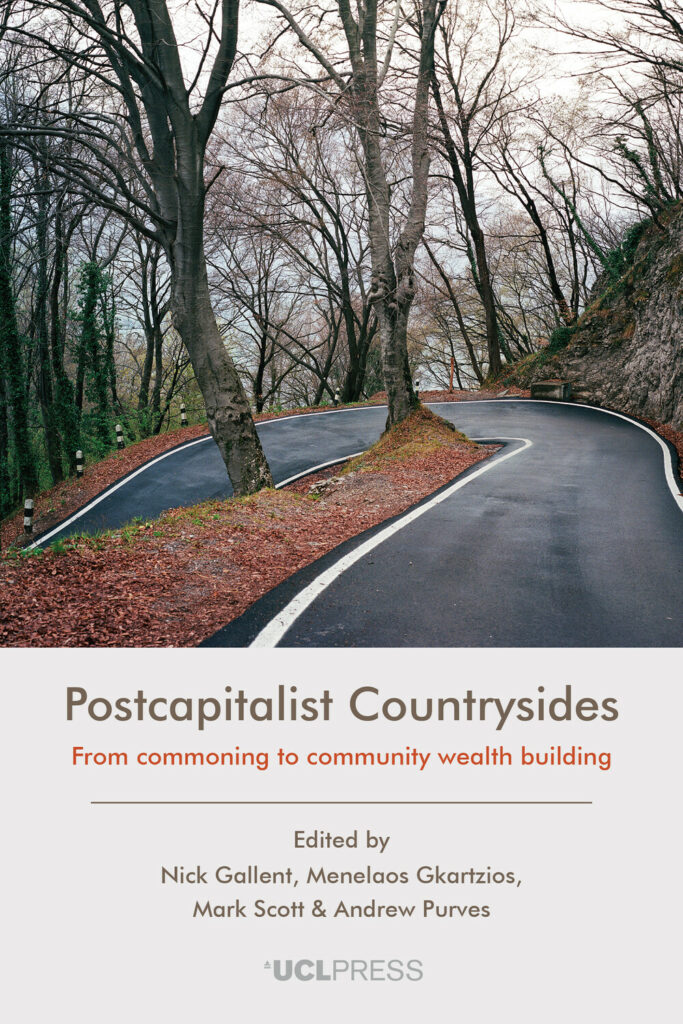
Postcapitalist Countrysides explores the tensions that arise from the established conventions of economic production and private accumulation, as they affect life, wealth and work in rural areas. Its premise is that capitalism, as we experience it today, is incapable of solving key societal challenges – centred on social justice and sustainable livelihoods. By rethinking land, capital and labour relationships, postcapitalism offers glimpses of alternative modes of socio-economic organisation, achievable through local pre-figurative actions today and scalable through structural supports in the future. The glimpses of hopeful futures offered in this collection focus on rural places, communities and economies.
Postcapitalist Countrysides explores the tensions that arise from the established conventions of economic production and private accumulation, as they affect life, wealth and work in rural areas. Its premise is that capitalism, as we experience it today, is incapable of solving key societal challenges – centred on social justice and sustainable livelihoods. By rethinking land, capital and labour relationships, postcapitalism offers glimpses of alternative modes of socio-economic organisation, achievable through local pre-figurative actions today and scalable through structural supports in the future. The glimpses of hopeful futures offered in this collection focus on rural places, communities and economies.
‘A comprehensive, wide-ranging and pioneering book, with a strong economics and planning emphasis, creatively foregrounding the place of our countryside today within debates about postcapitalism.’ Keith Halfacree, Swansea University, Wales
‘A critically important book that looks beyond the structural inequalities of capitalism in rural areas, and answers the question of “what is to be done”. Drawing on evidence from the UK and other advanced economies, it argues for alternative postcapitalist modes of socio-economic organisation.’ Natalia Mamonova, Ruralis – The Institute for Rural and Regional Research, Norway
Nick Gallent (Editor)
Nick Gallent is Professor of Housing and Planning at the Bartlett School of Planning, UCL.
Menelaos Gkartzios (Editor)
Menelaos Gkartzios is Professor of Planning at the Izmir Institute of Technology in Turkey, and Reader in Planning and Rural Development at Newcastle University, UK.
Mark Scott (Editor)
Mark Scott is Professor of Planning and Dean in the School of Architecture, Planning & Environmental Policy, University College Dublin.
Andrew Purves (Editor)
Andrew Purves is Honorary Research Fellow at the Bartlett School of Planning, UCL.
Sign up to our newsletter
Don't miss out! Subscribe to the UCL Press newsletter for the latest open access books, journal CfPs, news and views from our authors and much more!