
Publication date: 16 August 2021
DOI: https://doi.org/10.14324/111.9781800080119
Number of illustrations: 65

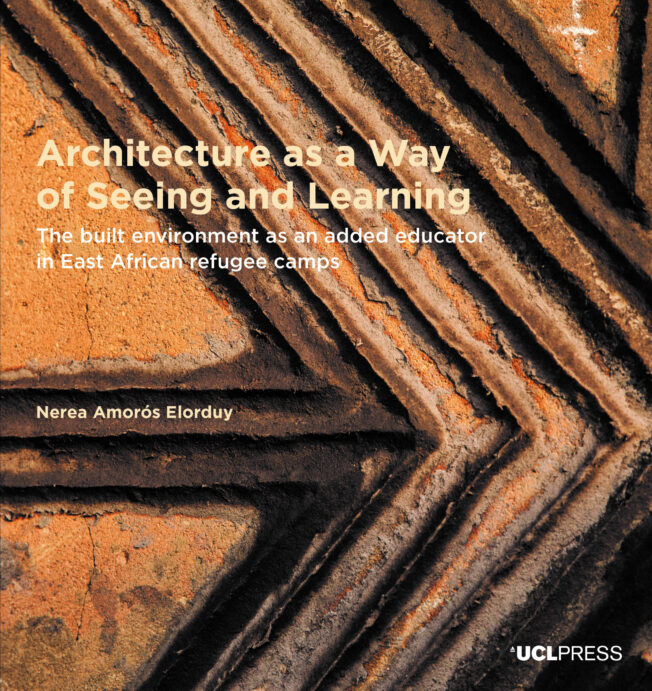
Architecture as a Way of Seeing and Learning
The built environment as an added educator in East African refugee camps
Nerea Amorós Elorduy (Author)
Series: Design Research in Architecture
At the beginning of 2020, 66 long-term refugee camps existed along the East African Rift. Millions of young children have been born at the camps and have grown up there, yet it is unknown how their surrounding built environments affect their learning and development.
Architecture as a Way of Seeing and Learning presents an architect’s take on questions many academics and humanitarians ask. Is it relevant to look at camps through an urban lens and focus on their built environment? Which analytical benefits can architectural and design tools provide to refugee assistance and specifically to young children’s learning? And which advantages can assemblage thinking and situated knowledges bring about in analysing, understanding and transforming long-term refugee camps?
Responding to the extreme lack of information about East African camps, Nerea Amorós Elorduy has built contextualised knowledge – nuanced, situated and participatory – to describe, study and transform the East African long-term camps, and uncover hidden agencies in refugee assistance. She uses architecture as a means to create new knowledge collectively, include more local voices and speculate on how to improve the educational landscape for young children.
With this book, Amorós Elorduy brings nuance, contextualisation and empathy to the study and management of long-term refugee camps in East Africa. It is empathy, she argues, that will help change mindsets, decolonise humanitarian refugee assistance and its study. Crossing architecture, humanitarian aid and early career development, this book offers many practical learnings.
Related titles
Expanding Fields of Architectural Discourse and Practice
Matthew Butcher, Megan O'Shea,
27 November 2020
Material Culture and (Forced) Migration
Friedemann Yi-Neumann, Andrea Lauser, Antonie Fuhse, Peter J. Bräunlein,
17 February 2022
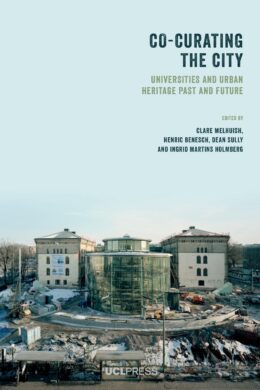
Clare Melhuish, Henric Benesch, Dean Sully, Ingrid Martins Holmberg,
24 May 2022
Urban Informality and the Built Environment
Nerea Amorós Elorduy, Nikhilesh Sinha, Colin Marx,
12 March 2024
Schooling for Refugee Children
Eleanore Hargreaves, Brian Lally, Bassel Akar, Jumana Al-Waeli, Jasmine Costello,
07 May 2024
Bob Sheil, Professor Frédéric Migayrou, Chair, Bartlett, UCL; Professor of Architecture, The Bartlett School of Architecture, UCL; Deputy Director, National Museum of Art, Centre Pompidou, Paris., Luke Pearson, Laura Allen,
11 November 2016
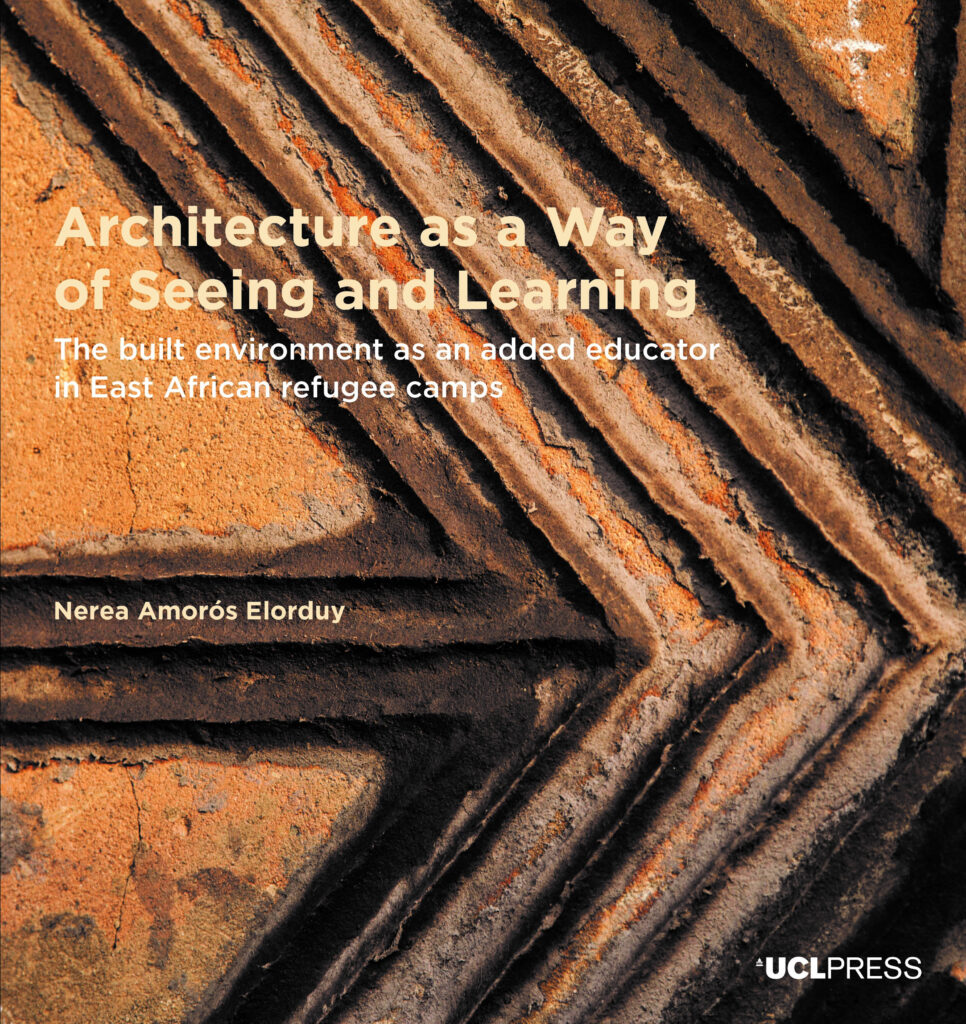
Architecture as a Way of Seeing and Learning
The built environment as an added educator in East African refugee camps
Series: Design Research in Architecture
Publication date: August 16, 2021
Open Access PDF ISBN: 9781800080119
Paperback ISBN: 9781800080126
Trim size (paperback): 22.9cm x 21.6cm
At the beginning of 2020, 66 long-term refugee camps existed along the East African Rift. Millions of young children have been born at the camps and have grown up there, yet it is unknown how their surrounding built environments affect their learning and development.
Architecture as a Way of Seeing and Learning presents an architect’s take on questions many academics and humanitarians ask. Is it relevant to look at camps through an urban lens and focus on their built environment? Which analytical benefits can architectural and design tools provide to refugee assistance and specifically to young children’s learning? And which advantages can assemblage thinking and situated knowledges bring about in analysing, understanding and transforming long-term refugee camps?
Responding to the extreme lack of information about East African camps, Nerea Amorós Elorduy has built contextualised knowledge – nuanced, situated and participatory – to describe, study and transform the East African long-term camps, and uncover hidden agencies in refugee assistance. She uses architecture as a means to create new knowledge collectively, include more local voices and speculate on how to improve the educational landscape for young children.
With this book, Amorós Elorduy brings nuance, contextualisation and empathy to the study and management of long-term refugee camps in East Africa. It is empathy, she argues, that will help change mindsets, decolonise humanitarian refugee assistance and its study. Crossing architecture, humanitarian aid and early career development, this book offers many practical learnings.
‘In Architecture as a Way of Seeing and Learning, Nerea Amorós questions the generic ‘modus ope-randi’ of the humanitarian system, and proposes that we see the refugee camps, and their built environment, as educative agents committed to the study detailed analysis of the fields as a vector to propose improvements and alternatives.’
ZARCH (Journal of Interdisciplinary studies in Architecture and Urbanism)