
Publication date: 13 May 2026
DOI: https://doi.org/10.14324/111.9781806550746
Number of illustrations: 1

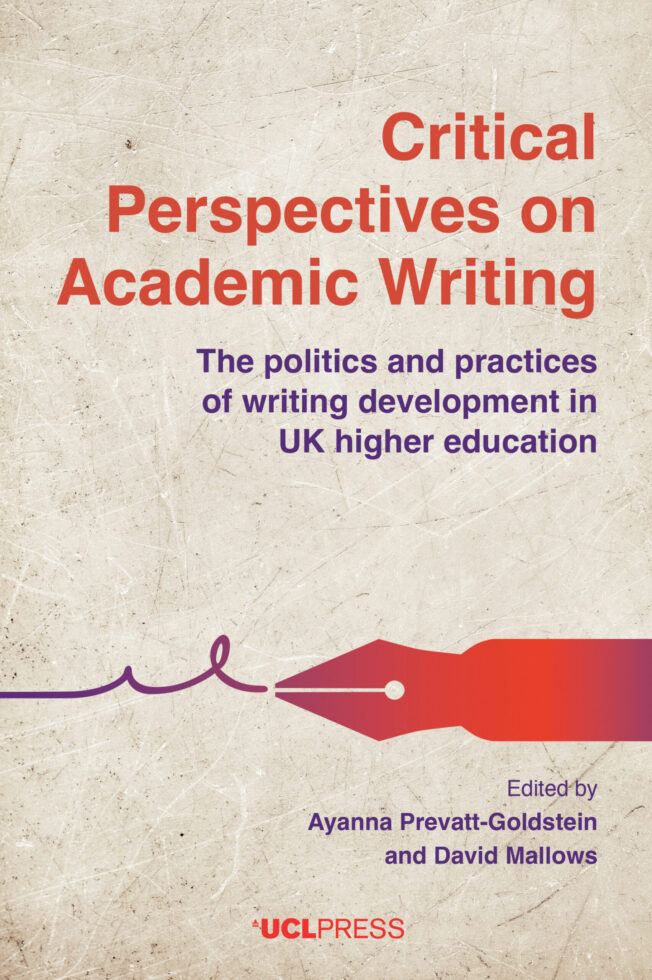
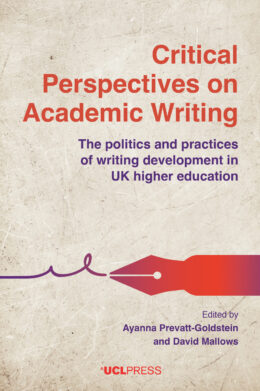
Critical Perspectives on Academic Writing
The politics and practices of writing development in UK higher education
Ayanna Prevatt-Goldstein (Editor), David Mallows (Editor)
Critical Perspectives on Academic Writing offers a timely, theoretically grounded examination of the often marginalised yet foundational role of academic writing in UK higher education. Based on the UCL Institute of Education’s Academic Writing Seminar Series, the volume brings together leading researchers and practitioners to interrogate the contested politics, practices, and pedagogies of academic writing development. Against the backdrop of internationalisation, widening participation, neoliberalisation, and the rapid rise of generative artificial intelligence in higher education, the contributors consider how we value academic writing and how we support student writing development.
The first part of the book frames the choices we make when working with writing or with developing writers as inherently political rather than neutral. The second focuses on the implications of generative AI for student academic writing; and the third situates research on academic writing and literacies in the practices of learning and teaching. By examining the roles of writing specialists, subject lecturers, and institutional policy, the book highlights both challenges and possibilities for change. It combines critical insights with practical approaches to writing pedagogy, offering an essential resource for educators, researchers and policymakers seeking to rethink the place of writing in the modern university.
How Alex Bloom Built Radical Democratic Secondary Education in Post-war London
Michael Fielding, Mark Erickson,
15 September 2026
Creating a Framework for Developing Sessional Teachers in Higher Education
Neil Sutherland, Alex Standen,
24 August 2026
Bringing Powerful Knowledge into Classrooms
Mark Hardman, Marie Nilsberth, Mikko Puustinen,
02 July 2026
Clive Young, Nataša Perović, Leo Havemann, Karen Shackleford-Cesare,
14 April 2026
Reading Randomised Controlled Trials
Robert Savage, Amy Fox, Anneka Dawson, Helen Gray, Clare Huxley,
03 March 2025
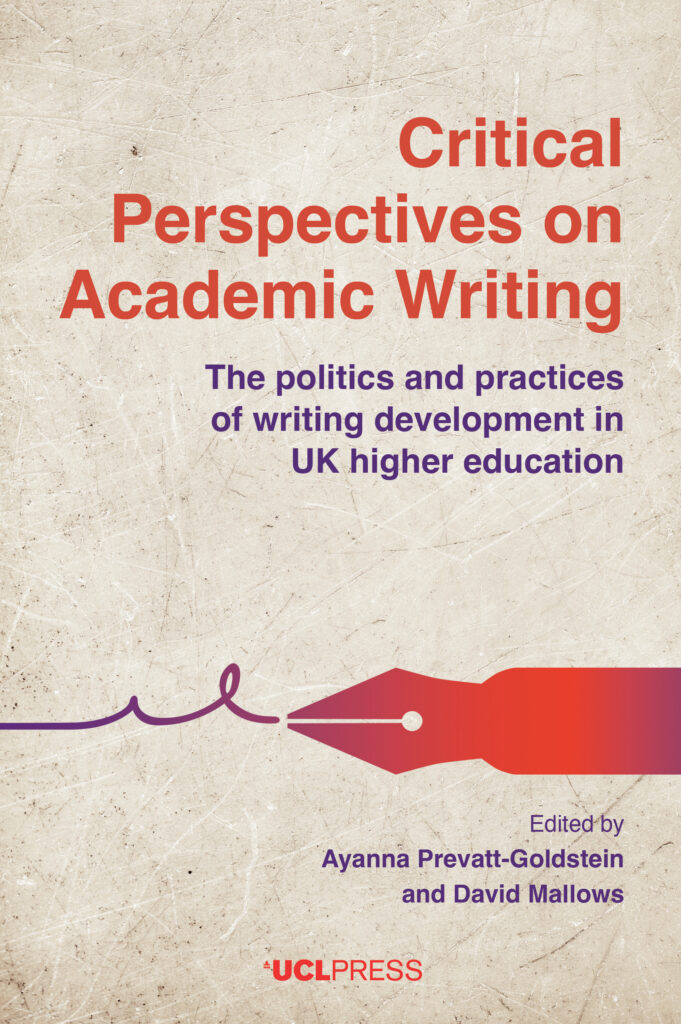
Critical Perspectives on Academic Writing
The politics and practices of writing development in UK higher education
Publication date: May 13, 2026
Open Access PDF ISBN: 9781806550746
Paperback ISBN: 9781806550739
Hardback ISBN: 9781806550722
Trim size (hardback): 23.4cm x 15.6cm
Trim size (paperback): 23.4cm x 15.6cm
Critical Perspectives on Academic Writing offers a timely, theoretically grounded examination of the often marginalised yet foundational role of academic writing in UK higher education. Based on the UCL Institute of Education’s Academic Writing Seminar Series, the volume brings together leading researchers and practitioners to interrogate the contested politics, practices, and pedagogies of academic writing development. Against the backdrop of internationalisation, widening participation, neoliberalisation, and the rapid rise of generative artificial intelligence in higher education, the contributors consider how we value academic writing and how we support student writing development.
The first part of the book frames the choices we make when working with writing or with developing writers as inherently political rather than neutral. The second focuses on the implications of generative AI for student academic writing; and the third situates research on academic writing and literacies in the practices of learning and teaching. By examining the roles of writing specialists, subject lecturers, and institutional policy, the book highlights both challenges and possibilities for change. It combines critical insights with practical approaches to writing pedagogy, offering an essential resource for educators, researchers and policymakers seeking to rethink the place of writing in the modern university.
This book is an eclectic collection of chapters, with each providing a different approach, perspective or theoretical lens to the practice of writing and writing development in Higher Education. The editors’ introduction and the afterword prepare and then remind the reader that writing and writing development are indeed eclectic and at times incoherent practices, taking place in contested, liminal and varied spaces in the academy. Ultimately, this diversity becomes a key strength of the book. The reader is forced to consider their own position, to think about where their own practices lie politically, pragmatically, pedagogically, to question deficit narratives from a range of perspectives and to then revisit these questions again in the light of Generative AI. Through the questions raised in each chapter, an argument is carefully developed to support and reaffirm the main point of the first chapter that writing is political – in all senses of the word. And this is something that we need to remember.
Bee Bond, University of Leeds