
Publication date: 27 August 2024
DOI: https://doi.org/10.14324/111.9781800087163
Number of illustrations: 7

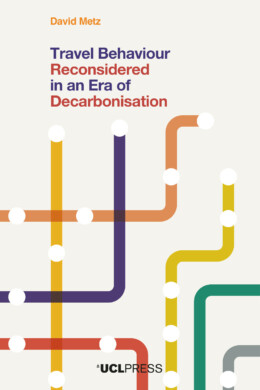
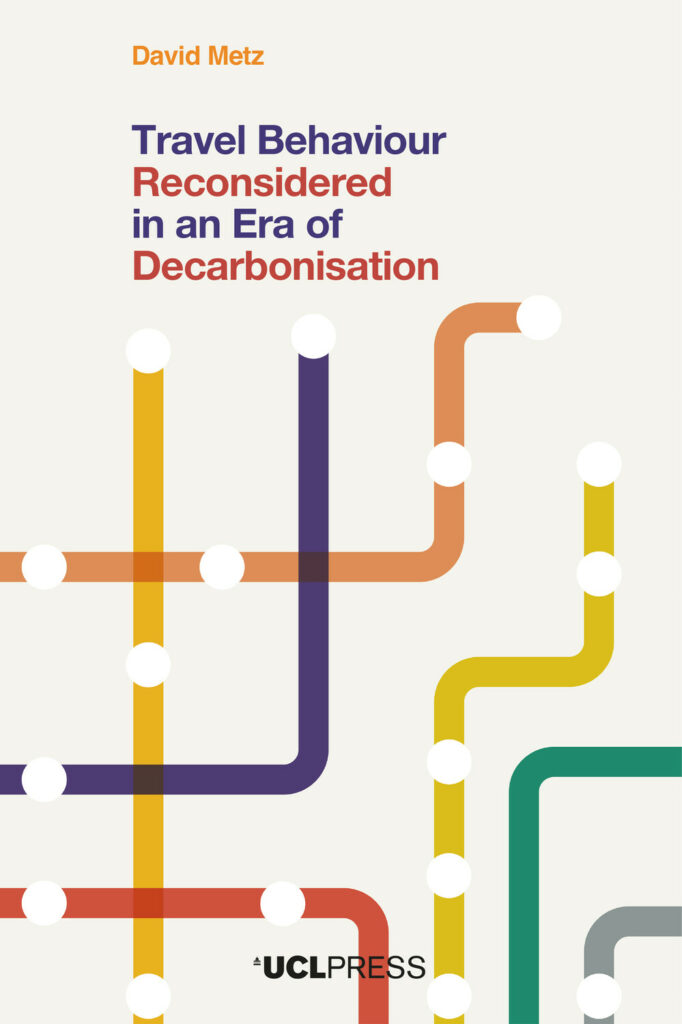
Travel Behaviour Reconsidered in an Era of Decarbonisation
David Metz (Author)
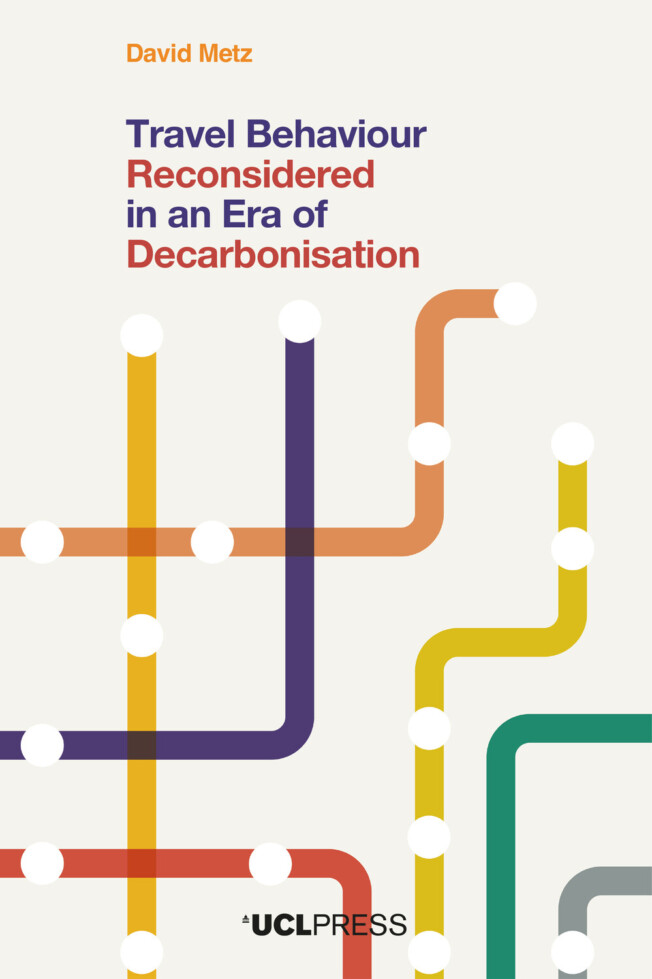
The transport system is central to our lives as our means to travel, but also has major impact on our environment. This has become most salient in recent years through its contribution to climate change. However, this perspective has only had a minor impact on the conventional economic analysis and modelling of transport investments, creating a dissonance between the traditional objectives of investment and the strategic need to reduce carbon emissions to Net Zero by 2050.
Travel Behaviour Reconsidered in an Era of Decarbonisation argues that our transport networks are mature, and the objective should be to improve operational efficiency. Over the past half century, large public expenditures in roads and railways were justified by an analytic approach to the benefits of investment, primarily the value of the time saved through faster travel, to both business and non-business users of the networks. However, average travel time has not changed over this period. People have taken the benefit of faster travel as better access to people, places, activities and services, with the ensuing enhanced opportunities and choices. This book argues that the basis of orthodox transport economic analysis has been misconceived and a fresh perspective on economic analysis is now needed.


Toby Butler, Felix Driver, Barbara Brayshay, Chris Church, Jeremy Iles, Oli Mould, Saskia Papadakis,
12 November 2026

Nick Gallent, Menelaos Gkartzios, Mark Scott, Andrew Purves,
06 February 2025
An Introduction to Waste Management and Circular Economy
Stijn van Ewijk, Julia Stegemann,
05 December 2023

Michael Hennessy Picard, Albert Brenchat-Aguilar, Timothy Carroll, Jane Gilbert, Nicola Miller,
03 July 2023

Sarah Bell, Charlotte Johnson, Kat Austen, Gemma Moore, Tse-Hui Teh,
27 April 2023

Travel Behaviour Reconsidered in an Era of Decarbonisation
Publication date: August 27, 2024
Open Access PDF ISBN: 9781800087163
Paperback ISBN: 9781800087170
Hardback ISBN: 9781800087187
Trim size (hardback): 23.4cm x 15.6cm
Trim size (paperback): 23.4cm x 15.6cm
The transport system is central to our lives as our means to travel, but also has major impact on our environment. This has become most salient in recent years through its contribution to climate change. However, this perspective has only had a minor impact on the conventional economic analysis and modelling of transport investments, creating a dissonance between the traditional objectives of investment and the strategic need to reduce carbon emissions to Net Zero by 2050.
Travel Behaviour Reconsidered in an Era of Decarbonisation argues that our transport networks are mature, and the objective should be to improve operational efficiency. Over the past half century, large public expenditures in roads and railways were justified by an analytic approach to the benefits of investment, primarily the value of the time saved through faster travel, to both business and non-business users of the networks. However, average travel time has not changed over this period. People have taken the benefit of faster travel as better access to people, places, activities and services, with the ensuing enhanced opportunities and choices. This book argues that the basis of orthodox transport economic analysis has been misconceived and a fresh perspective on economic analysis is now needed.
‘This book provides a good summary of the many issues associated with assessing transportation projects and efforts to decarbonize the sector, and many practicing planners will find it to be a useful summary of transportation economics and modelling… Chapters 4 and 5 in particular could be useful in a course on transportation economics. Even better, the book is open access and free, something students appreciate.’
Journal of the American Planning Association
‘a crucial reference in the decarbonisation discussion. Metz successfully combines the issue of climate change with the economic realities of transportation through his sharp criticism of predictive models that have long been considered the standard.’
Australian Planner