
Publication date: 2 November 2026
DOI: https://doi.org/10.14324/111.9781806551811
Number of illustrations: 7

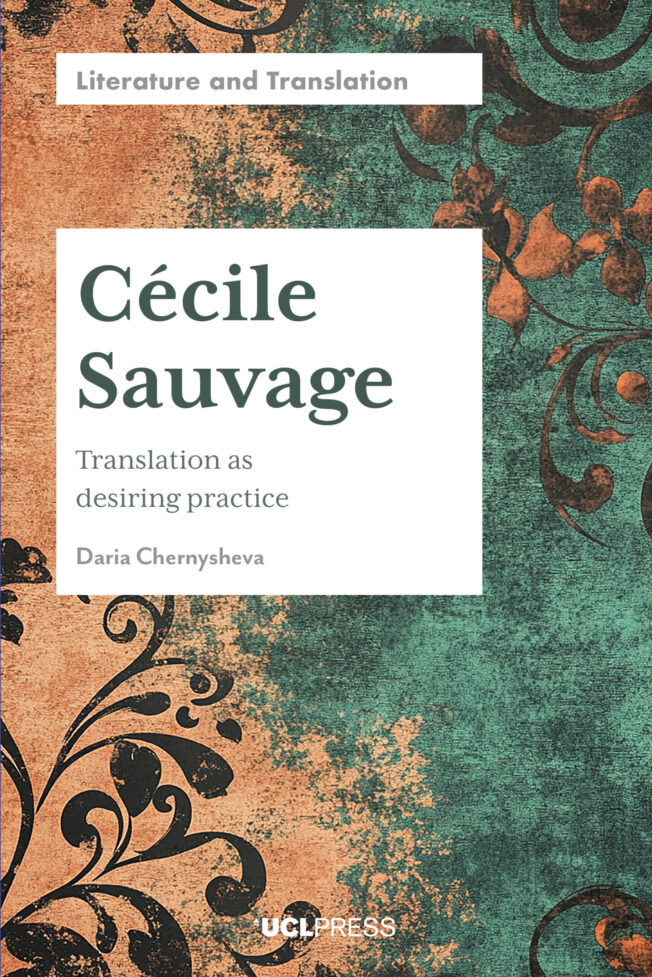
Cécile Sauvage
Translation as desiring practice
Daria Chernysheva (Author)
Series: Literature and Translation
This book offers a creative critical approach to translating the poetry of French writer, Cécile Sauvage (1883–1927). Sauvage was a remarkable poet who wrote of pregnancy, maternity, the self, sex and death, yet the story of her reception across the last century is a sequence of versions, as different readers and editors reworked Sauvage’s corpus to create new images of the poet. This book presents itself as the latest versioning of Sauvage, using the creative critical framework to challenge the traditionally strict separation between translation and commentary, between practice and theory. Figuring the literary translator as a fan, this approach makes the case for understanding translation as a participatory, possessive practice, and argues for Sauvage’s importance from the starting point of the personal.
Cécile Sauvage: Translation as desiring practice makes a wide-ranging selection of Sauvage’s poetry available in English for the first time and draws upon the poet’s recently discovered manuscripts and correspondence. It brings translation into interdisciplinary conversation with topics such as fan studies, genetic criticism and literary genre. Ultimately, it advocates for creativity in translation and a reappraisal of scholarly modes of working, arguing on behalf of rigorous scholarship that is unafraid to confess the desiring and subjective position from which it operates.

Hosts, Hospitals and Hospitalities
Susana Araújo, Catarina Nunes de Almeida, Santiago Pérez Isasi,
27 July 2026
Literary Translation in Latin America in the Twenty-First Century
Dirce Waltrick do Amarante, Letícia Maria Vieira de Souza Goellner,
04 June 2026
Creative Critical Interventions for Social Justice
Natasha Tanna, Abeyamí Ortega Domínguez, Hakan Sandal-Wilson,
04 February 2026
Translation Studies before ‘Translation Studies’
Kathryn Batchelor, Iryna Odrekhivska,
15 January 2026
Inclusion, Diversity and Innovation in Translation Education
Alejandro Bolaños García-Escribano, Mazal Oaknín, Olga Castro,
01 October 2024

Contemporary Afro-Brazilian Short Fiction
Ana Cláudia Suriani da Silva, Julio Ludemir, Maria Aparecida Andrade Salgueiro,
03 September 2024

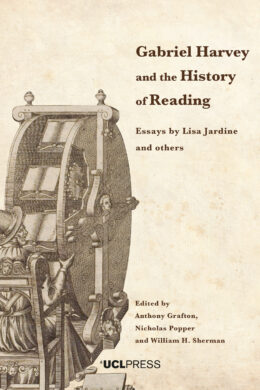
Gabriel Harvey and the History of Reading
Anthony Grafton, Nicholas Popper, William H. Sherman,
08 January 2024
Júlia Lopes de Almeida, Ana Cláudia Suriani da Silva, Cintia Kozonoi Vezzani, Jason Rhys Parry,
17 July 2023
Cécile Sauvage
Translation as desiring practice
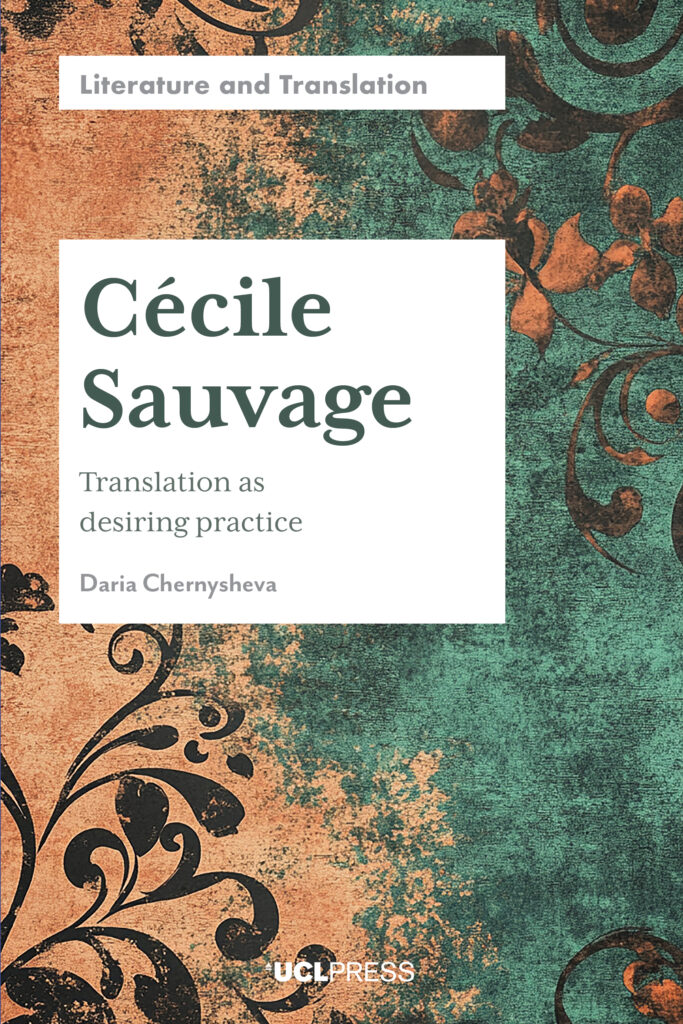
Series: Literature and Translation
Publication date: November 2, 2026
Open Access PDF ISBN: 9781806551811
Paperback ISBN: 9781806551804
Hardback ISBN: 9781806551798
Trim size (hardback): 23.4cm x 15.6cm
Trim size (paperback): 23.4cm x 15.6cm
This book offers a creative critical approach to translating the poetry of French writer, Cécile Sauvage (1883–1927). Sauvage was a remarkable poet who wrote of pregnancy, maternity, the self, sex and death, yet the story of her reception across the last century is a sequence of versions, as different readers and editors reworked Sauvage’s corpus to create new images of the poet. This book presents itself as the latest versioning of Sauvage, using the creative critical framework to challenge the traditionally strict separation between translation and commentary, between practice and theory. Figuring the literary translator as a fan, this approach makes the case for understanding translation as a participatory, possessive practice, and argues for Sauvage’s importance from the starting point of the personal.
Cécile Sauvage: Translation as desiring practice makes a wide-ranging selection of Sauvage’s poetry available in English for the first time and draws upon the poet’s recently discovered manuscripts and correspondence. It brings translation into interdisciplinary conversation with topics such as fan studies, genetic criticism and literary genre. Ultimately, it advocates for creativity in translation and a reappraisal of scholarly modes of working, arguing on behalf of rigorous scholarship that is unafraid to confess the desiring and subjective position from which it operates.