We are currently upgrading our shopping cart; in the interim all orders are being diverted to Waterstones. If you would like to redeem a promotional code, or are an author wanting to place an order, please email us.
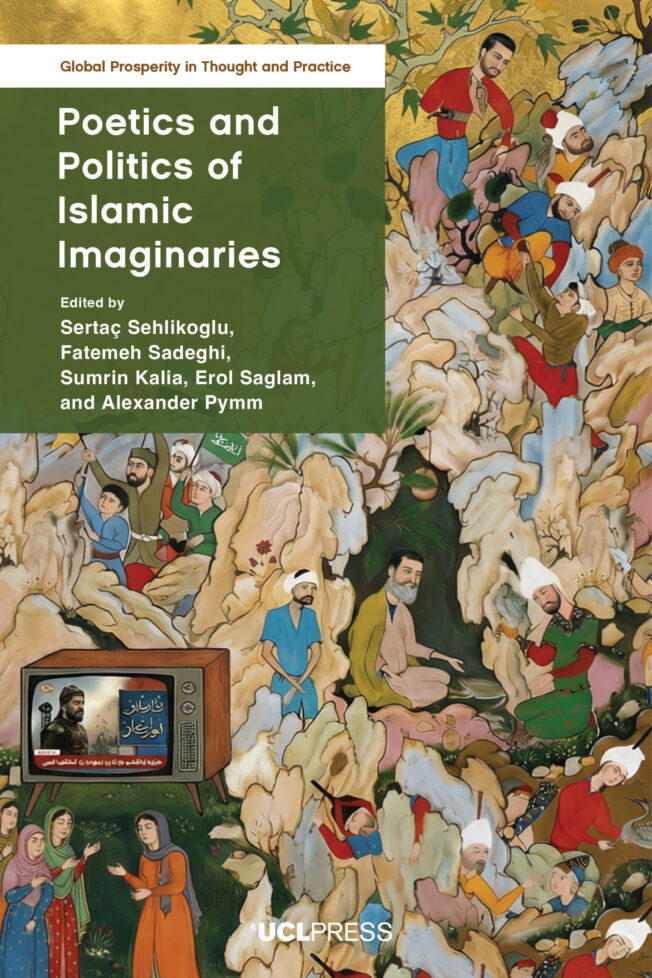
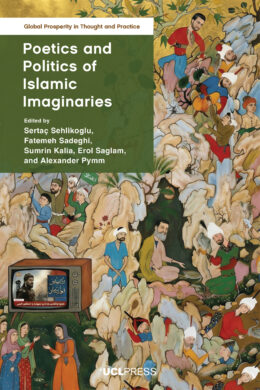
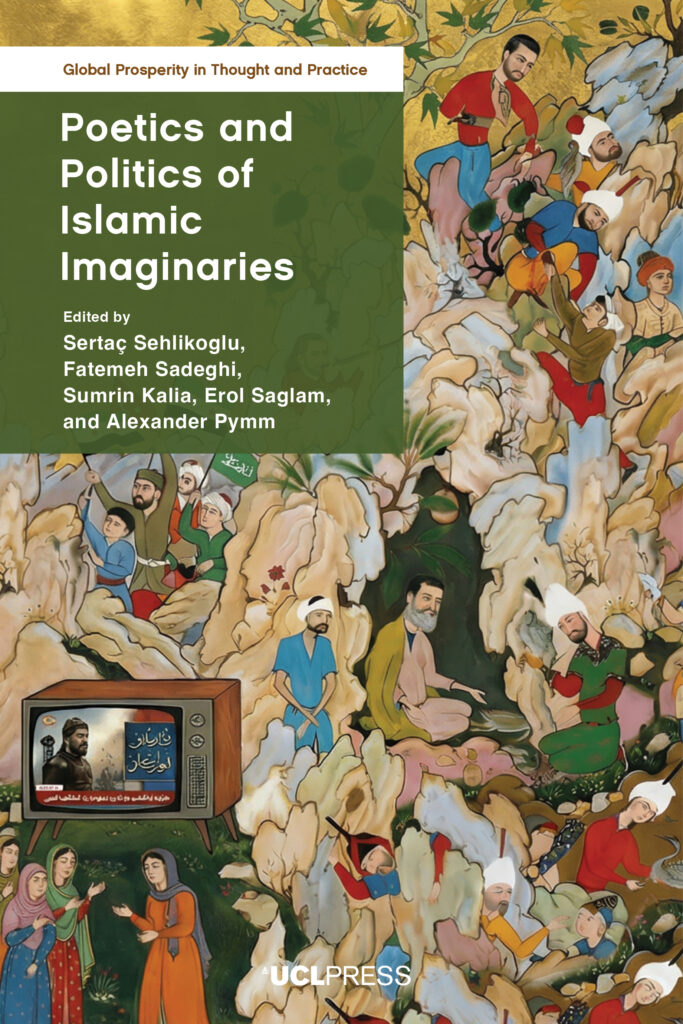
What animates Islamic politics, and how do we study it without importing Western assumptions about what imagination is? Poetics and Politics of Islamic Imaginaries takes up this challenge through the concept of takhayyul, a classical Arabic framework for understanding how political visions are formed, sustained and contested.
Drawing on scholarship across sociology, anthropology, political science, and cultural and legal history, the volume examines how narratives of masculine restoration, revolutionary spirit and cultural belonging drive and reinvent political formations across Turkey, Iran, Syria, Pakistan, India and China. Refusing positivist and Eurocentric templates, the contributors co-theorise from within their own contexts, attending to the specific temporalities through which Islamic movements claim the past, inhabit the present and project futures.
The result is a volume whose theoretical force comes from the very geographies it studies: a contribution, not a conclusion, to the decolonial rethinking of political imagination and its entanglement with nationalism, masculine desire and the unfinished business of revolution.
What animates Islamic politics, and how do we study it without importing Western assumptions about what imagination is? Poetics and Politics of Islamic Imaginaries takes up this challenge through the concept of takhayyul, a classical Arabic framework for understanding how political visions are formed, sustained and contested.
Drawing on scholarship across sociology, anthropology, political science, and cultural and legal history, the volume examines how narratives of masculine restoration, revolutionary spirit and cultural belonging drive and reinvent political formations across Turkey, Iran, Syria, Pakistan, India and China. Refusing positivist and Eurocentric templates, the contributors co-theorise from within their own contexts, attending to the specific temporalities through which Islamic movements claim the past, inhabit the present and project futures.
The result is a volume whose theoretical force comes from the very geographies it studies: a contribution, not a conclusion, to the decolonial rethinking of political imagination and its entanglement with nationalism, masculine desire and the unfinished business of revolution.
In recent years the centrality of political imaginaries has emerged as a key theme in the comparative study of social and political movements. In this richly detailed and theoretically sophisticated book, leading scholars of Muslim politics bring this same theoretical optic to bear on Islamic movements across a broad expanse of the modern world. They do so while also highlighting the deeply gendered nature of Islamic social imaginaries and nationalist movements today. Engagingly written and of breathtaking importance, the book is a major contribution to the study of Muslim politics, gender and nationalism.
Robert W. Hefner, Professor of Anthropology and Global Studies, Boston University
Sertaç Sehlikoglu (Editor)
Sertaç Sehlikoglu is a professor of feminist anthropology and Muslim societies at UCL, Institute for Global Prosperity. She leads the ERC-funded TAKHAYYUL project and is the author of Working Our Desire: Women, Sport and Self-Making in Istanbul (2021). She has co-edited multiple special journal issues on intimacy, critique, ethics, and imagination and serves as Reviews Section Editor for the Journal of Middle East Women’s Studies and the Editor-in-Chief of Contemporary Islam. UCL, Institute for Global Prosperity. She leads the ERC-funded TAKHAYYUL project and is the author of Working Our Desire: Women, Sport and Self-Making in Istanbul (2021). She has co-edited multiple special journal issues on intimacy, critique, ethics, and imagination and serves as Reviews Section Editor for the Journal of Middle East Women’s Studies and the Editor-in-Chief of Contemporary Islam.
Fatemeh Sadeghi (Editor)
Fatemeh Sadeghi is an Honorary Lecturer and a former Senior Research Fellow at UCL, Institute for Global Prosperity. Her research investigates political imagination as both an epistemological construct and an intersubjective phenomenon shaped by nostalgia, selective memory, and reinterpretations of the past. She was part of the ERC-funded TAKHAYYUL project, where she led the work package The Aftermath of Takhayyul.
Sumrin Kalia (Editor)
Sumrin Kalia is a political sociologist tracing how ideas and norms move through civil society, shaping cultures, communities and political valences. She is postdoctoral fellow at the Department of Management at the Free University of Berlin’s School of Business and Economics. Kalia’s scholarship brings organisational theories into dialogue with area studies literature, political sociology and institutional theory. Her research has been published in journals such as International Journal of Public Administration, International Journal of Politics, Culture, and Society, Non-Profit and Voluntary Sector Quarterly and Religion, State, Society. She is also the co-editor of the book Local Responses to Global Challenges in Southeast Asia and has written several opinion pieces and policy papers.
Erol Saglam (Editor)
Erol Saglam is Associate Professor of Sociology at Istanbul Medeniyet University and a Research Fellow at UCL. He was a postdoctoral fellow at Stockholm University and Freie Universität Berlin, and a visiting scholar at the University of Cambridge. Saglam publishes on topics such as conspiracy theories and their socio-political effects, everyday dynamics that forge and maintain masculinities, vigilantism, bureaucracies, and ethnographic methods.
Alexander Pymm (Editor)
Alexander Pymm holds an MSc in International Development and Humanitarian Emergencies programme from London School of Economics. Following his work at the UK House of Commons, providing research and communications support to Members of Parliament, he has worked as a project administrator and editorial assistant for the TAKHAYYUL Project.
Sign up to our newsletter
Don't miss out! Subscribe to the UCL Press newsletter for the latest open access books, journal CfPs, news and views from our authors and much more!