We are currently upgrading our shopping cart; in the interim all orders are being diverted to Waterstones. If you would like to redeem a promotional code, or are an author wanting to place an order, please email us.
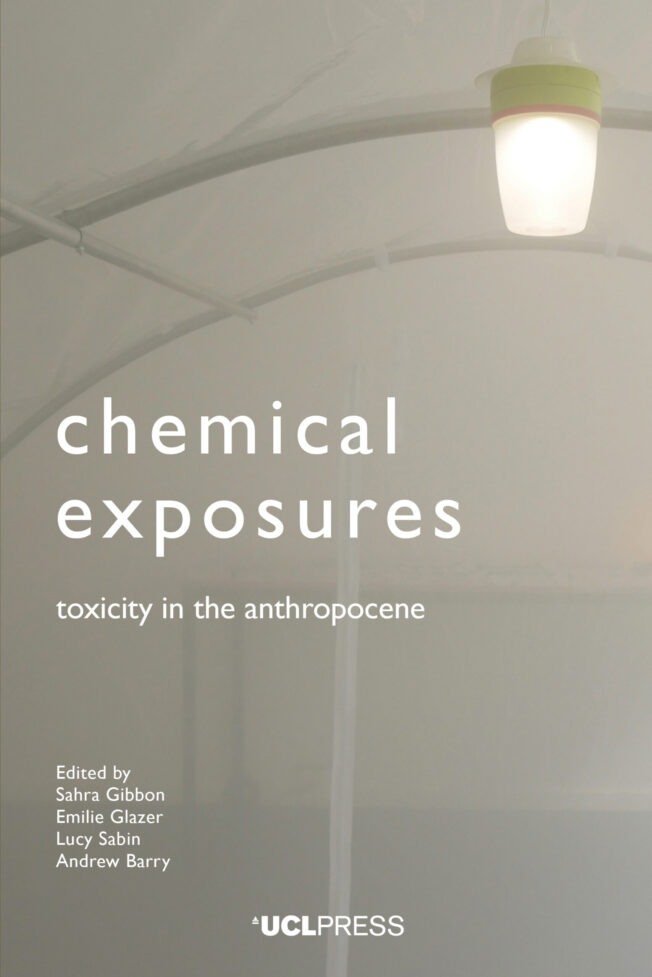
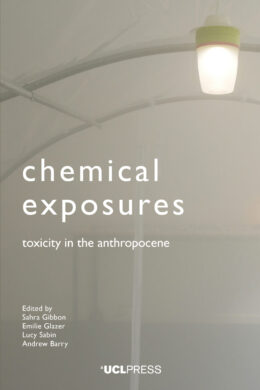
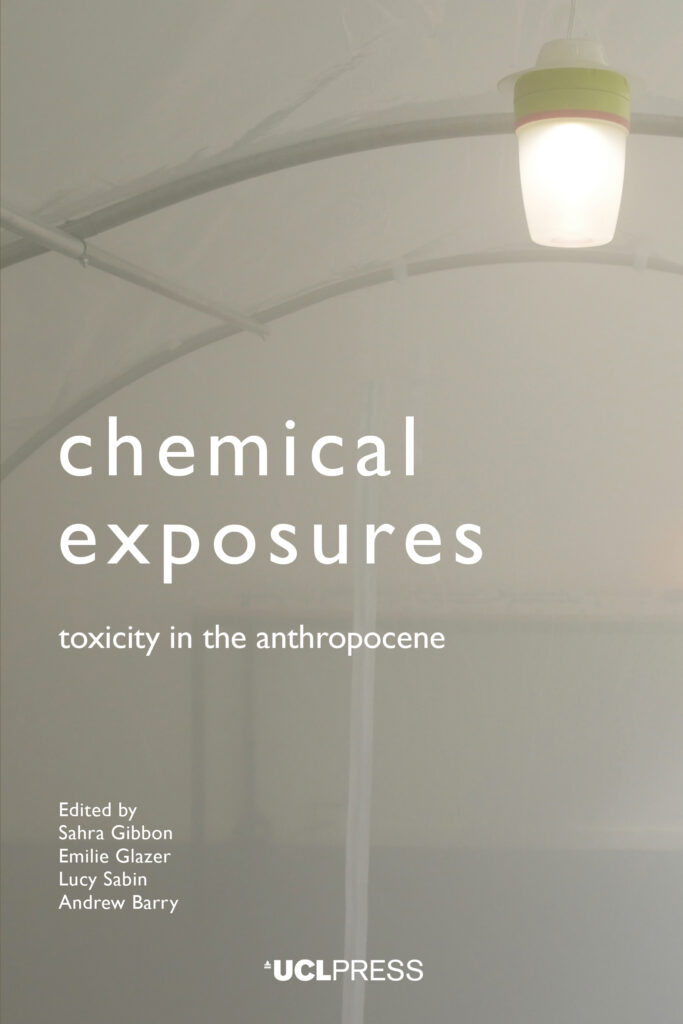
Exposure to toxic chemicals has become commonplace, yet the study of both chemicals and toxicity has tended to remain at the margins of the social sciences and humanities. This volume addresses the entangled landscape of toxic chemicals in the Anthropocene, drawing together research by anthropologists, geographers, artists and scholars in science and technology studies. The contributors understand chemical pollution as not simply pervasive, but multiple, situated and unequal, profoundly relational and affective, traversing temporal and spatial scales. Chemical worlds continuously disrupt and reconfigure the relations between the geological and the human, the political and the material and between academic disciplines and environmental governance. Chemical Exposures explores the accumulation of toxic substances, the multiple scales of exposure and the diverse ways in which exposure can be both sensed and visualised.
Nolwenn Bühler,
Nils Graber,
Victoria Boydell,
Cinzia Greco,
04 December 2025
×
Chemical Exposures
Toxicity in the Anthropocene
Publication date: October 20, 2026
Open Access PDF ISBN: 9781806551576
Paperback ISBN: 9781806551569
Hardback ISBN: 9781806551552
Trim size (hardback): 23.4cm x 15.6cm
Trim size (paperback): 23.4cm x 15.6cm
Download free PDF online
https://uclpress.co.uk/book/chemical-exposures/
Exposure to toxic chemicals has become commonplace, yet the study of both chemicals and toxicity has tended to remain at the margins of the social sciences and humanities. This volume addresses the entangled landscape of toxic chemicals in the Anthropocene, drawing together research by anthropologists, geographers, artists and scholars in science and technology studies. The contributors understand chemical pollution as not simply pervasive, but multiple, situated and unequal, profoundly relational and affective, traversing temporal and spatial scales. Chemical worlds continuously disrupt and reconfigure the relations between the geological and the human, the political and the material and between academic disciplines and environmental governance. Chemical Exposures explores the accumulation of toxic substances, the multiple scales of exposure and the diverse ways in which exposure can be both sensed and visualised.
Sahra Gibbon (Editor)
Sahra Gibbon is Professor of Medical Anthropology at UCL. She is co-lead for UCL Anthropocene and co-convenor of the UCL chemical exposures reading group. She is deeply committed to developing interdisciplinary approaches, including in her current work on Anthropocene Health, and also other projects focusing on Urban Mental Health and the social context and practices of Longitudinal birth cohort studies.
Emilie Glazer (Editor)
Emilie Glazer is Lecturer in Social Anthropology at King's College London and an anthropologist whose research explores care, justice, and political violence in the changing ecologies of the climate crisis. Her PhD, completed at UCL and supported by the Wellcome Trust, traced the affective politics of water infrastructure in Palestine/Israel, with a focus on the city of Jerusalem. She has taught at King’s College London, UCL Anthropology and served as visiting tutor at the Royal College of Art.
Lucy Sabin (Editor)
Lucy Sabin is Research Fellow in the Digital Humanities Lab at the University of Sussex. She is a researcher and designer/artist trained in geography. Her work explores air, atmospheres, weather, care, reflexivity, art-science and environmental justice. She has experience in participatory arts, film production, podcasting, exhibition design, interface design, and front-end development.
Andrew Barry (Editor)
Andrew Barry is Professor of Human Geography at UCL and co-lead of UCL Anthropocene. He is the author of Political Machines: Governing a Technological Society (Athlone) and Material Politics: Disputes along the Pipeline (Wiley-Blackwell). Andrew originally studied Chemistry and Physics as an undergraduate, and much of his research has been concerned with the relations between the natural and social sciences.
Sign up to our newsletter
Don't miss out! Subscribe to the UCL Press newsletter for the latest open access books, journal CfPs, news and views from our authors and much more!