
Publication date: 3 August 2026
DOI: https://doi.org/10.14324/111.9781806551248
Number of illustrations: 48

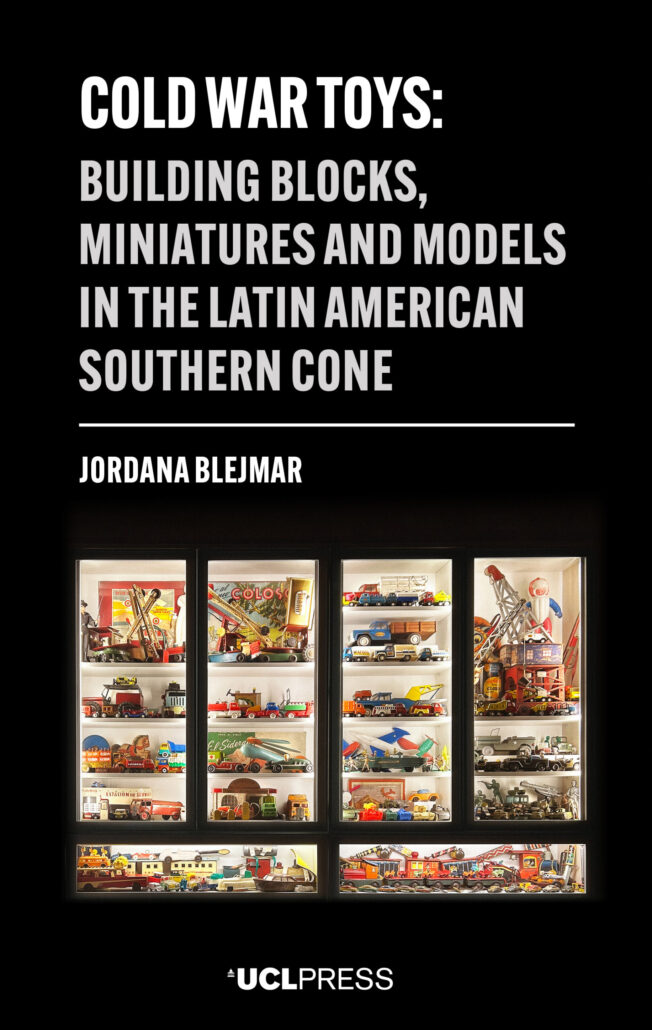
Cold War Toys
Building blocks, miniatures and models in the Latin American Southern Cone
Jordana Blejmar (Author)
Series: Modern Americas
Cold War Toys examines playthings manufactured, promoted and commercialised in Argentina, Chile and Uruguay during the second half of the twentieth century. Establishing connections and conversations with toys produced in earlier periods, including nineteenth-century dollhouses and building blocks created in the 1920s by Joaquín Torres-García, it goes on to analyse, among other items, scale-model household appliances distributed by the Eva Perón Foundation, construction sets made in 1970s Chile during Salvador Allende’s Popular Unity government, and more recent figurines such as the Latin American versions of G.I. Joe and Latin Barbie dolls.
The book approaches toys as dispositifs – cultural formations that condense the discourses, institutions, architectural forms, scientific statements and philosophical propositions of Latin America’s Cold War. Drawing on a rich compendium of objects, many inspired by European or US brands, it shows how South American toys incorporated local characters, designs, messages and materials through a process of creative adaptation, thereby acquiring new identities. These and other original artefacts are examined variously as commodities from a once-flourishing industry, as works of art, originators of cultural myths and as training tools for Cold War childhoods. ’Toys are also seen as undervalued expressions of children’s material culture, imbued with the collective memory of a turbulent and contested era.

Loretta Lees, Japonica Brown-Saracino, Stefano Portelli, Kenton Card,
01 March 2027

Mariam Daher, Mayssa Jallad, Nikolay Mintchev, Henrietta L. Moore,
25 February 2027


Afterlives of Urban Cosmopolitanism
Magnus Marsden, Vera Skvirskaja, Paul Anderson,
01 February 2027

Methods for Studying Online Extremism and Terrorism
Sandy Schumann, Isabelle van der Vegt, Ryan Scrivens,
01 February 2027

Who are the Humans behind Human Rights?
Agnieszka Kubal, Beáta Huszka, Hanna Oliinyk, Denis Shedov,
01 February 2027

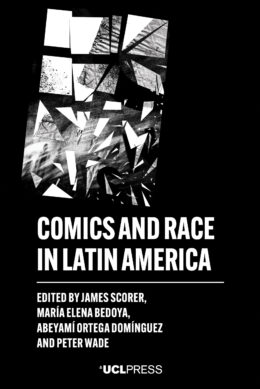
Comics and Race in Latin America
James Scorer, María Elena Bedoya, Abeyamí Ortega Domínguez, Peter Wade,
07 December 2026

Samuel Lunn-Rockliffe, Joseph Kimutai Cheptorus, Timothy Kipkeu Kiprutto,
03 December 2026






Poetics and Politics of Islamic Imaginaries
Sertaç Sehlikoglu, Fatemeh Sadeghi, Sumrin Kalia, Erol Saglam, Alexander Pymm,
01 October 2026

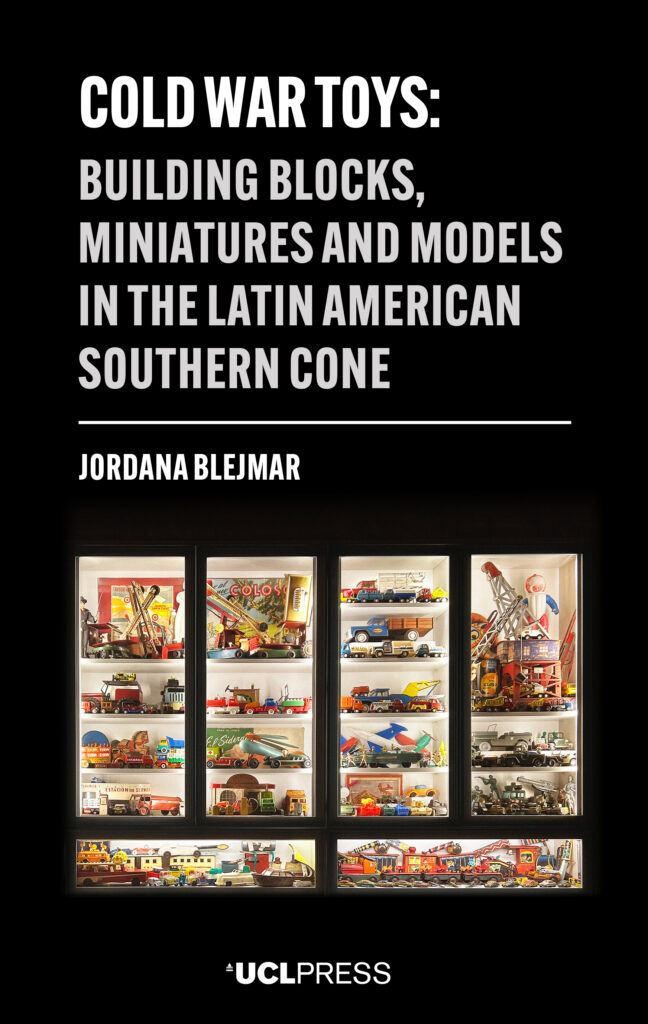
Cold War Toys
Building blocks, miniatures and models in the Latin American Southern Cone
Series: Modern Americas
Publication date: August 3, 2026
Open Access PDF ISBN: 9781806551248
Paperback ISBN: 9781806551231
Hardback ISBN: 9781806551224
Trim size (hardback): 23.4cm x 15.6cm
Trim size (paperback): 23.4cm x 15.6cm
Cold War Toys examines playthings manufactured, promoted and commercialised in Argentina, Chile and Uruguay during the second half of the twentieth century. Establishing connections and conversations with toys produced in earlier periods, including nineteenth-century dollhouses and building blocks created in the 1920s by Joaquín Torres-García, it goes on to analyse, among other items, scale-model household appliances distributed by the Eva Perón Foundation, construction sets made in 1970s Chile during Salvador Allende’s Popular Unity government, and more recent figurines such as the Latin American versions of G.I. Joe and Latin Barbie dolls.
The book approaches toys as dispositifs – cultural formations that condense the discourses, institutions, architectural forms, scientific statements and philosophical propositions of Latin America’s Cold War. Drawing on a rich compendium of objects, many inspired by European or US brands, it shows how South American toys incorporated local characters, designs, messages and materials through a process of creative adaptation, thereby acquiring new identities. These and other original artefacts are examined variously as commodities from a once-flourishing industry, as works of art, originators of cultural myths and as training tools for Cold War childhoods. ’Toys are also seen as undervalued expressions of children’s material culture, imbued with the collective memory of a turbulent and contested era.