We are currently upgrading our shopping cart; in the interim all orders are being diverted to Waterstones. If you would like to redeem a promotional code, or are an author wanting to place an order, please email us.
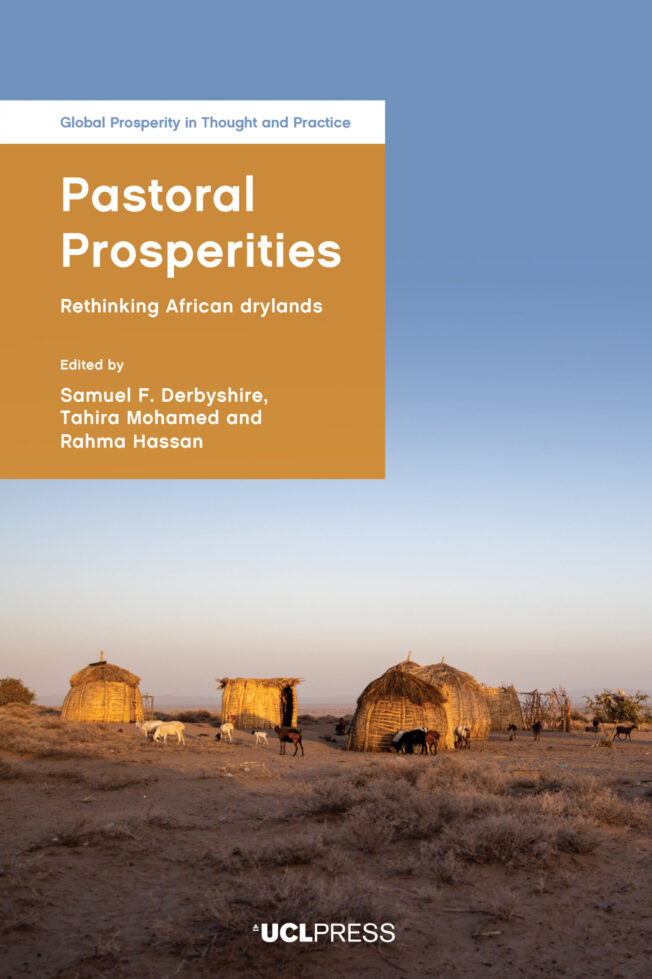
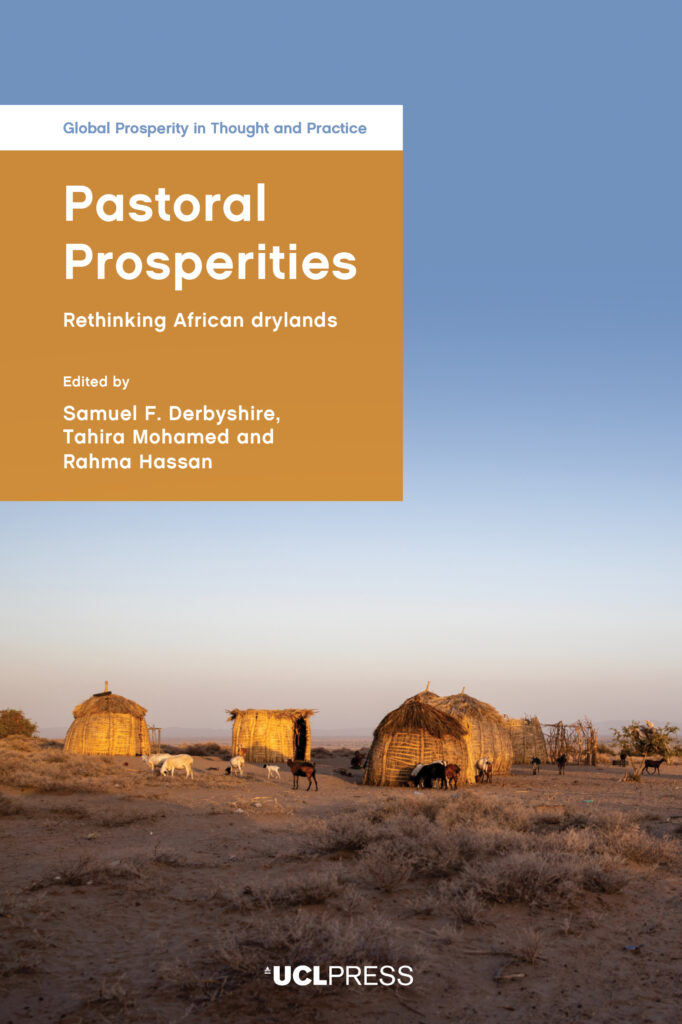
Pastoral Prosperities brings together contributions from diverse disciplinary perspectives to explore the future of mobile pastoralism in Africa’s drylands. Offering new empirical material from across the continent, it builds on pioneering works that have challenged fundamental assumptions about development, questioning approaches that overlook well-being, purpose, quality of life and environmental health as central bearings of human flourishing. The book asks how the future is imagined and fought for in the drylands, and how understandings of this might broaden analytical frames that otherwise privilege narrow economic indicators.
Taking stock of the enduring power of negative narratives about pastoralism, the volume considers counter-narratives from multiple corners, tracing their alternative visions of both the past and the future. It explores everyday aspirations and practices to make sense of sweeping socio-economic, political and environmental change. In doing so, Pastoral Prosperities gestures towards new cross-disciplinary and cross-sectoral conversations that might inform more grounded approaches to investment, governance and support in the years ahead.
Pastoral Prosperities brings together contributions from diverse disciplinary perspectives to explore the future of mobile pastoralism in Africa’s drylands. Offering new empirical material from across the continent, it builds on pioneering works that have challenged fundamental assumptions about development, questioning approaches that overlook well-being, purpose, quality of life and environmental health as central bearings of human flourishing. The book asks how the future is imagined and fought for in the drylands, and how understandings of this might broaden analytical frames that otherwise privilege narrow economic indicators.
Taking stock of the enduring power of negative narratives about pastoralism, the volume considers counter-narratives from multiple corners, tracing their alternative visions of both the past and the future. It explores everyday aspirations and practices to make sense of sweeping socio-economic, political and environmental change. In doing so, Pastoral Prosperities gestures towards new cross-disciplinary and cross-sectoral conversations that might inform more grounded approaches to investment, governance and support in the years ahead.
‘Pastoral Prosperities is a major scholarly contribution. The viability of African pastoral systems is often judged by metrics derived from neoclassical economics. This book, by contrast, reveals the values cultivated by pastoral peoples themselves as a guiding strand in their historical development.’
David Wengrow, Professor of Comparative Archaeology, UCL
‘Pastoral Prosperities brings pastoralists’ knowledge, labour and solidarities into debates about flourishing and change. It opens vital questions about how prosperity is made and shared, whose work sustains it, and how pastoralists, in all their diversity, can strengthen their collective power to shape more just futures.’
Ikal Ang’elei, Director of Friends of Lake Turkana
Samuel F. Derbyshire (Editor)
Samuel F. Derbyshire is a social anthropologist at the International Livestock Research Institute, Nairobi, Kenya. His work explores social and environmental change across Africa's drylands.. He was previously Junior Research Fellow in Anthropology at St John’s College, University of Oxford (2018-2023). His past work has explored social and economic change in pastoralist contexts in northern Kenya, including in his book Remembering Turkana: Material Histories and Contemporary Livelihoods in North-Western Kenya (Routledge, 2020).
Tahira Mohamed (Editor)
Tahira Mohamed is Regional Partnership and Engagement Lead at the Jameel Observatory for Food Security Early Action at the International Livestock Research Institute, Nairobi, Kenya. Her research examines resilience-building programs and humanitarian support in response to crises in the Horn of Africa. She holds a PhD from the University of Sussex, which she undertook via the PASTRES program. She has roughly 10 years of research experience in pastoralism, climate change, livelihood transformation, photo-voice research methods and migration.
Rahma Hassan (Editor)
Rahma Hassan is a researcher with the Centre for Research and Development in Drylands and holds a PhD in Development Studies from the University of Copenhagen and the University of Nairobi. She has worked extensively with the Feinstein International Centre and the Centre for Research and Development in the Drylands (CRDD) on pastoralist livelihoods and resilience. She has published on communal land rights and has contributed to examinations of natural governance and gender issues at the Institute for Development Studies, University of Nairobi.
Sign up to our newsletter
Don't miss out! Subscribe to the UCL Press newsletter for the latest open access books, journal CfPs, news and views from our authors and much more!