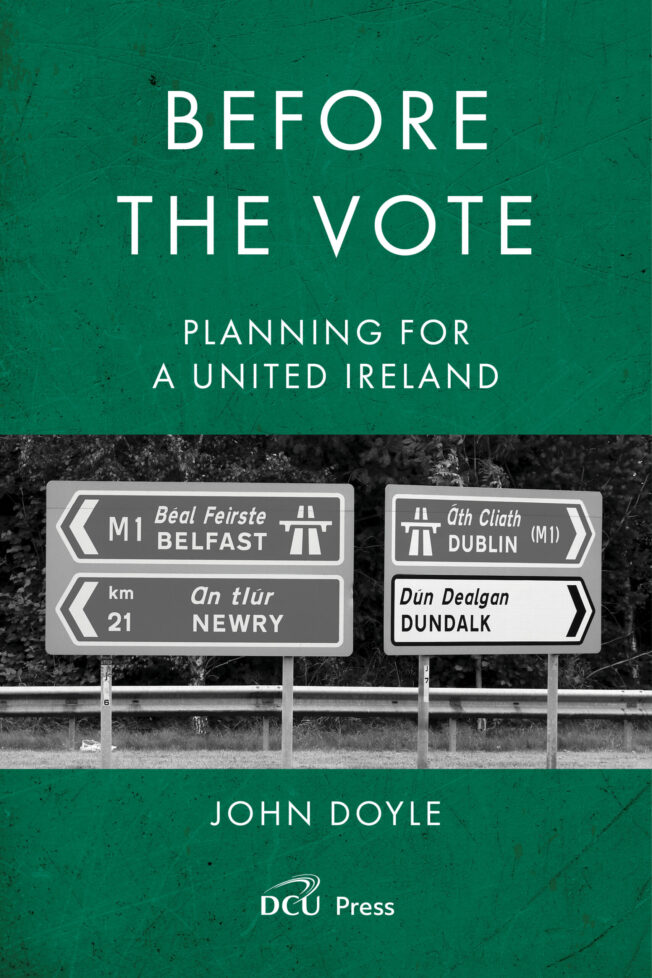

Before the Vote
Planning for a united Ireland
John Doyle (Author)
The UK’s departure from the European Union threatened a hard border on the island of Ireland, aggravated social and political tensions and undermined key aspects of the 1998 peace agreement. Consequently a vote on Irish unity now seems more likely than at any other point since the foundation of the Irish state. Before the Vote responds to this new political reality, focusing on what needs to be understood by the public before a referendum takes place.
Drawing on new research, John Doyle analyses the economic conditions and policy frameworks in the two parts of the island of Ireland; comparing gaps in living standards, education, welfare systems, gender equality and health. The findings counter previous inaccurate perceptions of the comparative positions of the North and South and the economic relationship between Northern Ireland and the British state. From this foundation the book looks to the future, exploring how a referendum might be called and managed, how the pre-referendum debates and planning should be structured, and the legal and political processes necessary to create a united Ireland. It traces the processes of policy and economic integration in a new united Ireland and provides projections of possible economic outcomes. It concludes with a reflection on potential political structures for the new state, and on policy areas, including security and defence, that have so far not featured in public debates on unity.
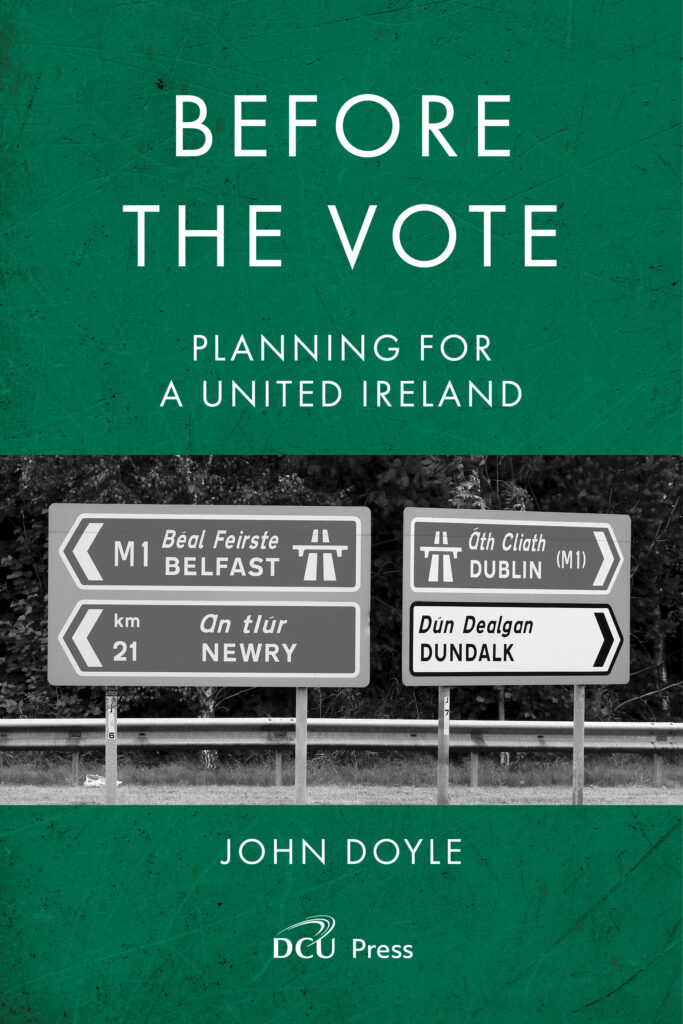
Before the Vote
Planning for a united Ireland
Publication date: September 21, 2026
Open Access PDF ISBN: 9781067618322
Paperback ISBN: 9781067618315
Trim size (paperback): 23.4cm x 15.6cm

The UK’s departure from the European Union threatened a hard border on the island of Ireland, aggravated social and political tensions and undermined key aspects of the 1998 peace agreement. Consequently a vote on Irish unity now seems more likely than at any other point since the foundation of the Irish state. Before the Vote responds to this new political reality, focusing on what needs to be understood by the public before a referendum takes place.
Drawing on new research, John Doyle analyses the economic conditions and policy frameworks in the two parts of the island of Ireland; comparing gaps in living standards, education, welfare systems, gender equality and health. The findings counter previous inaccurate perceptions of the comparative positions of the North and South and the economic relationship between Northern Ireland and the British state. From this foundation the book looks to the future, exploring how a referendum might be called and managed, how the pre-referendum debates and planning should be structured, and the legal and political processes necessary to create a united Ireland. It traces the processes of policy and economic integration in a new united Ireland and provides projections of possible economic outcomes. It concludes with a reflection on potential political structures for the new state, and on policy areas, including security and defence, that have so far not featured in public debates on unity.
‘Before the Vote: Planning for a united Ireland is a timely and balanced account of what needs to be done to prepare adequately for future referendums on the reunification of Ireland. John Doyle combines a forensic assessment of the state of the two polities, North and South, with a lively account of the attractive transformative possibilities of unification. Evidence-based and sober throughout, Doyle rigorously avoids trespassing into utopia. Highly recommended.’
Brendan O’Leary, University of Pennsylvania
‘This book is a timely and substantive contribution to debate on one of the most significant public policy and constitutional questions facing these islands. It brings analytical rigour and practical focus to a complex field, examining economic conditions, public finances, social outcomes, health, legal process and political institutions with impressive range and seriousness. Most importantly, it grounds discussion of Ireland’s future in the realities of policy, governance and implementation. As such, it will be a valuable resource for all those seeking a more informed and considered debate.’
Professor Cathy Gormley-Heenan, Ulster University
‘This book provides a rigorous, evidence-based analysis of many of the key questions that voters will require answers to prior to a border poll. The reader is provided with clear and accessible information on the potential implications of reunification for key aspects of society, including the economy, living standards, health, social welfare and education. The highly debated issue of subvention is forensically assessed, and the political and legal aspects of a future border poll are clearly laid out. The book is essential reading for future voters, and a clear wakeup call on the need to begin proper planning for possible constitutional change.’
Dr Séamus McGuinness Research Professor, ESRI Dublin Adjunct Professor Department of Economics, Trinity College Dublin Research Fellow, IZA