
Publication date: 26 January 2026
DOI: https://doi.org/10.14324/111.9781800089914
Number of pages: 324
Number of illustrations: 34

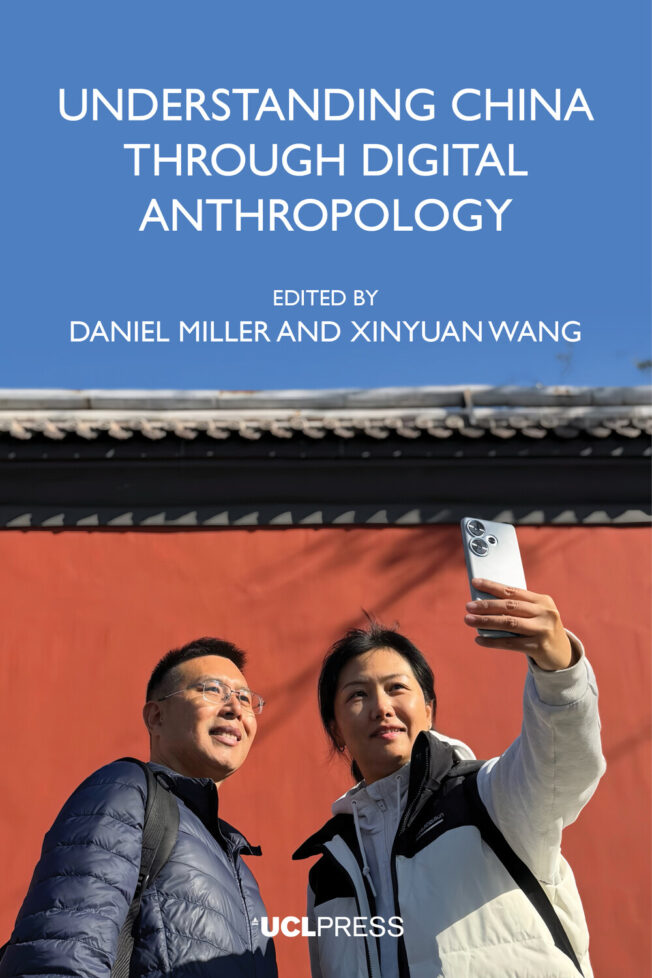
Understanding China through Digital Anthropology
Daniel Miller (Editor), Xinyuan Wang (Editor)
Understanding China through Digital Anthropology questions our understanding of digital technologies by demonstrating fundamental differences in the meaning of both technology and the digital between China and the West. This follows from a longstanding historical divergence in the meaning of and attitude to the relationship between technology and humanity.
The book also challenges our understanding of China through a series of case studies that range from the creation of algorithms, the normative basis of social media and the impact of digital communication on diverse fields including economic practices, gender, media and healthcare. These further demonstrate the value of long-term ethnographic studies that situate people’s online activities in their everyday offline lives. These case studies are testimony to the continued heterogeneity of China in covering sophisticated urban IT professionals, Tibetan villagers and grassroots women struggling to make a living. All of this contributes to a new understanding of a contemporary China that has been transformed by the sheer scale and dynamism manifested in the deployment of digital technologies. The book also includes an extensive summary of work undertaken by scholars inside China on digital anthropology and previously only available in Chinese.
Related titles

An Anthropological Approach to mHealth
Charlotte Hawkins, Patrick Awondo, Daniel Miller,
28 October 2024

Daniel Miller, Laila Abed Rabho, Patrick Awondo, Maya de Vries, Marília Duque, Pauline Garvey, Laura Haapio-Kirk, Charlotte Hawkins, Alfonso Otaegui, Shireen Walton, Xinyuan Wang,
06 May 2021


How the World Changed Social Media
Daniel Miller, Elisabetta Costa, Dr Nell Haynes, Tom McDonald, Razvan Nicolescu, Dr Jolynna Sinanan, Juliano Spyer, Shriram Venkatraman, Xinyuan Wang,
29 February 2016
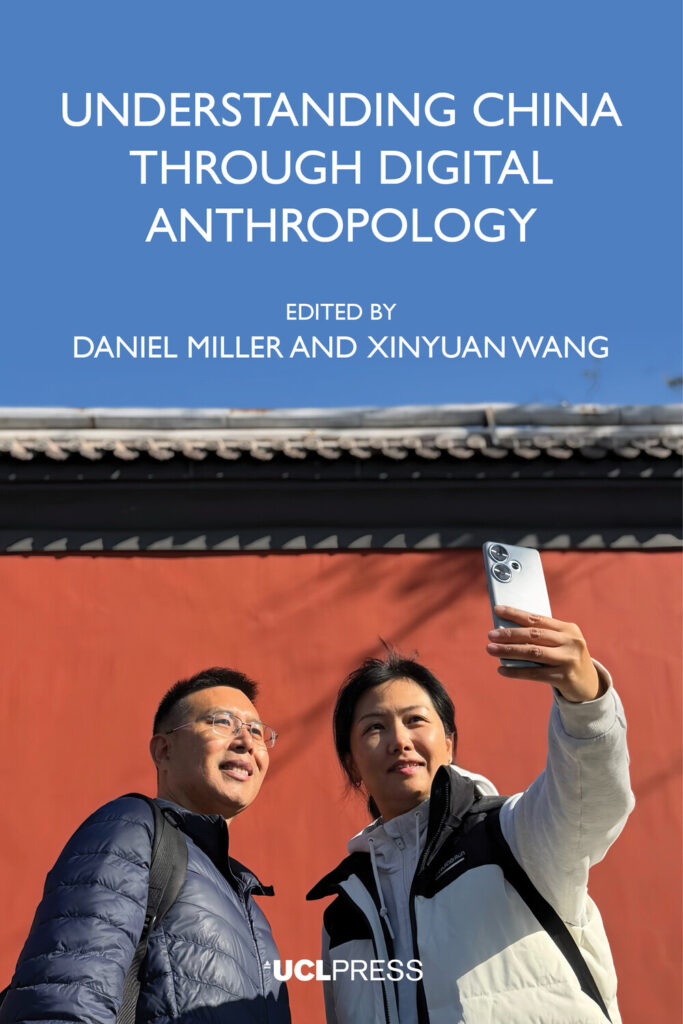
Understanding China through Digital Anthropology
Publication date: January 26, 2026
Open Access PDF ISBN: 9781800089914
Paperback ISBN: 9781800089907
Hardback ISBN: 9781800089891
Trim size (hardback): 23.4cm x 15.6cm
Trim size (paperback): 23.4cm x 15.6cm
Page count (hardback): 324
Understanding China through Digital Anthropology questions our understanding of digital technologies by demonstrating fundamental differences in the meaning of both technology and the digital between China and the West. This follows from a longstanding historical divergence in the meaning of and attitude to the relationship between technology and humanity.
The book also challenges our understanding of China through a series of case studies that range from the creation of algorithms, the normative basis of social media and the impact of digital communication on diverse fields including economic practices, gender, media and healthcare. These further demonstrate the value of long-term ethnographic studies that situate people’s online activities in their everyday offline lives. These case studies are testimony to the continued heterogeneity of China in covering sophisticated urban IT professionals, Tibetan villagers and grassroots women struggling to make a living. All of this contributes to a new understanding of a contemporary China that has been transformed by the sheer scale and dynamism manifested in the deployment of digital technologies. The book also includes an extensive summary of work undertaken by scholars inside China on digital anthropology and previously only available in Chinese.
‘Co-Editors Miller and Xinyuan’s’ 324-page book – Understanding China Through Digital Anthropology – should be very useful for students as well as researchers, who want to understand China in relation to the digital and the anthropological contexts. Invariably, the co-editors and their contributors do justice to the useful information that the book offers to its readers; in fact, we recommend it very highly as a textbook for advanced college and university students interested in absorbing the specialized information on digital anthropological discourses on China.’
African and Asian Studies