
Publication date: 12 March 2024
DOI: https://doi.org/10.14324/111.9781800086265
Number of illustrations: 43

Urban Informality and the Built Environment
Infrastructure, exchange and image
Nerea Amorós Elorduy (Editor), Nikhilesh Sinha (Editor), Colin Marx (Editor)
Series: FRINGE
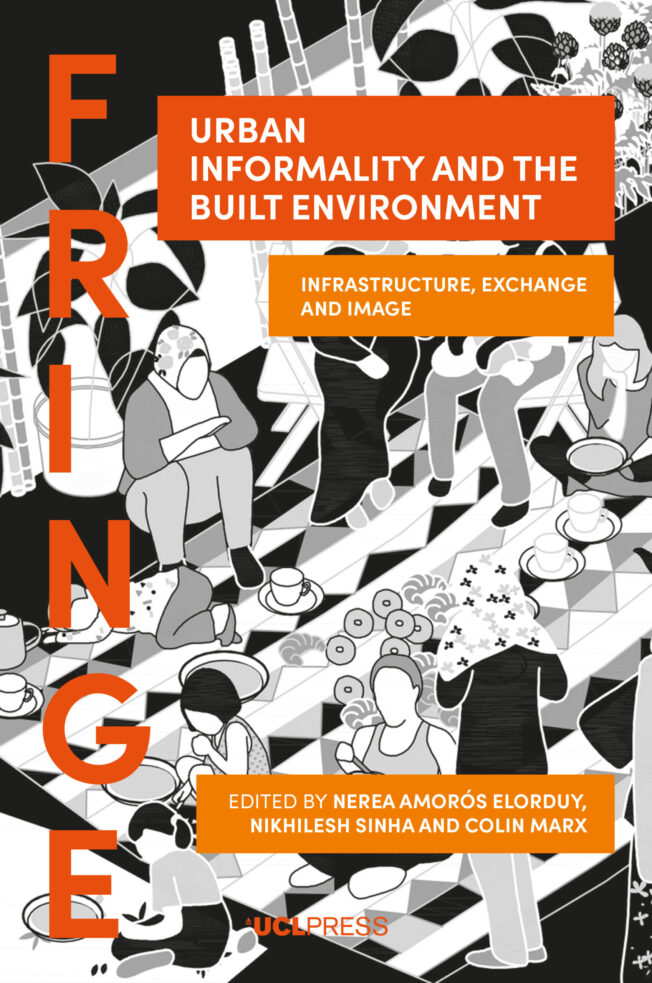
Urban Informality and the Built Environment demonstrates the value of greater and more diverse forms of engagement of built environment disciplines in what constitutes urban informality and its politics. It brings a multi-disciplinary approach to the study of informality and the built environment in diverse contexts, drawing on recent research by architects, planners, political scientists, geographers and urban theorists.
The book presents different case studies from multiple geographies, drawing attention to the need for studying urban informality in the Global North and Global South. The cases promote a cross-fertilization between disciplines, lenses, geographies and methodologies. They range from the creative place-making of street artists in Accra, to the morphological evolution of urban Tirana, urban agriculture in la Habana and social reproduction in Greece. Additional contributions highlight the cross-cutting themes of infrastructure, exchange and image.
Urban Informality and the Built Environment introduces built environment disciplines to its constitutive roles in producing urban informality. It also tests a range of new methodologies to the study of urban informality, demonstrating the possibilities for new insights when building on the relational understanding of urban informality.
Related titles
Urban Informality and the Built Environment
Infrastructure, exchange and image
Series: FRINGE
Publication date: March 12, 2024
Open Access PDF ISBN: 9781800086265
Paperback ISBN: 9781800086272
Hardback ISBN: 9781800086289
Trim size (hardback): 23.4cm x 15.6cm
Trim size (paperback): 23.4cm x 15.6cm
Urban Informality and the Built Environment demonstrates the value of greater and more diverse forms of engagement of built environment disciplines in what constitutes urban informality and its politics. It brings a multi-disciplinary approach to the study of informality and the built environment in diverse contexts, drawing on recent research by architects, planners, political scientists, geographers and urban theorists.
The book presents different case studies from multiple geographies, drawing attention to the need for studying urban informality in the Global North and Global South. The cases promote a cross-fertilization between disciplines, lenses, geographies and methodologies. They range from the creative place-making of street artists in Accra, to the morphological evolution of urban Tirana, urban agriculture in la Habana and social reproduction in Greece. Additional contributions highlight the cross-cutting themes of infrastructure, exchange and image.
Urban Informality and the Built Environment introduces built environment disciplines to its constitutive roles in producing urban informality. It also tests a range of new methodologies to the study of urban informality, demonstrating the possibilities for new insights when building on the relational understanding of urban informality.