
Publication date: 7 July 2025
DOI: https://doi.org/10.14324/111.9781800088696
Number of pages: 392
Number of illustrations: 71

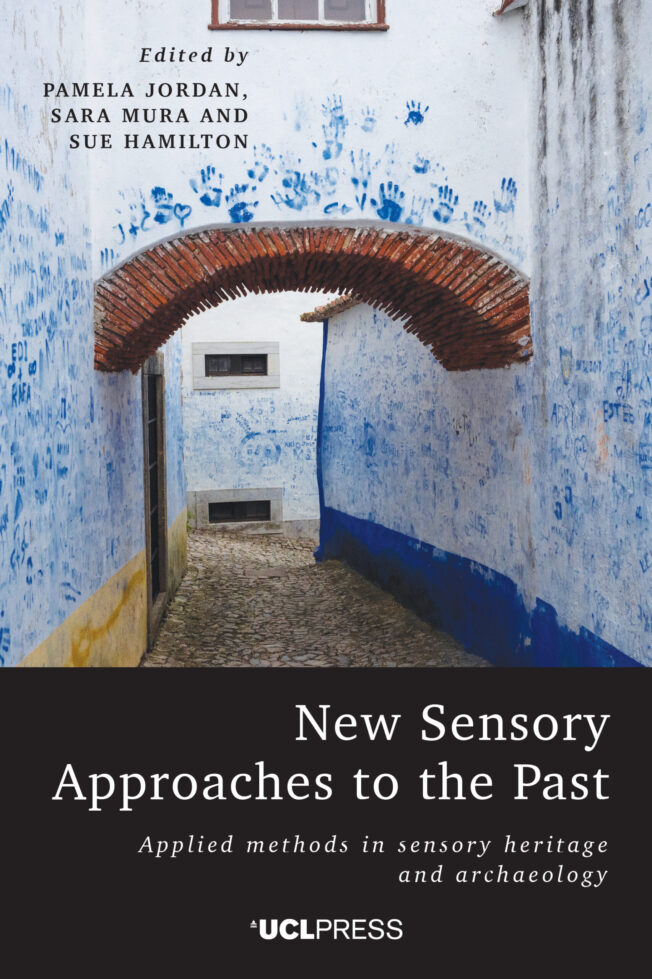
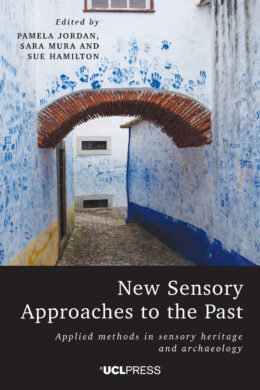
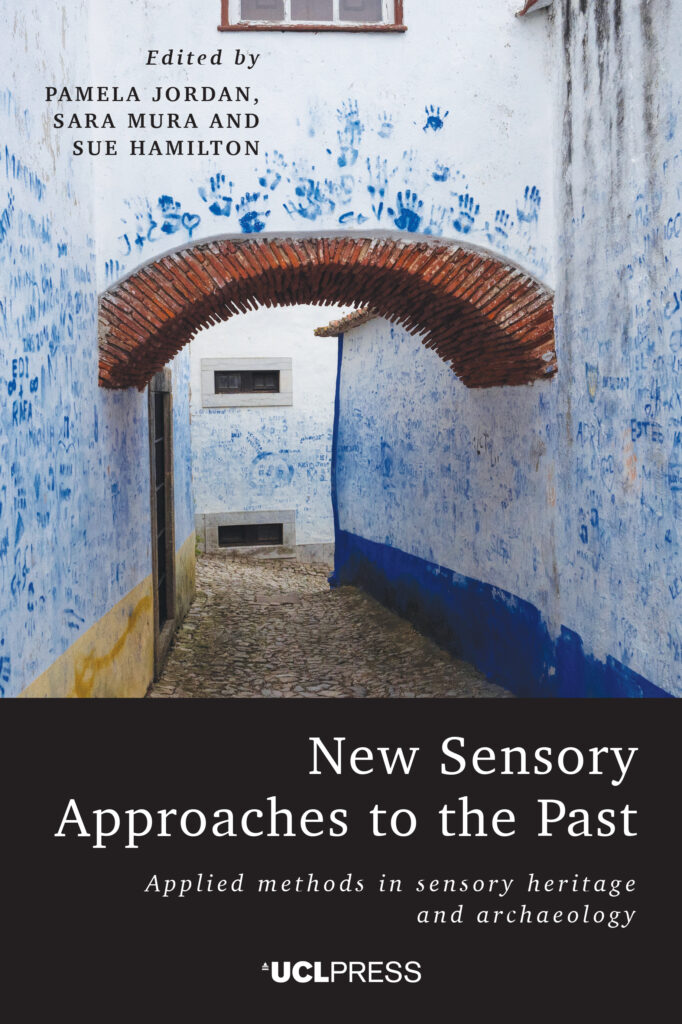
New Sensory Approaches to the Past
Applied methods in sensory heritage and archaeology
Pamela Jordan (Editor), Sara Mura (Editor), Sue Hamilton (Editor)
New Sensory Approaches to the Past assembles a series of research projects investigating cultural environments through the lens of the senses. The book presents the latest approaches to sensory archaeology and heritage research that aim to understand the lived experience of past inhabitants. Interdisciplinary case studies carry out investigations in three different registers: personal and embodied, teamwork and collective responses to the historical environment, and digital reconstruction. An international cast of contributors includes archaeologists, architects, sociolinguists, military experts, cultural studies scholars and acoustics specialists, with research sites spanning Palaeolithic rock art to a 1960s North American fairground. Descriptions and analyses of sensory in-situ investigations offer methodological transparency with the visual analysis that is common in archaeology and heritage assessments is placed alongside ethnographic techniques, landscape survey, sound recording, preservation advocacy work and various forms of digital reconstruction. This interdisciplinary approach harmonizes research terminologies across fields, fostering a comprehensive understanding of sensory-based studies and the methods used to carry them out. The book revitalizes familiar concepts with new insights and provides a platform to examine and resolve interdisciplinary ambiguities, making it an invaluable resource for advancing sensory research.
Eglė Rindzevičiūtė, Anna Storm, Linara Dovydaitytė, Karin Edberg, Rodney Harrison, Linda Ross,
01 April 2027
Second World War Archaeology at the Edge of Living Memory
Gabriel Moshenska, Jennifer McKinnon,
01 April 2027
Learning and Teaching Heritage Conservation
Renata F. Peters, Karen Thompson, Emily Williams, Melina Smirniou, James Harvie,
01 March 2027
Toby Butler, Felix Driver, Barbara Brayshay, Chris Church, Jeremy Iles, Oli Mould, Saskia Papadakis,
12 November 2026
Critical Heritage and Social Justice
Veysel Apaydin, Kalliopi Fouseki, David Francis, Jonathan Gardner, Sara Perry,
05 March 2026
Magdalena Buchczyk, Martín Fonck, Tomás J. Usón, Tina Palaić,
24 November 2025

Navigating Artificial Intelligence for Cultural Heritage Organisations
Lise Jaillant, Claire Warwick, Paul Gooding, Katherine Aske, Glen Layne-Worthey, J. Stephen Downie,
12 June 2025
New Sensory Approaches to the Past
Applied methods in sensory heritage and archaeology
Publication date: July 7, 2025
Open Access PDF ISBN: 9781800088696
Paperback ISBN: 9781800088689
Hardback ISBN: 9781800088672
Trim size (hardback): 23.4cm x 15.6cm
Trim size (paperback): 23.4cm x 15.6cm
Page count (hardback): 392
New Sensory Approaches to the Past assembles a series of research projects investigating cultural environments through the lens of the senses. The book presents the latest approaches to sensory archaeology and heritage research that aim to understand the lived experience of past inhabitants. Interdisciplinary case studies carry out investigations in three different registers: personal and embodied, teamwork and collective responses to the historical environment, and digital reconstruction. An international cast of contributors includes archaeologists, architects, sociolinguists, military experts, cultural studies scholars and acoustics specialists, with research sites spanning Palaeolithic rock art to a 1960s North American fairground. Descriptions and analyses of sensory in-situ investigations offer methodological transparency with the visual analysis that is common in archaeology and heritage assessments is placed alongside ethnographic techniques, landscape survey, sound recording, preservation advocacy work and various forms of digital reconstruction. This interdisciplinary approach harmonizes research terminologies across fields, fostering a comprehensive understanding of sensory-based studies and the methods used to carry them out. The book revitalizes familiar concepts with new insights and provides a platform to examine and resolve interdisciplinary ambiguities, making it an invaluable resource for advancing sensory research.
‘a critical and wide-ranging overview of sensory approaches within heritage studies’
Antiquity
‘This volume is a breath of fresh air with a “methodological transparency” to sensory approaches to the past exemplified through an exciting and diverse range of case studies from multiple disciplinary perspectives.’
Gavin Lucas, University of Iceland
‘This much needed volume will be invaluable to those wanting to know how to do sensory archaeology. Be inspired by thick description, sensory field survey, autoethnography, multi-sensory objects, acoustic and olfactory sense-scapes applied to academic and community projects.’
Susanna Harris, University of Glasgow