
Publication date: 5 October 2026
DOI: https://doi.org/10.14324/111.9781800089549
Number of illustrations: 6

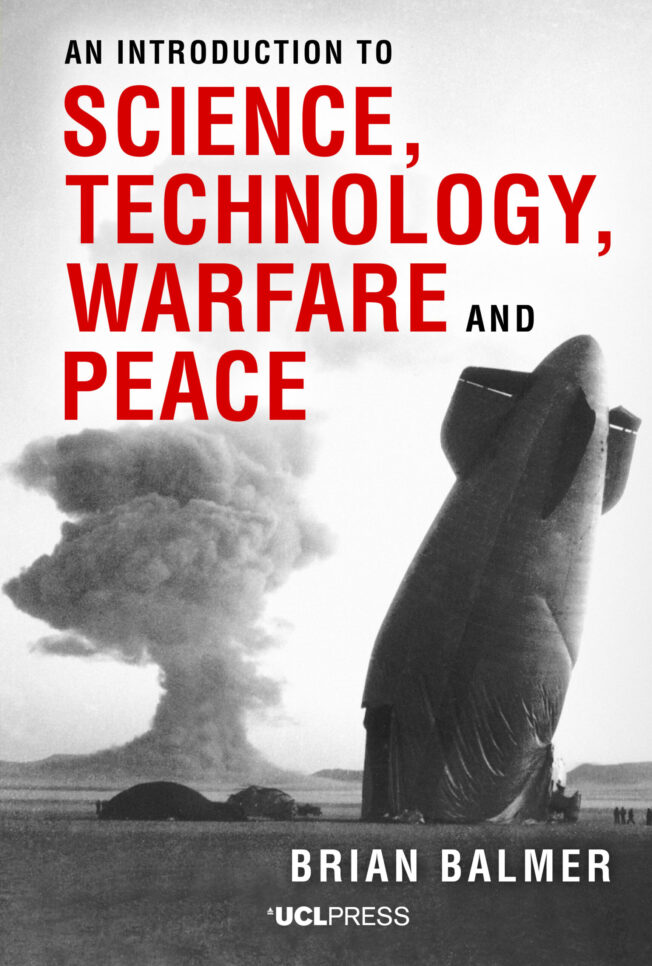
An Introduction to Science, Technology, Warfare and Peace
Brian Balmer (Author)
This textbook introduces how sociology, history and philosophy of science and technology (Science and Technology Studies or STS) approach the topic of war and security. It covers key concepts and theoretical approaches in STS and how they offer new insight into critical security, war and peace studies. To make the theory accessible, the book draws on seminal and contemporary empirical case studies, from weapons of mass destruction to everyday security and surveillance.
This textbook is ideal for students with no background knowledge of STS or as an introduction for more advanced researchers in other fields that study war and security, including politics and international relations, history, geography, sociology and anthropology.
Designed to support both independent and classroom learning, each carefully structured chapter begins by listing its key features and concepts so that readers understand the coverage at a glance. Chapters end with discussion questions to encourage critical thinking and suggested further readings. Online resources offer additional support in the form of learning activities and answer prompts for the discussion questions.


Loretta Lees, Japonica Brown-Saracino, Stefano Portelli, Kenton Card,
01 March 2027


Mariam Daher, Mayssa Jallad, Nikolay Mintchev, Henrietta L. Moore,
25 February 2027
Afterlives of Urban Cosmopolitanism
Magnus Marsden, Vera Skvirskaja, Paul Anderson,
01 February 2027
Methods for Studying Online Extremism and Terrorism
Sandy Schumann, Isabelle van der Vegt, Ryan Scrivens,
01 February 2027
Who are the Humans behind Human Rights?
Agnieszka Kubal, Beáta Huszka, Hanna Oliinyk, Denis Shedov,
01 February 2027




Comics and Race in Latin America
James Scorer, María Elena Bedoya, Abeyamí Ortega Domínguez, Peter Wade,
07 December 2026
Samuel Lunn-Rockliffe, Joseph Kimutai Cheptorus, Timothy Kipkeu Kiprutto,
03 December 2026

Poetics and Politics of Islamic Imaginaries
Sertaç Sehlikoglu, Fatemeh Sadeghi, Sumrin Kalia, Erol Saglam, Alexander Pymm,
01 October 2026
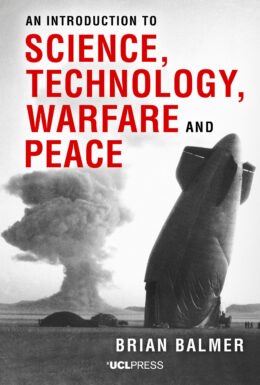
An Introduction to Science, Technology, Warfare and Peace
Publication date: October 5, 2026
Open Access PDF ISBN: 9781800089549
Paperback ISBN: 9781800089532
Hardback ISBN: 9781800089525
Trim size (hardback): 23.4cm x 15.6cm
Trim size (paperback): 23.4cm x 15.6cm
This textbook introduces how sociology, history and philosophy of science and technology (Science and Technology Studies or STS) approach the topic of war and security. It covers key concepts and theoretical approaches in STS and how they offer new insight into critical security, war and peace studies. To make the theory accessible, the book draws on seminal and contemporary empirical case studies, from weapons of mass destruction to everyday security and surveillance.
This textbook is ideal for students with no background knowledge of STS or as an introduction for more advanced researchers in other fields that study war and security, including politics and international relations, history, geography, sociology and anthropology.
Designed to support both independent and classroom learning, each carefully structured chapter begins by listing its key features and concepts so that readers understand the coverage at a glance. Chapters end with discussion questions to encourage critical thinking and suggested further readings. Online resources offer additional support in the form of learning activities and answer prompts for the discussion questions.
This book weaves together science, technology, war and security, offering a rare and insightful perspective. Drawing from a decade of research, Brian Balmer delivers a compelling exploration of how these domains have shaped, and been shaped by, modern history. A must-read for those seeking to understand the complex interplay between innovation, conflict and peace. Brian Rappert, University of Exeter, UK
This is a wonderful resource for faculty interested in teaching about the social and technical factors shaping military conflicts, peace and security – particularly in light of recent emerging technologies and complex geopolitical changes. In each chapter, the chapter map, key chapter features and key course concepts make the material accessible and organized for student learning in undergraduate or graduate courses. This will be my go-to reference text for teaching science, technology, and security-related courses. Kathleen Vogel, Arizona State University, USA
An invaluable and meticulously developed work that provides deep insights into the frictions of history and society, as well as an interdisciplinary lens through which these can be explored, navigated, and understood. This is a must-read for students of technology, warfare, and security. Brett Edwards, University of Bath, UK
Brian Balmer takes readers on an exploratory journey into science and technology studies and its engagements with questions of war, peace and security. This is an outstanding teaching resource for students across the social sciences, including international relations and security studies. By deftly weaving together theory, methods and empirics, the book equips students and general readers alike to navigate the complex and evolving intersections of security and technology today. Claudia Aradau, King’s College London, UK
An impressively wide and highly accessible introduction to the complex worlds of science, technology, warfare and peace. Learning to consider these issues together rather than separately is no longer daunting as this book opens a rich array of entry points and routes to making sense of their pressing interconnections. This grand tour of cases and concepts, knowledges, people, practices, weapons, absences, numbers and many more, is essential reading for students and researchers in Science and Technology Studies, International Relations, and many other fields.
Mike Bourne, Queen’s University Belfast, UK
This is an engaging and valuable textbook for students interested in security and technology. It covers a broad range of science and technology concepts and demonstrates their relevance to past and contemporary security issues. The book would be a useful addition to courses that examine the intersection of science, technology, and security. Sonia Ben Ouagrham-Gormley, George Mason University, USA