We are currently upgrading our shopping cart; in the interim all orders are being diverted to Waterstones. If you would like to redeem a promotional code, or are an author wanting to place an order, please email us.
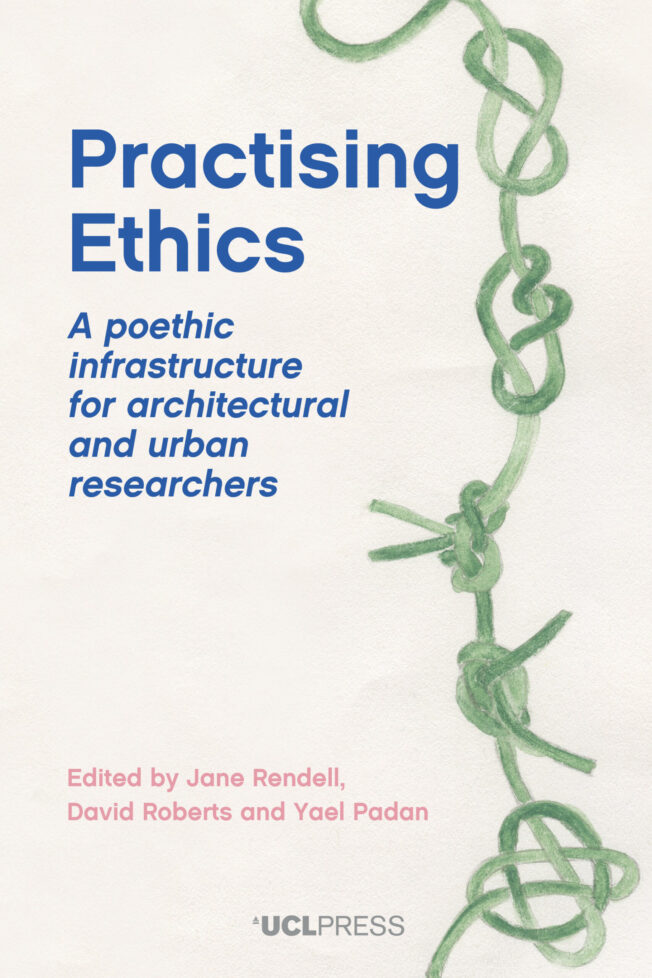
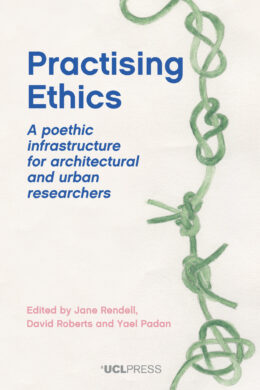
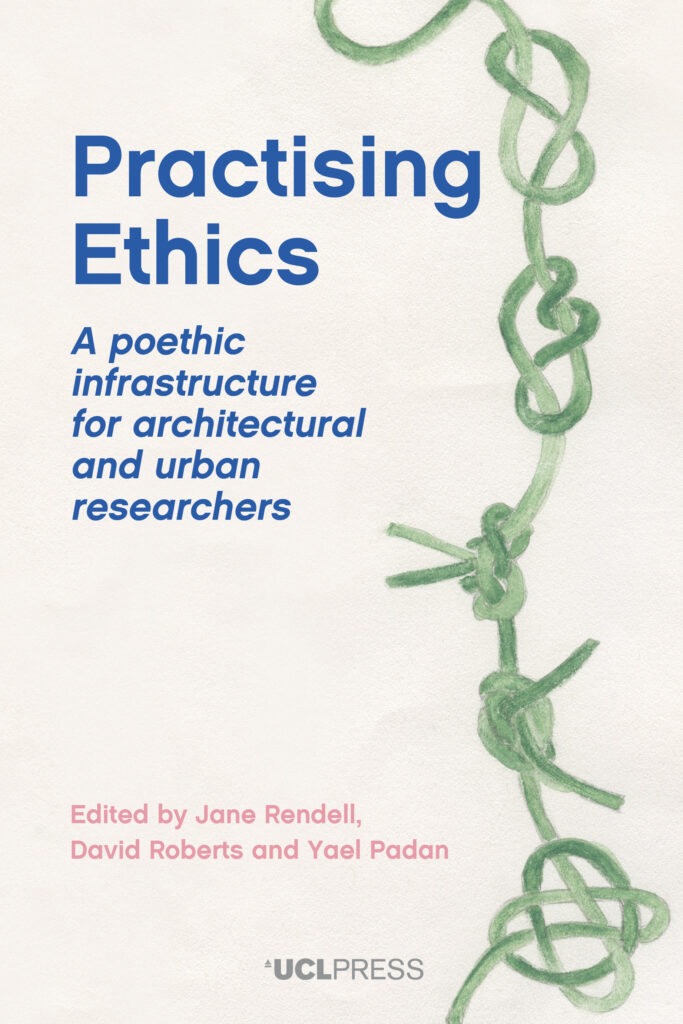
Grappling with ethics can disorientate and disturb your peace of mind in the small hours of the night. Practising Ethics transforms ethics from an obstacle to an opportunity by offering a poethic infrastructure to guide the development of ethical practice in architectural and urban research.
Practising Ethics bridges the gap between research volume and textbook. The book’s two-part structure creates a dialogue between ethical concepts derived from decolonial, ecological, feminist and queer theory, and lived ethical experiences that are explored through specific situations. A series of opening essays present hotspots, touchstones, keystones, blindspots, moonshots and milestones as different ethical orientations in a six-point methodology. This is followed by six case studies in which practitioners and researchers navigate these orientations through narrative figurations that describe ethical deliberations arising from social science, humanities, practice-led and participatory art and architectural design research in El Salvador, India, Nigeria, Peru and the United Kingdom.
The book acts as a companion to an award-winning online toolkit and is illustrated by Judit Ferencz who offers creative exercises for readers to develop their own poethic infrastructures.
A poethic infrastructure for architectural and urban researchers
Publication date: July 16, 2026
Open Access PDF ISBN: 9781806550333
Paperback ISBN: 9781806550326
Hardback ISBN: 9781806550319
Trim size (hardback): 23.4cm x 15.6cm
Trim size (paperback): 23.4cm x 15.6cm
Download free PDF online
https://uclpress.co.uk/book/practising-ethics/
Grappling with ethics can disorientate and disturb your peace of mind in the small hours of the night. Practising Ethics transforms ethics from an obstacle to an opportunity by offering a poethic infrastructure to guide the development of ethical practice in architectural and urban research.
Practising Ethics bridges the gap between research volume and textbook. The book’s two-part structure creates a dialogue between ethical concepts derived from decolonial, ecological, feminist and queer theory, and lived ethical experiences that are explored through specific situations. A series of opening essays present hotspots, touchstones, keystones, blindspots, moonshots and milestones as different ethical orientations in a six-point methodology. This is followed by six case studies in which practitioners and researchers navigate these orientations through narrative figurations that describe ethical deliberations arising from social science, humanities, practice-led and participatory art and architectural design research in El Salvador, India, Nigeria, Peru and the United Kingdom.
The book acts as a companion to an award-winning online toolkit and is illustrated by Judit Ferencz who offers creative exercises for readers to develop their own poethic infrastructures.
Jane Rendell (Editor)
Jane Rendell is Professor of Critical Spatial Practice at the Bartlett School of Architecture, UCL. Her recent publications include The Architecture of Psychoanalysis (2017), Silver (2016), and the co-edited volume Reactivating the Social Condenser (2017). She curates site-writing.co.uk and criticalspatialpractice.co.uk. With Padan and Roberts she established, co-curates and edits www.practisingethics.org.
David Roberts (Editor)
David Roberts is Associate Professor at the Bartlett School of Architecture, UCL. He is part of collaborative art practice Fugitive Images and of architecture collective BREAK//LINE. With Jane Rendell and Yael Padan, he designed and coordinates the open-access project www.pratisingethics.org and has exhibited, screened and installed work at Tate Modern, Hayward Gallery, Whitechapel Gallery, ICA and PEER.
Yael Padan (Editor)
Yael Padan is a researcher working in the interface of architecture, planning and sociology. She received her PhD in sociology from the department of Sociology and Anthropology, Ben Gurion University of the Negev, Israel. She was a Postdoctoral Research Fellow at the Bartlett School of Architecture, UCL, working on the Knowledge in Action for Urban Equality programme.
Sign up to our newsletter
Don't miss out! Subscribe to the UCL Press newsletter for the latest open access books, journal CfPs, news and views from our authors and much more!