
Publication date: 5 August 2024
DOI: https://doi.org/10.14324/111.9781800087200
Number of illustrations: 94

Early Civilization and the American Modern
Images of Middle Eastern origins in the United States, 1893–1939
Eva Miller (Author)
Series: Modern Americas
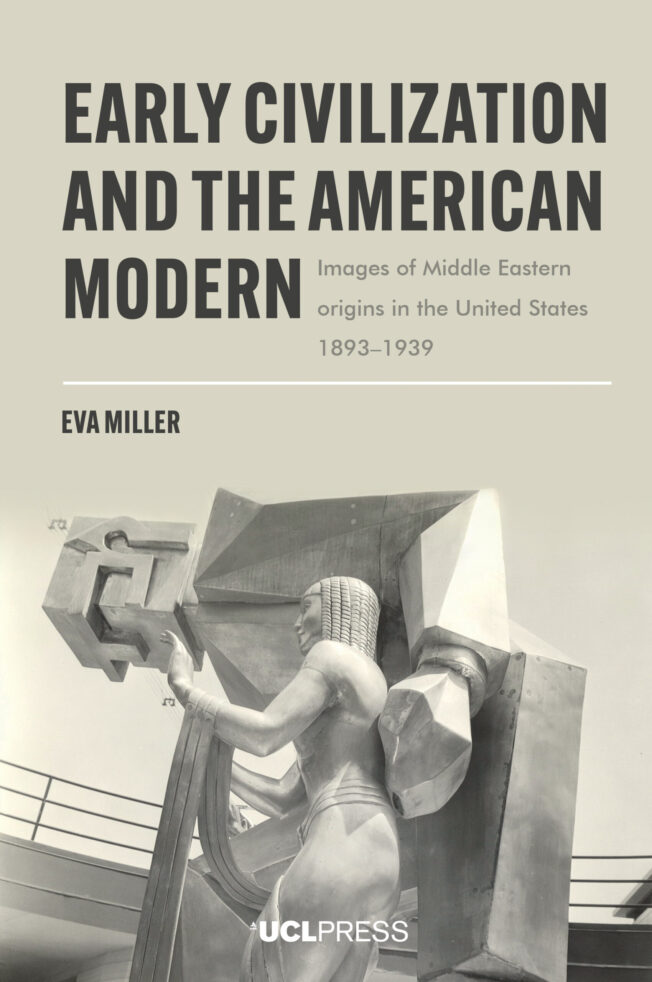
In the late nineteenth and early twentieth century, a particular story about the United States’ role in the long history of world civilization was constructed in public spaces, through public art and popular histories. This narrative posited that civilization and its benefits – science, law, writing, art and architecture – began in Egypt and Mesopotamia before passing ever further westward, towards a triumphant culmination on the American continent.
Early Civilization and the American Modern explores how this teleological story answered anxieties about the United States’ unique role in the long march of progress. Eva Miller focuses on important figures who collaborated on the creation of a visual, progressive narrative in key institutions, world’s fairs and popular media: Orientalist and public intellectual James Henry Breasted, astronomer George Ellery Hale, architect Bertram Grosvenor Goodhue, and decorative artists Lee Lawrie and Hildreth Meière. At a time when new information about the ancient Middle East was emerging through archaeological excavation, ancient Egypt and Mesopotamia appeared simultaneously old and new. This same period was crucial to the development of public space and civic life across the United States, as a shared sense of historical consciousness was actively pursued by politicians, philanthropists, intellectuals, architects and artists.
Related titles

Early Civilization and the American Modern
Images of Middle Eastern origins in the United States, 1893–1939
Series: Modern Americas
Publication date: August 5, 2024
Open Access PDF ISBN: 9781800087200
Paperback ISBN: 9781800087217
Hardback ISBN: 9781800087224
Trim size (hardback): 23.4cm x 15.6cm
Trim size (paperback): 23.4cm x 15.6cm
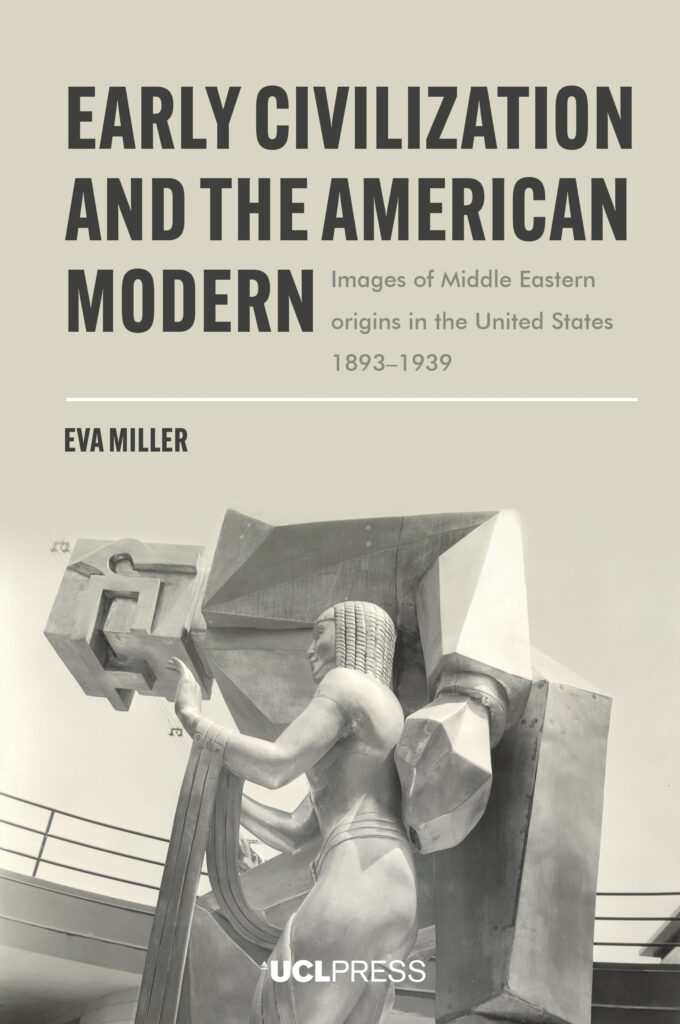
In the late nineteenth and early twentieth century, a particular story about the United States’ role in the long history of world civilization was constructed in public spaces, through public art and popular histories. This narrative posited that civilization and its benefits – science, law, writing, art and architecture – began in Egypt and Mesopotamia before passing ever further westward, towards a triumphant culmination on the American continent.
Early Civilization and the American Modern explores how this teleological story answered anxieties about the United States’ unique role in the long march of progress. Eva Miller focuses on important figures who collaborated on the creation of a visual, progressive narrative in key institutions, world’s fairs and popular media: Orientalist and public intellectual James Henry Breasted, astronomer George Ellery Hale, architect Bertram Grosvenor Goodhue, and decorative artists Lee Lawrie and Hildreth Meière. At a time when new information about the ancient Middle East was emerging through archaeological excavation, ancient Egypt and Mesopotamia appeared simultaneously old and new. This same period was crucial to the development of public space and civic life across the United States, as a shared sense of historical consciousness was actively pursued by politicians, philanthropists, intellectuals, architects and artists.