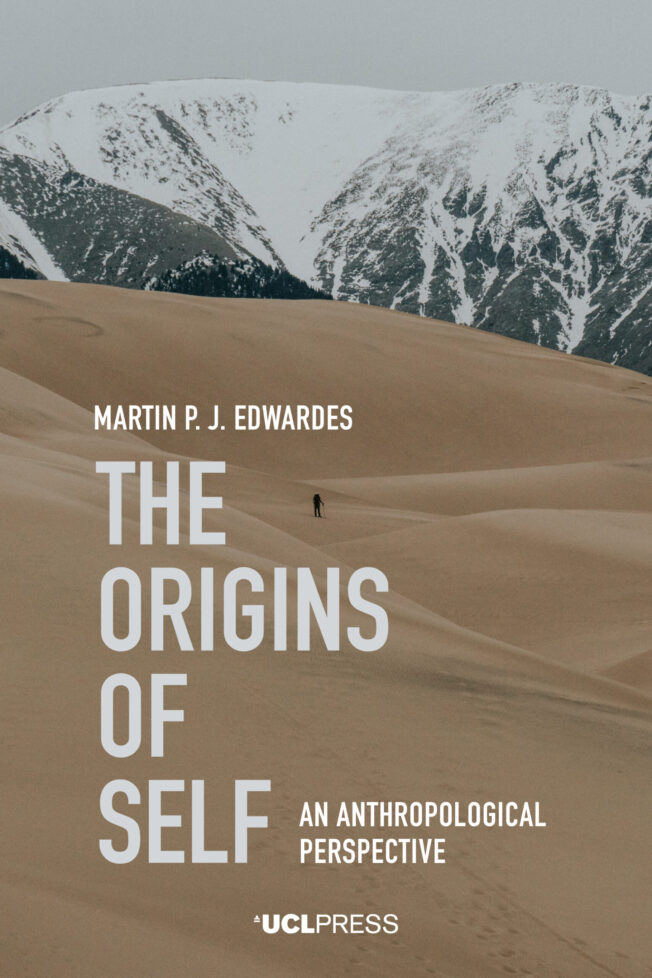

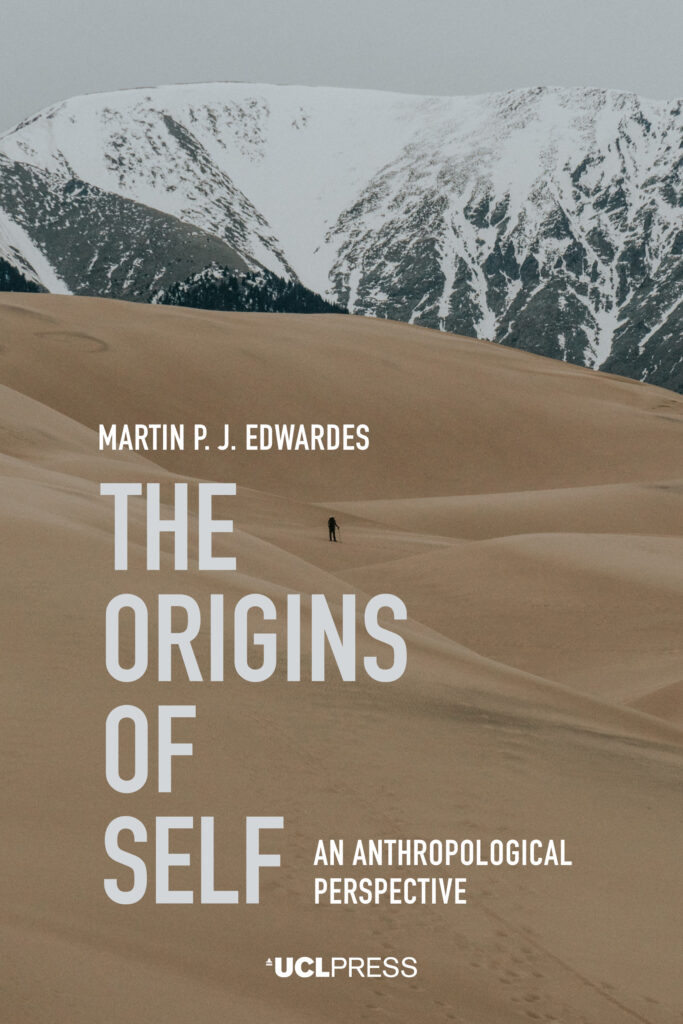
The Origins of Self
An Anthropological Perspective
Martin P. J. Edwardes (Author)
The Origins of Self explores the role that selfhood plays in defining human society, and each human individual in that society. It considers the genetic and cultural origins of self, the role that self plays in socialisation and language, and the types of self we generate in our individual journeys to and through adulthood.
Edwardes argues that other awareness is a relatively early evolutionary development, present throughout the primate clade and perhaps beyond, but self-awareness is a product of the sharing of social models, something only humans appear to do. The self of which we are aware is not something innate within us, it is a model of our self produced as a response to the models of us offered to us by other people. Edwardes proposes that human construction of selfhood involves seven different types of self. All but one of them are internally generated models, and the only non-model, the actual self, is completely hidden from conscious awareness. We rely on others to tell us about our self, and even to let us know we are a self.
Developed in relation to a range of subject areas – linguistics, anthropology, genomics and cognition, as well as socio-cultural theory – The Origins of Self is of particular interest to students and researchers studying the origins of language, human origins in general, and the cognitive differences between human and other animal psychologies.

Afterlives of Urban Cosmopolitanism
Magnus Marsden, Vera Skvirskaja, Paul Anderson,
01 February 2027
Methods for Studying Online Extremism and Terrorism
Sandy Schumann, Isabelle van der Vegt, Ryan Scrivens,
01 February 2027

Who are the Humans behind Human Rights?
Agnieszka Kubal, Beáta Huszka, Hanna Oliinyk, Denis Shedov,
01 February 2027


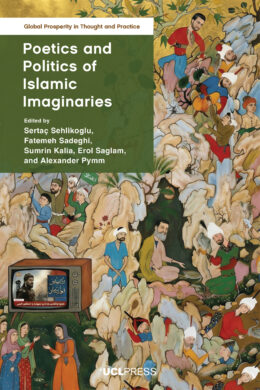
Poetics and Politics of Islamic Imaginaries
Sertaç Sehlikoglu, Fatemeh Sadeghi, Sumrin Kalia, Erol Saglam, Alexander Pymm,
01 October 2026



Alex Ungprateeb Flynn, María Iñigo Clavo, Beatriz Lemos, Florencia Portocarrero,
20 May 2026

The Correspondence of Jeremy Bentham, Volume 14
Philip Schofield, Tim Causer, Chris Riley,
07 May 2026


Nolwenn Bühler, Nils Graber, Victoria Boydell, Cinzia Greco,
04 December 2025
The Origins of Self
An Anthropological Perspective
The Origins of Self explores the role that selfhood plays in defining human society, and each human individual in that society. It considers the genetic and cultural origins of self, the role that self plays in socialisation and language, and the types of self we generate in our individual journeys to and through adulthood.
Edwardes argues that other awareness is a relatively early evolutionary development, present throughout the primate clade and perhaps beyond, but self-awareness is a product of the sharing of social models, something only humans appear to do. The self of which we are aware is not something innate within us, it is a model of our self produced as a response to the models of us offered to us by other people. Edwardes proposes that human construction of selfhood involves seven different types of self. All but one of them are internally generated models, and the only non-model, the actual self, is completely hidden from conscious awareness. We rely on others to tell us about our self, and even to let us know we are a self.
Developed in relation to a range of subject areas – linguistics, anthropology, genomics and cognition, as well as socio-cultural theory – The Origins of Self is of particular interest to students and researchers studying the origins of language, human origins in general, and the cognitive differences between human and other animal psychologies.