
Publication date: 22 January 2026
DOI: https://doi.org/10.14324/111.9781800089785
Number of illustrations: 39

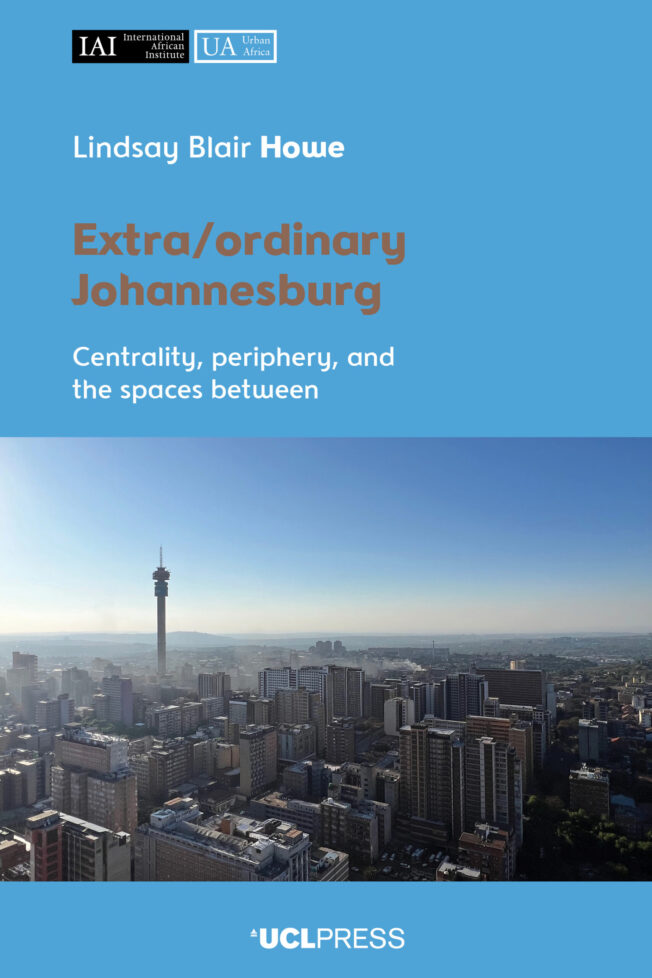
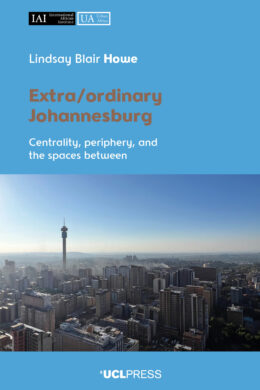
Extra/ordinary Johannesburg
Centrality, periphery, and the spaces between
Lindsay Blair Howe (Author)
Series: Urban Africa
Johannesburg, South Africa, is often associated with inequality and referred to as the quintessential ‘apartheid city’. Yet this book argues that Johannesburg, part of the highly urbanized Gauteng City-Region, is actually an ‘ordinary’ space where spatial changes both marginalize and create opportunities for people going about their lives.
Relying on more than a decade of empirical research, the book also interrogates the concept of ‘spatial dialectics’ proposed by Henri Lefebvre. Through deep insight into the practices and experiences of everyday life, Lindsay Blair Howe shows how cities and regions like greater Johannesburg are more than just a sum of their parts. Individuals, and the collectives they forge, influence processes of urbanization and capital accumulation. Extra/ordinary Johannesburg reveals how Lefebvre’s assertions about the production of space remain relevant today, but also where they reach their limits, and how theories on the production of space can be further developed by a stronger understanding of this African urban region. What we can learn from how people are able to navigate the urban fabric of centralities, peripheries, and the spaces between matter greatly in productively reimagining ways to encounter urban Africa.
Afterlives of Urban Cosmopolitanism
Magnus Marsden, Vera Skvirskaja, Paul Anderson,
01 February 2027
Urban Violence and Marginalised Communities
Ashvin Devasundaram, Stamatis Zografos, Márcio Mattos, Zoe Holman,
25 March 2026
Co-production of Knowledge in Action
Cassidy Johnson, Vanesa Castán Broto, Wilbard Kombe, Catalina Ortiz, Barbara Lipietz, Emmanuel Osuteye, Caren Levy,
15 September 2025
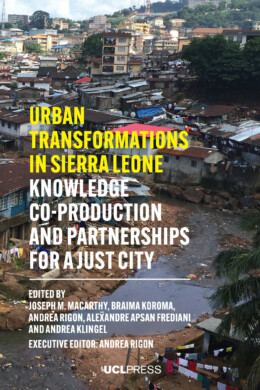
Urban Transformations in Sierra Leone
Joseph M. Macarthy, Braima Koroma, Andrea Rigon, Alexandre Apsan Frediani, Andrea Klingel,
05 December 2024
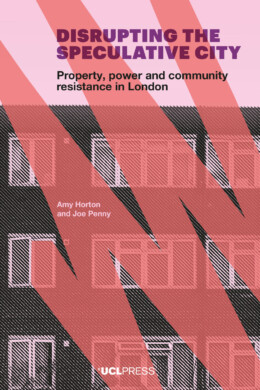

Urban Informality and the Built Environment
Nerea Amorós Elorduy, Nikhilesh Sinha, Colin Marx,
12 March 2024
An Introduction to Waste Management and Circular Economy
Stijn van Ewijk, Julia Stegemann,
05 December 2023
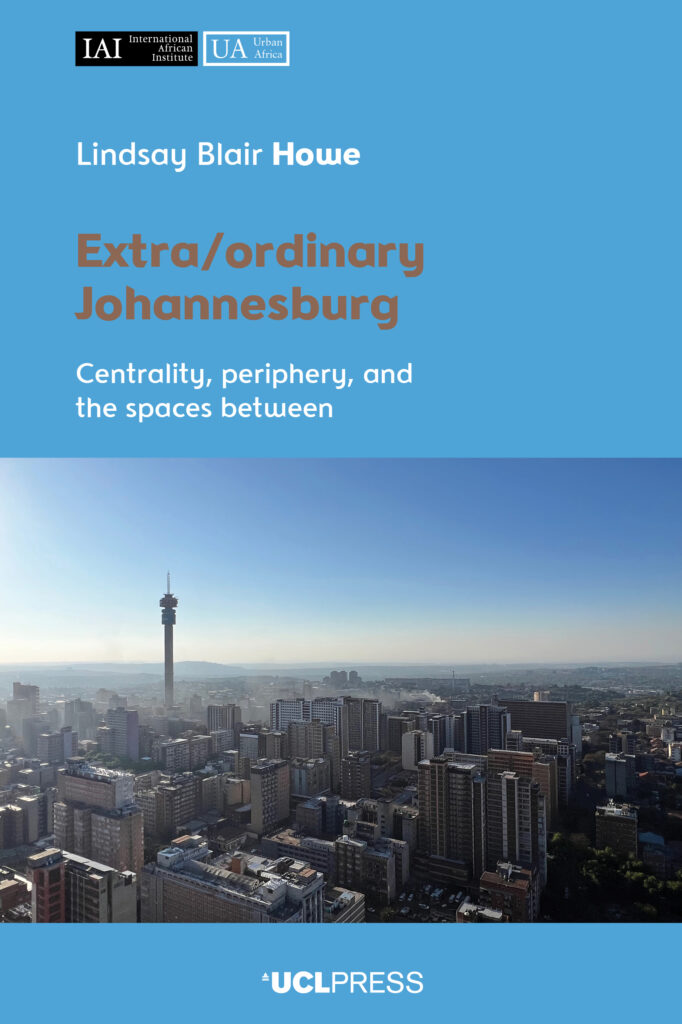
Extra/ordinary Johannesburg
Centrality, periphery, and the spaces between
Series: Urban Africa
Publication date: January 22, 2026
Open Access PDF ISBN: 9781800089785
Paperback ISBN: 9781800089778
Hardback ISBN: 9781800089761
Trim size (hardback): 23.4cm x 15.6cm
Trim size (paperback): 23.4cm x 15.6cm
Johannesburg, South Africa, is often associated with inequality and referred to as the quintessential ‘apartheid city’. Yet this book argues that Johannesburg, part of the highly urbanized Gauteng City-Region, is actually an ‘ordinary’ space where spatial changes both marginalize and create opportunities for people going about their lives.
Relying on more than a decade of empirical research, the book also interrogates the concept of ‘spatial dialectics’ proposed by Henri Lefebvre. Through deep insight into the practices and experiences of everyday life, Lindsay Blair Howe shows how cities and regions like greater Johannesburg are more than just a sum of their parts. Individuals, and the collectives they forge, influence processes of urbanization and capital accumulation. Extra/ordinary Johannesburg reveals how Lefebvre’s assertions about the production of space remain relevant today, but also where they reach their limits, and how theories on the production of space can be further developed by a stronger understanding of this African urban region. What we can learn from how people are able to navigate the urban fabric of centralities, peripheries, and the spaces between matter greatly in productively reimagining ways to encounter urban Africa.
‘highly recommended for both classroom and research use’
*African and Asian Studies8