
Reinventing the Good Life
An empirical contribution to the philosophy of care
Jeannette Pols (Author)
Ever since Adam Smith’s musings on ‘the invisible hand’ became more famous than his work on moral sentiments, social theorists have paid less attention to everyday ethics and aesthetics. Smith’s metaphor of the invisible hand posits that social outcomes emerge by dint of the behaviours of individuals rather than their intentions or virtues.
Modernist and scientific approaches to determining the common good or good forms of governance have increasingly relied on techniques of generalisation and rationalisation. This shift has meant that we no longer comprehend why and how people display a deep concern for everyday life values in their social practices. People continue to enact these values and live by them while academics lack the vocabulary and methods to grasp them.
By reconstructing the history of ideas about everyday-life values, and by analysing the role of such values in contemporary care practices for patients with chronic disease in the Netherlands, Reinventing the Good Life explores new ways to study the values of everyday life, particularly in situations where the achievement of a clear cut or uniform good is unlikely. The book presents a practice-based epistemology and methodology for studying everyday care practices and supporting their goodness. This analytical approach ultimately aims to generate ideas that will allow us to relate in more imaginative ways to the many pressing concerns that we are forced to live with today.


Loretta Lees, Japonica Brown-Saracino, Stefano Portelli, Kenton Card,
01 March 2027

Mariam Daher, Mayssa Jallad, Nikolay Mintchev, Henrietta L. Moore,
25 February 2027


Afterlives of Urban Cosmopolitanism
Magnus Marsden, Vera Skvirskaja, Paul Anderson,
01 February 2027

Methods for Studying Online Extremism and Terrorism
Sandy Schumann, Isabelle van der Vegt, Ryan Scrivens,
01 February 2027
Who are the Humans behind Human Rights?
Agnieszka Kubal, Beáta Huszka, Hanna Oliinyk, Denis Shedov,
01 February 2027



Comics and Race in Latin America
James Scorer, María Elena Bedoya, Abeyamí Ortega Domínguez, Peter Wade,
07 December 2026

Samuel Lunn-Rockliffe, Joseph Kimutai Cheptorus, Timothy Kipkeu Kiprutto,
03 December 2026






Poetics and Politics of Islamic Imaginaries
Sertaç Sehlikoglu, Fatemeh Sadeghi, Sumrin Kalia, Erol Saglam, Alexander Pymm,
01 October 2026
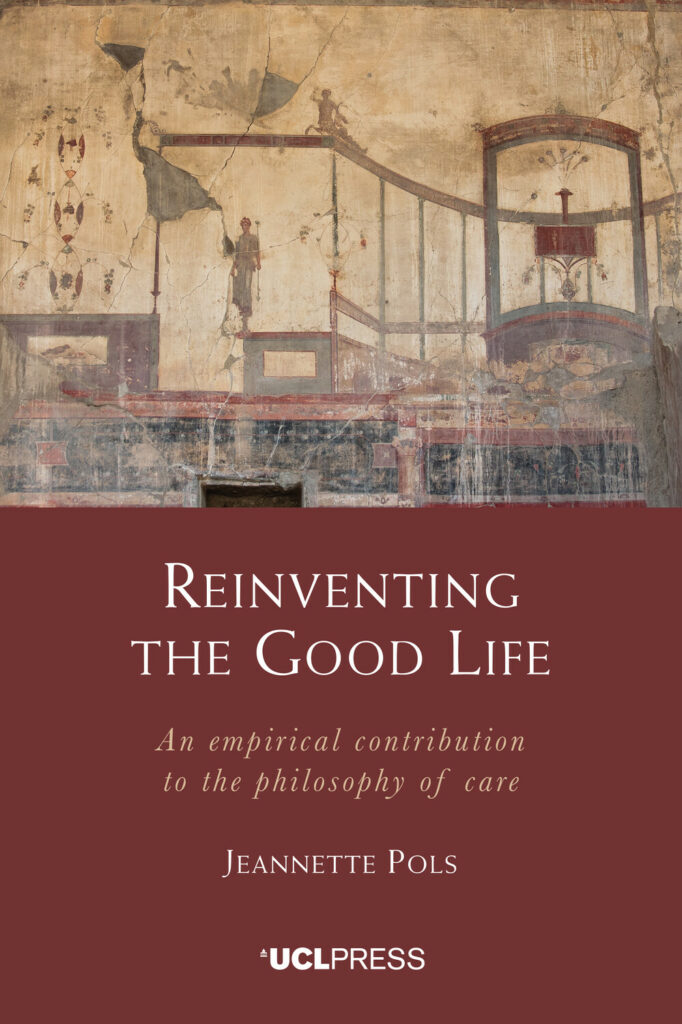
Reinventing the Good Life
An empirical contribution to the philosophy of care
Publication date: December 4, 2023
Open Access PDF ISBN: 9781800086029
Paperback ISBN: 9781800086036
Hardback ISBN: 9781800086043
Trim size (hardback): 23.4cm x 15.6cm
Trim size (paperback): 23.4cm x 15.6cm

Ever since Adam Smith’s musings on ‘the invisible hand’ became more famous than his work on moral sentiments, social theorists have paid less attention to everyday ethics and aesthetics. Smith’s metaphor of the invisible hand posits that social outcomes emerge by dint of the behaviours of individuals rather than their intentions or virtues.
Modernist and scientific approaches to determining the common good or good forms of governance have increasingly relied on techniques of generalisation and rationalisation. This shift has meant that we no longer comprehend why and how people display a deep concern for everyday life values in their social practices. People continue to enact these values and live by them while academics lack the vocabulary and methods to grasp them.
By reconstructing the history of ideas about everyday-life values, and by analysing the role of such values in contemporary care practices for patients with chronic disease in the Netherlands, Reinventing the Good Life explores new ways to study the values of everyday life, particularly in situations where the achievement of a clear cut or uniform good is unlikely. The book presents a practice-based epistemology and methodology for studying everyday care practices and supporting their goodness. This analytical approach ultimately aims to generate ideas that will allow us to relate in more imaginative ways to the many pressing concerns that we are forced to live with today.
‘Importantly, this book brings together humanities and social science scholarship, where empirical research and fieldwork are used to reflect on deep philosophical and ethico-political questions.’
Sociology of Health & Illness
‘This book represents a significant contribution not only to the field of anthropology but also to a broader audience of disciplines, as its methodological approach reconceptualizes practices that have traditionally been examined and applied by both empirical and qualitative researchers.’
Anthropologia Integra