We are currently upgrading our shopping cart; in the interim all orders are being diverted to Waterstones. If you would like to redeem a promotional code, or are an author wanting to place an order, please email us.
Home » Books » History » Gabriel Harvey and the History of Reading
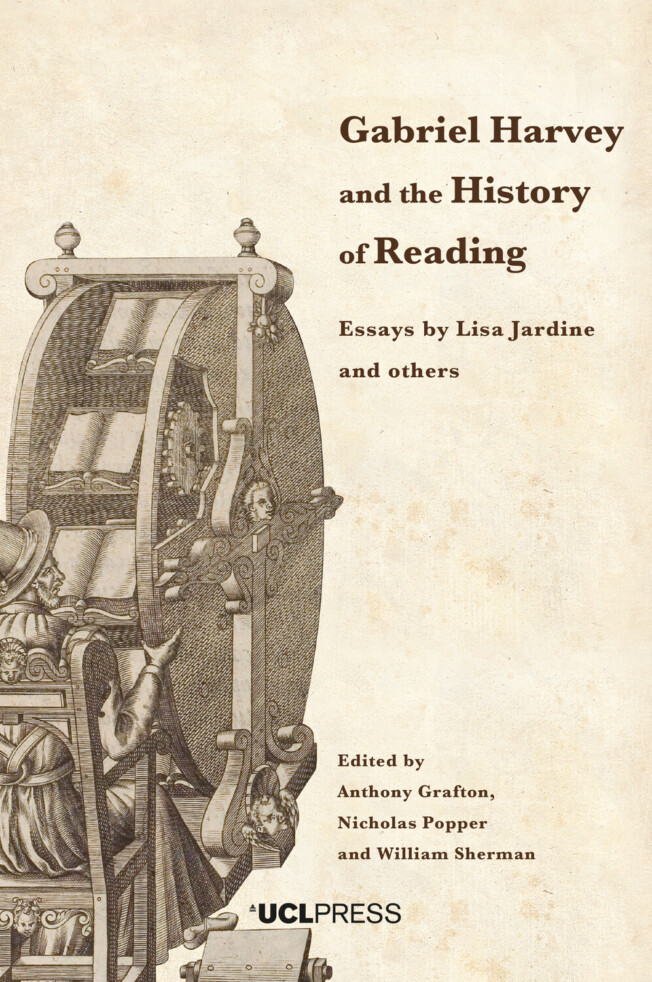
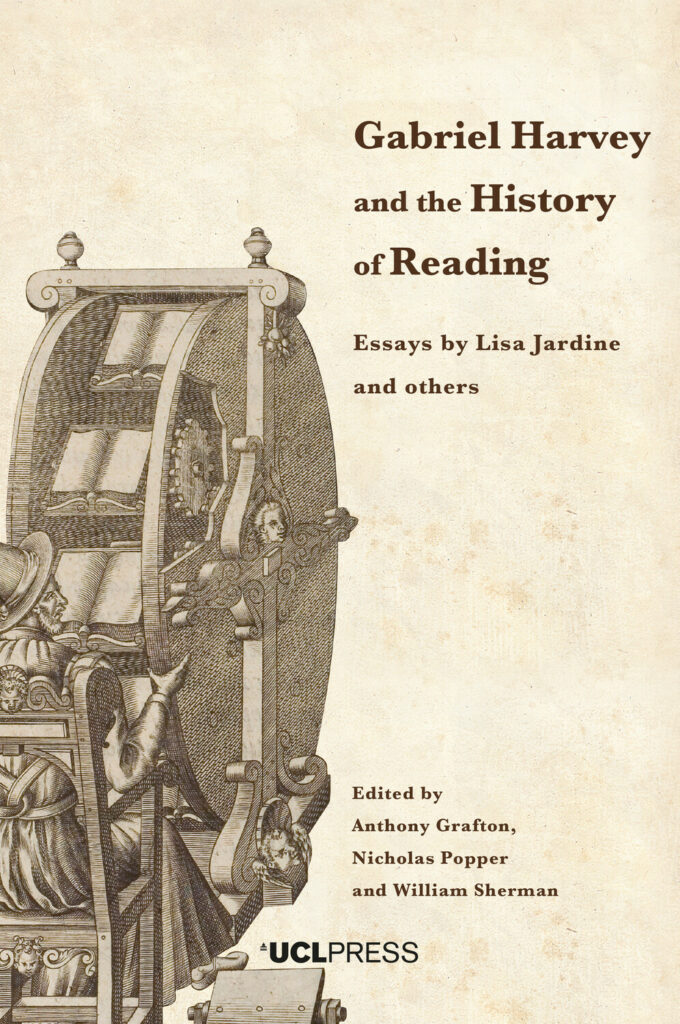
Few articles in the humanities have had the impact of Lisa Jardine and Anthony Grafton’s seminal ‘Studied for Action’ (1990), a study of the reading practices of Elizabethan polymath and prolific annotator Gabriel Harvey. Their excavation of the setting, methods and ambitions of Harvey’s encounters with his books ignited the History of Reading, an interdisciplinary field which quickly became one of the most exciting corners of the scholarly cosmos. A generation inspired by the model of Harvey fanned out across the world’s libraries and archives, seeking to reveal the many creative, unexpected and curious ways that individuals throughout history responded to texts, and how these interpretations in turn illuminate past worlds.
Three decades on, Harvey’s example and Jardine’s work remain central to cutting-edge scholarship in the History of Reading. By uniting ‘Studied for Action’ with published and unpublished studies on Harvey by Jardine, Grafton and the scholars they have influenced, this collection provides a unique lens on the place of marginalia in textual, intellectual and cultural history. The chapters capture subsequent work on Harvey and map the fields opened by Jardine and Grafton’s original article, collectively offering a posthumous tribute to Lisa Jardine and an authoritative overview of the History of Reading.
Few articles in the humanities have had the impact of Lisa Jardine and Anthony Grafton’s seminal ‘Studied for Action’ (1990), a study of the reading practices of Elizabethan polymath and prolific annotator Gabriel Harvey. Their excavation of the setting, methods and ambitions of Harvey’s encounters with his books ignited the History of Reading, an interdisciplinary field which quickly became one of the most exciting corners of the scholarly cosmos. A generation inspired by the model of Harvey fanned out across the world’s libraries and archives, seeking to reveal the many creative, unexpected and curious ways that individuals throughout history responded to texts, and how these interpretations in turn illuminate past worlds.
Three decades on, Harvey’s example and Jardine’s work remain central to cutting-edge scholarship in the History of Reading. By uniting ‘Studied for Action’ with published and unpublished studies on Harvey by Jardine, Grafton and the scholars they have influenced, this collection provides a unique lens on the place of marginalia in textual, intellectual and cultural history. The chapters capture subsequent work on Harvey and map the fields opened by Jardine and Grafton’s original article, collectively offering a posthumous tribute to Lisa Jardine and an authoritative overview of the History of Reading.
‘These essays point forwards and backwards into one another, showing how Harvey’s marginalia, “Studied for Action” and recent microhistories of reading generate intellectual “action” by illuminating what we do when we cross-reference, make notes or look for help in the things that we read.’ Times Literary Supplement (TLS)
‘It is no exaggeration to say that researchers working on the history of reading and scholarship have been awaiting this book for over three decades… essential reading for anyone engaging with early modern bibliography, intellectual culture, and analyses of the role played by scholarship in sixteenth-century public life.’ History
‘In its breadth and generosity, this collection offers powerful testimony to the intellectual ripples sent out from the supremely warm, erudite and imaginative collaboration at its heart. A story of scholarly triumph pitched upon a tale of scholarly failure, the collection naturally invites speculation about the relationship between early modern intellectual cultures and our own world, in which the humanities are engaged with politics as never before, and are slighted by politicians as never before.’ Erudition and the Republic of Letters
‘[A] rich volume …sure to become essential to future inquiries into the history of reading.’ The English Historical Review
Anthony Grafton (Editor)
Anthony Grafton is Henry Putnam University Professor of History at Princeton University. He is the author or co-author of over 20 books and editor or co-editor of over 20 more, most recently Inky Fingers: The Making of Books in Early Modern Europe (Cambridge, MA, 2020) and, with Maren Elisabeth Schwab, The Art of Discovery: Digging into the Past in Renaissance Europe (Princeton, 2022). In addition to nearly 200 scholarly articles in journals and collected volumes, he has written extensively on early modern and modern intellectual history for outlets such as the London Review of Books, New York Times, New Republic, New York Review of Books, and The Nation.
Nicholas Popper (Editor)
Nicholas Popper is Associate Professor of History at William & Mary, Williamsburg, VA, and Editor of Books at the Omohundro Institute of Early American History and Culture. From 2017 to 2022 he was Book Review Editor for the William & Mary Quarterly, the premier journal for early American history. He is author of Walter Ralegh’s 'History of the World' and the Historical Culture of the Late Renaissance (Chicago, 2012), and The Specter of the Archive: Political Practice and the Information State in Early Modern Britain (Chicago, 2023).
William H. Sherman (Editor)
William H. Sherman is Director of the Warburg Institute and Professor of Cultural History in the University of London’s School of Advanced Study. In addition to editing many collected volumes, special issues and editions of Renaissance plays, he is the author of John Dee: The Politics of Reading and Writing in the English Renaissance (1998) and Used Books: Marking Readers in Renaissance England (2008). He is currently finishing a study of visual marginalia called The Reader’s Eye (Reaktion), and a history of codes and ciphers called The Cryptographic Renaissance (Oxford).
Sign up to our newsletter
Don't miss out! Subscribe to the UCL Press newsletter for the latest open access books, journal CfPs, news and views from our authors and much more!