
Publication date: 6 October 2026
DOI: https://doi.org/10.14324/111.9781806551491
Number of illustrations: 12

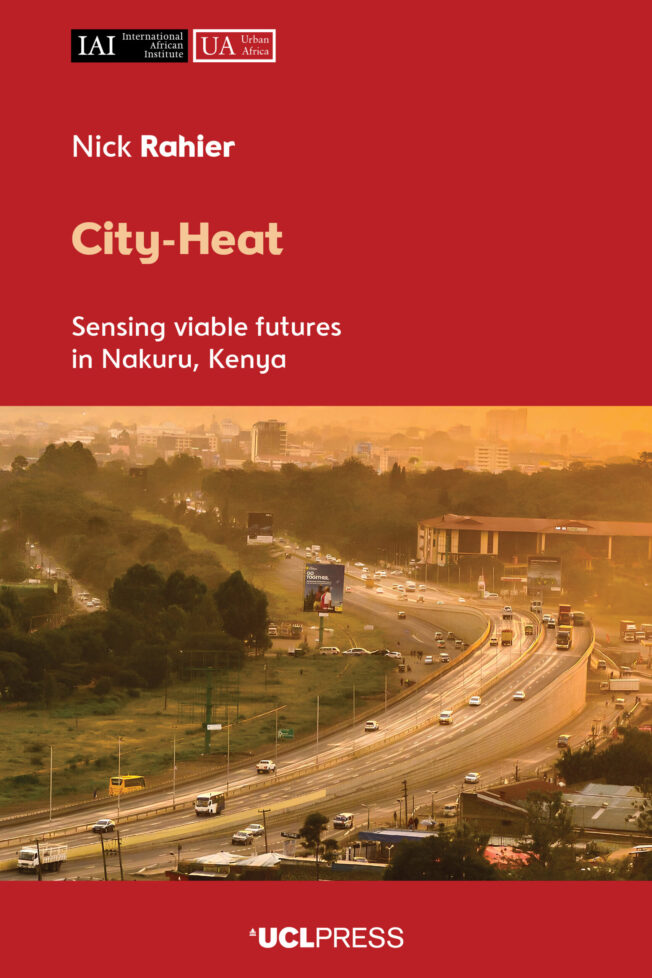
City-Heat
Sensing viable futures in Nakuru, Kenya
Nick Rahier (Author)
Series: Urban Africa
Heat has become the metaphor of choice through which politics, philosophy and science speak about the current polycrisis. Heat, in these instances, is primarily translated into temperature metrics such as thresholds and tipping points that feed predictions regarding the planet’s future. Yet conceiving of heat in degrees flattens the complexity of lived experience and obscures the different ways in which communities respond to runaway change.
City-Heat breaks with temperature-based understandings of heat and delves into a richer, more emic exploration of its socio-cultural and sensory dimensions. The chapters cover a range of topics explored through interactions with a diverse group of interlocutors in the Kenyan city of Nakuru, spanning from the daily struggles of hustling youths to the work of geothermal engineers, spiritual warfare, pervasive issues of toxicity and pollution confronted by herbalists, and the medicinal practices to which the interlocutors turned in their efforts to forge more viable pathways into the future.
Through these ethnographic terrains, the book traces how the interlocutors sense, and make sense of, what remains viable in a city undergoing rapid change across infrastructural, spiritual, metabolic and moral registers. Nick Rahier argues that hotter conditions shape how people move, work, relate and forge viable pathways toward ‘cooler’ horizons.


Loretta Lees, Japonica Brown-Saracino, Stefano Portelli, Kenton Card,
01 March 2027

Mariam Daher, Mayssa Jallad, Nikolay Mintchev, Henrietta L. Moore,
25 February 2027

Methods for Studying Online Extremism and Terrorism
Sandy Schumann, Isabelle van der Vegt, Ryan Scrivens,
01 February 2027

Who are the Humans behind Human Rights?
Agnieszka Kubal, Beáta Huszka, Hanna Oliinyk, Denis Shedov,
01 February 2027
Afterlives of Urban Cosmopolitanism
Magnus Marsden, Vera Skvirskaja, Paul Anderson,
01 February 2027


Comics and Race in Latin America
James Scorer, María Elena Bedoya, Abeyamí Ortega Domínguez, Peter Wade,
07 December 2026
Samuel Lunn-Rockliffe, Joseph Kimutai Cheptorus, Timothy Kipkeu Kiprutto,
03 December 2026



Poetics and Politics of Islamic Imaginaries
Sertaç Sehlikoglu, Fatemeh Sadeghi, Sumrin Kalia, Erol Saglam, Alexander Pymm,
01 October 2026

City-Heat
Sensing viable futures in Nakuru, Kenya
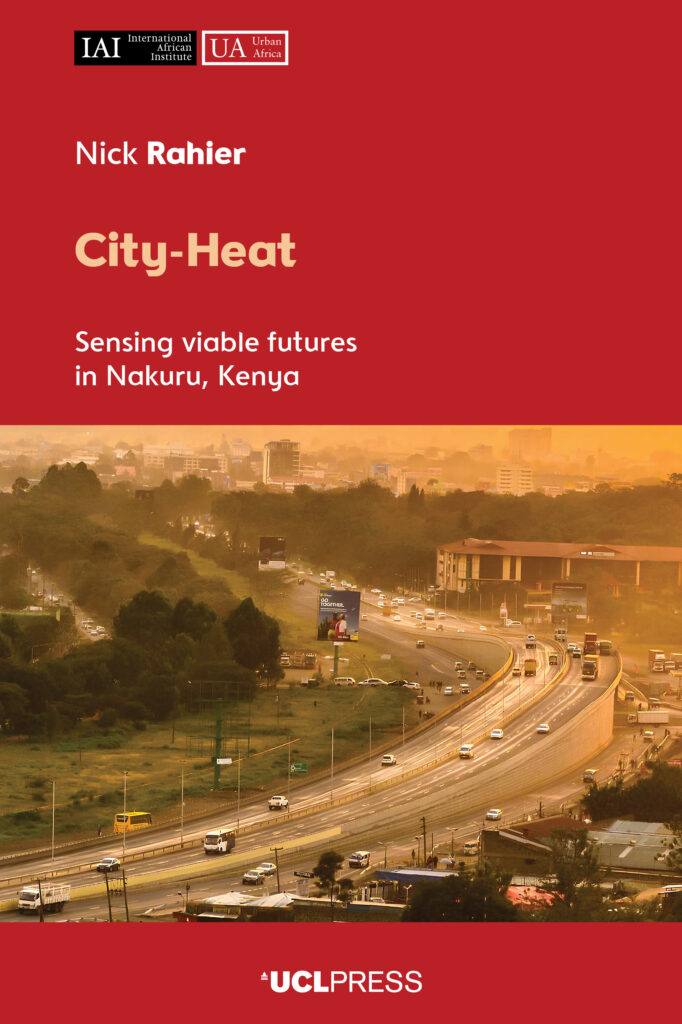
Series: Urban Africa
Publication date: October 6, 2026
Open Access PDF ISBN: 9781806551491
Paperback ISBN: 9781806551484
Hardback ISBN: 9781806551477
Trim size (hardback): 23.4cm x 15.6cm
Trim size (paperback): 23.4cm x 15.6cm
Heat has become the metaphor of choice through which politics, philosophy and science speak about the current polycrisis. Heat, in these instances, is primarily translated into temperature metrics such as thresholds and tipping points that feed predictions regarding the planet’s future. Yet conceiving of heat in degrees flattens the complexity of lived experience and obscures the different ways in which communities respond to runaway change.
City-Heat breaks with temperature-based understandings of heat and delves into a richer, more emic exploration of its socio-cultural and sensory dimensions. The chapters cover a range of topics explored through interactions with a diverse group of interlocutors in the Kenyan city of Nakuru, spanning from the daily struggles of hustling youths to the work of geothermal engineers, spiritual warfare, pervasive issues of toxicity and pollution confronted by herbalists, and the medicinal practices to which the interlocutors turned in their efforts to forge more viable pathways into the future.
Through these ethnographic terrains, the book traces how the interlocutors sense, and make sense of, what remains viable in a city undergoing rapid change across infrastructural, spiritual, metabolic and moral registers. Nick Rahier argues that hotter conditions shape how people move, work, relate and forge viable pathways toward ‘cooler’ horizons.
‘What does it mean to live at a moment of overheating, in a world increasingly marked by the entanglement of climate change, anthropogenic warming, excess, toxicity and uneven development? This book is a compelling, original exploration of how heat and cooling intersect with socio-material fabrics and tensions of urban change, accumulation and acceleration. It offers a distinctive account of heat in its multiple and polysemic manifestations and in the diverse ways it is experienced, produced, mediated and contested amid competing understandings of the present and visions of the future. A timely contribution to urban geography and anthropology.’
Prince Guma, University of Cambridge, UK
‘Set in and around the Kenyan secondary city of Nakuru, this meticulously constructed and theoretically ambitious ethnography of urban transformation offers a brilliant, multi-layered inquiry into how residents navigate urban transformation through the complex cultural prism of “heat” and “coolness”. The author masterfully avoids imposing abstract concepts from the outside, instead teasing out organic insights directly from rich ethnographic data, and bringing the voices of healers, farmers and street hustlers to life in vivid vignettes. By foregrounding the body as the central site where urban pressure is experienced, the text seamlessly weaves together medical, environmental and urban anthropology. This highly original, innovative work not only maps the toxic, overheated realities of contemporary African urban landscapes, but also speculates on viable thermal futures and new forms of urban habitability.’
Filip De Boeck, KU Leuven, Belgium
‘Rahier’s lived ethnography recasts the terms that once characterized anthropology. In City-Heat, crisis becomes heat, witchcraft is toxicity, healing sprouts from the organic, and the decolonial horizon is not an imaginary zenith but an instance of viability with interdisciplinary significance. A must-read for scholars and students alike working on ecosocial inclusion.’
Koen Stroeken, Ghent University, Belgium
‘Rahier’s book does what the best ethnography can achieve: it takes the reader into an unfamiliar social world, depicts it from diverse, even incongruous angles, and makes its inhabitants simultaneously familiar and surprising. Moving a kaleidoscope of storylines held together by one place – the city of Nakuru – it speaks of innovative energy infrastructures and spectral city-planning, young men’s hustling and enterprising women’s “smartness”, herbal medicines and religious practices, food and ecologies. Focusing on the topical subject of “heat”, the book speaks to the very present climate crisis and to creative pursuits of “viability” beyond it, yet it avoids making (over-)heating a framework that flattens people’s lives into a crisis-present or that shoehorns the beauty of what Rahier calls a “pointillist” image into anthropological theory. Instead, the book offers an empathetic and subtle portrayal of struggles to create viable and vital lives and life within, and beyond, the city.’
Ruth Prince and Wenzel Geissler, University of Oslo, Norway