We are currently upgrading our shopping cart; in the interim all orders are being diverted to Waterstones. If you would like to redeem a promotional code, or are an author wanting to place an order, please email us.
Home » Books » History » Discord and Consensus in the Low Countries, 1700-2000
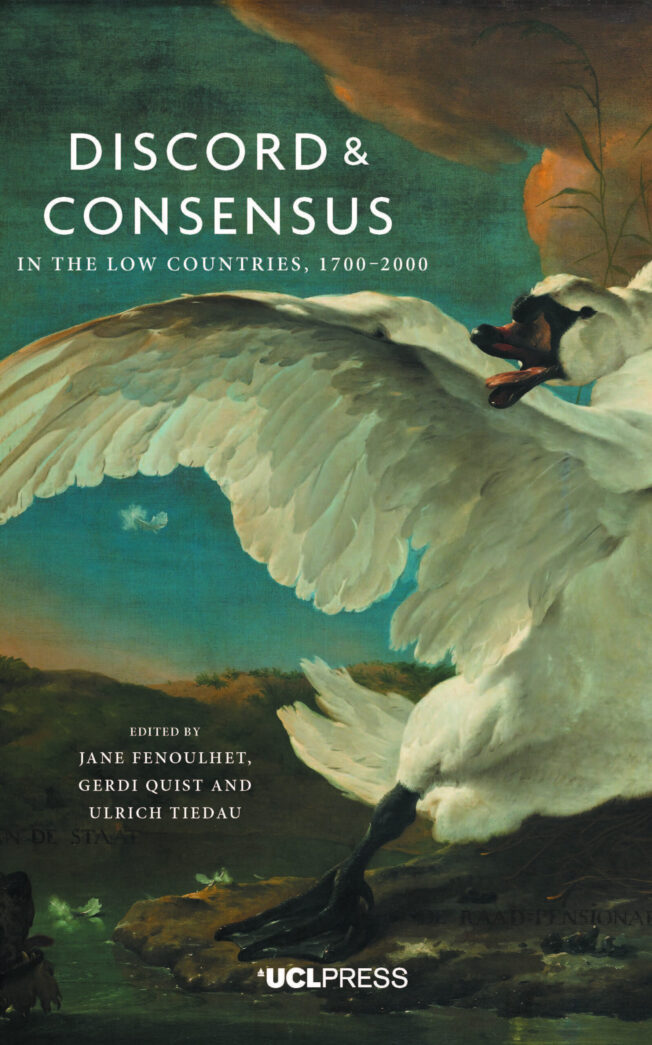
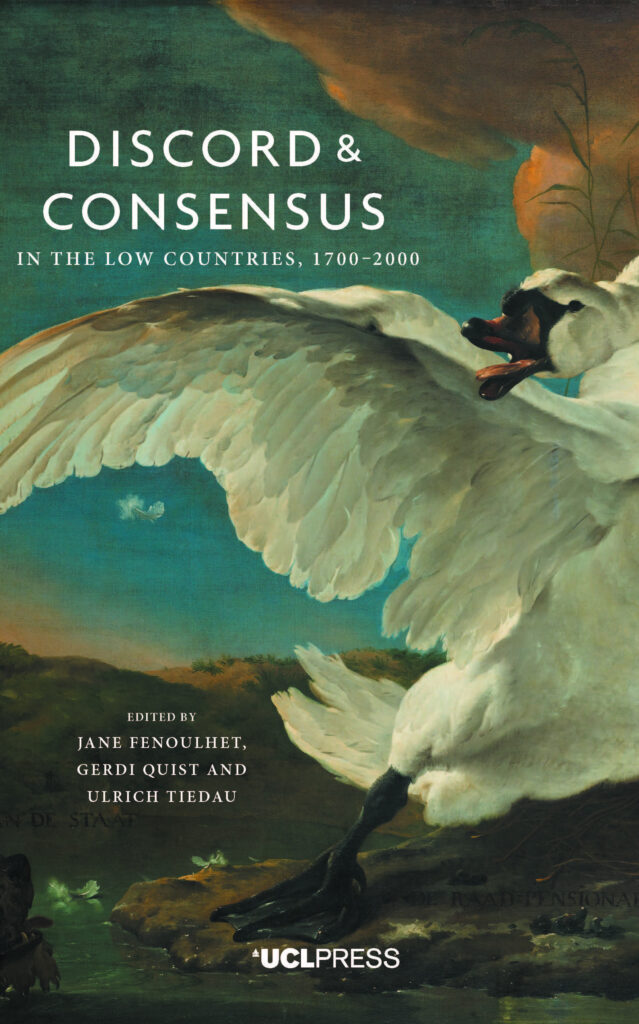
All countries, regions and institutions are ultimately built on a degree of consensus, on a collective commitment to a concept, belief or value system. This consensus is continuously rephrased and reinvented through a narrative of cohesion and challenged by expressions of discontent and discord. The history of the Low Countries is characterised by both a striving for consensus and eruptions of discord, both internally and from external challenges. This interdisciplinary volume explores consensus and discord in a Low Countries context along broad cultural, linguistic and historical lines. Disciplines represented include early-modern and contemporary history; art history; film; literature; and translation scholars from both the Low Countries and beyond.
All countries, regions and institutions are ultimately built on a degree of consensus, on a collective commitment to a concept, belief or value system. This consensus is continuously rephrased and reinvented through a narrative of cohesion and challenged by expressions of discontent and discord. The history of the Low Countries is characterised by both a striving for consensus and eruptions of discord, both internally and from external challenges. This interdisciplinary volume explores consensus and discord in a Low Countries context along broad cultural, linguistic and historical lines. Disciplines represented include early-modern and contemporary history; art history; film; literature; and translation scholars from both the Low Countries and beyond.
Jane Fenoulhet (Editor)
Jane Fenoulhet is Emerita Professor of Dutch Studies at UCL where she taught and researched across the fields of Dutch literature, translation studies and gender studies. She draws on philosophy to unite these interdisciplinary strands and is currently working on the subjectivity of translators. Her books include Making the Personal Political: Dutch Women Writers 1919-1970 (2007) which has a chapter on Carry van Bruggen, and Nomadic Literature: Cees Nooteboom and his Writing (2013).
Gerdi Quist (Editor)
Gerdi Quist currently researches language-and-culture teaching and the development of language learning materials from a social semiotic perspective. As well as publishing theoretical articles on the issue, she has also produced self-study materials for Dutch as a Foreign Language.
Ulrich Tiedau ()
Ulrich Tiedau is Associate Professor of Dutch at UCL and an Associate Director of the UCL Centre for Digital Humanities. In addition, he serves as editor-in-chief of Dutch Crossing: Journal of Low Countries Studies.
Sign up to our newsletter
Don't miss out! Subscribe to the UCL Press newsletter for the latest open access books, journal CfPs, news and views from our authors and much more!