
Publication date: 4 September 2023
DOI: https://doi.org/10.14324/111.9781800084100
Number of illustrations: 74

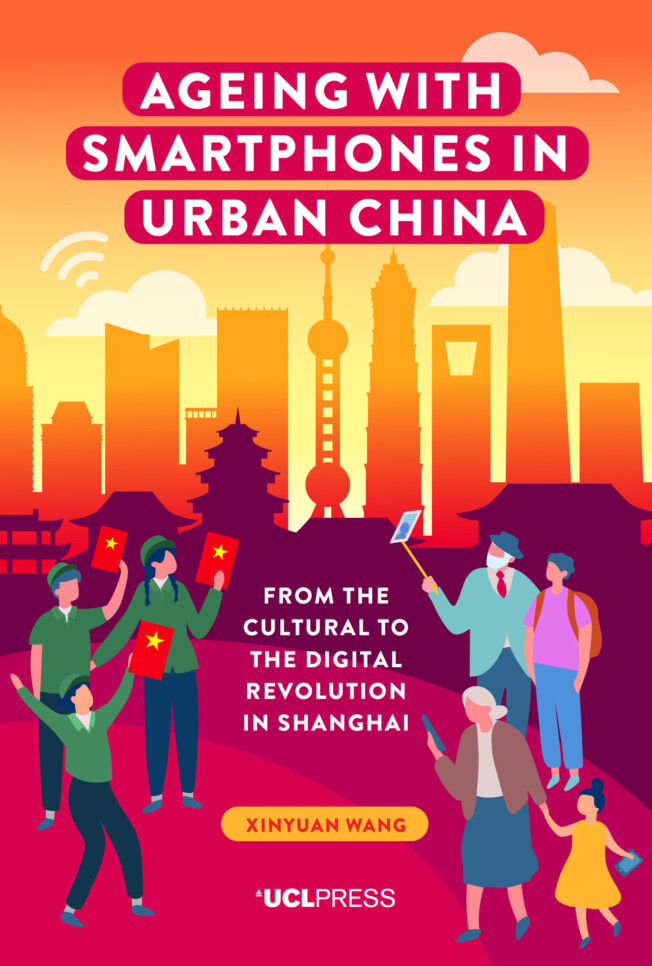
Ageing with Smartphones in Urban China
From the cultural to the digital revolution in Shanghai
Xinyuan Wang (Author)
Series: Ageing with Smartphones
If we want to understand contemporary China, the key is through understanding the older generation. This is the generation in China whose life courses almost perfectly synchronised with the emergence and growth of the ‘New China’ under the rule of the Communist Party (1949). People in their 70s and 80s have double the life expectancy of their parents’ generation. The current oldest generation in Shanghai was born in a time when the average household could not afford electric lights, but today they can turn their lights off via their smartphone apps.
Based on 16-month ethnographic fieldwork in Shanghai, Ageing with Smartphones in Urban China tackles the intersection between the ‘two revolutions’ experienced by the older generation in Shanghai: the contemporary smartphone-based digital revolution and the earlier communist revolutions. We find that we can only explain the smartphone revolution if we first appreciate the long-term consequences of these people’s experiences during the communist revolutions.
The context of this book is a wide range of dramatic social transformations in China, from the Cultural Revolution to the individualism and Confucianism in Digital China. Supported by detailed ethnographic material, the observations and analyses provide a panoramic view of the social landscape of contemporary China, including topics such as the digital and everyday life, ageing and healthcare, intergenerational relations and family development, community building and grassroots organizations, collective memories and political attitudes among ordinary Chinese people.
Related titles
An Anthropological Approach to mHealth
Charlotte Hawkins, Patrick Awondo, Daniel Miller,
28 October 2024
Daniel Miller, Laila Abed Rabho, Patrick Awondo, Maya de Vries, Marília Duque, Pauline Garvey, Laura Haapio-Kirk, Charlotte Hawkins, Alfonso Otaegui, Shireen Walton, Xinyuan Wang,
06 May 2021
Daniel Miller, Laila Abed Rabho, Patrick Awondo, Maya de Vries, Marília Duque, Pauline Garvey, Laura Haapio-Kirk, Charlotte Hawkins, Alfonso Otaegui, Shireen Walton, Xinyuan Wang,
28 July 2022
Ageing with Smartphones in Urban China
From the cultural to the digital revolution in Shanghai
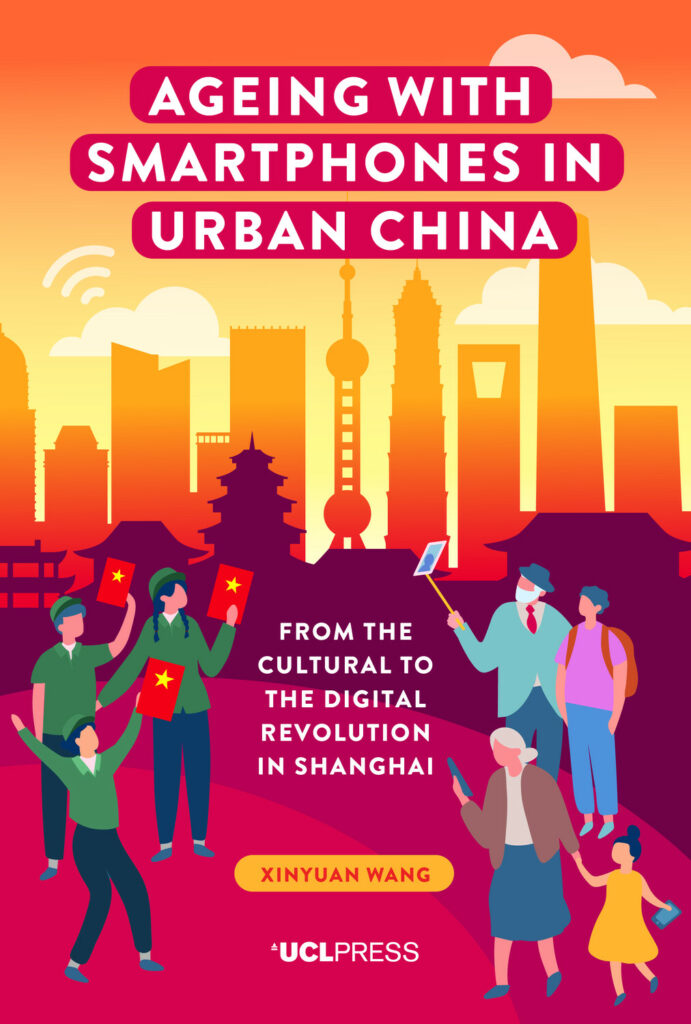
Series: Ageing with Smartphones
Publication date: September 4, 2023
Open Access PDF ISBN: 9781800084100
Paperback ISBN: 9781800084117
Hardback ISBN: 9781800084124
Trim size (hardback): 23.4cm x 15.6cm
Trim size (paperback): 23.4cm x 15.6cm
If we want to understand contemporary China, the key is through understanding the older generation. This is the generation in China whose life courses almost perfectly synchronised with the emergence and growth of the ‘New China’ under the rule of the Communist Party (1949). People in their 70s and 80s have double the life expectancy of their parents’ generation. The current oldest generation in Shanghai was born in a time when the average household could not afford electric lights, but today they can turn their lights off via their smartphone apps.
Based on 16-month ethnographic fieldwork in Shanghai, Ageing with Smartphones in Urban China tackles the intersection between the ‘two revolutions’ experienced by the older generation in Shanghai: the contemporary smartphone-based digital revolution and the earlier communist revolutions. We find that we can only explain the smartphone revolution if we first appreciate the long-term consequences of these people’s experiences during the communist revolutions.
The context of this book is a wide range of dramatic social transformations in China, from the Cultural Revolution to the individualism and Confucianism in Digital China. Supported by detailed ethnographic material, the observations and analyses provide a panoramic view of the social landscape of contemporary China, including topics such as the digital and everyday life, ageing and healthcare, intergenerational relations and family development, community building and grassroots organizations, collective memories and political attitudes among ordinary Chinese people.
‘This book not only provides valuable insights into academic research on aging and new media, but also showcases a distinctive, pioneering approach rooted in traditional cultural anthropology.’
American Ethnologist
‘Illuminating insights include the book’s exploration of how social media and messaging apps have modified people’s practice of guanxi, the well-known “Chinese art” of cultivating at once and inseparably instrumental and affective relations… Another fascinating topic is how smartphone usage has been incorporated into older people’s traditional Chinese medicine (TCM)–centered regimes of wellness and self-care… The colorful and lively forays the book offers into the “appified” (Morris and Murray 2018) lives of older people in Shanghai are more than enough to make it a worthy and valuable read.’
Journal of Anthropological Research
‘Wang’s ethnography vividly captures the lived experiences of Shanghai’s seniors, offering a rich and thought-provoking exploration of how they navigate the digital revolution and lead fulfilling lives… This monograph makes significant contributions to the fields of anthropology, digital communication, and ageing studies, and provides a compelling case study of cultural and technological transformations in contemporary urban China.’
International Journal of Communication