
Publication date: 1 August 2027
DOI: https://doi.org/10.14324/111.9781806551736
Number of illustrations: 1

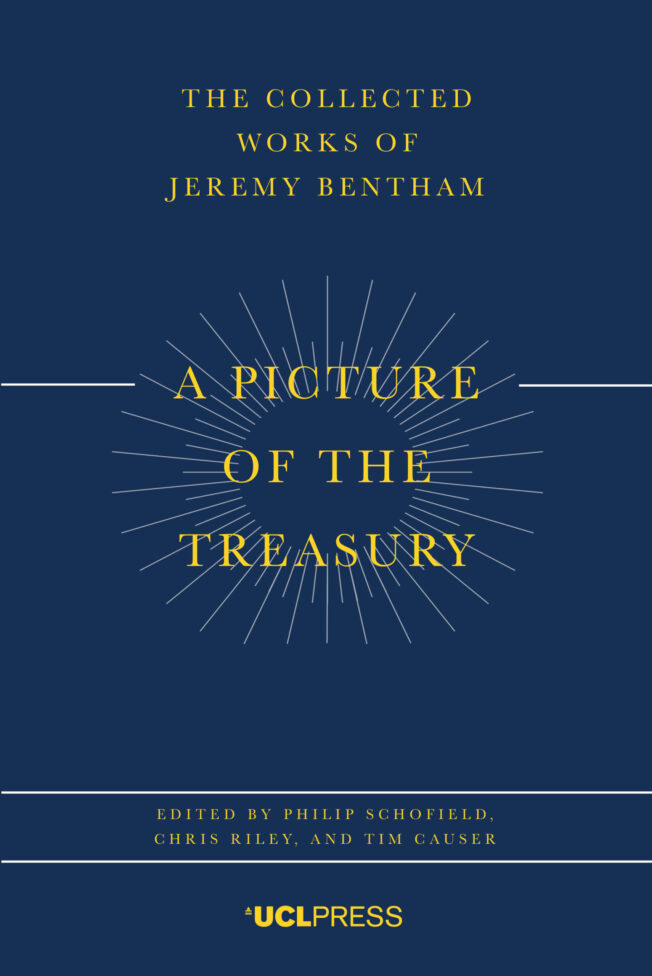
A Picture of the Treasury
Philip Schofield (Editor), Chris Riley (Editor), Tim Causer (Editor)
A Picture of the Treasury, published here for the first time from the manuscript, is addressed to the Home Secretary Lord Pelham and contains Bentham’s narrative of the events between 1798 and 1801 that led to the ‘relinquishment’ of the panopticon penitentiary scheme by the British government. The story is told through correspondence and official documents, to which Bentham adds a detailed commentary, in which he explains his own motives and his emotional state at the time, as well as his opinions about the character of officials at the Treasury and Home Office with whom he had to deal. Hoping to acquire land at Tothill Fields, Bentham was instead informed that the Millbank estate of the Marquis of Salisbury would be purchased for the proposed penitentiary. Bentham explains the difficulties in putting the land to its intended use, the prevarication of government around the number or prisoners to be built for, and the disingenuous claim that Bentham had increased his terms.
The volume is completed by two Appendices that inform the primary text. The first contains earlier material addressed to Pelham. The second is a draft letter to Speaker of the House of Commons, dated March 1802, enquiring about an unsigned document presented by the Treasury to the House of Commons that claimed that the panopticon penitentiary had been delayed due to Bentham’s increasing his terms, which Bentham rejected as a falsehood.

Who are the Humans behind Human Rights?
Agnieszka Kubal, Beáta Huszka, Hanna Oliinyk, Denis Shedov,
01 February 2027
Franziska Arnold-Dwyer, Mark Dsouza, Jeevan Hariharan, Maria Lee,
05 November 2026

The Correspondence of Jeremy Bentham, Volume 14
Philip Schofield, Tim Causer, Chris Riley,
07 May 2026


The Correspondence of Jeremy Bentham, Volume 13
Philip Schofield, Tim Causer, Chris Riley, Jeremy Bentham,
11 April 2024

New Directions in Private Law Theory
Fabiana Bettini, Martin Fischer, Charles Mitchell, Prince Saprai,
16 October 2023


A Picture of the Treasury
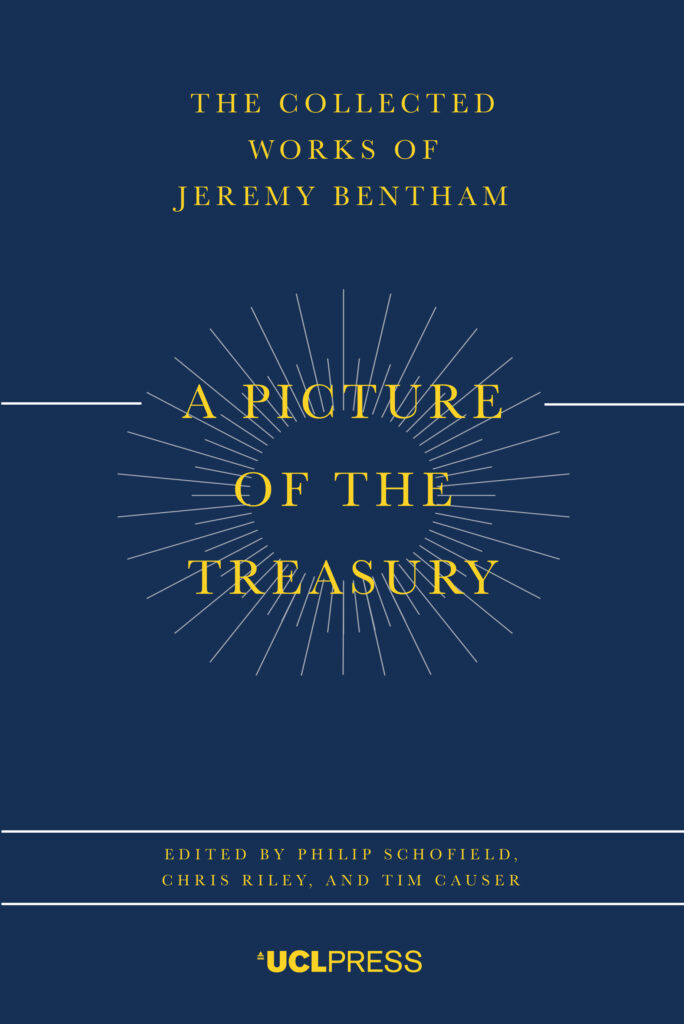
Series: The Collected Works of Jeremy Bentham
Publication date: August 1, 2027
Open Access PDF ISBN: 9781806551736
Paperback ISBN: 9781806551729
Trim size (paperback): 23.4cm x 15.6cm
A Picture of the Treasury, published here for the first time from the manuscript, is addressed to the Home Secretary Lord Pelham and contains Bentham’s narrative of the events between 1798 and 1801 that led to the ‘relinquishment’ of the panopticon penitentiary scheme by the British government. The story is told through correspondence and official documents, to which Bentham adds a detailed commentary, in which he explains his own motives and his emotional state at the time, as well as his opinions about the character of officials at the Treasury and Home Office with whom he had to deal. Hoping to acquire land at Tothill Fields, Bentham was instead informed that the Millbank estate of the Marquis of Salisbury would be purchased for the proposed penitentiary. Bentham explains the difficulties in putting the land to its intended use, the prevarication of government around the number or prisoners to be built for, and the disingenuous claim that Bentham had increased his terms.
The volume is completed by two Appendices that inform the primary text. The first contains earlier material addressed to Pelham. The second is a draft letter to Speaker of the House of Commons, dated March 1802, enquiring about an unsigned document presented by the Treasury to the House of Commons that claimed that the panopticon penitentiary had been delayed due to Bentham’s increasing his terms, which Bentham rejected as a falsehood.