We are currently upgrading our shopping cart; in the interim all orders are being diverted to Waterstones. If you would like to redeem a promotional code, or are an author wanting to place an order, please email us.
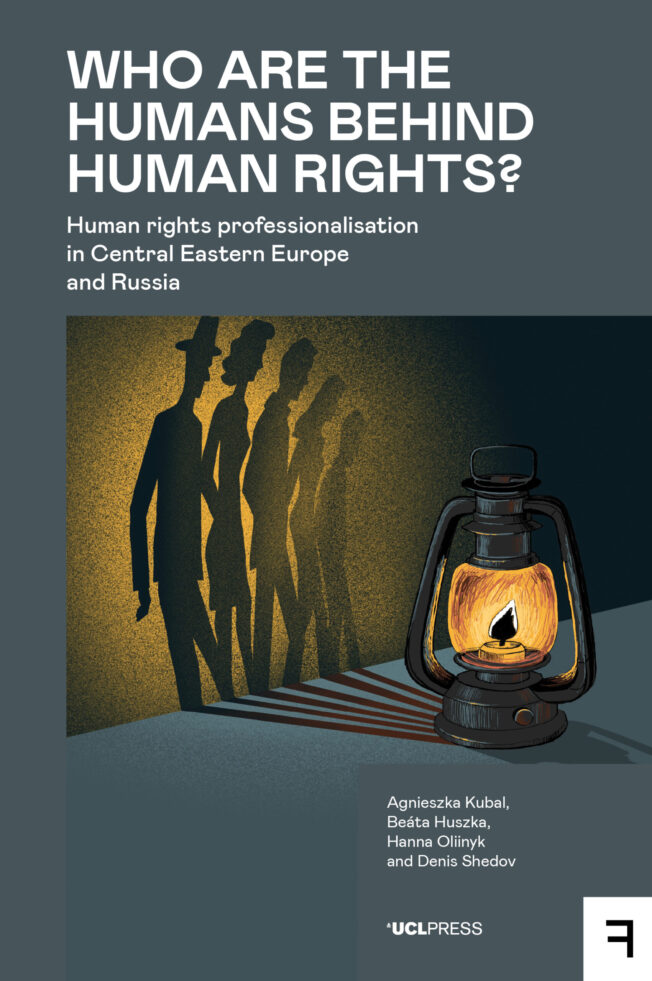
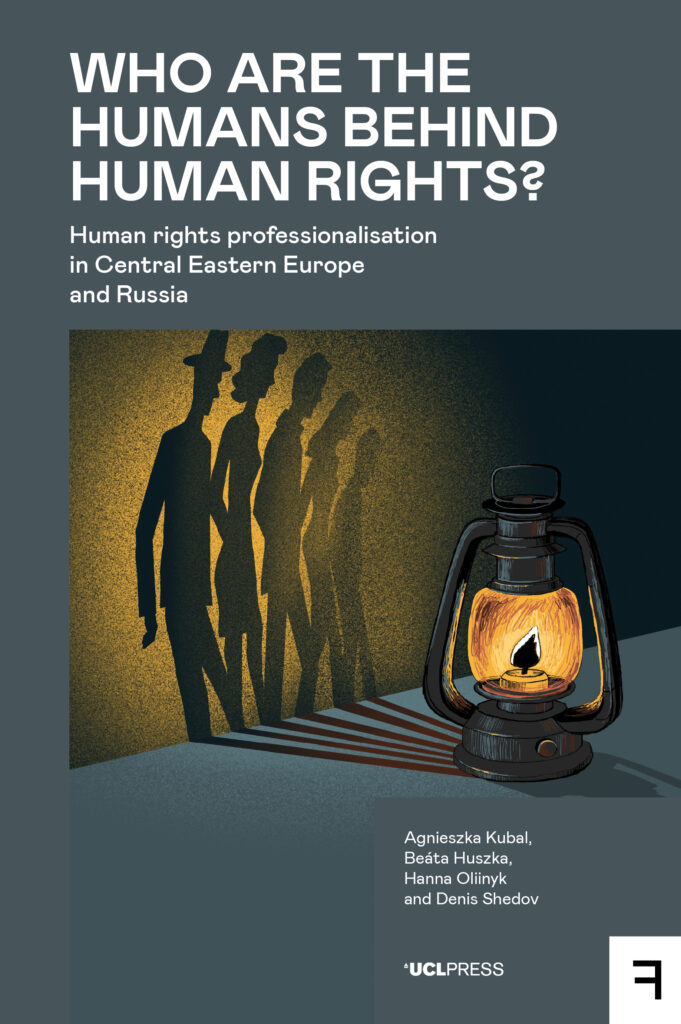
Who are the Humans behind Human Rights? offers a historically grounded and sociologically rich account of how human rights have been lived, practised and transformed in Central and Eastern Europe and Russia over the past five decades. Moving beyond law-centred and institution-focused narratives, the book shifts attention to the people who have given human rights meaning in everyday life: dissidents, activists, lawyers, judges, NGO workers and activists.
Drawing on extensive archival research and expert interviews, the book traces two interconnected processes. It reconstructs how human rights were rooted under late socialism through home-grown practices of documentation, translation and dissent. It then examines how these practices were reconfigured after 1989 through uneven professionalisation of national ‘human rights complexes’. The book’s unique contribution lies in its comparative, socio-legal approach. By placing Hungary, Poland, Ukraine, Romania and Russia side by side, it reveals diverse trajectories of human rights professionalisation, resilience and failure. In doing so, it offers a new relational and bottom-up perspective on human rights as a lived social practice shaped by history, professional networks and human experience.
Who are the Humans behind Human Rights? offers a historically grounded and sociologically rich account of how human rights have been lived, practised and transformed in Central and Eastern Europe and Russia over the past five decades. Moving beyond law-centred and institution-focused narratives, the book shifts attention to the people who have given human rights meaning in everyday life: dissidents, activists, lawyers, judges, NGO workers and activists.
Drawing on extensive archival research and expert interviews, the book traces two interconnected processes. It reconstructs how human rights were rooted under late socialism through home-grown practices of documentation, translation and dissent. It then examines how these practices were reconfigured after 1989 through uneven professionalisation of national ‘human rights complexes’. The book’s unique contribution lies in its comparative, socio-legal approach. By placing Hungary, Poland, Ukraine, Romania and Russia side by side, it reveals diverse trajectories of human rights professionalisation, resilience and failure. In doing so, it offers a new relational and bottom-up perspective on human rights as a lived social practice shaped by history, professional networks and human experience.
‘This is an essential book. The struggle to defend basic human rights has reached crisis proportions around the world and human rights activists (and their supporters) need the reflections of academics on what works and what doesn’t. This book resituates the focus from abstract legal language to the entire network of humans who mobilize it, while also recentering discourse away from the western countries where the discourse of rights originated to the frontiers where the struggle is most acute.’ Richard Abel, UCLA
‘In a context where rights and values are increasingly contested, and where the role of courts is at the centre of public debate, this book is an essential reading, not only for academics but also for political and social actors. Bridging history, sociology and legal studies, this volume makes a significant contribution to interdisciplinary human rights scholarship and reshapes our understanding of the Convention system from the bottom up.’ Ramona Coman, Université Libre de Bruxelles
‘A major strength of the book lies in its careful contextualization of East-Central Europe and Russia. Rather than presenting isolated case studies, the book weaves together individual country narratives into a coherent whole – a kind of “symphony” in which distinct historical trajectories contribute to a broader regional transformation.’
Witold Klaus, Polish Academy of Sciences
Agnieszka Kubal (Author)
Agnieszka Kubal is Associate Professor at the Centre for Socio-Legal Studies, University of Oxford, and Research Fellow at Green Templeton College. She completed her DPhil at Oxford in 2011 and has held research and academic posts at Oxford, Harvard, and UCL. An interdisciplinary socio-legal scholar specialising in Central and Eastern Europe and Russia, she is the author of Socio-legal Integration (2012) and Immigration and Refugee Law in Russia (2019), and co-editor of A Sociology of Justice in Russia (2018). She is currently Principal Investigator on the ERC (UKRI funded) project (2022-2027) “Who are the Humans behind Human Rights? Comparative perspectives on Central Eastern Europe and Russia” (HuRiEE).
Beáta Huszka (Author)
Beáta Huszka is Research Fellow at the Centre for Socio-Legal Studies, University of Oxford, working on the HuRiEE project, leading the research on Romania and Hungary. She completed her PhD at Central European University in 2010. She has held academic posts at University College London (UCL), Eötvös Loránd University and was a Marie Skłodowska-Curie Fellow at the Hellenic Foundation for European and Foreign Policy (ELIAMEP, 2019–2021). Her research centres on minority rights, legal mobilisation and ethnic politics in Central and Eastern Europe. She is the author of Secessionist Movements and Ethnic Conflict (Routledge, 2014) and has published widely in leading journals.
Hanna Oliinyk (Author)
Hanna Oliinyk is a doctoral researcher at the University of Oxford and a Research Assistant on the HuRiEE project. Her DPhil research examines the role of law in shaping collective memory, identity and authority in Russian-occupied territories of Ukraine. She is also a researcher on the UKRI-funded project ‘Mobilizing Human Rights and Resistance: Media, Law, and Accountability in Wartime Ukraine’, and previously worked on the HuRiEE project, where she led the Ukrainian component of the research. Hanna has extensive experience across academia, civil society and policy-related research on Ukraine, memory politics and transitional justice.
Denis Shedov (Author)
Denis Shedov is a doctoral researcher at the University of Helsinki and a Research Assistant on the HuRiEE project. His PhD examines the experiences of Russian human rights lawyers following Russia’s full-scale invasion of Ukraine, growing international isolation, and intensifying domestic repression. Alongside his academic work, he is a human rights activist, serving as a board member of Memorial and an analyst at OVD-Info. Denis has worked as a research assistant on the HuRiEE project at UCL, where he led the Russian component of the research. Denis has been a visiting researcher at the Free University of Berlin and the Max Planck Institute in Halle.
Sign up to our newsletter
Don't miss out! Subscribe to the UCL Press newsletter for the latest open access books, journal CfPs, news and views from our authors and much more!