COP30 reading list

Close up photograph of a cactus

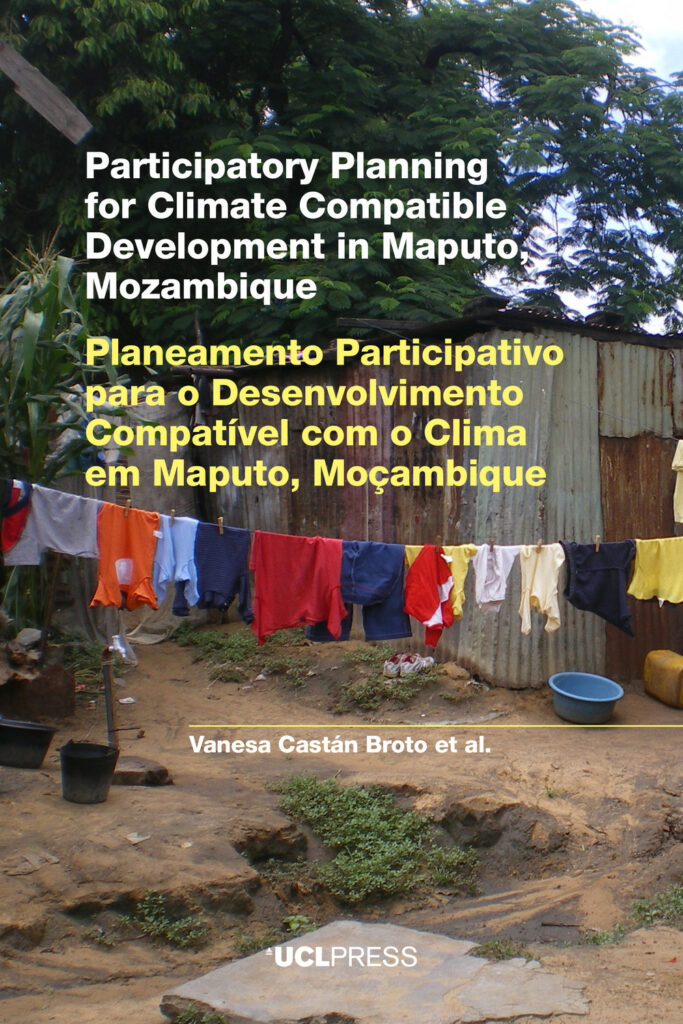
As COP30 comes to an end, we’ve pulled together a selection of open access books and journals tackling the big questions on climate change, environmental justice and sustainable futures. From practical solutions for greener cities to global perspectives on policy and activism, these titles bring fresh thinking to urgent challenges.

Highlights include Universities and Climate ActionHaste: The slow politics of climate urgencyObstacles to Environmental Progress: A U.S. perspective and our multidisciplinary open science journal UCL Open: Environment. Every title is free to read and share – because knowledge should power action.


New open access books published in September 2025

Rock pool

September marks the start of a new academic year, and UCL Press welcomed it with a selection of five new open access titles. September’s releases spanned museum studies, pedagogy, urban knowledge co-production, Victorian collecting, and children’s wellbeing in cities.

Object-Based Learning: Exploring museums and collections in education

Thomas Kador

Object-Based Learning provides a concise overview of some of the most important approaches to material culture and object analysis in plain and easily understandable language, that is equally accessible to undergraduate and postgraduate students as well as lecturers.

Read and download free.

Millionaire Shopping: The collections of Alfred Morrison, 1821-1897

Edited by Caroline Dakers

Millionaire Shopping is the first full, detailed and original account of the huge and unstoppable collecting and patronage of Alfred Morrison (1821-1897) who was one of the most important Victorian collectors and patrons of the arts. Each chapter is written by an expert in the field and dedicated to a particular aspect of Morrison’s collecting and patronage.

Read and download free,

Urban Childhoods: Growing up in inequality and hope

Edited by Claire Cameron

Urban Childhoods puts children’s and families’ voices centre stage while investigating ways of bringing children’s wellbeing to the fore in planning for urban life. The book explores themes that start from what children find important and details strategies that emerged from a major prevention programme conducted in two English cities.

Read and download free,

Co-production of Knowledge in Action: Emancipatory strategies for urban equality

Cassidy Johnson, Vanesa Castán Broto, Wilbard Kombe, Catalina Ortiz, Barbara Lipietz, Emmanuel Osuteye, Caren Levy

Co-production of Knowledge in Action examines how co-production is articulated and deployed in cities such as Lima, Freetown, Kampala, Dar es Salaam and Delhi. It engages with ongoing experiences of co-production-inspired action, mapping the different aspirations that inform co-production practices and the impacts on urban communities.

Read and download free.

Deconstituting Museums: Participation’s affective work

Helen Graham

Deconstituting Museums argues that participation collides with dominant paradigms of inclusion, diversity and decision-making on behalf of ‘future generations’ and ‘the public’. Participation draws in ideas from direct and horizontal political traditions. How might participation and its affects enable new political structures of heritage?

Read and download free

We’ll be back next month with more open access gems. Until then, stay safe, and happy reading!

New open access books published in July 2025

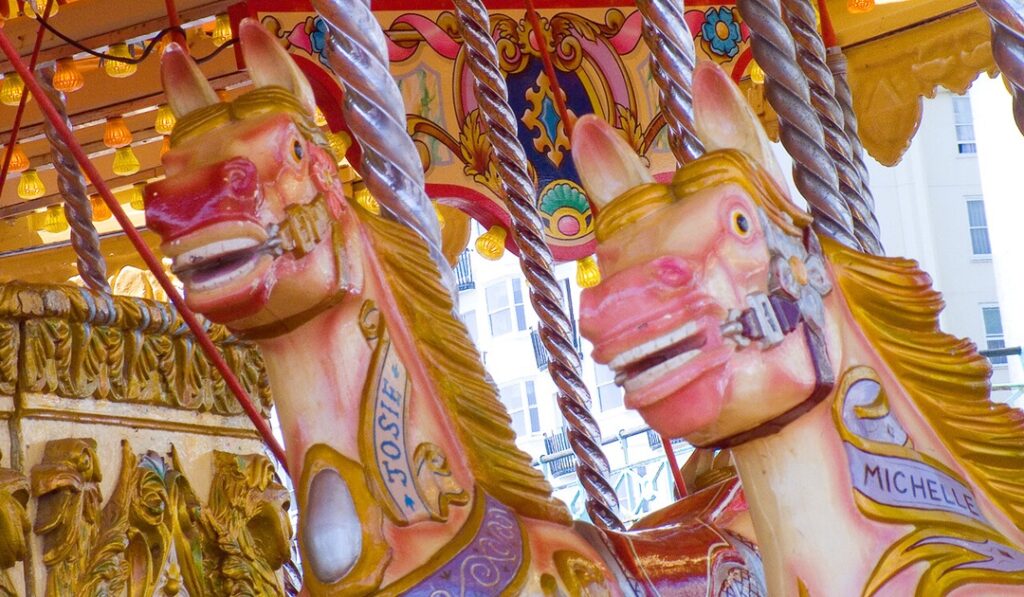
Horses on a Carousel Roundabout

July’s sunny weather wasn’t an excuse to relax at UCL Press – we’ve been busier than ever with five new open access books! Covering topics from historical memory and mental health to kinship, sensory heritage, and literary masculinity, these titles are, as always, freely available to download from our website.

An important addition to historical scholarship, Conversations with Third Reich Contemporaries: From Luke Hollands Final Account presents excerpts from filmed interviews conducted by British documentary filmmaker Luke Holland. Most interviewees were young adults when the war ended; some had benefited from Nazism. The book raises critical awareness of issues around representation, authenticity and the co-production of narratives. Download it free.

The ground-breaking Petty Tyranny and Soulless Discipline? Patients, policy and practice in public mental hospitals in England, 1918–1930 examines England’s public mental hospitals for the working class after the First World War. Narratives of patients’ difficult daily lives are interwoven with analysis of competing agendas from campaigners, government and new medical knowledge, to build a complex picture of mental health provision. Download free.

The fantastic Marriage Matters: Imagining love and belonging in Uganda engages with new and classic anthropological theory, and gender studies about kinship, marriage, relatedness and temporality. It examines how partnership, kinship, child filiation, friendship, ideas about love and commitment have been changing, and how Ugandans imagine past and future relationship between genders and generations. Download it free.

Presenting studies of historical environments through the lens of the senses, New Sensory Approaches to the Past: Applied methods in sensory heritage and archaeology showcases the latest approaches to sensory research through real-world scenarios of human−environment connections. Interdisciplinary examples of diverse sensory in-situ studies will enable readers to replicate and enhance their own investigations. Whether you’re a student, academic or researcher, it’s a fantastic read. Download it free.

Finally, the latest volume of the Comparative Literature and Culture series, Heterosexual Masculinities and the Self-Reflexive Novel examines how the narratives of, J. M. Coetzee, Milan Kundera, Philip Roth and Mario Vargas Llosa, offer a standpoint through which to address the inscription of heterosexual masculinity into Western literary legacy and the ways in which masculinity is re-fashioned in contemporary self-reflexive novels. Download it free.

We’ll be back again next month with a round up of the very best open access books. As always, stay safe!

New open access books published in February 2025

Books on a wooden bookshelf in UCL library.

It’s been another grey, dark, wet month, but we’ve almost been too busy to notice. With six more exciting open access books to read, who can blame us?

The final volume of David Scott’s extraordinary On Learning trilogy (v1, v2) , On Learning, Volume 3: Knowledge, curriculum and ethics published at the start of the month. Like the first two volumes, the book is a response to empiricist and positivist conceptions of knowledge. in which the author challenges detheorised and reductionist ideas of learning that have filtered through to the management of our schools, colleges and universities, over-simplified messages about learning, knowledge, curriculum and assessment, and the denial that values are central to understanding how we live and how we should live.

Postcapitalist Countrysides: From commoning to community wealth building explores the tensions that arise from the established conventions of economic production and private accumulation, as they affect life, wealth and work in rural areas. Find out more about the brilliance of the brilliance of the book’s contributors in an interview with one of the editors.

Revisiting Childhood Resilience Through Marginalised and Displaced Voices: Perspectives from the past and present draws on 10 years of Wendy Sims-Schouten’s research with children, young people and adults from marginalised, disadvantaged and displaced communities. These stories draw critical attention to coping strategies in adversity and oppression, and will inform creative research and policymaking. Read our interview with the author to find out more about her fascinating approach to research.

Lahore in Motion: Infrastructure, history and belonging in urban Pakistan provides a vivid portrait of the Pakistani metropolis by tracing the path of the city’s first metro rail corridor. The volume collects stories from a series of walks along the metro’s 27-kilometre path, bringing together a wide variety of authors to reflect on the relationship between urban change and belonging in a historic city. Interested to find out more? We have an excusive excerpt on the blog.

The latest book in the FRINGE series, Anti-Atlas: Critical Area Studies from the East of the West plays with the politics of the conventional atlas, with its assumptions about knowledge and power, its hierarchies of value, and its simplifications. It provides readers with a diverse series of intellectual resources, asking them to think critically about the ways in which we construct the world by dividing it into pieces.

The final book of the month, A Guide to Performing Systematic Reviews of Health and Disease is a fantastic practical guide to performing systematic reviews in a healthcare context provides a step-by-step approach for students and health professionals. Using free, opensource software to extract data and perform the necessary meta-analyses, this open access guide navigates the process of reviews, from study design and randomised controlled trials to interpreting results and reporting your findings. The author explains why this is an important book for health professionals and students alike in a wide-ranging interview.

We’ll be back again next month with a round up of the very best open access books. As always, stay safe!

Meet the author: The Laissez-Faire Peasant

Silhouette of a tractor on a textured red and brown background, as featured on the cover of The Laissez-faire Peasant

Earlier this month, Jovana Diković’s fascinating open access book The Laissez-Faire Peasant was published.  We caught up with her to talk about her fascinating research in Serbia and Kosovo, why peasants are misunderstood and just why ‘Kill your darlings’ was a useful piece of advice she received when completing her PhD.

Tell us about yourself.

I am an economic anthropologist. At the University of Belgrade, I obtained my Bachelor diploma in social anthropology and Masters diploma in political sciences. In 2012, I moved to Zurich to complete a doctoral degree in economic anthropology.

Since then, my main research interests have centred around agriculture and food systems, peasantry, cooperation, rural economies and sustainability. As an avid rural explorer, I conducted more than two years of fieldwork research in villages in Serbia and Kosovo.

During longer research stays at the University of Ottawa and University of Pittsburgh, I furthered my studies in cooperation, self-governance, and property rights. Since 2022 I have headed a research unit on sustainable development and inclusive growth at the Centre for Corporate Responsibility and Sustainability, at the School of Management in Fribourg. In the past eleven years, I have taught several courses on rural economy, development, environment and sustainability at the University of St. Gallen, University of Fribourg, and University of Zurich.

What motivated you to write and publish The Laissez-Faire Peasant?

Serbian peasants were my main motivation. In the book I attempt to show that peasants are not the victims of state politics or market economy which is a prevailing image of them but are rather autonomous and competent actors. Peasants are the architects of their own and local wellbeing, and their conceptions of development are often opposed to state plans for agriculture and rural development. Moreover, state plans for rural development in Serbian villages have been continuously distorted and interrupted by autonomous actions and values of peasants because the state programs do not provide what peasants seek. It is less known that peasants’ values determine the level of their cooperation with the state and are the main drivers of individual and local wellbeing.

Contrary to this explanation, the rural scholarship predominantly focuses on the diverse forms of peasants’ marginalization, completely neglecting that even when that is being true, such a marginalization is often intentionally sustained in order to protect peasant’s autonomy, their ownership of land, way of doing things, and safe distance from the state. In other words, peasants know how to deal with their marginalization. Such an insight questions mainstream interpretations of power relations between the peasants and the state in the literature and public discussions, and urges rethinking theoretical conceptions of the peasantry, and generally paternalistic agricultural policies.

In a nutshell, the book  questions the broader implications of the purposefulness of state programs for rural development (which are doomed to fail in the local context), and whether peasants need state rural development at all.

How and why did you get into this subject area?

In my mid-twenties, I got an opportunity to accompany an older colleague and conduct research on vernacular architecture in several rural municipalities in Serbia. This allowed me to became familiar with the vernacular building techniques and the ways local people preserve their built heritage.

During that time, I discovered a fascinating world I did not know much about. It was the experience of being and living in villages among villagers – not the results of research – that hooked me. I discovered the world of our co-citizens about which we usually believe we know much, and eventually we either misinterpret or romanticize their realities. I wanted to pick up a village life in its entirety and to explain what matters in rural communities, particularly in regard to local rural development. And so, in my thirties, I undertook research on rural development in three villages in Vojvodina province in Serbia.  

Why did you choose to publish your work Open Access?

Typical university publisher books are often expensive and out of reach for the interested and non-academic audience. I always have hard time deciding to purchase a book that costs more than €50. In some parts of the world people live on a less than a $3a day-  buying books investing in education is often  sacrificed first in those societies.

My intention was to publish a book which is accessible, downloadable, and easily available for anyone with an interest in the topic. Open access has allowed me to do this.

Open access has a noble intention of making the books available for everyone and disrupting the monopolies of publishers who established the system for generating enormous profits at the expense of authors.

How do you see your research contributing to a better understanding of the world, and what potential benefits might it offer in the future?

My contribution is in bridging the gap towards understanding peasants’ motivations and realities; these are generally not understood by outsiders or are subjected to severe criticism.

When peasants are not perceived as victims, they are often accused of being severe polluters and free riders. By getting to know them and their farming practices we can understand their attitudes beter. This has the potential to lead toward sound and effective agricultural and rural policies. If we extend the ideas of my book to agri-environmental context and fixing bad practices in agricultural production, they contain an important moral: subtle and direct coercion of peasants will not force them to work toward environmental goals.

Finding a cooperation threshold for sustainable agriculture will not be possible without a dialogue between peasants, consumers, legislators and policymakers. Without this dialogue, the incentives and agendas of sustainable agricultural policies will be failing, one after another. Policymakers, legislators, and consumers need to have an understanding of those whose practices they intend to change – in this case those of the peasants – and to understand what is realistic on that path.

Surprise us with something unexpected you encountered in your research for this book.

‘Land never stays uncultivated, no matter the political and economic conditions’, was one of the most revealing statements by a peasant. It means that peasants will cultivate their land even when they are facing high costs, bankruptcy, or when it is a complete loss for them. In another words, peasants are not only utility maximisers. That was a turning point which changed my perspective and made me rethink my research questions. It forced me to examine the issue of the relationships between the peasants and land, and peasants and the state from an unorthodox angle and understand their viewpoint freed from layers of scientific knowledge installed by post-socialist and rural studies about peasants. It also inspired me to explain why existing scientific conceptions about peasants are wrong, which occupies a special place in my book.

What do you see as the most exciting future directions for research in your field, and what breakthroughs do you hope to see in the coming years?

I am eager to see how the understanding of land property will develop in the era of vertical farming, GMO production, and speed technological advancements that at least hypothetically might enable satisfactory production on smaller and smaller plots of land, or in a laboratory. That will be indeed an exciting time, both for anthropologists and societies. I wonder how agriculture, practices of farming and farming knowledge will change, when practically anyone given meeting certain conditions such as vertical space, agri- or lab-tech, can become a farmer. So, this will change an image of farmers, who can be an everyman without agricultural knowledge and skills on how to use agricultural mechanisation, without which today’s agriculture cannot be imagined. If development of agriculture follows such a path, it will be a structural transformation urging reconsideration of the modern view of land property, concept of farmers, production, and production ethics.    

What advice would you give to students who are interested in pursuing a career in your field, and what skills or qualities do you think are most important for success?

The worst thing one can do is to become a niche expert. This is important, to the  limited extent which requires technical knowledge of the field and literature but it will not make you a good scholar. ‘Kill your darlings’, was one of the best pieces of advice when I was doing my PhD, and which I still find very useful in my career.  It makes you step down from your ivory tower, challenge the niche knowledge and explore the world outside the domain of your expertise.


About the author

Jovana Diković is an economic anthropologist, publicist, and Head of Sustainable Development and Inclusive Growth at the Center for Corporate Responsibility and Sustainability, School of Management, Fribourg.

New open access books published in January 2025

Books on a wooden bookshelf in UCL library.

2025 has begun in the best way possible- with four brand new open access books!

Our first book of the year, The Laissez-Faire Peasant: Post-socialist rural development in Serbia examines manifestations of peasant autonomy, both in response to and independent of state rural development policies through a multi-sited ethnography of three Serbian villages. It is shown how these factors impede state programs for rural development while enabling the spontaneous flourishing of local communities. By focusing on the agency of rural residents, the book finds that peasants are resilient and competent agents who do not need government plans to thrive.

This was closely followed by Alice Stevenson’s Contemporary Art and the Display of Ancient Egypt argues that the contemporary and the ancient do not necessarily inform each other. Rather than explore how contemporary artists have been inspired by Egypt, this book examines how they have shaped the language and discourse around study of the Egyptian past by looking at the wider field of public display in which both have been historically situated. Building on this critical history of practice, the book draws from experiments in bringing contemporary artistic sculptures, conceptual pieces, multimedia films, sounds, smells and performances into galleries: at the British Museum in London, the Egyptian Museum in Turin and the State Museum of Egyptian Art in Munich. These are used to explore what contemporary art does in these spaces, the motivations for inviting artists in, and the legacies of those interventions. It ends with a reflection on how academics and curators can be involved in the creative process and how artists contribute to academic research.

The edited collection Palaeontology in Public: Popular science, lost creatures and deep time followed. This delightful book  considers the connections between palaeontology and public culture across the past two centuries. In so doing, it explores how these public dimensions have been crucial to the develo Dinosaurs feature, of course, including Spinosaurus, Winsor McCay’s ‘Gertie the Dinosaur’ and the creatures of Jurassic Park and The Lost World. A must for anyone with an interest in history of science, palaeontology and culture.

The final book of the month was the immensely important War Essays. In this fantastically absorbing book, Zainab Bahrani charts the devastation, cultural cleansing and targeted erasure of Iraq’s past, and argues that the topics of archaeology, history and memory must be analysed within the larger geopolitical issues of the contemporary Middle East. The essays present a counter-narrative of events that historicize the position of the historian and illustrate the enduring colonial practices of archaeology. Set within a narrative that reflects at once upon the violence of war and the processes of writing, an archaeologist’s personal journey unfolds. War Essays intertwines the autobiographical with the historical and analytical aspects of scholarship, weaving an eye-witness account of war with theoretical discussions around writing, the relationship of monuments, historical landscapes and memory, and how one’s sense of place in the world is disrupted by war. Definitely not one to miss.

We’ll be back again next month with a round up of the very best open access books. As always, stay safe!

Everyday resistance to Assad never dimmed 

Wall painted to resemble the Syrian flag with text and stars, topped by a mattress.

Charlotte Al-Khalili spent three years embedded with Syrians displaced to the Turkish border after the 2011 uprising. She found a people continuing to resist and evidence of a ‘permanent’ revolution. The voices she presents in this ethnography have deep resonance now Assad has fallen.

In light of recent events in Syria, going back to Syrians’ understanding and conception of revolutionary change is important. Now the Assad regime has finally fallen, 13 years after the revolution started, one can wonder how these events are linked. Since Sunday 8 December, I have received many messages from my friends and interlocutors who are central figures in my ethnographic monograph of the revolution. Most expressed their immense joy at finally seeing the regime fall, the detainees freed and the brutal oppression exposed in plain light with the opening of its prisons. My interlocutors see the downfall of the regime as part of the revolutionary process and cycle I have described in my book, and as part of this cycle it is not an end in itself, as the revolutionary spirit that emerged in 2011 must continue to inform the changes that will happen now the regime has ended.

The fieldwork for this book was conducted between 2013 and 2016, to reflect on the aftermath of the 2011 uprising that appeared to have been defeated. The book’s thesis is that the Syrian revolution was in fact an unended process and my interlocutors were still hoping to see it succeed at the scale of the state in the political domain. They were conscious that a revolution is a long-term process rather than a single event and that their revolution would take time to be fully completed. The ethnographic concept of al-thawra proposes that we think of revolution as a long-term process that is cyclical and can be defeated on the scale of the nation-state in the political sphere, but still has deep effects in the social domain and in exile. Even when the Syrian revolution was widely perceived as defeated, many of my interlocutors still conceived it as permanent (al-thawra mustamera), a conception of revolution that opens up to the potential that the 2011 defeat was only temporary. The idea that the revolution was still ongoing throughout my fieldwork inside and outside Syria was illustrated by my interlocutors through examples of everyday resistance to new forms of oppression (zulm) in the territories liberated from regime control. They were not ready to submit to any new illegitimate authorities, as exemplified by Nura in the first extract from my book.

Resistance as a way of life (from Chapter 5)

‘How long did it take for the French revolution to succeed? A hundred years?’ I was often asked rhetorically, before one of my interlocutors would conclude, ‘We still have a long way ahead of us!’, referring to the four years that had passed since the beginning of the Syrian revolution. The possible success of the revolution was thus located in a distant future that will be a different repetition of the past. However, I was also often given the example of liberated areas that had rejected the zulm (oppression/injustice) of Islamist groups that had gained control over them. Nura described how people had refused to submit to these rules whereby women’s dress must be modified, men were forbidden to smoke in public, and revolutionary emblems were banned in her city. According to her and other interlocutors, such actions, as well as renewed protests inside Syria, exemplified the revolution’s legacy and the continued presence of the spirit of the revolution inside (juwwa). The areas where it happened had first been liberated by the FSA and had witnessed the involvement of communities in local bodies of administration and governance after the revolution. Nura, among other interlocutors, explained that after these localities were liberated by the FSA, women started to participate in public and political life, increased their mobility, and became breadwinners, getting new opportunities to work outside their homes in community centres and newly established institutions. They thus saw the revolution’s enduring spirit in the fact that after being taken over by Islamist groups, women organised protests against restrictions imposed by these groups. The possibility for the revolution’s future success was thus linked by my interlocutors to ‘irreversible’ (ghir rdud) changes in the social fabric and in people’s ‘mentality’ (‘aqliyyeh), that were already happening in the present. This was stressed by the fact that the revolution became increasingly called ‘al thawra al mustamera’ (the permanent revolution) stressing its long-lasting and constant effect. Despite political change at nation-state level becoming a more distant horizon, my interlocutors thus argued that permanent social transformations were taking place in the present at the local level. These in-depth transformations were believed to enable a political revolution in the long term. To my interlocutors, this widespread spirit of defiance was proof of the success of revolutionary transformation on the social level; such changes gave them hope that what Abu Zein called ‘cycle of anger’ would start again. This led my young interlocutors in particular to believe that even in the regions retaken by the Assad regime, people would eventually start a more radical revolution, even if it took a generation.

If the renewed protests happening inside Syria’s liberated areas were interpreted as a renewed struggle that replicated the 2011 uprising – they similarly opposed zulm (oppression/injustice) and illegitimate authority inside Syria – such struggle was also located outside, where it was similarly directed against traditional and usually taken-for-granted forms of authority. These acts of ‘everyday resistance’(maqawameh yawmiyyeh) index in particular Syrian women’s questioning of gender ideology and socio-religious conservatism, as pointed out by Nura for instance. Here, the term ‘resistance’ has to be understood as an ethnographic concept that signifies a struggle against all kinds of oppressive authority. Resistance literally translates as maqawameh but it was most often expressed by my interlocutors in terms of struggle against authority (sulta) and oppression (zulm). By taking seriously my interlocutors’ claims, and their understanding of continuities between their political struggles and the transformations of their social and intimate lives, I propose to make sense of their questioning of the dominant gender ideology in (pre-)revolutionary Syria. My aim is not to describe these processes in terms of ‘emancipation’ or ‘empowerment’, which would risk imposing a white Western feminist gaze that universalises a historically bounded situation.  On the contrary – inspired by bell hooks’s feminist writings and building on Julie Peteet’s work on Palestinian women in the resistance – I aim to draw out processes of transformation of gender structures and meanings rather than analyse the situation in terms of liberation versus subordination.

Revolution as ethnographic object (from the Introduction)

Taking revolution as an ethnographic object – that is, examining it through Syrians’ experiences, narrations and  understandings of the events – this book sheds a new light on its causes, developments and evolving definitions. This contributes to extending the concept of revolution, showing what a revolution can be when it is understood from the perspective of its very actors. Heard through Syrian voices, or its mnemonic and linguistic traces, al-thawra (the revolution) appears as an ongoing process that inscribes itself in a national and regional history of uprisings, rebellions and revolts, rather than merely a failed uprising. It is presented as having deep roots in Syria’s past, creating a radical rupture in Syrians’ present, and having long-lasting consequences in their lives. Moreover, al-thawra appears as a transformative entity that is itself subject to change: from a peaceful uprising to an armed rebellion against the regime’s and, later, the jihadists’ and islamists’ oppression (zulm), leading Syrian revolutionaries from hope to doubt and despair in their political project.

Here, looking at revolution ethnographically means putting the concept of revolution itself ‘under ethnographic scrutiny’, in other words, deconstructing revolution using my interlocutors’ conceptualisations and experiences as analytical tools. Such endeavour allows for a redefinition of what revolution is and can be by ethnographically showing how Syrian events have been experienced, conceptualised, and imagined by my interlocutors as thawra. This shows that a revolution engenders a series of transformations that transcend the paradigm of success and failure and can be found outside the (narrowly defined) political realm.

In taking revolution as an ethnographic object, this book’s central argument is that the Syrian revolution is understood as open-ended: despite having been defeated in the political domain at the scale of the state, the Syrian revolution still has a transformative power that can be identified at the level of the constitution of subjects, social relations, modes of dwelling, temporality, future horizons, and imaginative modes. Moreover, the Syrian revolution witnessed a displacement: rather than a political rupture at the scale of the state, it produced a series of transformations that dramatically reshaped Syrians’ lifeworlds. Here, al-thawra appears as a transformational entity that can reorganise an entire world even when a revolution has been defeated. My argument is therefore that a revolution defeated in the political domain can nonetheless produce ruptures and disruptions in the social realm, as well as on micro (intimate) and and macro (cosmological) scales. It thus suggests stepping away from the dichotomous definition of revolution as either a successful or a failed rupture and shifting the research focus to its marginal and often unexplored dimensions in order to grasp more fully what a revolution is. Rather than looking at the epicentre of revolutionary action – protests, occupations, and political organisations – it proposes to explore what is often seen as peripheral and apolitical: everyday life, kinship relations, religious imagination, and spatio-temporal practices.

Revolutions have been classically defined, according to a model of before-and-after, as a historical rupture that leads to a new political order and temporal cycle because of a change in political regime – the ancient regime is replaced by a new one. Such a definition therefore glosses over the transformative potential of apparently defeated and failed revolutions. Because of such definitions, failed or defeated revolutions end up in history’s dustbin. The ethnographic enquiry of the Syrian revolution thus calls to an expanding of our conceptual framework and methodological tools to fully grasp what revolution, and in particular a defeated one, is and can be.

Arguing that revolutionary transformations outlast revolution’s defeat, this book maps out the ruptures (intended changes) and disruptions (unexpected shifts) that the revolution engendered beyond what is usually defined as the political field: within the self, in the intimate sphere of the home, in Syrians’ everyday lives, social relations, and sense of time, and in their experience of Islamic cosmology, thereby shifting the analytical focus to the revolution’s long-lasting and in-depth consequences.7 Revolution becomes a multi-layered and multidimensional entity: it affects Syrian lifeworlds in all domains and scales. These very transformations are themselves being interpreted in ways that evolve as Syrians’ theorisations, experiences, and imaginations of al-thawra (the revolution) are themselves being transformed. This book has thus two overall aims: the location of the traces of the early stage of the 2011 revolution through my interlocutors’ narratives, memories, activities and artefacts; and the mapping of the transformations that revolutionary moment, space and experience create in exile.

By grounding my research within families, my ethnography was able to grasp the in-depth and long-term effects of the 2011 revolution on Syrians’ lifeworlds. In the course of my fieldwork, I often heard of great hardship.

The unbearable weight of waiting (from Chapter 4)

With the revolution’s defeat becoming clearer, it seems that the near future has been evacuated, yet this period is central to revolutionary action, for it is the time of ‘the reach of thought and imagination, of planning and hoping’. Moreover, the revolution’s defeat also leads to a shift in temporal horizons from the near future to a present consisting of waiting and a long-term horizon of the revolution’s successful return and its afterlife. In the aftermath of the defeated revolution, the near past and distant future appear as the main horizons of the revolutionary project and action, and are invested with hope, whereas the near future is a time of uncertainty that seems an extension of my interlocutors’ indefinite waiting in the present. After Umm Najem’s husband was arrested in Idlib by the regime forces, she did not hear of him for nine months despite her attempts to discover his whereabouts. When the security forces sent his belongings to her home – his watch, his ID card, and other things he had with him when he was arrested – they announced that he was dead [‘killed under torture’ as Nura translated it for me]. She had four small children, and she was living in her in-laws’ home. After her husband was martyred, and after the four-month mourning period, she married his brother so she could keep living with her children at her in-laws. It had then been over a year since her husband disappeared, and she had lost hope that he was still alive. A year after she married her brother-in-law, her husband was released from jail and he came home to find that his wife had married his brother and was pregnant by him … Can you imagine these people’s situation?! This is why people never give up hope and, unless they see their relatives’ bodies, never accept they are dead.

As Nura compared the incomparable – the martyrdom or detention of a relative – she used this story to contrast waiting for a detainee with her own situation. She had nothing to wait for anymore, no hope that her husband would ever come back, and no hope for a future together. On the other hand, if he had been detained there would still be a slight hope that he would come back, she explained. Yet waiting for a victim of enforced disappearance in a country known for its arbitrary arrests, and for torture on an industrial scale, is an indefinite and uncertain process.


About the author

Charlotte Al-Khalili is currently a Leverhulme Early Career fellow in anthropology at the University of Sussex

CfP: Urban Africa series

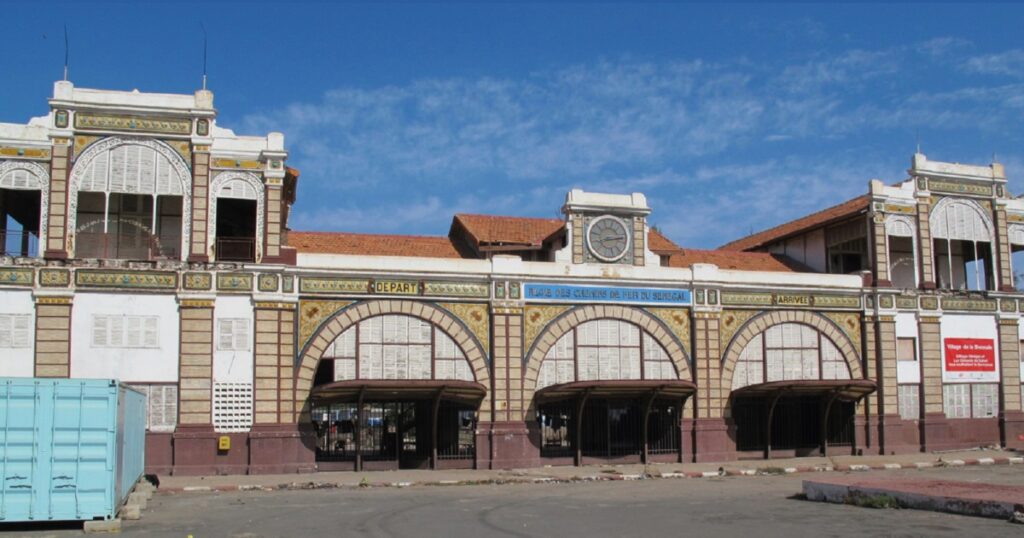
The image shows the Malian market at the railway terminus in Dakar, as featured on the cover of Urban Displacement and Trade in a Senegalese Market.

To celebrate World Urbanism Day, the editors of the open access Urban Africa series, co-published with the International African Institute, have opened a new call for proposals for new books.  The series provides a platform for critical, in-depth analysis of key contemporary issues affecting urban environments across the African continent.

The editors aim to work in close collaboration with African based networks and centres of urban scholarship to publish the best of urban research on Africa, prioritising the publication of work by scholars based in African contexts as well as leading African scholars globally. Their goals are to publish an urban studies series with a distinctive African-centred approach; to provide a high-profile platform to urban scholars from the African continent; to bring the best work in African urban studies globally to African studies audiences; and to make publications widely accessible to African based scholars.

The series tackles the most important issues of the day, such as demographic change; climate change; increasing mobility; major infrastructure investments. It fosters transdisciplinary perspectives, with strong links to all areas of research prominent in urban studies, notably human geography, architecture, ethnography, anthropology, sociology, environmental studies, urban planning, politics and development. It seeks to establish insights from African urbanisms as fundamental to theory development in urban studies and place African cities in conversation with other urban contexts. The series also seeks to showcase the best of urban scholarship emanating from the African continent, and to amplify the voices of scholars who are immersed in the day-to-day realities of African urban life. The series is open to both conventional and innovative formats.

UCL Press books are open access, and manuscripts accepted for this series will incur no book publishing charge.

All proposals and further queries can be directed to Stephanie Kitchen, sk111@soas.ac.uk, or to one of the lead editors, Jennifer Robinson (Jennifer.Robinson@ucl.ac.uk) and Jeffrey Paller (jpaller@usfca.edu).

More details about the series can be found at: https://www.internationalafricaninstitute.org/publishing/urban-africa-book-series

Sign up to our newsletter

Don't miss out!
Subscribe to the UCL Press newsletter for the latest open access books,
journal CfPs, news and views from our authors and much more!