
Publication date: 1 July 2025
DOI: https://doi.org/10.14324/111.9781800088610
Number of illustrations: 16

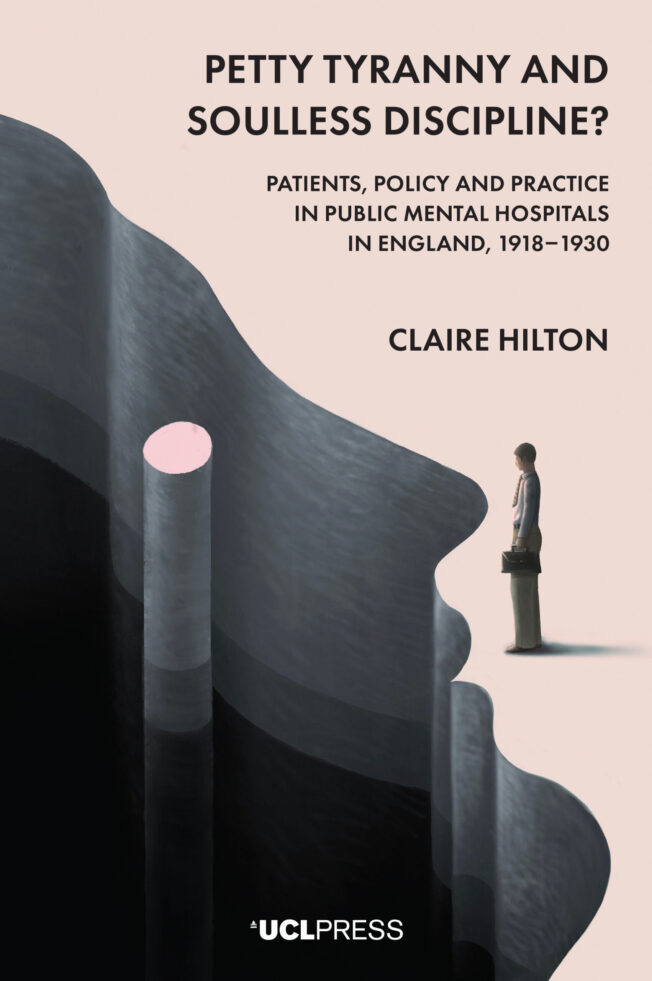
Petty Tyranny and Soulless Discipline?
Patients, policy and practice in public mental hospitals in England, 1918–1930
Claire Hilton (Author)
High expectations for a better world followed the First World War. Many changes took place aligned with ‘progress’, but in England the poorest benefited little from them. This was all too evident in the nation’s public mental hospitals. Patients were their raison d’ȇtre, yet their experiences show that they sat at the foot of the country’s priorities.
Petty Tyranny and Soulless Discipline? places patients at its centre to explore their daily lives, including their admission, care, treatment, discharge and after-care, or death. These narratives, drawn from a range of primary sources, are contextualised in an historical analysis of how and why a mixture of stagnating and changing knowledge, attitudes and ideals affected patients’ experiences. The Lunacy Act 1890 underpinned life in the mental hospitals by setting out their organisation, regulation and funding. A variety of professionals, campaigners for reform, central government departments, local authorities, trades unions and voluntary organisations, often with competing agendas, influenced what happened to patients. There was also new medical knowledge, from Britain and beyond. This book weaves these strands into a coherent whole, to reveal the complexity of mental health provision in the past and enable reflection that might inform debate today.


Eglė Rindzevičiūtė, Anna Storm, Linara Dovydaitytė, Karin Edberg, Rodney Harrison, Linda Ross,
01 April 2027







Toby Butler, Felix Driver, Barbara Brayshay, Chris Church, Jeremy Iles, Oli Mould, Saskia Papadakis,
12 November 2026





Imperial Science, the Organic Movement and the Path to Shangri-La, 1900-1969
Ashok Malhotra,
23 March 2026




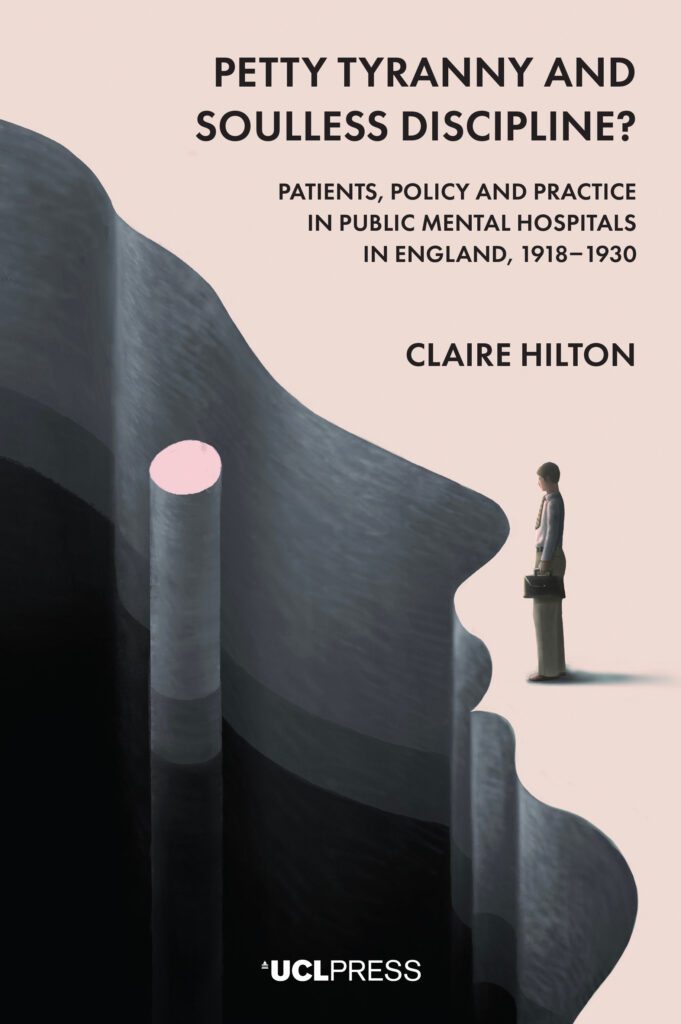
Petty Tyranny and Soulless Discipline?
Patients, policy and practice in public mental hospitals in England, 1918–1930
Publication date: July 1, 2025
Open Access PDF ISBN: 9781800088610
Paperback ISBN: 9781800088603
Hardback ISBN: 9781800088597
Trim size (hardback): 23.4cm x 15.6cm
Trim size (paperback): 23.4cm x 15.6cm
High expectations for a better world followed the First World War. Many changes took place aligned with ‘progress’, but in England the poorest benefited little from them. This was all too evident in the nation’s public mental hospitals. Patients were their raison d’ȇtre, yet their experiences show that they sat at the foot of the country’s priorities.
Petty Tyranny and Soulless Discipline? places patients at its centre to explore their daily lives, including their admission, care, treatment, discharge and after-care, or death. These narratives, drawn from a range of primary sources, are contextualised in an historical analysis of how and why a mixture of stagnating and changing knowledge, attitudes and ideals affected patients’ experiences. The Lunacy Act 1890 underpinned life in the mental hospitals by setting out their organisation, regulation and funding. A variety of professionals, campaigners for reform, central government departments, local authorities, trades unions and voluntary organisations, often with competing agendas, influenced what happened to patients. There was also new medical knowledge, from Britain and beyond. This book weaves these strands into a coherent whole, to reveal the complexity of mental health provision in the past and enable reflection that might inform debate today.
‘[A] wonderful book … I would commend it to you as do others.’
Linda Bryant, CEO, Together for Mental Wellbeing
‘Hilton writes in detail clearly and with compassion, care and integrity … The epilogue ‘Then and now’ reflects in detail on significant similarities of problems in mental health services decades apart and this is a notable strength of the volume.’
British Society for the History of Medicine
‘Claire Hilton… provides a meticulously researched and yet eminently accessible account.’
Australasian Psychiatry
‘With scrupulous attention to detail, assembling a plethora of theories and observations from different interest groups and vantage points, Hilton’s text’is… a compelling and durable resource.’
Social History of Medicine
‘While elements in the history of psychiatry should be extremely instructive, the reader is left with the distinct impression that we have rarely used its lessons to best effect. Claire Hilton has done an important service in fully exposing a very uncomfortable period in that history, while reminding us of the serious shortcomings that still persist.’
The British Journal of Psychiatry ‘
‘Dr Hilton’s comparison of psychiatric care in the 1920s and the 2020s is, by turns, elegant, stunning, salutary and chilling. Throughout, she reminds us of the dangers of what Rob Behrens has dubbed “bunker-ism”. This excellent book is the beginning of an antidote, if not cure, for this common affliction.’
Nicol Ferrier, Newcastle University
‘A groundbreaking and sobering read, which has seismic implications for the field of mental health care in the future. It should be compulsory reading for clinicians and providers of mental health services.’
Jane Warner, Plymouth University