We are currently upgrading our shopping cart; in the interim all orders are being diverted to Waterstones. If you would like to redeem a promotional code, or are an author wanting to place an order, please email us.

Contact us

Join us to celebrate 10 years of UCL Press!

Rows of champagne flutes filled with golden liquid.

June marks 10 years since UCL Press was founded as the UK’s first fully-open access university press. Join us to celebrate 10 years of award winning publishing!

Event details

In person

10 June 2025 17:00-19.30 BST

Chancellor’s Hall, First floor, Senate House, Malet Street, London, WC1E 7HU

Online

10 June 2025 17:00-18:15 BST

Speakers

Chair

Dr Paul Ayris, Pro-Vice-Provost, LCCOS, UCL, and CEO of UCL Press

Panellists

  • Anthony Cond, President of the Association of University Presses and Chief Executive of Liverpool University Press
  • Prof Margot Finn, Chair in Modern British History, UCL, and former President of the Royal Historical Society
  • Dr Rupert Gatti, a Director of Open Book Publishers, Thoth Open Metadata and the Open Book Collective, actively engaged in the COPIM/OBF initiative and Fellow in Economics, Trinity College Cambridge
  • Benjamin Meunier, University Librarian, Chinese University of Hong Kong, and lead for Open Books Hong Kong
  • Stephanie Smith, Deputy Director of Policy, Russell Group of Universities
  • Niamh Tumelty, Director of LSE Library and Managing Director of LSE Press

Event Description

In the 10 years since UCL Press launched as the UK’s first fully open access university press, the open access landscape has changed considerably, with other new OA presses launching, the development of numerous OA initiatives supporting monographs, new funder mandates and a demonstrable shift in the perception of OA from a niche activity to a mainstream one, adopted by publishers large and small.

An impressive number of OA books have been published in the last 10 years, with over 13,000 listed on JSTOR’s OA monographs platform and 30,000 on OAPEN’s. With so many OA books in circulation, the sector is seeing impressive download figures that demonstrate the global reach of OA books, with benefits for institutions, authors, policy makers and the wider public. This panel celebrates the progress made with OA monographs during the last 10 years as well as touching on the challenges to come. Featuring key actors in university press publishing, open access, libraries and funding, the panel will debate what the sector needs to do next to drive the growth in OA monographs further, as well as addressing the financial crisis in the sector that is affecting universities’ funding priorities and the humanities and social sciences, the backbone of monograph publishing.

The in-person event will be followed by a drinks reception to celebrate 10 years of UCL Press.

Book launch: Revisiting Childhood Resilience

Join the the UCL Institute of Advanced Studies and the Critical Childhood Studies Centre for the launch of new books, including Revisiting Childhood Resilience by Wendy Sims-Schouten on 1st April, 5-7pm.

This event is open to all, and will take place at the UCL Institute of Advanced Studies. Tickets can be booked online at Eventbrite.

Revisiting Childhood Resilience Through Marginalised and Displaced Voices: Perspectives from the past and present

Author: Wendy Sims-Schouten
Revisiting Childhood Resilience Through Marginalised and Displaced Voices uses an interdisciplinary approach to challenge current childhood resilience research and practice. The culmination of ten years of research and publications around childhood resilience, the book draws upon data collected from and co-produced with children, young people and adults from marginalised, disadvantaged and displaced communities. In so doing, it highlights the transformative potential of stories told by marginalised and displaced children, past and present. When these narratives are prioritised, they disrupt, counter and draw critical attention to coping strategies in light of adversity and oppression, to inform creative research and policymaking. Centralising the voices of care leavers, young people who are bullied, members from minority ethnic communities and former migrants/refugees, among others, Wendy Sims-Schouten shines a light on 150 years of marginalised voices and experiences in relation to resilience.

Revisiting Childhood Resilience Through Marginalised and Displaced Voices is published by UCL Press. Click here for more information.


This book launch is part of the Institute of Advanced Studies Book Launch Series and organised by the Critical Childhood Studies Centre. The Centre is a home for world-leading scholarship about childhood as a socio-political, cultural, and historical phenomenon in diverse global contexts. The Centre provides a focal point for faculty and students at all levels in UCL to engage in innovative and multi-disciplinary research, teaching, and public engagement geared towards achieving social justice with and for children and young people.

New print distribution arrangements

Close-up of a stack of books with visible edges, set on a dark surface.

UCL Press is pleased to announce a change in its print and distribution arrangements outside of North America from 1st February 2025. Gardners will become exclusive distributor for all territories outside of North America. Established over 38 years ago, Gardners has grown to become a leading wholesaler of books and eBooks to retailers around the world.

Compass Independent Publishing Services will continue to provide representation to bookstores in the UK and Europe, and Chicago University Press will continue to represent UCL Press in North America.

With effect from 1st February 2025, Gardners will begin servicing all UCL Press books  previously distributed by Ingram Publisher Services (UK) and all enquiries related to this product information, availability, and ordering should be through:

Orders for UK and Europe

Telephone: +44 (0)1323 521555

https://www.gardners.com

Email: uksales@gardners.com 

Online ordering for account customers: https://www.gardners.com/Account/LogOn

Orders for ROW (excl. N  America)

Telephone: +44 (0)1323 521555

https://www.gardners.com

internationalsales@gardners.com

Online ordering for account customers: https://www.gardners.com/Account/LogOn

If you have any queries, please contact the UCL Press Sales and Marketing team:

Email: uclpresspublishing@ucl.ac.uk

Palaeontology in Public: Meet the editor

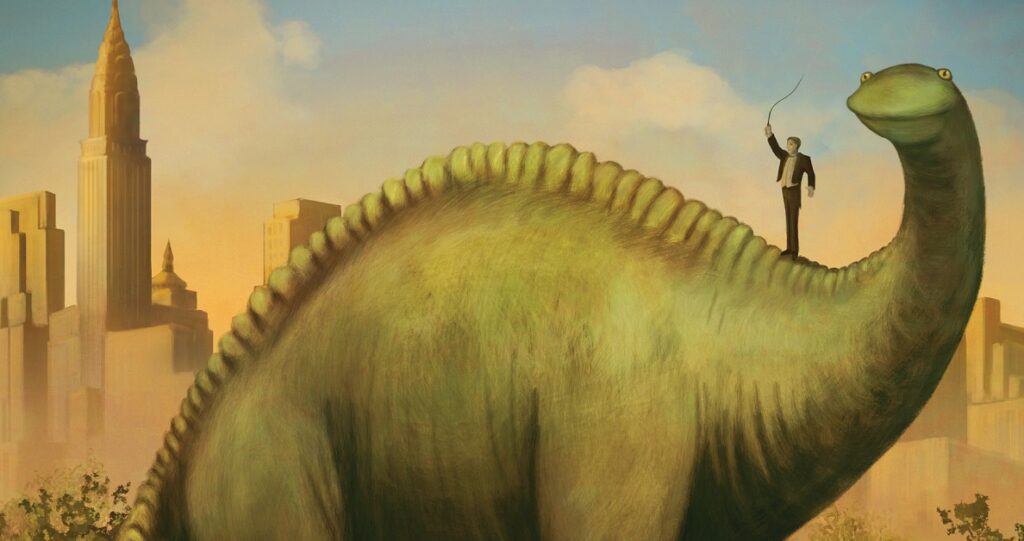
A large green dinosaur with a man in a suit on its back, set against a cityscape with skyscrapers.

Today we are excited to publish Palaeontology in Public, edited by Dr Chris Manias. This exciting new book considers the connections between palaeontology and public culture across the past two centuries. In so doing, it explores how these public dimensions have been crucial to the development of palaeontology, and indeed how they conditioned wider views of science, nature, the environment, time and the world. 

We are grateful to Chris for taking the time to answer a few questions about his work, making the book as accessible as possible, and what he’s learnt from editing this new collection.

Tell us more about your background and experience in this field

I’m a historian of science specialising in the history and cultural role of palaeontology and related fields. As well as working on Palaeontology in Public, I’ve recently written another book about the history of mammal palaeontology in the nineteenth century, looking at why scientists and public audiences in this period were so interested in fossil mammals, and what this tells us about global connections and understandings of nature and the environment in this period. I’m currently working on a new project, looking at how palaeontologists and geologists engaged with the crises of the 1920s and 1930s, and have recently been awarded a Research Fellowship by the Leverhulme Trust to work on this (detailed here, p. 9).

What do you enjoy most about your work?

As an academic employed by a university, my work is very varied, which makes it both fun and unexpected, but does also mean juggling a large number of different things! I particularly like talking to people from differing backgrounds about the cultural role of nature, deep time and evolution. People can approach these issues from very different perspectives, and so it can be a really useful meeting ground to think about different ways seeing the world, its history, and its current condition.

How did you work with the contributors to this book to ensure their voices were heard and their work is presented in the best possible light?

As this project grew out of a pre-existing network, we had a lot of activity to develop the book, making sure that everyone got their work presented well, and that they could all contribute to making the book as coherent as possible. All the contributors knew each other already, or were introduced to each other early in the process, so they could keep up to date with how the other chapters were developing. We also had a number of ways that authors could get feedback on their chapters. Each author led a session on their chapter at the Popularizing Palaeontology online meetings, which meant they could showcase their work and get feedback. I also made sure that each chapter was read over in depth by myself and at least one other book contributor (ideally one from a different field) so they had another perspective on it. And we had a small in-person workshop once the whole draft manuscript was ready, where we could talk about the book and all the comments in the round. I hope this was successful in making sure that all authors got heard, and that the book became a coherent collection of related case studies.

How did you balance the need for academic rigour with the aim to make this book accessible and engaging to a broader audience?

We are lucky with this book, in that we are dealing with topics which have a great deal of public appeal and an audience already: the role of dinosaurs, human ancestors, and prehistoric mammals in popular culture. The structure of the book, looking at particular case studies, like changing views of Spinosaurus, the animated ‘Gertie the Dinosaur’ from the 1910s, and the place of human evolution in museum and media culture, provides a series of engaging episodes which fit together into a single arc.

The book also deals with an area where there is a lot of sophisticated and complex academic work, especially around science popularization, the reconstruction of prehistoric animals, and building new perspectives on the history of palaeontology (especially as connected to changes in understanding the world and nature, and processes like scientific change, the history of the media, and colonialism). So the subject of palaeontology in public culture can act as a bridge between the wide public audience interested in palaeontology, and these more specialist academic fields.

The fact that the book is interdisciplinary, and the chapters were written by authors from different fields (and in some cases written co-written by scientists and humanities scholars), also helped make the book accessible. Given that palaeontologists are not trained in history of science, and historians of science are not trained in palaeontology, authors needed to make sure that what they were saying was absolutely clear to non-specialists when drafting and presenting their works. So this also, I think, helped with making it accessible and engaging, while still keeping things on a high intellectual level.

What advice would you give to aspiring editors, and what do you think are the key skills and attributes required?

Edited collections take a long time to put together, especially as you will be working with a large number of authors, all of whom have other commitments and projects. Some will invariably be able to devote more time to their chapters than others, and contributors will also be working at different rates and rhythms. So you do need to be able to work with people’s schedules, while making sure that things move forward at a rate that works for everyone. A combination of flexibility, alongside awareness of when things need to be pushed along (and an ability to work out how best to do that) is particularly important.

Surprise us with something unexpected you encountered in your work on this book

I especially liked the chapters which took the case studies beyond the traditional European and North American framework that a lot of the history of palaeontology has been written around. This included Irina Podgorny’s chapter on the relation between glyptodons, art and literature in twentieth-century Argentina, Zichuan Qin and Lukas Rieppel’s discussion of the role of dinosaurs in China, and the highlighting of the role of African and Asian research in palaeontology and human evolutionary studies in several chapters. These are things that the academic literature is starting to focus on, and tells the history of palaeontology in a new light.

What do you think are the biggest challenges facing academic book publishing today, and how do you see the industry evolving in the future?

The move to open access is a really important one. Incidentally, a major reason I wanted this book to be published by UCL Press is that I really like the model of open access publishing that you support, where the digital download is freely available, but it is still possible to buy the book as a well-produced printed edition. Open access presents big opportunities in terms of reaching new and expanded audiences, but also of course comes with challenges. It doesn’t fit with the for-profit model of academic publishing that has developed (very unhealthily in my view), and so there is the potential for conflict there, or for quite exploitative models of authors paying large sums of money to have articles published in open access. Also my field – History – is one where large single-authored books are the gold standard, which is a format that doesn’t fit very well with open access formats as currently envisioned. So this is going to require negotiation and new ways of working all round, which might hopefully dismantle some of the more problematic structures that have developed around for-profit academic publishing.


About the author

Chris Manias is Senior Lecturer in the History of Science & Technology at King’s College London.
Contemporary Art and the Display of Ancient Egypt: Meet the author

Today marks the publication of a new book from UCL Press: Contemporary Art and the Display of Ancient Egypt by Professor Alice Stevenson. We are delighted to celebrate this new open-access publication by sharing an interview with Alice, exploring her background in the Museum Studies and Archaeology, her reflections on her research, and how the value of mundane tasks is underestimated in understanding how museums really work.

What motivated you to write and publish this book?

Some 25 years ago during my undergraduate degree in Archaeology, one of our course convenors – Professor Colin Renfrew – experimented with a new module on ‘Contemporary Art and Architecture’. At the time I was a bit bemused by it, thinking it well outside the scope of my training to study the past, but those first engagements with contemporary art have stayed with me as a means of thinking about how we interpret the tangible remains of the past, giving me confidence to enter into spaces and query artworks in ways I don’t think I would have done independently. Having had a career in museums since my undergraduate days, I was very aware of the popularity of combining archaeological displays with artists’ interventions but I was always a little dubious about the claims that these put the past and present ‘into dialogue’. It was such a ubiquitous refrain in interviews with artists and curators that I increasingly wanted to delve into the specifics about what these juxtapositions were really doing or achieving.

Tell us more about your background and experience.

I’m an archaeologist by training, but after my undergraduate degree, I sought more vocational training in Museum Studies before undertaking a PhD where I specialised in prehistoric (Predynastic) Egypt (4000-3000 BC roughly). Throughout my doctoral studies I spent a lot of time in museums studying material from old excavations and volunteering at several institutions on documentation projects. The latter meant that my first post-doctoral studies were nothing to do with Egypt, but were instead more general Museum Studies or Information Studies research projects. I also spent some time as the archivist and librarian of the Egypt Exploration Society before moving to Oxford to be a researcher in World Archaeology at the Pitt Rivers Museum. The latter was an influential couple of years in terms of understanding museums as complex institutions, about collecting histories and the implications for modern communities of historical collecting and representation. From there, I became Curator of the Petrie Museum of Egyptian and Sudanese Archaeology which further deepened my experience of all aspects of museum work, but now within my area of expertise. All the pieces came together! I’ve been teaching Museum Studies since 2017, and putting my collections-based experience in conversation with academic literature has be helpful in developing new projects.  

How and why did you get into this subject area?

When I was trying to choose a university subject at the age of 16 I kept going back to the prospectus pages about Archaeology and was drawn to it, although I never had much interest in the excavating and surveying aspect of the field. My grandfather was an archaeologist and museum curator, and although he passed away when I was 11, I guess there was always a personal framework of love and value for museums work. From the outset of my interest in archaeology it was the material recovered and the narratives we could construct on the basis of excavated assemblages that really interested me. Having also trudged through many wet fields during my archaeological training I also figured museums were dryer and warmer (neither necessarily true, I found). I spent much of my undergraduate days volunteering in museums rather than doing more traditional fieldwork, and have been researching and working in them ever since.

Why did you choose to publish your work open access?

For this project I was a recipient of public funds through a British Academy Mid-Career Fellowship and it is only right that the outputs should be fully publicly accessible. Moreover, open access increases, to some extent, the equity of engagement with academic work globally. The intellectual capital of keeping up to date with current research should not be limited to richest countries. Since my research is primarily on Egypt’s heritage that research should be available there too. 

How do you see your research contributing to a better understanding of the world, and what potential benefits might it offer in the future?

Exploring the histories and legacies of past museum practice allows curators, artists and scholars to see what worked (or didn’t) previously, together with the contexts that constrained and enabled particular interventions. This helps us bring to the fore taken-for-granted assertions to see how they become established in the first place. Often there are agendas, biases and assumptions baked into such received wisdom that need to be actively revealed to help understand how we are making knowledge claims so we can forge a fresh path forward. It allows us to see more clearly how meanings are made and why certain ideas take hold (or don’t) at particular moments.

I hope the book can refresh a dialogue – not necessarily between past and present, but between artists, curators and archaeologists – that encourages experimentation and honesty about what can or cannot be achieved, and which is sensitive to the different sorts of values and experiences that art and archaeology can foster.

What do you think sets your approach apart from others in your field, and how do you stay innovative?

Understanding how museums work and thinking through intellectual questions as critical practice makes a difference. In other words, it is easy to critique work and representation from outside an institution with critical theory, but understanding the practical constraints and institutional structures through which knowledge is produced and reproduced is vital. I’m always looking to see what might be the wider contexts that are shaping the why’s and the how’s, so I try not to look at museum developments in isolation from the bigger socio-political forces or individual idiosyncrasies that influence them.

In terms of staying innovative, I think teaching really helps, as does writing synthesis pieces, as all of that gives you the opportunity to have a birds’-eye view of whole fields and you can see trends, gaps and challenges.

Surprise us with something unexpected you encountered in your research for this book.

I’m not sure it is unexpected but perhaps it goes against received wisdom that more recent archival records of work done in the 1990s or early 2000s will be comprehensive. I found them instead to be very sparse and harder to access than records of the nineteenth and early twentieth centuries that I’m more used to working with. The move to computers and online working has left much data trapped on outmoded forms of data storage (DVDs/1990s spreadsheets on floppy disks etc.), while the paper record is much thinner in terms of correspondence, etc.

In terms of research content, the biggest surprise for me was the dynamics of artists’ interventions at the British Museum which were much more radical than I think is generally known. Yet the fact that these interventions have not had as much of a legacy and impact in that institution is telling. Looking at the factors for why that may be is the subject of Chapter 3 of the book.

What do you see as the most exciting future directions for research in your field, and what breakthroughs do you hope to see in the coming years?

It’s refreshing to see more practitioner views and voices from outside the Eurocentric canons. Those ‘behind the scenes’ aspects of museums – collections management and storage – are also being shown to be anything but ‘background’ or ‘incidental’, and it is there that we are seeing transformations in practice that can shift the field. There’s also a heartening wider acceptance of the role that legacy collections play in archaeology and that innovative, dynamic and significant archaeological research can and does happen in museum spaces and not just through excavating more stuff in the field. The museum is not just about managing and exhibiting. Some of the old claims that the archaeological record is ‘finite’ (i.e. in danger/are limited) are really challenged by the many ways people can work with collections and the fresh perspectives different voices and backgrounds can bring. 

What advice would you give to students who are interested in pursuing a career in your field, and what skills or qualities do you think are most important for success?

Don’t under-estimate the value of mundane or routinised work such as database entry, archival sorting, or administrative tasks. Understanding how museums or institutions work from the collections outwards, rather than critiquing it from the outside in, is really important for grounded, realistic and meaningful studies.

What do you do to stay motivated and inspired in your work, and how do you maintain a positive attitude even in challenging situations?

I take inspiration for getting time to immerse myself in museums, collections or archives. Too much sitting in front of a laptop and working through academic papers is draining. My research has to be grounded in working with things and engaging with people.

In terms of motivation I’m generally an optimist and am pretty stubborn by nature, meaning I tend to plough through things to get them done. Being from Edinburgh, with a long Scottish family heritage, I picked up the ‘Scottish Presbyterian work ethic’ early, which helps – although I somewhat dispense with the frugality and ensure I do treat myself. I have clear boundaries of never working after 9pm, always closing the laptop at 5pm on Friday to make way for wine and a nice dinner, making sure the weekend is for family. Regular catch ups with friends and colleagues keep me positive, as do regular gym workouts – I can never be bothered with yoga or Pilates, it has to fast and energetic like a HIIT or Circuits class to some upbeat tunes. 


About the author

Alice Stevenson is Professor of Museum Archaeology at UCL’s Institute of Archaeology. She has previously held posts as the Curator of the Petrie Museum of Egyptian Archaeology and as Researcher in World Archaeology at the Pitt Rivers Museum. Her academic specialization is Predynastic and Early Dynastic Egyptian archaeology, but she has a written on a broad range of topics including the history of archaeology, anthropology and museums.

Alice’s previous UCL Press publications include Scattered Finds (2019), Collections Management as Critical Museum Practice (as co-editor, 2023) and The Petrie Museum of Egyptian Archaeology: Characters and Collections (as editor, 2015)

A Contemporary Archaeology of London’s Mega Events wins London Archaeological Prize

We are delighted to share the news that A Contemporary Archaeology of London’s Mega Events by Jonathan Gardner has won the London Archaeological Prize awarded by London Archaeologist to the best book about London archaeology published in the preceding two years.

Since its inception in 2004, this biennial publication prize has aimed to promote and encourage high publication standards and wider dissemination of London’s archaeological findings. London Archaeologist administers the Prize, and it is adjudicated by a panel of judges from professional, academic and voluntary sectors of archaeology.

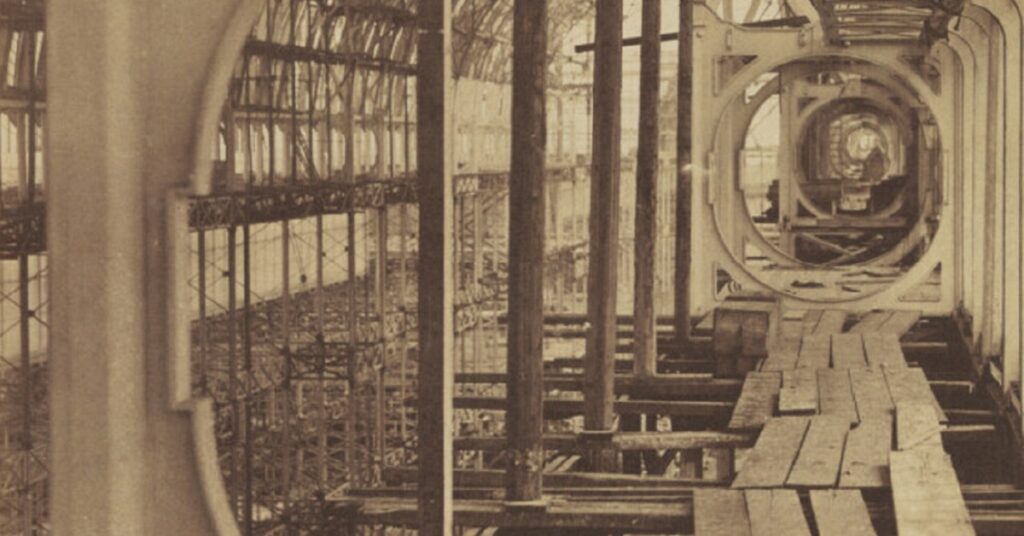
The book explores the traces of London’s most significant modern ‘mega events’: the Great Exhibition of 1851, the 1951 Festival of Britain’s South Bank Exhibition and the 2012 Olympic and Paralympic Games. Though only open for a few weeks or months, mega events permanently and disruptively reshape their host cities and societies: they demolish and rebuild whole districts, they draw in materials and participants from around the globe and their organisers self-consciously seek to leave a ‘legacy’ that will endure for decades or more.

The judges commented:

‘An exceptional piece of well-written, new, and original research unparalleled for quality and excellence.’

‘The book is a Mega Event in its own right and in my opinion quite brilliant. It is meticulous (but) unpretentious – an excellent balance, well-written, complex but very accessible. A great achievement.’

Congratulations to Dr Gardner!

First textbook in major new series on world and minority languages to publish this week

Students in a class room.

UCL Press is delighted to announce the publication of the first book in the open access Textbook of World of Minority Languages series, marking a significant milestone in the teaching of world and minority languages.

Designed to meet the needs of today’s students, the open access series consists of contemporary and accessible beginners’ language textbooks of the world’s less commonly taught languages with an emphasis on Indigenous, regional, minority, and endangered languages, as well as ancient languages.

The first title, Baghdadi Judeo-Arabic, focuses on the native tongue spoken by the Jews of Baghdad and other towns of Southern Iraq, historically one of the oldest and biggest Jewish communities. This textbook is dedicated to spoken Baghdadi Judeo-Arabic and is designed to guide beginners to an advanced level, with the goal of enabling basic conversations. It focuses on common expressions of this unique dialect and opens a window to Baghdad’s historic Jewish culture. The 10 lessons guide readers through a particular topic, such as greetings, family, shopping or cuisine, and consist of sample texts, key vocabulary, grammar points and exercises; it also includes free access to audio files, additional activities and links to the exercises.

The series will continue to highlight languages which presently lack easy-to-use English-medium textbooks, complementing the UCL Press open access series Grammars of World and Minority Languages. The textbooks equip both classroom and independent learners with the knowledge of the language’s basic grammatical structures, high frequency vocabulary, and salient cultural topics. For modern spoken languages emphasis is placed on everyday communicative situations, while for ancient languages the focus is on reading texts.

Dhara Snowden, UCL Press textbook Programme manager, said: ‘I’m thrilled to be publishing this important work from Dr. Bar-Moshe. The teaching and learning of rare and minority languages should be supported and protected and this series aims to do just that, by providing high-quality resources for both academics and students. By publishing OA, we remove all financial barriers to access and ability to reuse (under the CC licence) and hope this text reaches a global audience.’

Essential reading for COP29 from UCL Open Environment

A series of vertical coloured bars, showing the progressive heating of our planet. They progress from blue through to red and show c how global average temperatures have risen over nearly two centuries,

From 11-22 November 2024, nearly 200 world leaders and 30,000 delegates will come together in Azerbaijan’s capital, Baku, to coordinate global climate action for the year ahead at the latest UN Climate Change Convention Conference of the Parties (COP). We asked the UCL Open Environment team reflect on some of the articles that have published in the journal’s UNFCCC/COP collection.

This collection provides researchers, academics and professionals the opportunity to publish open access scholarly and research articles, for free, about key topics covered at COP. Whether focused on The Paris Agreement, Glasgow Climate Pact or the UN led Early Warnings for All Initiative, all are welcome. In this blog we highlight a series of articles from the UCL (University College London, UK) delegation team that attended COP and whom are playing a critical role to providing evidence based research to decision-makers to implement effective climate change policies.

In ‘A short history of the successes and failures of the international climate change negotiations’ the authors helpfully remind us in their review of the timeline and major events of the past COP meetings, tracing key achievements but also setbacks. Here, they analyse major agreements, including the Kyoto Protocol and Paris Agreement, assessing how political, economic, and social challenges have influenced progress and emphasise the importance of collaboration and accountability for future climate policy to effectively address a warming world due to an increasing amount of anthropogenic carbon dioxide in the atmosphere.

Addressing the large carbon footprint of a warming world is a major focus and one which takes centre stage at many scientific and scholarly conferences across world. COP29 in Baku is no different. Since 2022, UCL’s delegation have each year provided articles focusing on UCL’s own carbon footprint to calculate and weigh up the benefits of certain modes of transport. In the first of these articles titled ‘Location, location, location: A carbon footprint calculator for transparent travel to COP27’, the research group from UCL discuss how they calculate carbon emissions associated with travel to the COP27 in Sharm El-Sheikh, Egypt, climate conference, emphasising the need for transparency in environmental impact assessments for event-related travel and aims to inform sustainable travel choices by highlighting carbon footprints linked to various transportation options.

Building on from this, in ‘Navigating the Climate Conferences: Comparing the Carbon Footprint of Private Jet Travel and Other Modes of Transport to COP28’ the authors looked at private jet travel to COP28 in Dubai, the United Arab Emirates, which, at the time, were expected to generate nine times more the emissions of commercial flights and much more than public transport (like train or bus travel), that are in stark contrast with the climate goals of these events.

Now, in their latest update, for COP29, ‘The Road to Baku: The Carbon Cost of Getting to COP29 in Azerbaijan’ provides updated data and analysis on the travel options from the United Kingdom to Baku, highlighting the carbon cost of such travel. Ultimately, the research in these series of articles aims to encourage greater levels of transparency on travel choices and emissions to inform positive and sustainable travel policies.

Read more about the collection including how to contribute, by visiting https://journals.uclpress.co.uk/ucloe/collections/455

This article is adapted from the UCL Open Environment blog post ‘COP and UCL Open: Environment’.

About UCL Open Environment

UCL Open Environment is a fully non-commercial, Open Science scholarly journal, publishing high impact, multi-disciplinary research, on real world environmental issues, with the overall aim of benefitting humanity. Published by UCL Press, submission is open to anyone at any institution and from anywhere in the world. Unlike typical, single disciplinary journals, UCL Open Environment is the only dedicated multi-disciplinary environmental Open Science journal that publishes broadly across all environment-related subjects.

Episode 5 of The Greatest Good now available!

'Pink and yellow graphic featuring a line drawing of Jeremy Bentham, the text 'Coming soon: The Greatest Good'.

UCL Press Play is delighted to announce the release of the fifth – and final – episode of the podcast series The Greatest Good, which explores the lasting influence of the philosopher Jeremy Bentham, whose radical progressivism was the intellectual inspiration for UCL.

In the final episode, a video podcast, Professor Philip Schofield engages with art historian and co-director of qUCL (UCL’s Queer Studies network), Professor Bob Mills, to explore the legend and cult of St. Wilgefortis in medieval Europe. Professor Mills highlights Wilgefortis as a non-binary figure, challenging both the popular belief that the Middle Ages adhered to strictly binary gender norms, and the notion that gender diversity is a modern phenomenon.

Episodes 1 to 4 are available to download now, and the documentary ‘Bentham’s Defence of Sexual Liberty’ is available to stream now via YouTube.

About The Greatest Good

The inaugural series from UCL Press Play, The Greatest Good, explores the lasting influence of the philosopher Jeremy Bentham, whose radical progressivism was the intellectual inspiration for UCL. As the first entirely secular university to admit students regardless of religion, UCL was inspired by Bentham’s principles of equality and intellectual freedom.

About UCL Press Play

UCL Press Play is a new initiative presenting documentary videos and podcasts featuring aspects of UCL’s sector-leading research, and casting light on the contribution UCL makes to society.

Just as UCL Press makes its work accessible through Open Access, UCL Press Play brings the ground-breaking research of London’s global university to audiences worldwide.

CfP: Urban Africa series

The image shows the Malian market at the railway terminus in Dakar, as featured on the cover of Urban Displacement and Trade in a Senegalese Market.

To celebrate World Urbanism Day, the editors of the open access Urban Africa series, co-published with the International African Institute, have opened a new call for proposals for new books.  The series provides a platform for critical, in-depth analysis of key contemporary issues affecting urban environments across the African continent.

The editors aim to work in close collaboration with African based networks and centres of urban scholarship to publish the best of urban research on Africa, prioritising the publication of work by scholars based in African contexts as well as leading African scholars globally. Their goals are to publish an urban studies series with a distinctive African-centred approach; to provide a high-profile platform to urban scholars from the African continent; to bring the best work in African urban studies globally to African studies audiences; and to make publications widely accessible to African based scholars.

The series tackles the most important issues of the day, such as demographic change; climate change; increasing mobility; major infrastructure investments. It fosters transdisciplinary perspectives, with strong links to all areas of research prominent in urban studies, notably human geography, architecture, ethnography, anthropology, sociology, environmental studies, urban planning, politics and development. It seeks to establish insights from African urbanisms as fundamental to theory development in urban studies and place African cities in conversation with other urban contexts. The series also seeks to showcase the best of urban scholarship emanating from the African continent, and to amplify the voices of scholars who are immersed in the day-to-day realities of African urban life. The series is open to both conventional and innovative formats.

UCL Press books are open access, and manuscripts accepted for this series will incur no book publishing charge.

All proposals and further queries can be directed to Stephanie Kitchen, sk111@soas.ac.uk, or to one of the lead editors, Jennifer Robinson (Jennifer.Robinson@ucl.ac.uk) and Jeffrey Paller (jpaller@usfca.edu).

More details about the series can be found at: https://www.internationalafricaninstitute.org/publishing/urban-africa-book-series

Sign up to our newsletter

Don't miss out!
Subscribe to the UCL Press newsletter for the latest open access books,
journal CfPs, news and views from our authors and much more!