New Sensory Approaches to the Past shortlisted for the EAA Book Prize 2026

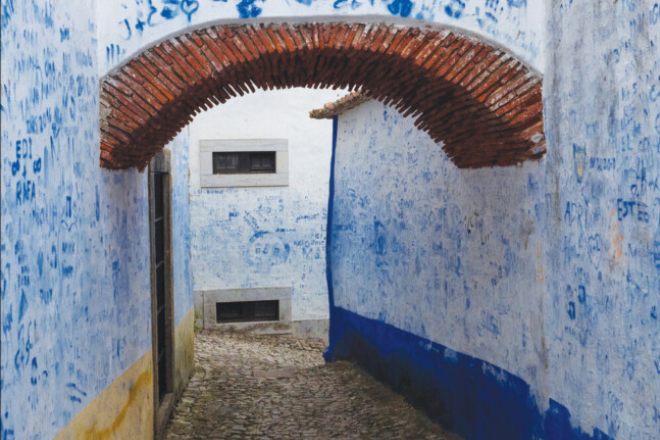
A narrow cobblestone alleyway with white walls covered in blue graffiti and a red brick archway overhead, as featured on the cover of New Sensory Approaches to the Past.

We are delighted to announce that New Sensory Approaches to the Past: Applied Methods in Sensory Heritage and Archaeology, edited by Pamela Jordan, Sara Mura and Sue Hamilton, has been shortlisted for the 2026 European Association of Archaeologists (EAA) Book Prize.

Awarded annually, the EAA Book Prize recognises exceptional recent publications by EAA members. This year’s prize attracted a highly competitive field, with a selection of seven titles shortlisted.

The winner will be announced at the Opening Ceremony of the 32nd Annual Meeting of the European Association of Archaeologists, which will take place in Athens later this year.

Shortlisting for the prize reflects the originality, scholarly quality and wider contribution of New Sensory Approaches to the Past. Bringing together an international range of contributors, the volume explores how people in the past experienced their worlds through the senses, offering innovative approaches that challenge the predominantly visual focus of traditional archaeological research.

Through case studies spanning diverse periods and geographies, the book demonstrates how attention to sound, smell, movement and embodied experience can open up new perspectives on cultural environments and lived experience. Its interdisciplinary scope highlights the value of integrating methods and insights from across archaeology and beyond.

Published open access by UCL Press, the book is freely available to read online, ensuring its research can reach and inform readers across the world.

We warmly congratulate the editors and contributors on this well-deserved recognition and look forward to the announcement of the 2026 prize winner in Athens.

Discover object-based learning: Workshop and book launch with Thomas Kador

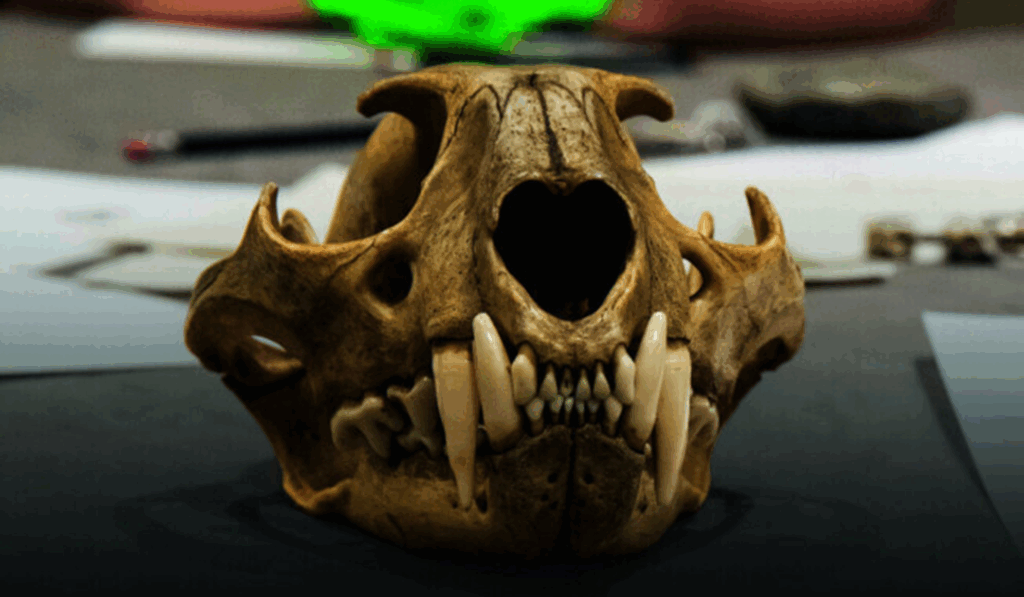
Animal skull with prominent canines on a tabletop.

Join Thomas Kador, author of the new textbook Object-based Learning: Exploring Museums and Collections in Education for an afternoon and evening of events and activities, centring on UCL’s museums and their unique collections.

To mark the publication of Thomas Kador’s Object-based Learning: Exploring Museums and Collections in Education, that author is hosting an Object-based Learning (OBL) workshop followed by a reception and book launch.

The workshop will take place at UCL Institute of Advanced Studies, and provides an opportunity to encounter and explore some of the objects that are featured in the book as well as a range of other OBL activities.

This will be followed by a reception and book launch at the Grant Museum of Zoology, introduced by Professor Helen Chatterjee.

While this book will be freely downloadable from early September (via the link below), paper copies will be available for purchase on the day. https://uclpress.co.uk/book/object-based-learning/

Schedule

2.30-4.30pm: OBL workshop at the IAS (and the UCL Art Museum), ground floor, South Wing
Explore some of the objects discussed in the book and participate in a range of object-based activities, facilitated by the book’s author and colleagues from UCL Museums and Collections. 

5.45pm: Book launch and wine reception at the Grant Museum of Zoology
Enjoy a glass of wine, beer or non-alcoholic alternative, meet some more of the specimens discussed in the book and join some conversations about the book in the surroundings of UCL’s recently refurbished Grant Museum.

You can choose to attend one or both sections of the day. Please select the relevant ticket when registering: 
https://object-based-learning.eventbrite.co.uk

New open access books published in September 2025

Rock pool

September marks the start of a new academic year, and UCL Press welcomed it with a selection of five new open access titles. September’s releases spanned museum studies, pedagogy, urban knowledge co-production, Victorian collecting, and children’s wellbeing in cities.

Object-Based Learning: Exploring museums and collections in education

Thomas Kador

Object-Based Learning provides a concise overview of some of the most important approaches to material culture and object analysis in plain and easily understandable language, that is equally accessible to undergraduate and postgraduate students as well as lecturers.

Read and download free.

Millionaire Shopping: The collections of Alfred Morrison, 1821-1897

Edited by Caroline Dakers

Millionaire Shopping is the first full, detailed and original account of the huge and unstoppable collecting and patronage of Alfred Morrison (1821-1897) who was one of the most important Victorian collectors and patrons of the arts. Each chapter is written by an expert in the field and dedicated to a particular aspect of Morrison’s collecting and patronage.

Read and download free,

Urban Childhoods: Growing up in inequality and hope

Edited by Claire Cameron

Urban Childhoods puts children’s and families’ voices centre stage while investigating ways of bringing children’s wellbeing to the fore in planning for urban life. The book explores themes that start from what children find important and details strategies that emerged from a major prevention programme conducted in two English cities.

Read and download free,

Co-production of Knowledge in Action: Emancipatory strategies for urban equality

Cassidy Johnson, Vanesa Castán Broto, Wilbard Kombe, Catalina Ortiz, Barbara Lipietz, Emmanuel Osuteye, Caren Levy

Co-production of Knowledge in Action examines how co-production is articulated and deployed in cities such as Lima, Freetown, Kampala, Dar es Salaam and Delhi. It engages with ongoing experiences of co-production-inspired action, mapping the different aspirations that inform co-production practices and the impacts on urban communities.

Read and download free.

Deconstituting Museums: Participation’s affective work

Helen Graham

Deconstituting Museums argues that participation collides with dominant paradigms of inclusion, diversity and decision-making on behalf of ‘future generations’ and ‘the public’. Participation draws in ideas from direct and horizontal political traditions. How might participation and its affects enable new political structures of heritage?

Read and download free

We’ll be back next month with more open access gems. Until then, stay safe, and happy reading!

Tackling difficult histories with (museum) objects

Animal skull with prominent canines on a tabletop.

What can a preserved animal specimen tell us about colonialism, extinction and even genocide? In this blog post, Thomas Kador reflects on the themes of his recent book Object-Based Learning: Exploring Museums and Collections in Education and considers how museum objects, often seen as neutral or purely scientific, can reveal troubling histories. From the Thylacine skeleton in UCL’s Grant Museum to instruments linked to eugenics, these objects challenge us to confront uncomfortable truths and rethink the role of collections in education.

Object-based learning (OBL) refers to a pedagogy based on working with material culture in support of learning and critical engagement with the world. While object-based approaches can involve all types of objects, there is usually a particular focus on items from museums and other curated collections.

My recent book Object-Based Learning: Exploring Museums and Collections in Education explores the many ways in which we can employ objects in formal and informal educational settings, and the benefits of doing so. Research repeatedly demonstrates that learners find working with objects – especially heritage ones – inspiring. It also shows that working with objects can support the development of subject-specific, transferable, and interdisciplinary skills, as well as benefit learners’ health and wellbeing.

You can probably recall a time when you felt inspired by a beautiful museum object or work of art, but there are museum objects that testify to much darker and challenging parts of human history. This does not diminish their capacity to facilitate learning. On the contrary, such objects represent extremely powerful catalysts for interrogating the past, including power structures, abuses of power, injustices, and even atrocities. 

There are some well-known examples you might be aware of, such as the so-called Benin bronzes in the British Museum, and the artworks that were stolen by Nazi officials from their Jewish owners during the Holocaust. However, many items’ connection to difficult histories is less readily apparent, and we need to scratch a little deeper  below the surface to reveal their stories.

For example, the deep entanglement of many museums and collections in the colonial project is well known. Objects and specimens allow us to lift the curtain on colonial exploits, with much of the discourse focusing  on archaeological, anthropological, and historical museums, and – to a lesser extent – art collections. But what about natural history museums? Often mistakenly seen solely as spaces of scientific study which are unconnected to past or present political situations, these museums can also reveal problematic histories if we dig a little deeper.

UCL’s Grant Museum of Zoology has a collection of animal specimens that stretch back to the university’s foundation in 1826. When the collection was started in the 1820s and 30s, animals which have since become endangered or extinct were still in existence. For example, the museum has a collection of Thylacine – commonly known as the Tasmanian Tiger – material, consisting of a complete skeleton, some skulls, a number of other bones and a fluid specimen (i.e. a dissected animal preserved in alcohol). As Thylacines became extinct nearly 90 years ago,  the remains at the Grant Museum are significant, especially as the fluid specimen is possibly the only one in the world.

But this is where it gets political, as Tasmania – the island from where the Thylacine specimens originate – was declared a British colony in 1825. At the time, the Thylacine, the largest modern day marsupial carnivore, was seen as a threat to European sheep plantations, and a bounty was placed on their pelts. This resulted in perhaps the only documented purposeful extinction of an entire animal species in human history. The mission ‘succeeded’, and by 1936 the last known Thylacine had died in that Australian zoo. The native human population did not fare much better, with the colonisers coming extremely close to exterminating the local Aboriginal people during the 1824-1832 Tasmanian war. It is striking how quickly a seemingly ‘harmless’ specimen in a natural history collection can become an emblem not only of its own species’ extinction, but also a reminder of the genocides perpetrated by Europeans on Tasmanians and other Aboriginal peoples. 

While these are truly dark subjects, museum objects and specimens allow us to explore them closely in a relatively safe and non-confrontational manner. We can interrogate difficult topics from multiple perspectives, including some that differ from our own personal views. This brings us back to the role of objects as conduit for highlighting and critiquing institutional power and violence without being violent in their own right. This allows learners to confront uncomfortable truths, such as our own complicity – or inaction – in local or global injustices.

As an employee of UCL, it would be remiss of me not to mention my institution’s promotion of scientifically racist and ableist ideas through its enthusiastic embrace of eugenics in the early twentieth century. As a legacy of UCL’s involvement, we have a collection of objects, instruments and materials related to the study of eugenics, which recently have found new use as items that allow learners to critically engage with this troubled history. In this context, objects that were once instruments of oppression are now enabling students and researchers to interrogate, challenge, and come to terms with these practices and the mindsets that gave rise to them. The objects remain as tangible connections to these troublesome chapters of human history, but they have been transformed from tools of power and domination to facilitators of dialogue and cultural understanding.

New open access books published in July 2025

Horses on a Carousel Roundabout

July’s sunny weather wasn’t an excuse to relax at UCL Press – we’ve been busier than ever with five new open access books! Covering topics from historical memory and mental health to kinship, sensory heritage, and literary masculinity, these titles are, as always, freely available to download from our website.

An important addition to historical scholarship, Conversations with Third Reich Contemporaries: From Luke Hollands Final Account presents excerpts from filmed interviews conducted by British documentary filmmaker Luke Holland. Most interviewees were young adults when the war ended; some had benefited from Nazism. The book raises critical awareness of issues around representation, authenticity and the co-production of narratives. Download it free.

The ground-breaking Petty Tyranny and Soulless Discipline? Patients, policy and practice in public mental hospitals in England, 1918–1930 examines England’s public mental hospitals for the working class after the First World War. Narratives of patients’ difficult daily lives are interwoven with analysis of competing agendas from campaigners, government and new medical knowledge, to build a complex picture of mental health provision. Download free.

The fantastic Marriage Matters: Imagining love and belonging in Uganda engages with new and classic anthropological theory, and gender studies about kinship, marriage, relatedness and temporality. It examines how partnership, kinship, child filiation, friendship, ideas about love and commitment have been changing, and how Ugandans imagine past and future relationship between genders and generations. Download it free.

Presenting studies of historical environments through the lens of the senses, New Sensory Approaches to the Past: Applied methods in sensory heritage and archaeology showcases the latest approaches to sensory research through real-world scenarios of human−environment connections. Interdisciplinary examples of diverse sensory in-situ studies will enable readers to replicate and enhance their own investigations. Whether you’re a student, academic or researcher, it’s a fantastic read. Download it free.

Finally, the latest volume of the Comparative Literature and Culture series, Heterosexual Masculinities and the Self-Reflexive Novel examines how the narratives of, J. M. Coetzee, Milan Kundera, Philip Roth and Mario Vargas Llosa, offer a standpoint through which to address the inscription of heterosexual masculinity into Western literary legacy and the ways in which masculinity is re-fashioned in contemporary self-reflexive novels. Download it free.

We’ll be back again next month with a round up of the very best open access books. As always, stay safe!

New open access books published in January 2025

Books on a wooden bookshelf in UCL library.

2025 has begun in the best way possible- with four brand new open access books!

Our first book of the year, The Laissez-Faire Peasant: Post-socialist rural development in Serbia examines manifestations of peasant autonomy, both in response to and independent of state rural development policies through a multi-sited ethnography of three Serbian villages. It is shown how these factors impede state programs for rural development while enabling the spontaneous flourishing of local communities. By focusing on the agency of rural residents, the book finds that peasants are resilient and competent agents who do not need government plans to thrive.

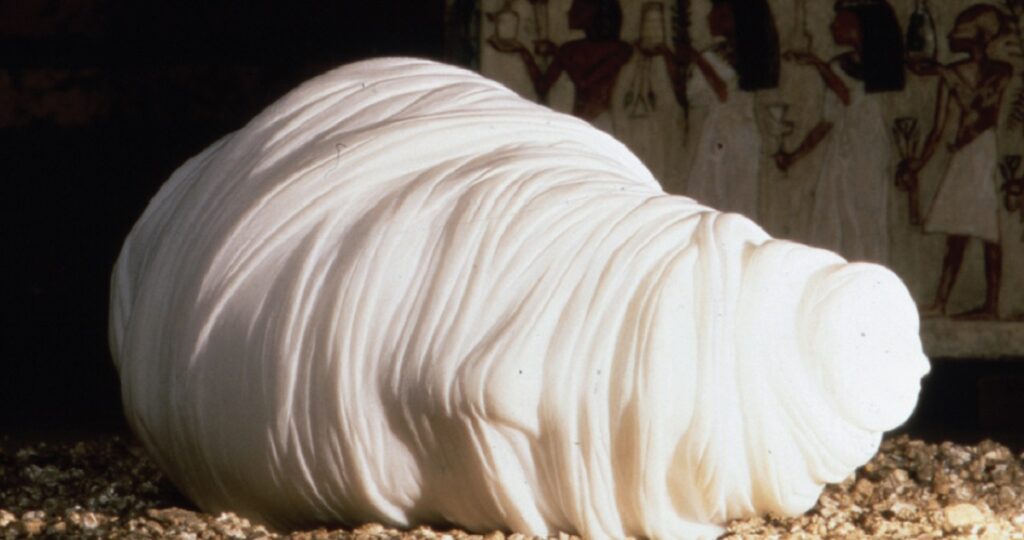
This was closely followed by Alice Stevenson’s Contemporary Art and the Display of Ancient Egypt argues that the contemporary and the ancient do not necessarily inform each other. Rather than explore how contemporary artists have been inspired by Egypt, this book examines how they have shaped the language and discourse around study of the Egyptian past by looking at the wider field of public display in which both have been historically situated. Building on this critical history of practice, the book draws from experiments in bringing contemporary artistic sculptures, conceptual pieces, multimedia films, sounds, smells and performances into galleries: at the British Museum in London, the Egyptian Museum in Turin and the State Museum of Egyptian Art in Munich. These are used to explore what contemporary art does in these spaces, the motivations for inviting artists in, and the legacies of those interventions. It ends with a reflection on how academics and curators can be involved in the creative process and how artists contribute to academic research.

The edited collection Palaeontology in Public: Popular science, lost creatures and deep time followed. This delightful book  considers the connections between palaeontology and public culture across the past two centuries. In so doing, it explores how these public dimensions have been crucial to the develo Dinosaurs feature, of course, including Spinosaurus, Winsor McCay’s ‘Gertie the Dinosaur’ and the creatures of Jurassic Park and The Lost World. A must for anyone with an interest in history of science, palaeontology and culture.

The final book of the month was the immensely important War Essays. In this fantastically absorbing book, Zainab Bahrani charts the devastation, cultural cleansing and targeted erasure of Iraq’s past, and argues that the topics of archaeology, history and memory must be analysed within the larger geopolitical issues of the contemporary Middle East. The essays present a counter-narrative of events that historicize the position of the historian and illustrate the enduring colonial practices of archaeology. Set within a narrative that reflects at once upon the violence of war and the processes of writing, an archaeologist’s personal journey unfolds. War Essays intertwines the autobiographical with the historical and analytical aspects of scholarship, weaving an eye-witness account of war with theoretical discussions around writing, the relationship of monuments, historical landscapes and memory, and how one’s sense of place in the world is disrupted by war. Definitely not one to miss.

We’ll be back again next month with a round up of the very best open access books. As always, stay safe!

Contemporary Art and the Display of Ancient Egypt: Meet the author

Today marks the publication of a new book from UCL Press: Contemporary Art and the Display of Ancient Egypt by Professor Alice Stevenson. We are delighted to celebrate this new open-access publication by sharing an interview with Alice, exploring her background in the Museum Studies and Archaeology, her reflections on her research, and how the value of mundane tasks is underestimated in understanding how museums really work.

What motivated you to write and publish this book?

Some 25 years ago during my undergraduate degree in Archaeology, one of our course convenors – Professor Colin Renfrew – experimented with a new module on ‘Contemporary Art and Architecture’. At the time I was a bit bemused by it, thinking it well outside the scope of my training to study the past, but those first engagements with contemporary art have stayed with me as a means of thinking about how we interpret the tangible remains of the past, giving me confidence to enter into spaces and query artworks in ways I don’t think I would have done independently. Having had a career in museums since my undergraduate days, I was very aware of the popularity of combining archaeological displays with artists’ interventions but I was always a little dubious about the claims that these put the past and present ‘into dialogue’. It was such a ubiquitous refrain in interviews with artists and curators that I increasingly wanted to delve into the specifics about what these juxtapositions were really doing or achieving.

Tell us more about your background and experience.

I’m an archaeologist by training, but after my undergraduate degree, I sought more vocational training in Museum Studies before undertaking a PhD where I specialised in prehistoric (Predynastic) Egypt (4000-3000 BC roughly). Throughout my doctoral studies I spent a lot of time in museums studying material from old excavations and volunteering at several institutions on documentation projects. The latter meant that my first post-doctoral studies were nothing to do with Egypt, but were instead more general Museum Studies or Information Studies research projects. I also spent some time as the archivist and librarian of the Egypt Exploration Society before moving to Oxford to be a researcher in World Archaeology at the Pitt Rivers Museum. The latter was an influential couple of years in terms of understanding museums as complex institutions, about collecting histories and the implications for modern communities of historical collecting and representation. From there, I became Curator of the Petrie Museum of Egyptian and Sudanese Archaeology which further deepened my experience of all aspects of museum work, but now within my area of expertise. All the pieces came together! I’ve been teaching Museum Studies since 2017, and putting my collections-based experience in conversation with academic literature has be helpful in developing new projects.  

How and why did you get into this subject area?

When I was trying to choose a university subject at the age of 16 I kept going back to the prospectus pages about Archaeology and was drawn to it, although I never had much interest in the excavating and surveying aspect of the field. My grandfather was an archaeologist and museum curator, and although he passed away when I was 11, I guess there was always a personal framework of love and value for museums work. From the outset of my interest in archaeology it was the material recovered and the narratives we could construct on the basis of excavated assemblages that really interested me. Having also trudged through many wet fields during my archaeological training I also figured museums were dryer and warmer (neither necessarily true, I found). I spent much of my undergraduate days volunteering in museums rather than doing more traditional fieldwork, and have been researching and working in them ever since.

Why did you choose to publish your work open access?

For this project I was a recipient of public funds through a British Academy Mid-Career Fellowship and it is only right that the outputs should be fully publicly accessible. Moreover, open access increases, to some extent, the equity of engagement with academic work globally. The intellectual capital of keeping up to date with current research should not be limited to richest countries. Since my research is primarily on Egypt’s heritage that research should be available there too. 

How do you see your research contributing to a better understanding of the world, and what potential benefits might it offer in the future?

Exploring the histories and legacies of past museum practice allows curators, artists and scholars to see what worked (or didn’t) previously, together with the contexts that constrained and enabled particular interventions. This helps us bring to the fore taken-for-granted assertions to see how they become established in the first place. Often there are agendas, biases and assumptions baked into such received wisdom that need to be actively revealed to help understand how we are making knowledge claims so we can forge a fresh path forward. It allows us to see more clearly how meanings are made and why certain ideas take hold (or don’t) at particular moments.

I hope the book can refresh a dialogue – not necessarily between past and present, but between artists, curators and archaeologists – that encourages experimentation and honesty about what can or cannot be achieved, and which is sensitive to the different sorts of values and experiences that art and archaeology can foster.

What do you think sets your approach apart from others in your field, and how do you stay innovative?

Understanding how museums work and thinking through intellectual questions as critical practice makes a difference. In other words, it is easy to critique work and representation from outside an institution with critical theory, but understanding the practical constraints and institutional structures through which knowledge is produced and reproduced is vital. I’m always looking to see what might be the wider contexts that are shaping the why’s and the how’s, so I try not to look at museum developments in isolation from the bigger socio-political forces or individual idiosyncrasies that influence them.

In terms of staying innovative, I think teaching really helps, as does writing synthesis pieces, as all of that gives you the opportunity to have a birds’-eye view of whole fields and you can see trends, gaps and challenges.

Surprise us with something unexpected you encountered in your research for this book.

I’m not sure it is unexpected but perhaps it goes against received wisdom that more recent archival records of work done in the 1990s or early 2000s will be comprehensive. I found them instead to be very sparse and harder to access than records of the nineteenth and early twentieth centuries that I’m more used to working with. The move to computers and online working has left much data trapped on outmoded forms of data storage (DVDs/1990s spreadsheets on floppy disks etc.), while the paper record is much thinner in terms of correspondence, etc.

In terms of research content, the biggest surprise for me was the dynamics of artists’ interventions at the British Museum which were much more radical than I think is generally known. Yet the fact that these interventions have not had as much of a legacy and impact in that institution is telling. Looking at the factors for why that may be is the subject of Chapter 3 of the book.

What do you see as the most exciting future directions for research in your field, and what breakthroughs do you hope to see in the coming years?

It’s refreshing to see more practitioner views and voices from outside the Eurocentric canons. Those ‘behind the scenes’ aspects of museums – collections management and storage – are also being shown to be anything but ‘background’ or ‘incidental’, and it is there that we are seeing transformations in practice that can shift the field. There’s also a heartening wider acceptance of the role that legacy collections play in archaeology and that innovative, dynamic and significant archaeological research can and does happen in museum spaces and not just through excavating more stuff in the field. The museum is not just about managing and exhibiting. Some of the old claims that the archaeological record is ‘finite’ (i.e. in danger/are limited) are really challenged by the many ways people can work with collections and the fresh perspectives different voices and backgrounds can bring. 

What advice would you give to students who are interested in pursuing a career in your field, and what skills or qualities do you think are most important for success?

Don’t under-estimate the value of mundane or routinised work such as database entry, archival sorting, or administrative tasks. Understanding how museums or institutions work from the collections outwards, rather than critiquing it from the outside in, is really important for grounded, realistic and meaningful studies.

What do you do to stay motivated and inspired in your work, and how do you maintain a positive attitude even in challenging situations?

I take inspiration for getting time to immerse myself in museums, collections or archives. Too much sitting in front of a laptop and working through academic papers is draining. My research has to be grounded in working with things and engaging with people.

In terms of motivation I’m generally an optimist and am pretty stubborn by nature, meaning I tend to plough through things to get them done. Being from Edinburgh, with a long Scottish family heritage, I picked up the ‘Scottish Presbyterian work ethic’ early, which helps – although I somewhat dispense with the frugality and ensure I do treat myself. I have clear boundaries of never working after 9pm, always closing the laptop at 5pm on Friday to make way for wine and a nice dinner, making sure the weekend is for family. Regular catch ups with friends and colleagues keep me positive, as do regular gym workouts – I can never be bothered with yoga or Pilates, it has to fast and energetic like a HIIT or Circuits class to some upbeat tunes. 


About the author

Alice Stevenson is Professor of Museum Archaeology at UCL’s Institute of Archaeology. She has previously held posts as the Curator of the Petrie Museum of Egyptian Archaeology and as Researcher in World Archaeology at the Pitt Rivers Museum. Her academic specialization is Predynastic and Early Dynastic Egyptian archaeology, but she has a written on a broad range of topics including the history of archaeology, anthropology and museums.

Alice’s previous UCL Press publications include Scattered Finds (2019), Collections Management as Critical Museum Practice (as co-editor, 2023) and The Petrie Museum of Egyptian Archaeology: Characters and Collections (as editor, 2015)
A Contemporary Archaeology of London’s Mega Events wins London Archaeological Prize

We are delighted to share the news that A Contemporary Archaeology of London’s Mega Events by Jonathan Gardner has won the London Archaeological Prize awarded by London Archaeologist to the best book about London archaeology published in the preceding two years.

Since its inception in 2004, this biennial publication prize has aimed to promote and encourage high publication standards and wider dissemination of London’s archaeological findings. London Archaeologist administers the Prize, and it is adjudicated by a panel of judges from professional, academic and voluntary sectors of archaeology.

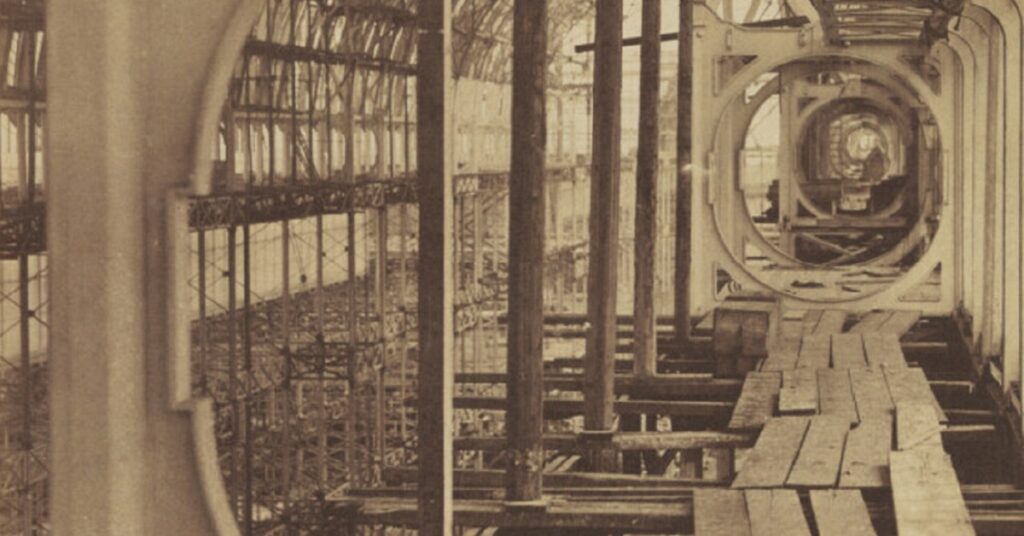
The book explores the traces of London’s most significant modern ‘mega events’: the Great Exhibition of 1851, the 1951 Festival of Britain’s South Bank Exhibition and the 2012 Olympic and Paralympic Games. Though only open for a few weeks or months, mega events permanently and disruptively reshape their host cities and societies: they demolish and rebuild whole districts, they draw in materials and participants from around the globe and their organisers self-consciously seek to leave a ‘legacy’ that will endure for decades or more.

The judges commented:

‘An exceptional piece of well-written, new, and original research unparalleled for quality and excellence.’

‘The book is a Mega Event in its own right and in my opinion quite brilliant. It is meticulous (but) unpretentious – an excellent balance, well-written, complex but very accessible. A great achievement.’

Congratulations to Dr Gardner!

Sign up to our newsletter

Don't miss out!
Subscribe to the UCL Press newsletter for the latest open access books,
journal CfPs, news and views from our authors and much more!