Celebrate World Social Media Day with the Why We Post series

Today is World Social Media Day, a moment to reflect on how deeply digital platforms shape everyday life. From sharing moments with friends to building communities across continents, social media has become central to how we connect, communicate and understand the world.

This makes it the perfect moment to revisit the ground-breaking open access Why We Post series, which explores not just how we use social media, but why it matters across different cultures and societies.

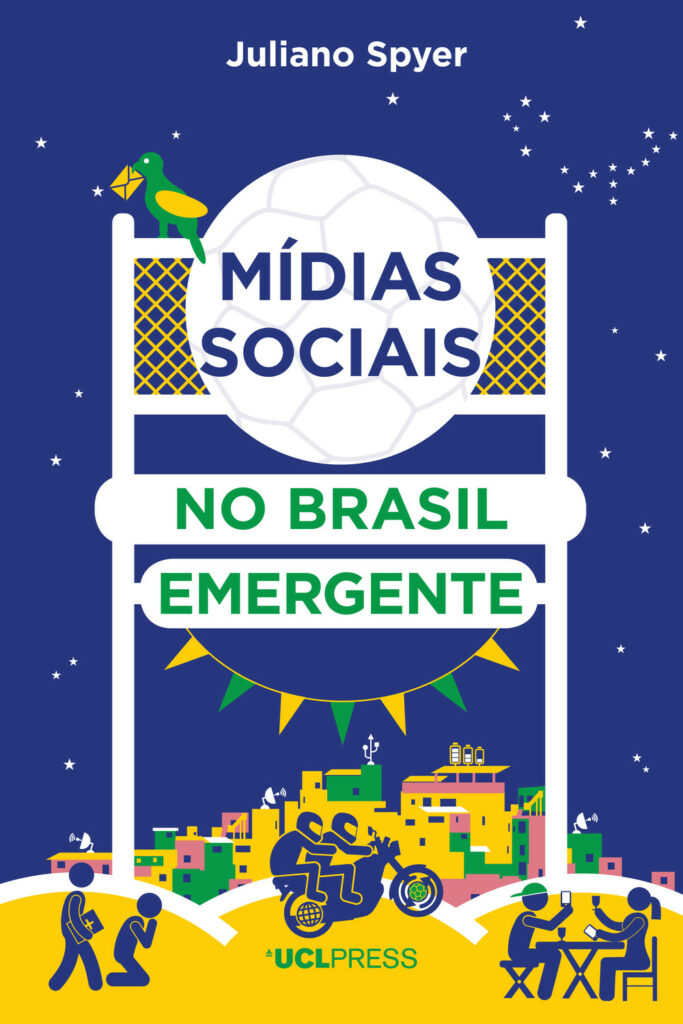
Why We Post set out to answer these questions by looking beyond headlines and assumptions. Nine anthropologists spent 15 months living in communities across China, Brazil, Turkey, Chile, India, England, Italy and Trinidad. Their research focused not just on platforms, but on what people actually share and why.

The series moves beyond headlines and assumptions. Nine anthropologists spent 15 months living in communities across China, Brazil, Turkey, Chile, India, England, Italy and Trinidad, exploring not just the platforms people use, but what they share and why.

Their findings are clear. Social media is not simply a tool for communication. It is a place where we live our lives.

Across the series, common assumptions are challenged. What looks like self promotion in one context can signal belonging in another. What appears to weaken relationships may instead strengthen them. Social media takes on different meanings depending on culture, community and everyday experience.

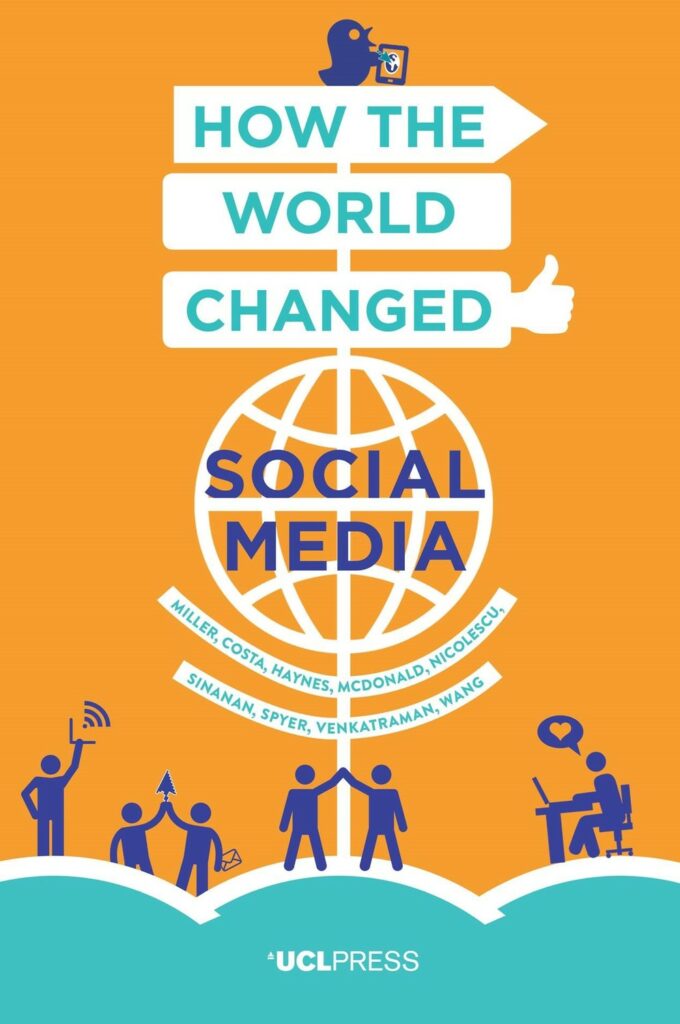
By bringing these perspectives together, Why We Post offers a powerful comparative view of social media worldwide. It remains a landmark open access series, reshaping how we understand digital life and its impact- explore the open access books below!

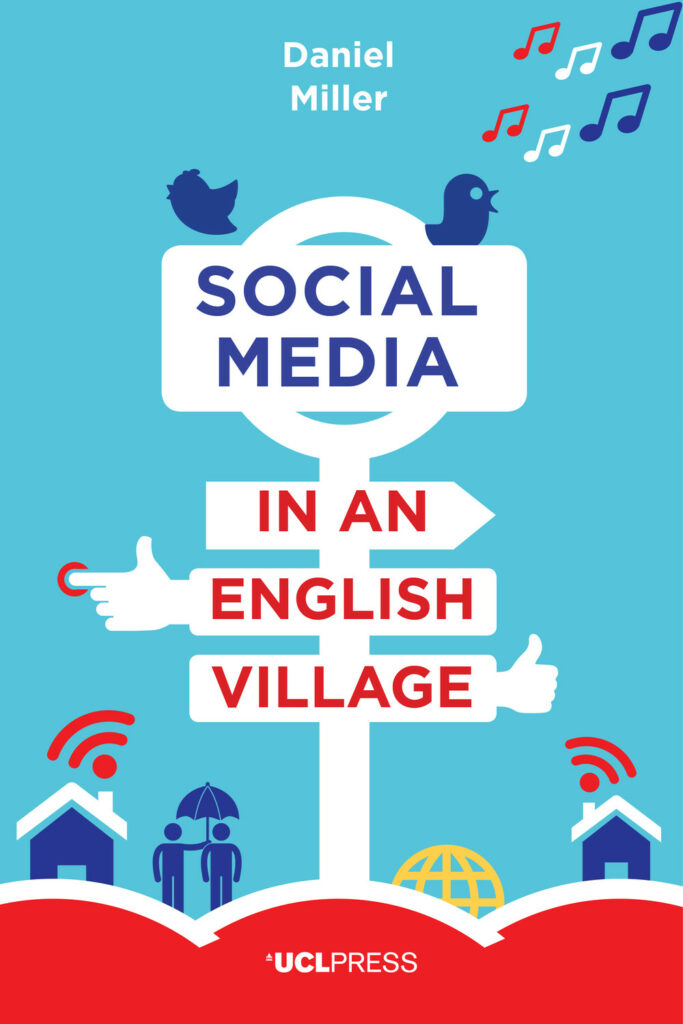
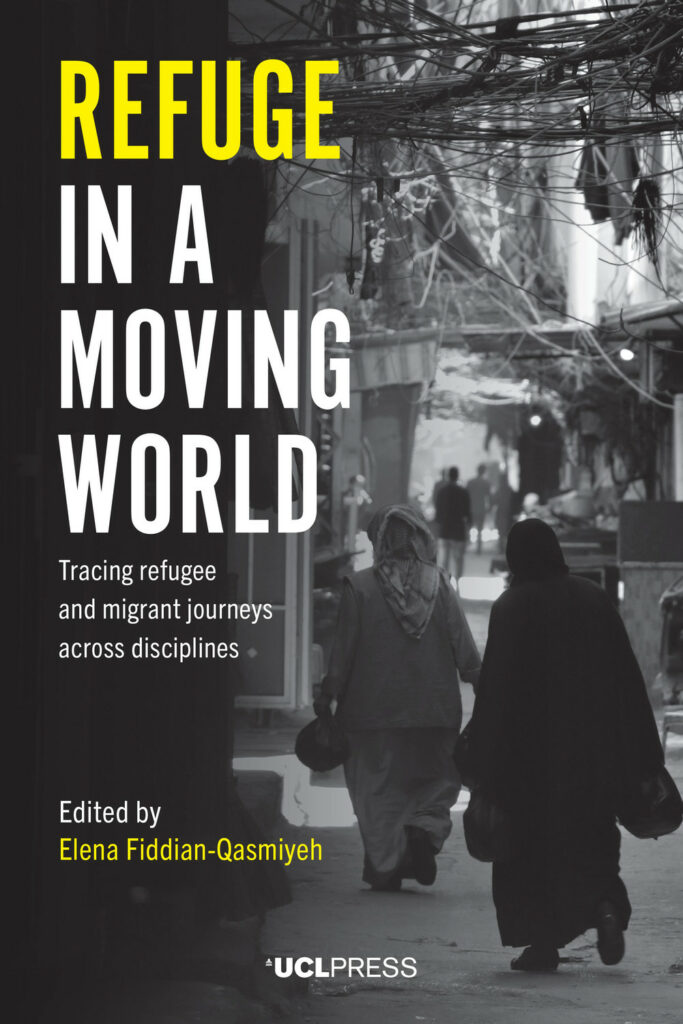
Cover of social media in south india
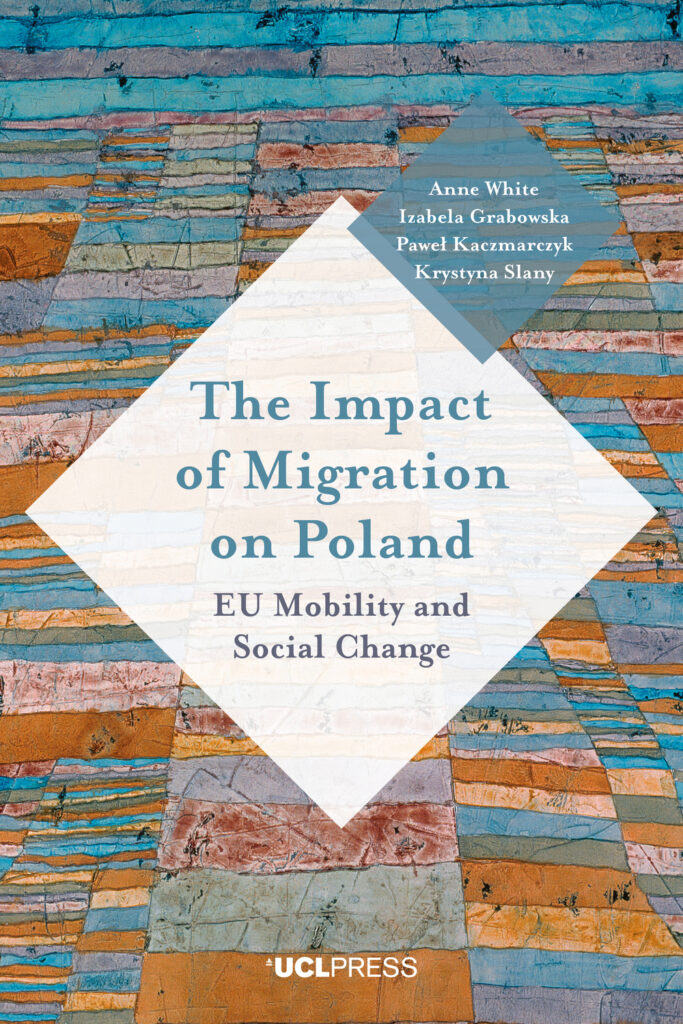
Cover of social media in Trinidad

New Sensory Approaches to the Past shortlisted for the EAA Book Prize 2026

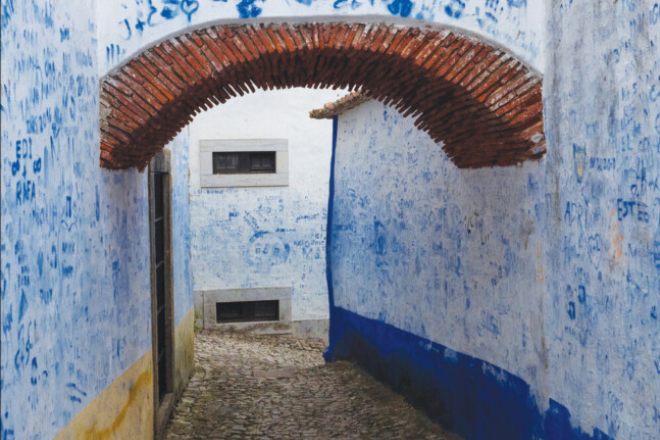
A narrow cobblestone alleyway with white walls covered in blue graffiti and a red brick archway overhead, as featured on the cover of New Sensory Approaches to the Past.

We are delighted to announce that New Sensory Approaches to the Past: Applied Methods in Sensory Heritage and Archaeology, edited by Pamela Jordan, Sara Mura and Sue Hamilton, has been shortlisted for the 2026 European Association of Archaeologists (EAA) Book Prize.

Awarded annually, the EAA Book Prize recognises exceptional recent publications by EAA members. This year’s prize attracted a highly competitive field, with a selection of seven titles shortlisted.

The winner will be announced at the Opening Ceremony of the 32nd Annual Meeting of the European Association of Archaeologists, which will take place in Athens later this year.

Shortlisting for the prize reflects the originality, scholarly quality and wider contribution of New Sensory Approaches to the Past. Bringing together an international range of contributors, the volume explores how people in the past experienced their worlds through the senses, offering innovative approaches that challenge the predominantly visual focus of traditional archaeological research.

Through case studies spanning diverse periods and geographies, the book demonstrates how attention to sound, smell, movement and embodied experience can open up new perspectives on cultural environments and lived experience. Its interdisciplinary scope highlights the value of integrating methods and insights from across archaeology and beyond.

Published open access by UCL Press, the book is freely available to read online, ensuring its research can reach and inform readers across the world.

We warmly congratulate the editors and contributors on this well-deserved recognition and look forward to the announcement of the 2026 prize winner in Athens.

Russian Pendulum shortlisted for the Pushkin House Book Prize 2026

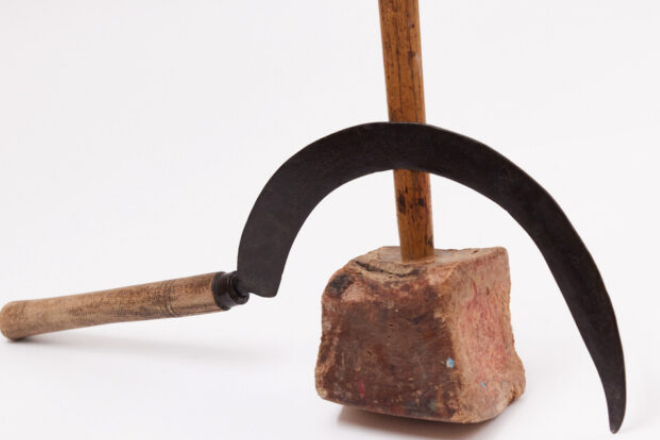
A sickle with a curved blade and wooden handle leans against a hammer with a wooden handle and a brick head, as featured on the cover of Russian Pendulum.

Russian Pendulum: Paradoxes, Practices and Patterns named among six titles on this year’s shortlist for the prestigious £10,000 award.

Pushkin House has announced the shortlist for the 2026 Book Prize, with Prof. Alena Ledeneva’s Russian Pendulum: Paradoxes, Practices and Patterns selected as one of six outstanding titles.

In Russian Pendulum, Ledeneva offers a compelling exploration of Russia’s political and social dynamics, examining the enduring interplay between tradition and modernity, power and society. Framed through the concept of ambivalence, the book identifies long-standing patterns that shape governance and everyday life, highlighting the role of informal networks sustained by practices of co-optation, control and camouflage.

The winner of the £10,000 prize will be announced by the judging panel at the award ceremony in September 2026.

Congratulations to Prof. Ledeneva on this well-deserved recognition

UCL Press author Jovana Diković receives leading Serbian anthropology award

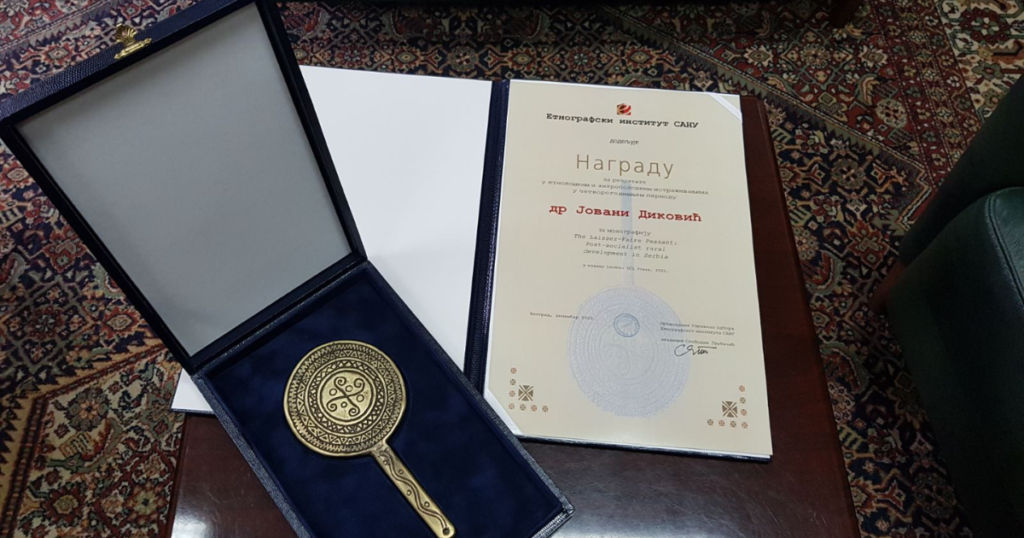
An open presentation box containing a circular gold-toned award with an ornate design, placed on a dark blue velvet lining, next to an open folder holding a certificate written in cyrrilic script. Both items are displayed on a wooden table with a patterned rug in the background.

UCL Press is pleased to share that Dr Jovana Diković, author of The Laissez-Faire Peasant: Post-Socialist Rural Development in Serbia, has been honoured by the Ethnographic Institute of the Serbian Academy of Sciences and Arts.

The award recognises Dr Diković’s outstanding contribution to ethnological and anthropological research. Presented once every four years, it is widely regarded as one of the most prestigious honours within the Serbian anthropological community.

Published by UCL Press in 2025, The Laissez-Faire Peasant offers a timely and original examination of post-socialist rural transformation in Serbia. Drawing on extensive ethnographic fieldwork, the book explores how evolving political and economic structures have shaped everyday life, agricultural practices and rural identities.

We warmly congratulate Dr Diković on this outstanding achievement.

Book Launch: The Babushka Phenomenon

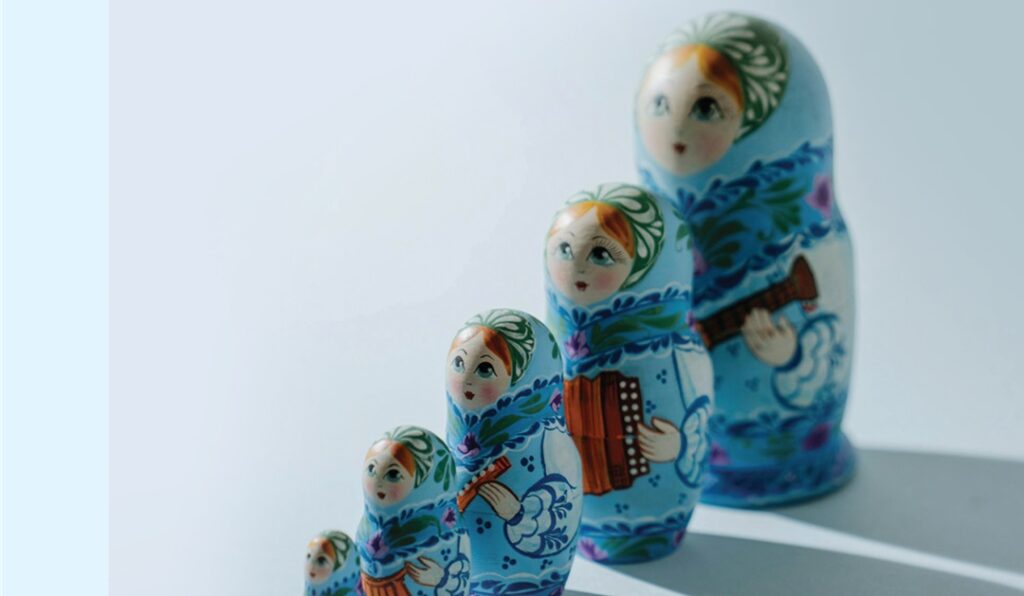
A set of four blue matryoshka dolls with floral patterns arranged by size.

Join Anna Shadrina at UCL SSEES for the launch of The Babushka Phenomenon: Older Women and the Political Sociology of Ageing in Russia, her new open access book published by UCL Press.

Hosted by UCL’s FRINGE Centre, the event will feature a discussion of the book’s key themes and will be chaired by Professor Alena Ledeneva from UCL SSEES.

Shadrina’s research explores ageing as a socio-political phenomenon shaped by local responses to declining fertility and the pluralisation of family forms. In many parts of the world, women combine paid work and motherhood by outsourcing care and domestic labour to paid nannies and domestic workers. The case of Russia shows how post-socialist welfare cutbacks have positioned older women as essential yet unpaid and undervalued family caregivers.

In Russia, the norm of grandmothers’ active involvement in childcare, housing support, and housework has shaped the marginal social position of the babushka – a post-professional and post-sexual member of society who, paradoxically, is perceived as a recipient of social benefits rather than an active contributor. The book demonstrates how older women’s practical and financial support enables younger generations to navigate post-socialist insecurities and to combine paid labour with family life.

Event details

Date: Wednesday 29 October 2025
Time: 6:30 to 8:30pm GMT
Location: Masaryk Room, 16 Taviton Street, UCL SSEES, London WC1H 0BW
Register here: Eventbrite link

Discover object-based learning: Workshop and book launch with Thomas Kador

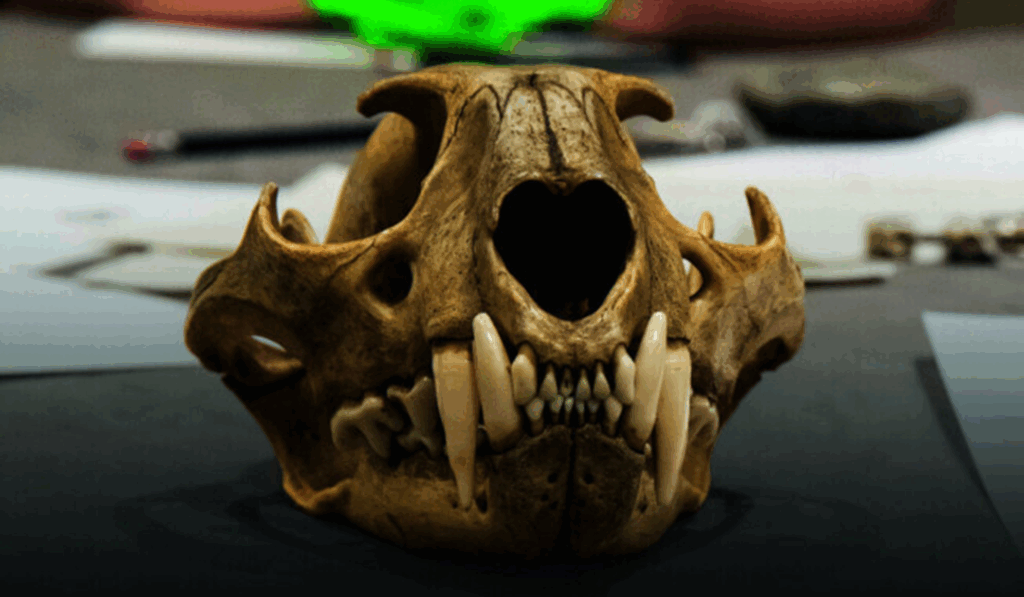
Animal skull with prominent canines on a tabletop.

Join Thomas Kador, author of the new textbook Object-based Learning: Exploring Museums and Collections in Education for an afternoon and evening of events and activities, centring on UCL’s museums and their unique collections.

To mark the publication of Thomas Kador’s Object-based Learning: Exploring Museums and Collections in Education, that author is hosting an Object-based Learning (OBL) workshop followed by a reception and book launch.

The workshop will take place at UCL Institute of Advanced Studies, and provides an opportunity to encounter and explore some of the objects that are featured in the book as well as a range of other OBL activities.

This will be followed by a reception and book launch at the Grant Museum of Zoology, introduced by Professor Helen Chatterjee.

While this book will be freely downloadable from early September (via the link below), paper copies will be available for purchase on the day. https://uclpress.co.uk/book/object-based-learning/

Schedule

2.30-4.30pm: OBL workshop at the IAS (and the UCL Art Museum), ground floor, South Wing
Explore some of the objects discussed in the book and participate in a range of object-based activities, facilitated by the book’s author and colleagues from UCL Museums and Collections. 

5.45pm: Book launch and wine reception at the Grant Museum of Zoology
Enjoy a glass of wine, beer or non-alcoholic alternative, meet some more of the specimens discussed in the book and join some conversations about the book in the surroundings of UCL’s recently refurbished Grant Museum.

You can choose to attend one or both sections of the day. Please select the relevant ticket when registering: 
https://object-based-learning.eventbrite.co.uk

New open access books published in September 2025

Rock pool

September marks the start of a new academic year, and UCL Press welcomed it with a selection of five new open access titles. September’s releases spanned museum studies, pedagogy, urban knowledge co-production, Victorian collecting, and children’s wellbeing in cities.

Object-Based Learning: Exploring museums and collections in education

Thomas Kador

Object-Based Learning provides a concise overview of some of the most important approaches to material culture and object analysis in plain and easily understandable language, that is equally accessible to undergraduate and postgraduate students as well as lecturers.

Read and download free.

Millionaire Shopping: The collections of Alfred Morrison, 1821-1897

Edited by Caroline Dakers

Millionaire Shopping is the first full, detailed and original account of the huge and unstoppable collecting and patronage of Alfred Morrison (1821-1897) who was one of the most important Victorian collectors and patrons of the arts. Each chapter is written by an expert in the field and dedicated to a particular aspect of Morrison’s collecting and patronage.

Read and download free,

Urban Childhoods: Growing up in inequality and hope

Edited by Claire Cameron

Urban Childhoods puts children’s and families’ voices centre stage while investigating ways of bringing children’s wellbeing to the fore in planning for urban life. The book explores themes that start from what children find important and details strategies that emerged from a major prevention programme conducted in two English cities.

Read and download free,

Co-production of Knowledge in Action: Emancipatory strategies for urban equality

Cassidy Johnson, Vanesa Castán Broto, Wilbard Kombe, Catalina Ortiz, Barbara Lipietz, Emmanuel Osuteye, Caren Levy

Co-production of Knowledge in Action examines how co-production is articulated and deployed in cities such as Lima, Freetown, Kampala, Dar es Salaam and Delhi. It engages with ongoing experiences of co-production-inspired action, mapping the different aspirations that inform co-production practices and the impacts on urban communities.

Read and download free.

Deconstituting Museums: Participation’s affective work

Helen Graham

Deconstituting Museums argues that participation collides with dominant paradigms of inclusion, diversity and decision-making on behalf of ‘future generations’ and ‘the public’. Participation draws in ideas from direct and horizontal political traditions. How might participation and its affects enable new political structures of heritage?

Read and download free

We’ll be back next month with more open access gems. Until then, stay safe, and happy reading!

Tackling difficult histories with (museum) objects

Animal skull with prominent canines on a tabletop.

What can a preserved animal specimen tell us about colonialism, extinction and even genocide? In this blog post, Thomas Kador reflects on the themes of his recent book Object-Based Learning: Exploring Museums and Collections in Education and considers how museum objects, often seen as neutral or purely scientific, can reveal troubling histories. From the Thylacine skeleton in UCL’s Grant Museum to instruments linked to eugenics, these objects challenge us to confront uncomfortable truths and rethink the role of collections in education.

Object-based learning (OBL) refers to a pedagogy based on working with material culture in support of learning and critical engagement with the world. While object-based approaches can involve all types of objects, there is usually a particular focus on items from museums and other curated collections.

My recent book Object-Based Learning: Exploring Museums and Collections in Education explores the many ways in which we can employ objects in formal and informal educational settings, and the benefits of doing so. Research repeatedly demonstrates that learners find working with objects – especially heritage ones – inspiring. It also shows that working with objects can support the development of subject-specific, transferable, and interdisciplinary skills, as well as benefit learners’ health and wellbeing.

You can probably recall a time when you felt inspired by a beautiful museum object or work of art, but there are museum objects that testify to much darker and challenging parts of human history. This does not diminish their capacity to facilitate learning. On the contrary, such objects represent extremely powerful catalysts for interrogating the past, including power structures, abuses of power, injustices, and even atrocities. 

There are some well-known examples you might be aware of, such as the so-called Benin bronzes in the British Museum, and the artworks that were stolen by Nazi officials from their Jewish owners during the Holocaust. However, many items’ connection to difficult histories is less readily apparent, and we need to scratch a little deeper  below the surface to reveal their stories.

For example, the deep entanglement of many museums and collections in the colonial project is well known. Objects and specimens allow us to lift the curtain on colonial exploits, with much of the discourse focusing  on archaeological, anthropological, and historical museums, and – to a lesser extent – art collections. But what about natural history museums? Often mistakenly seen solely as spaces of scientific study which are unconnected to past or present political situations, these museums can also reveal problematic histories if we dig a little deeper.

UCL’s Grant Museum of Zoology has a collection of animal specimens that stretch back to the university’s foundation in 1826. When the collection was started in the 1820s and 30s, animals which have since become endangered or extinct were still in existence. For example, the museum has a collection of Thylacine – commonly known as the Tasmanian Tiger – material, consisting of a complete skeleton, some skulls, a number of other bones and a fluid specimen (i.e. a dissected animal preserved in alcohol). As Thylacines became extinct nearly 90 years ago,  the remains at the Grant Museum are significant, especially as the fluid specimen is possibly the only one in the world.

But this is where it gets political, as Tasmania – the island from where the Thylacine specimens originate – was declared a British colony in 1825. At the time, the Thylacine, the largest modern day marsupial carnivore, was seen as a threat to European sheep plantations, and a bounty was placed on their pelts. This resulted in perhaps the only documented purposeful extinction of an entire animal species in human history. The mission ‘succeeded’, and by 1936 the last known Thylacine had died in that Australian zoo. The native human population did not fare much better, with the colonisers coming extremely close to exterminating the local Aboriginal people during the 1824-1832 Tasmanian war. It is striking how quickly a seemingly ‘harmless’ specimen in a natural history collection can become an emblem not only of its own species’ extinction, but also a reminder of the genocides perpetrated by Europeans on Tasmanians and other Aboriginal peoples. 

While these are truly dark subjects, museum objects and specimens allow us to explore them closely in a relatively safe and non-confrontational manner. We can interrogate difficult topics from multiple perspectives, including some that differ from our own personal views. This brings us back to the role of objects as conduit for highlighting and critiquing institutional power and violence without being violent in their own right. This allows learners to confront uncomfortable truths, such as our own complicity – or inaction – in local or global injustices.

As an employee of UCL, it would be remiss of me not to mention my institution’s promotion of scientifically racist and ableist ideas through its enthusiastic embrace of eugenics in the early twentieth century. As a legacy of UCL’s involvement, we have a collection of objects, instruments and materials related to the study of eugenics, which recently have found new use as items that allow learners to critically engage with this troubled history. In this context, objects that were once instruments of oppression are now enabling students and researchers to interrogate, challenge, and come to terms with these practices and the mindsets that gave rise to them. The objects remain as tangible connections to these troublesome chapters of human history, but they have been transformed from tools of power and domination to facilitators of dialogue and cultural understanding.
New open access books published in July 2025

Horses on a Carousel Roundabout

July’s sunny weather wasn’t an excuse to relax at UCL Press – we’ve been busier than ever with five new open access books! Covering topics from historical memory and mental health to kinship, sensory heritage, and literary masculinity, these titles are, as always, freely available to download from our website.

An important addition to historical scholarship, Conversations with Third Reich Contemporaries: From Luke Hollands Final Account presents excerpts from filmed interviews conducted by British documentary filmmaker Luke Holland. Most interviewees were young adults when the war ended; some had benefited from Nazism. The book raises critical awareness of issues around representation, authenticity and the co-production of narratives. Download it free.

The ground-breaking Petty Tyranny and Soulless Discipline? Patients, policy and practice in public mental hospitals in England, 1918–1930 examines England’s public mental hospitals for the working class after the First World War. Narratives of patients’ difficult daily lives are interwoven with analysis of competing agendas from campaigners, government and new medical knowledge, to build a complex picture of mental health provision. Download free.

The fantastic Marriage Matters: Imagining love and belonging in Uganda engages with new and classic anthropological theory, and gender studies about kinship, marriage, relatedness and temporality. It examines how partnership, kinship, child filiation, friendship, ideas about love and commitment have been changing, and how Ugandans imagine past and future relationship between genders and generations. Download it free.

Presenting studies of historical environments through the lens of the senses, New Sensory Approaches to the Past: Applied methods in sensory heritage and archaeology showcases the latest approaches to sensory research through real-world scenarios of human−environment connections. Interdisciplinary examples of diverse sensory in-situ studies will enable readers to replicate and enhance their own investigations. Whether you’re a student, academic or researcher, it’s a fantastic read. Download it free.

Finally, the latest volume of the Comparative Literature and Culture series, Heterosexual Masculinities and the Self-Reflexive Novel examines how the narratives of, J. M. Coetzee, Milan Kundera, Philip Roth and Mario Vargas Llosa, offer a standpoint through which to address the inscription of heterosexual masculinity into Western literary legacy and the ways in which masculinity is re-fashioned in contemporary self-reflexive novels. Download it free.

We’ll be back again next month with a round up of the very best open access books. As always, stay safe!

Sign up to our newsletter

Don't miss out!
Subscribe to the UCL Press newsletter for the latest open access books,
journal CfPs, news and views from our authors and much more!