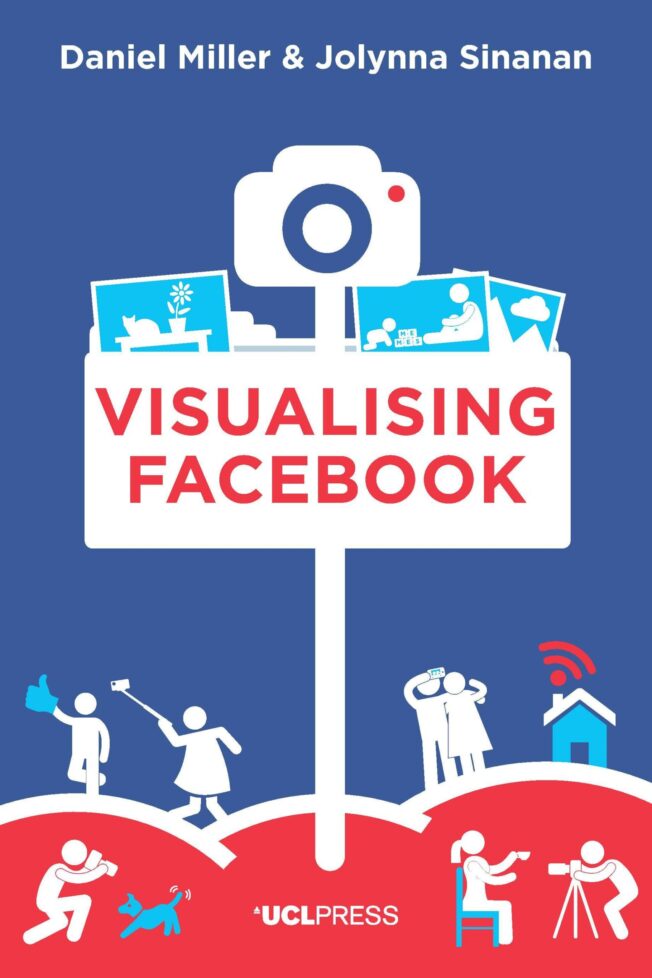

Publication date: 7 March 2017
DOI: https://doi.org/10.14324/111.9781911307402
Number of pages: 236
Number of illustrations: 95

Visualising Facebook
A Comparative Perspective
Daniel Miller (Author), Dr Jolynna Sinanan (Author)
Series: Why We Post
Since the growth of social media, human communication has become much more visual. This book presents a scholarly analysis of the images people post on a regular basis to Facebook. By including hundreds of examples, readers can see for themselves the differences between postings from a village north of London, and those from a small town in Trinidad. Why do women respond so differently to becoming a mother in England from the way they do in Trinidad? How are values such as carnival and suburbia expressed visually? Based on an examination of over 20,000 images, the authors argue that phenomena such as selfies and memes must be analysed in their local context. The book aims to highlight the importance of visual images today in patrolling and controlling the moral values of populations, and explores the changing role of photography from that of recording and representation, to that of communication, where an image not only documents an experience but also enhances it, making the moment itself more exciting.
Related titles

Daniel Miller, Laila Abed Rabho, Patrick Awondo, Maya de Vries, Marília Duque, Pauline Garvey, Laura Haapio-Kirk, Charlotte Hawkins, Alfonso Otaegui, Shireen Walton, Xinyuan Wang,
06 May 2021
How the World Changed Social Media
Daniel Miller, Elisabetta Costa, Dr Nell Haynes, Tom McDonald, Razvan Nicolescu, Dr Jolynna Sinanan, Juliano Spyer, Shriram Venkatraman, Xinyuan Wang,
29 February 2016



Visualising Facebook
A Comparative Perspective
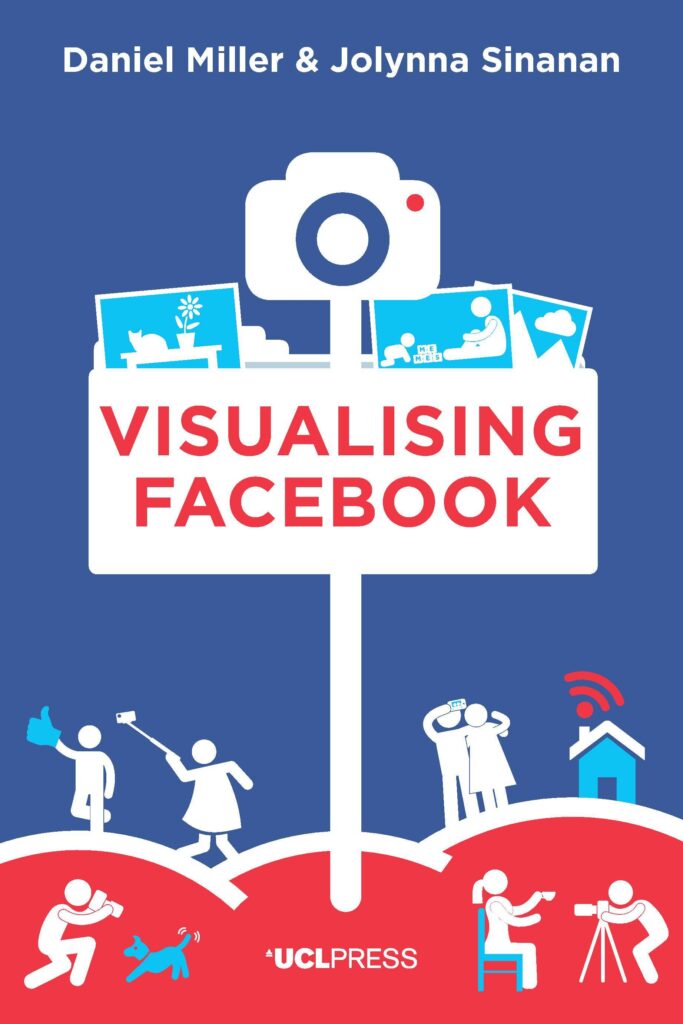
Series: Why We Post
Publication date: March 7, 2017
Open Access PDF ISBN: 9781911307402
Paperback ISBN: 9781911307365
Hardback ISBN: 9781911307358
Trim size (hardback): 23.4cm x 15.6cm
Trim size (paperback): 23.4cm x 15.6cm
Page count (hardback): 236
Since the growth of social media, human communication has become much more visual. This book presents a scholarly analysis of the images people post on a regular basis to Facebook. By including hundreds of examples, readers can see for themselves the differences between postings from a village north of London, and those from a small town in Trinidad. Why do women respond so differently to becoming a mother in England from the way they do in Trinidad? How are values such as carnival and suburbia expressed visually? Based on an examination of over 20,000 images, the authors argue that phenomena such as selfies and memes must be analysed in their local context. The book aims to highlight the importance of visual images today in patrolling and controlling the moral values of populations, and explores the changing role of photography from that of recording and representation, to that of communication, where an image not only documents an experience but also enhances it, making the moment itself more exciting.