
Publication date: 1 November 2026
DOI: https://doi.org/10.14324/111.9781806551361
Number of illustrations: 90

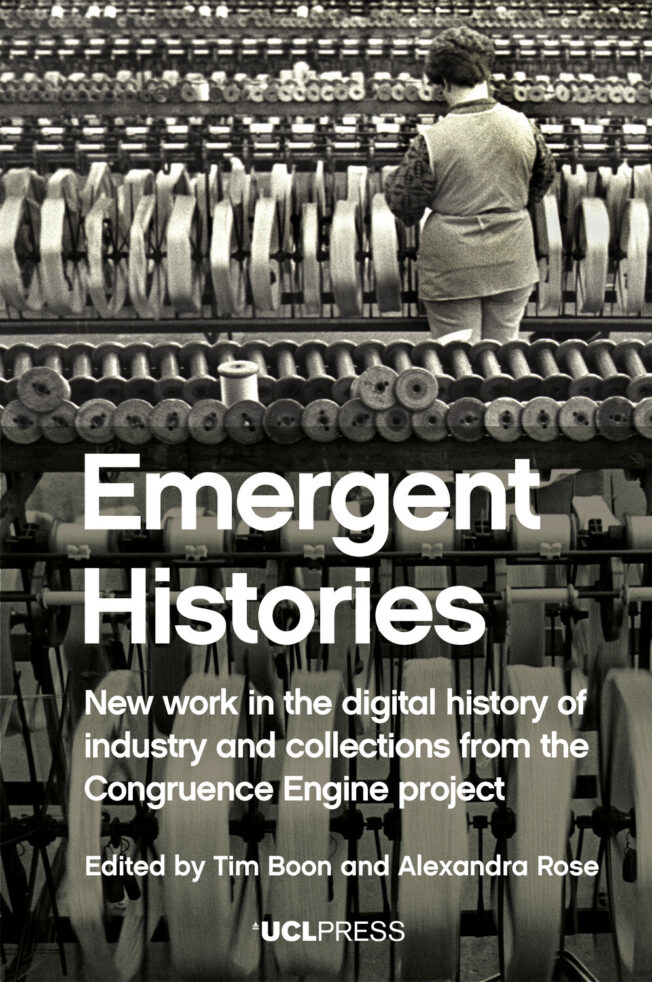
Emergent Histories
New work in the digital history of industry and collections from the Congruence Engine project
Tim Boon (Editor), Alexandra Rose (Editor)
For generations, artefacts and information of all kinds have been assembled in diverse collections across the UK. Museum objects, archives, pictures, moving images and media, records of historical places, even datasets derived from state, commercial and individual activity, all have been catalogued and stored. Yet in most museums and galleries, only a tiny proportion of physical collections are shown in public displays, with vast stores kept in reserve for research, although researchers rarely come. Great repositories of cultural capital, the knowledge they hold has been largely untapped – until now.
For nearly half a century, heritage organisations have created digital inventories of their collections. Inspired by the prospect of combining these records so they may be explored together, the Congruence Engine research project set out to build digital bridges and pathways between collections dedicated to the UK’s industrial history for textiles, energy and communications. Launched in 2021, Congruence Engine navigated the generative AI revolution that commenced a year later. As a result, Emergent Histories is by turns a reflection on the historical and curatorial possibilities arising from collections, a digital history how-to manual, and a narrative of the tribulations of AI early adopters. It will be of interest to historians, curators, students – and to anyone who cares for the industrial aspects of our past.

Toby Butler, Felix Driver, Barbara Brayshay, Chris Church, Jeremy Iles, Oli Mould, Saskia Papadakis,
01 November 2026


Imperial Science, the Organic Movement and the Path to Shangri-La, 1900-1969
Ashok Malhotra,
23 March 2026
Critical Heritage and Social Justice
Veysel Apaydin, Kalliopi Fouseki, David Francis, Jonathan Gardner, Sara Perry,
05 March 2026
Magdalena Buchczyk, Martín Fonck, Tomás J. Usón, Tina Palaić,
24 November 2025






Emergent Histories
New work in the digital history of industry and collections from the Congruence Engine project
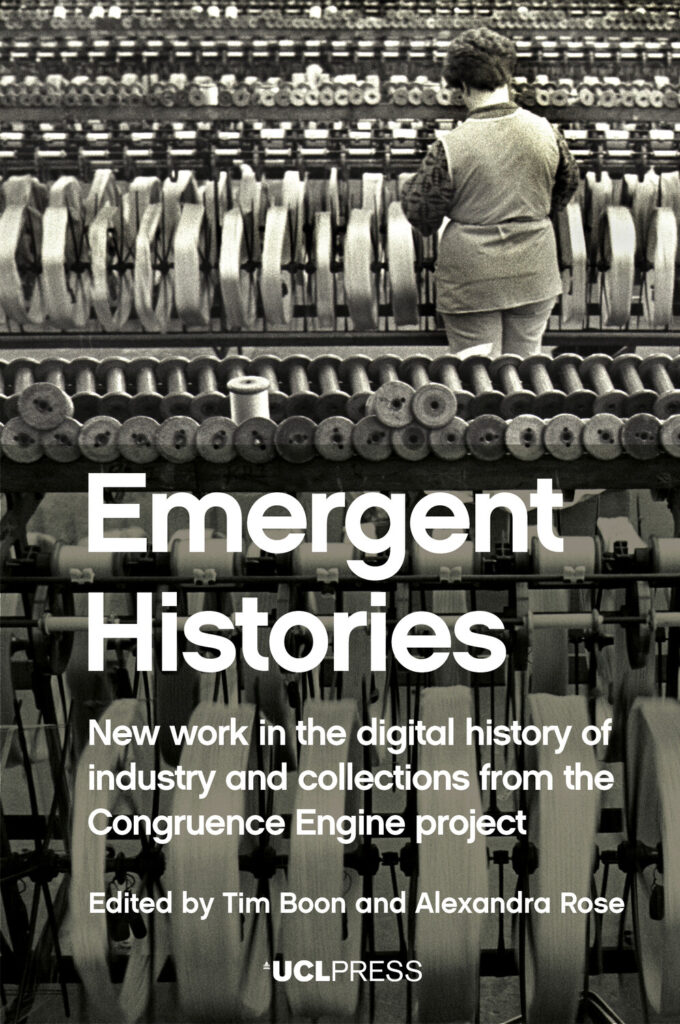
Publication date: November 1, 2026
Open Access PDF ISBN: 9781806551361
Paperback ISBN: 9781806551354
Hardback ISBN: 9781806551347
Trim size (hardback): 23.4cm x 15.6cm
Trim size (paperback): 23.4cm x 15.6cm
For generations, artefacts and information of all kinds have been assembled in diverse collections across the UK. Museum objects, archives, pictures, moving images and media, records of historical places, even datasets derived from state, commercial and individual activity, all have been catalogued and stored. Yet in most museums and galleries, only a tiny proportion of physical collections are shown in public displays, with vast stores kept in reserve for research, although researchers rarely come. Great repositories of cultural capital, the knowledge they hold has been largely untapped – until now.
For nearly half a century, heritage organisations have created digital inventories of their collections. Inspired by the prospect of combining these records so they may be explored together, the Congruence Engine research project set out to build digital bridges and pathways between collections dedicated to the UK’s industrial history for textiles, energy and communications. Launched in 2021, Congruence Engine navigated the generative AI revolution that commenced a year later. As a result, Emergent Histories is by turns a reflection on the historical and curatorial possibilities arising from collections, a digital history how-to manual, and a narrative of the tribulations of AI early adopters. It will be of interest to historians, curators, students – and to anyone who cares for the industrial aspects of our past.