
Publication date: 23 March 2026
DOI: https://doi.org/10.14324/111.9781806550579
Number of illustrations: 12

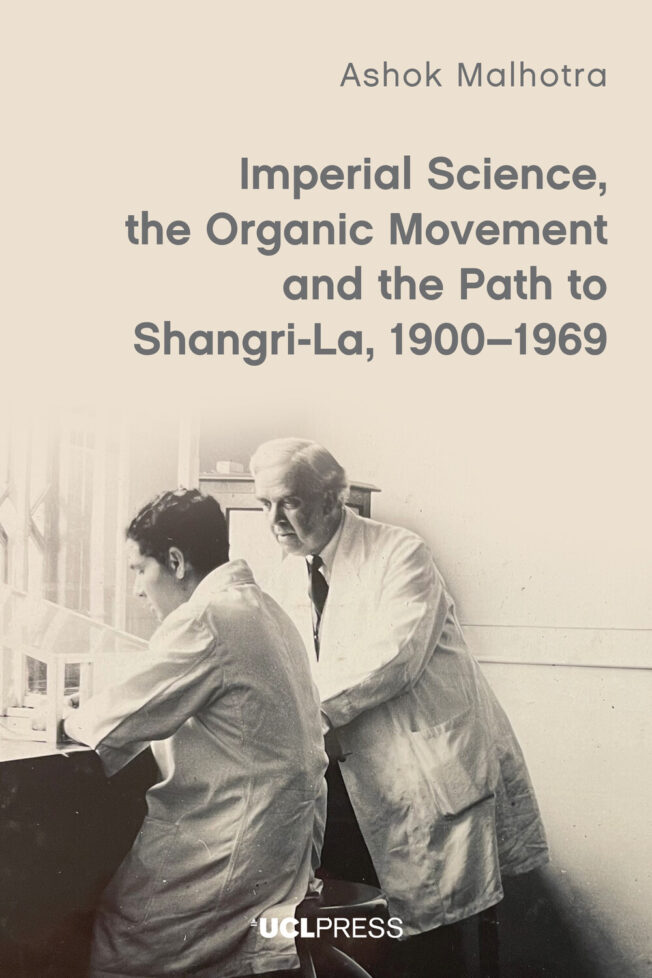
Imperial Science, the Organic Movement and the Path to Shangri-La, 1900-1969
Ashok Malhotra (Author)
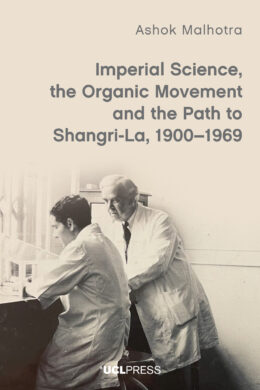
Imperial Science, the Organic Movement and the Path to Shangri-La, 1900-1969 investigates scientific studies undertaken in British India by Robert McCarrison and Albert Howard in the 1920s, and how this research was later adapted in Britain and the USA. It examines how imperial agendas and colonial stereotyping shaped McCarrison’s dietary laboratory experiments and Howard’s development of the Indore Composting Process. Ashok Malhotra reveals how Indian scientists and Indian Princes contributed to the research culture in the institutes that were founded by these two British scientists, and in so doing, he draws attention to figures whose contributions have previously been overlooked by scholars. Malhotra demonstrates how McCarrison’s and Howard’s research was interpreted by British and US-based organic farming advocates to advocate for agricultural methods which returned organic matter to the soil and rejected chemical fertilisers.
It discusses how organic advocates on both sides of the Atlantic deployed the Hunzas, a community in British India (later Pakistan), as an example of a ‘tribe’ whose vigour could be ascribed to their farming techniques and diets. The narrative concludes by demonstrating how US travel writers in the 1950s and 1960s represented Hunza as a Shangri-La – a paradise whose inhabitants lived prolonged lives in blissful contentment.
List of figures
Acknowledgements
Introduction
1 Robert McCarrison’s imperial medical career in India and dietary experiments, 1902–1935
2 The Howards’ agricultural research in British India and the development of the Indore Process, 1900–1931
3 Adapting imperial agricultural and nutritional science for a British context
4 J. I. Rodale, the ‘healthy Hunzas’ and the organic movement in the US
5 ‘Hunza’ as Shangri-La in North American travelogues and film in the 1950s and 60s
Conclusion
Bibliography
Index
DOI: 10.14324/111.9781806550579
Number of illustrations: 12
Publication date: 23 March 2026
PDF ISBN: 9781806550579
EPUB ISBN: 9781806550586
Hardback ISBN: 9781806550555
Paperback ISBN: 9781806550562
Ashok Malhotra (Author) 
Ashok Malhotra is Senior Lecturer in British Imperial History at Queen’s University Belfast. He has previously served as a British Academy Postdoctoral Research Fellow at the University of Warwick.
‘Imperial Science is a fascinating read. It provides a compelling narrative of colonial science in British India and its links with wider popular science movements in the early to the mid-twentieth century. Malhotra effortlessly melds interdisciplinary methodologies with transnational perspectives and offers a scholarly and engaging narrative of imperialism and agronomy, diet cultures and institutionalized sciences, in the nineteenth and twentieth centuries.’
Nandini Bhattacharya, University of Houston
‘Ashok Malhotra’s manuscript represents an original and fascinating contribution to the fields of history of science, environmental history and cultural/postcolonial studies. By exploring the intersection of British imperial science in India and the twentieth-century organic movement, this fine storyteller gives a textured sense of the period and the key characters under study. His book breaks new ground by demonstrating how colonial agricultural and nutritional research was selectively interpreted and deployed by organic farming and soil protection movements in Britain and the US’
Claire Chambers, University of York
‘A brilliant, sophisticated and probing account of the colonial pre-history of Anglo-American ecological research and proselytism. Ashok Malhotra’s highly readable volume is an important intervention in global food studies and the history of sustainability, demonstrating the imperial dimension of nutritional and environmental science.’
Miles Taylor, Humboldt University of Berlin

Imperial Science, the Organic Movement and the Path to Shangri-La, 1900-1969
Ashok Malhotra,
23 March 2026

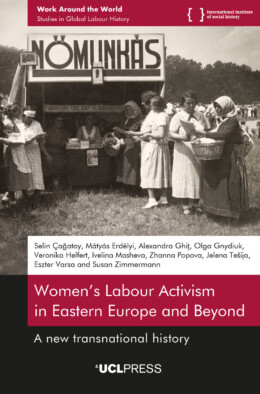
Women’s Labour Activism in Eastern Europe and Beyond
Selin Çağatay, Mátyás Erdélyi, Alexandra Ghiț, Olga Gnydiuk, Veronika Helfert, Ivelina Masheva, Zhanna Popova, Jelena Tešija, Eszter Varsa, Susan Zimmermann,
26 August 2025

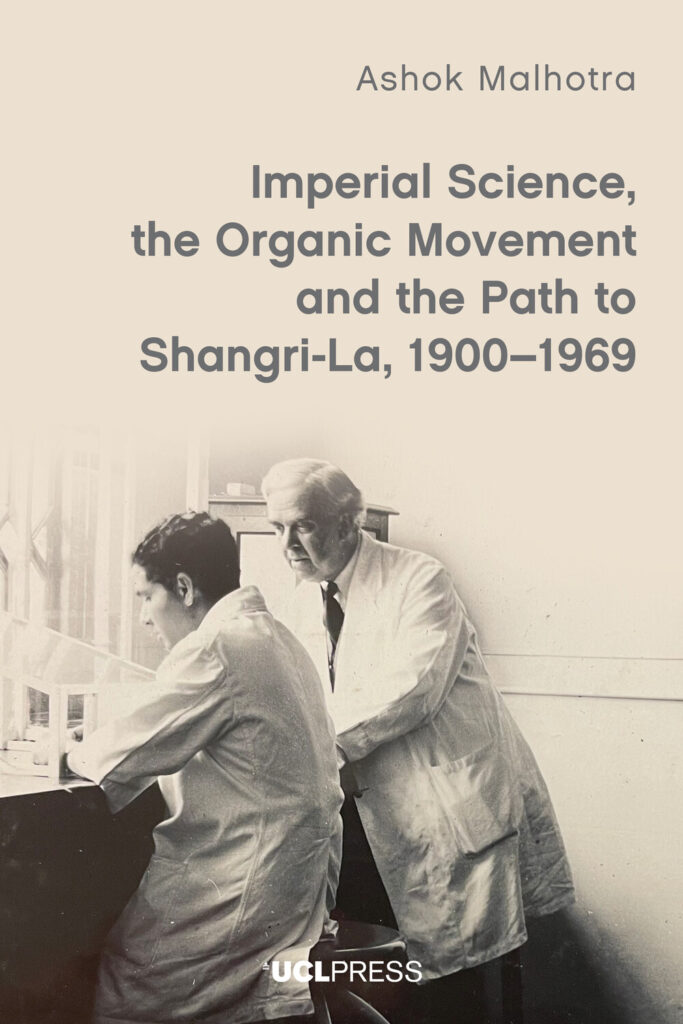
Imperial Science, the Organic Movement and the Path to Shangri-La, 1900-1969
Publication date: March 23, 2026
Open Access PDF ISBN: 9781806550579
Paperback ISBN: 9781806550562
Hardback ISBN: 9781806550555
Trim size (hardback): 23.4cm x 15.6cm
Trim size (paperback): 23.4cm x 15.6cm
Imperial Science, the Organic Movement and the Path to Shangri-La, 1900-1969 investigates scientific studies undertaken in British India by Robert McCarrison and Albert Howard in the 1920s, and how this research was later adapted in Britain and the USA. It examines how imperial agendas and colonial stereotyping shaped McCarrison’s dietary laboratory experiments and Howard’s development of the Indore Composting Process. Ashok Malhotra reveals how Indian scientists and Indian Princes contributed to the research culture in the institutes that were founded by these two British scientists, and in so doing, he draws attention to figures whose contributions have previously been overlooked by scholars. Malhotra demonstrates how McCarrison’s and Howard’s research was interpreted by British and US-based organic farming advocates to advocate for agricultural methods which returned organic matter to the soil and rejected chemical fertilisers.
It discusses how organic advocates on both sides of the Atlantic deployed the Hunzas, a community in British India (later Pakistan), as an example of a ‘tribe’ whose vigour could be ascribed to their farming techniques and diets. The narrative concludes by demonstrating how US travel writers in the 1950s and 1960s represented Hunza as a Shangri-La – a paradise whose inhabitants lived prolonged lives in blissful contentment.
‘Imperial Science is a fascinating read. It provides a compelling narrative of colonial science in British India and its links with wider popular science movements in the early to the mid-twentieth century. Malhotra effortlessly melds interdisciplinary methodologies with transnational perspectives and offers a scholarly and engaging narrative of imperialism and agronomy, diet cultures and institutionalized sciences, in the nineteenth and twentieth centuries.’
Nandini Bhattacharya, University of Houston
‘Ashok Malhotra’s manuscript represents an original and fascinating contribution to the fields of history of science, environmental history and cultural/postcolonial studies. By exploring the intersection of British imperial science in India and the twentieth-century organic movement, this fine storyteller gives a textured sense of the period and the key characters under study. His book breaks new ground by demonstrating how colonial agricultural and nutritional research was selectively interpreted and deployed by organic farming and soil protection movements in Britain and the US’
Claire Chambers, University of York
‘A brilliant, sophisticated and probing account of the colonial pre-history of Anglo-American ecological research and proselytism. Ashok Malhotra’s highly readable volume is an important intervention in global food studies and the history of sustainability, demonstrating the imperial dimension of nutritional and environmental science.’
Miles Taylor, Humboldt University of Berlin