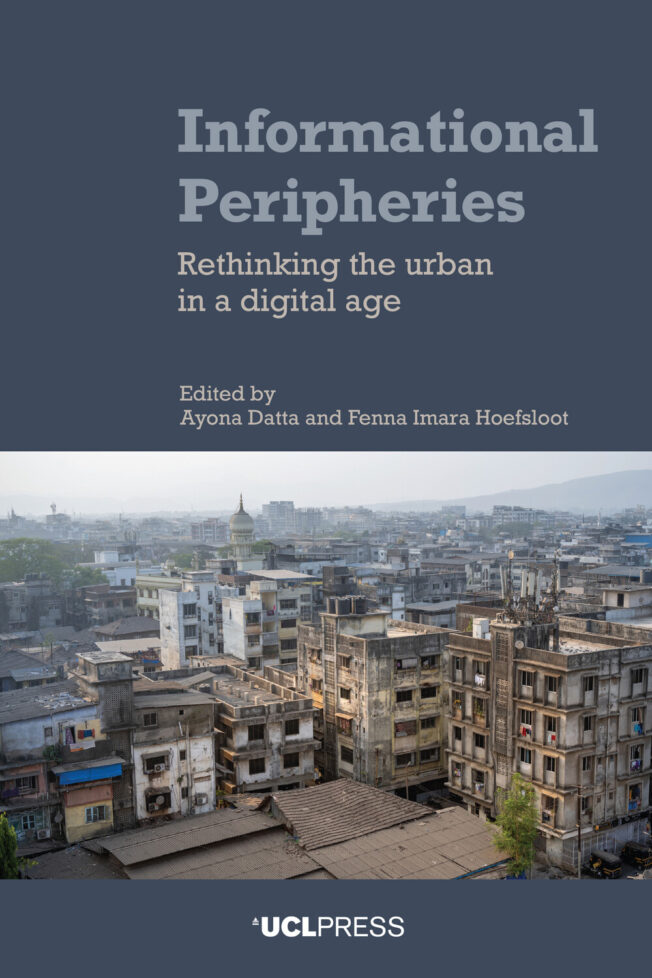

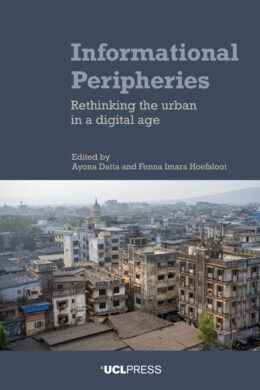
Informational Peripheries
Rethinking the urban in a digital age
Ayona Datta (Editor), Fenna Imara Hoefsloot (Editor)
Urbanisation and urban life in a digital age needs to be examined through a lens of information – encompassing both its politics and its geographies. The periphery in an information age is located simultaneously across the geographic centre and edge, across social, material and digital worlds. Moving beyond current scholarship in urban and regional studies, this book presents a case for ‘informational peripheries’ as an analytical lens to understand the uneven, fragmented and disconnected geographies of urban peripheries in the Global South.
While ‘unplanned urbanisation’ has been a key discourse in the production of urban periphery in the Global South, Informational Peripheries argues that the coming of an informational age destabilises the geographic location of the urban periphery. Informational peripheries capture the complexities of digital, material and social dispersal and fragmentation that emerge from informational extraction, redlining, manipulation and bypassing. Exclusions are marked by both geographic and informational distance from the state. It includes subjects who are uncountable, as well as territories that are digitally, socially and materially unmappable. This approach provides an important vantage point for interrogating the political and technological apparatuses that are reconfiguring the notion of the urban in a digital age.
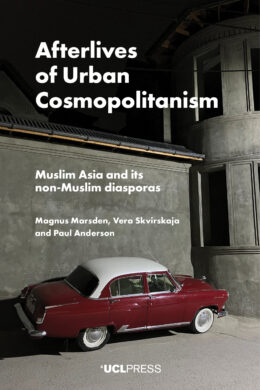
Afterlives of Urban Cosmopolitanism
Magnus Marsden, Vera Skvirskaja, Paul Anderson,
01 February 2027

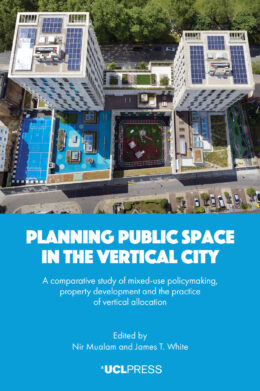




Urban Violence and Marginalised Communities
Ashvin Devasundaram, Stamatis Zografos, Márcio Mattos, Zoe Holman,
25 March 2026


Co-production of Knowledge in Action
Cassidy Johnson, Vanesa Castán Broto, Wilbard Kombe, Catalina Ortiz, Barbara Lipietz, Emmanuel Osuteye, Caren Levy,
15 September 2025

Urban Informality and the Built Environment
Nerea Amorós Elorduy, Nikhilesh Sinha, Colin Marx,
12 March 2024


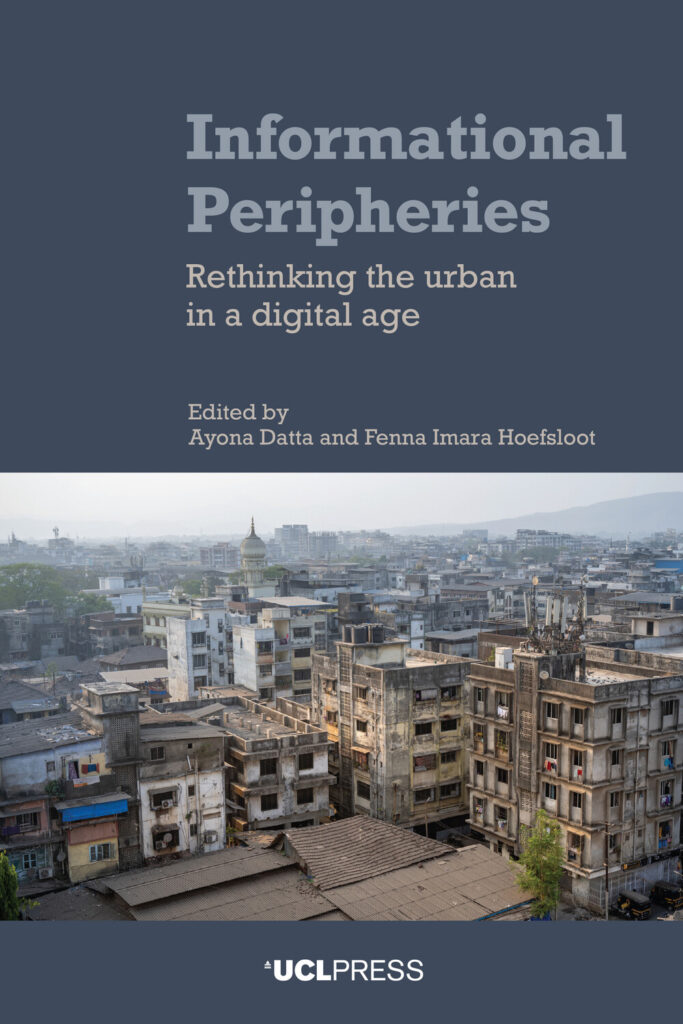
Informational Peripheries
Rethinking the urban in a digital age
Publication date: August 4, 2025
Open Access PDF ISBN: 9781800088894
Paperback ISBN: 9781800088887
Hardback ISBN: 9781800088870
Trim size (hardback): 23.4cm x 15.6cm
Trim size (paperback): 23.4cm x 15.6cm

Urbanisation and urban life in a digital age needs to be examined through a lens of information – encompassing both its politics and its geographies. The periphery in an information age is located simultaneously across the geographic centre and edge, across social, material and digital worlds. Moving beyond current scholarship in urban and regional studies, this book presents a case for ‘informational peripheries’ as an analytical lens to understand the uneven, fragmented and disconnected geographies of urban peripheries in the Global South.
While ‘unplanned urbanisation’ has been a key discourse in the production of urban periphery in the Global South, Informational Peripheries argues that the coming of an informational age destabilises the geographic location of the urban periphery. Informational peripheries capture the complexities of digital, material and social dispersal and fragmentation that emerge from informational extraction, redlining, manipulation and bypassing. Exclusions are marked by both geographic and informational distance from the state. It includes subjects who are uncountable, as well as territories that are digitally, socially and materially unmappable. This approach provides an important vantage point for interrogating the political and technological apparatuses that are reconfiguring the notion of the urban in a digital age.