
New open access books published in February 2025

Books on a wooden bookshelf in UCL library.

It’s been another grey, dark, wet month, but we’ve almost been too busy to notice. With six more exciting open access books to read, who can blame us?

The final volume of David Scott’s extraordinary On Learning trilogy (v1, v2) , On Learning, Volume 3: Knowledge, curriculum and ethics published at the start of the month. Like the first two volumes, the book is a response to empiricist and positivist conceptions of knowledge. in which the author challenges detheorised and reductionist ideas of learning that have filtered through to the management of our schools, colleges and universities, over-simplified messages about learning, knowledge, curriculum and assessment, and the denial that values are central to understanding how we live and how we should live.

Postcapitalist Countrysides: From commoning to community wealth building explores the tensions that arise from the established conventions of economic production and private accumulation, as they affect life, wealth and work in rural areas. Find out more about the brilliance of the brilliance of the book’s contributors in an interview with one of the editors.

Revisiting Childhood Resilience Through Marginalised and Displaced Voices: Perspectives from the past and present draws on 10 years of Wendy Sims-Schouten’s research with children, young people and adults from marginalised, disadvantaged and displaced communities. These stories draw critical attention to coping strategies in adversity and oppression, and will inform creative research and policymaking. Read our interview with the author to find out more about her fascinating approach to research.

Lahore in Motion: Infrastructure, history and belonging in urban Pakistan provides a vivid portrait of the Pakistani metropolis by tracing the path of the city’s first metro rail corridor. The volume collects stories from a series of walks along the metro’s 27-kilometre path, bringing together a wide variety of authors to reflect on the relationship between urban change and belonging in a historic city. Interested to find out more? We have an excusive excerpt on the blog.

The latest book in the FRINGE series, Anti-Atlas: Critical Area Studies from the East of the West plays with the politics of the conventional atlas, with its assumptions about knowledge and power, its hierarchies of value, and its simplifications. It provides readers with a diverse series of intellectual resources, asking them to think critically about the ways in which we construct the world by dividing it into pieces.

The final book of the month, A Guide to Performing Systematic Reviews of Health and Disease is a fantastic practical guide to performing systematic reviews in a healthcare context provides a step-by-step approach for students and health professionals. Using free, opensource software to extract data and perform the necessary meta-analyses, this open access guide navigates the process of reviews, from study design and randomised controlled trials to interpreting results and reporting your findings. The author explains why this is an important book for health professionals and students alike in a wide-ranging interview.

We’ll be back again next month with a round up of the very best open access books. As always, stay safe!
CfP: Urban Africa series

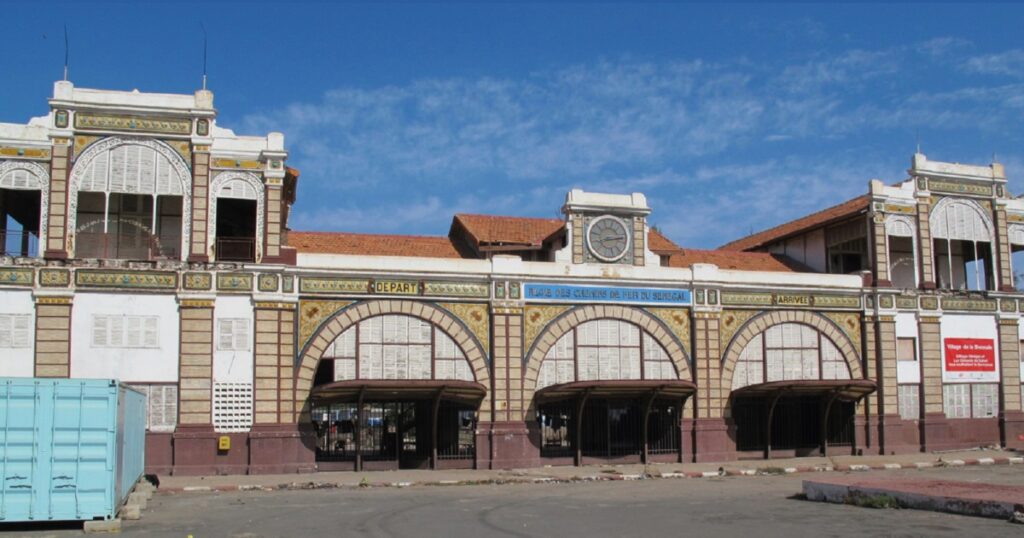
The image shows the Malian market at the railway terminus in Dakar, as featured on the cover of Urban Displacement and Trade in a Senegalese Market.

To celebrate World Urbanism Day, the editors of the open access Urban Africa series, co-published with the International African Institute, have opened a new call for proposals for new books.  The series provides a platform for critical, in-depth analysis of key contemporary issues affecting urban environments across the African continent.

The editors aim to work in close collaboration with African based networks and centres of urban scholarship to publish the best of urban research on Africa, prioritising the publication of work by scholars based in African contexts as well as leading African scholars globally. Their goals are to publish an urban studies series with a distinctive African-centred approach; to provide a high-profile platform to urban scholars from the African continent; to bring the best work in African urban studies globally to African studies audiences; and to make publications widely accessible to African based scholars.

The series tackles the most important issues of the day, such as demographic change; climate change; increasing mobility; major infrastructure investments. It fosters transdisciplinary perspectives, with strong links to all areas of research prominent in urban studies, notably human geography, architecture, ethnography, anthropology, sociology, environmental studies, urban planning, politics and development. It seeks to establish insights from African urbanisms as fundamental to theory development in urban studies and place African cities in conversation with other urban contexts. The series also seeks to showcase the best of urban scholarship emanating from the African continent, and to amplify the voices of scholars who are immersed in the day-to-day realities of African urban life. The series is open to both conventional and innovative formats.

UCL Press books are open access, and manuscripts accepted for this series will incur no book publishing charge.

All proposals and further queries can be directed to Stephanie Kitchen, sk111@soas.ac.uk, or to one of the lead editors, Jennifer Robinson (Jennifer.Robinson@ucl.ac.uk) and Jeffrey Paller (jpaller@usfca.edu).

More details about the series can be found at: https://www.internationalafricaninstitute.org/publishing/urban-africa-book-series

Open access books published in August 2024

Books on a wooden bookshelf in UCL library.

As the Summer continued to hurtle towards Autumn, we published three fantastic (and very different) new open access books in August.

In the late nineteenth and early twentieth century, a story about the United States’ role in the long history of world civilization was constructed in public spaces, through public art and popular histories. Early Civilization and the American Modern Images of Middle Eastern origins in the United States, 1893–1939 explores the key institutions and figures who collaborated on the creation of this progressive narrative.

Travel Behaviour Reconsidered in an Era of Decarbonisation by David Metz argues that our transport networks are mature, and the objective should be to improve operational efficiency. Over the past half century, large public expenditures in roads and railways were justified by an analytic approach to the benefits of investment, primarily the value of the time saved through faster travel, to both business and non-business users of the networks. However, average travel time has not changed over this period. People have taken the benefit of faster travel as better access to people, places, activities and services, with the ensuing enhanced opportunities and choices. This book argues that the basis of orthodox transport economic analysis has been misconceived and a fresh perspective on economic analysis is now needed.

We finished the month with the latest book in the Ageing with Smartphones series: Ageing with Smartphones in Japan: Care in a visual digital age by Laura Haapio-Kirk, who we have worked with since the early days of the Press when she was closely involved in the Why We Post series of books as the team’s Research Assistant. Based on 16 months of ethnographic research in urban Kyoto and in rural Kōchi Prefecture, Ageing with Smartphones in Japan follows members of one of the most aged populations in the world as they navigate social and personal shifts post-retirement.

We’ll be back again next month with a round up of the very best open access books. As always, stay safe!

Sign up to our newsletter

Don't miss out!
Subscribe to the UCL Press newsletter for the latest open access books,
journal CfPs, news and views from our authors and much more!