
Publication date: 1 September 2026
DOI: https://doi.org/10.14324/111.9781800089990
Number of illustrations: 11

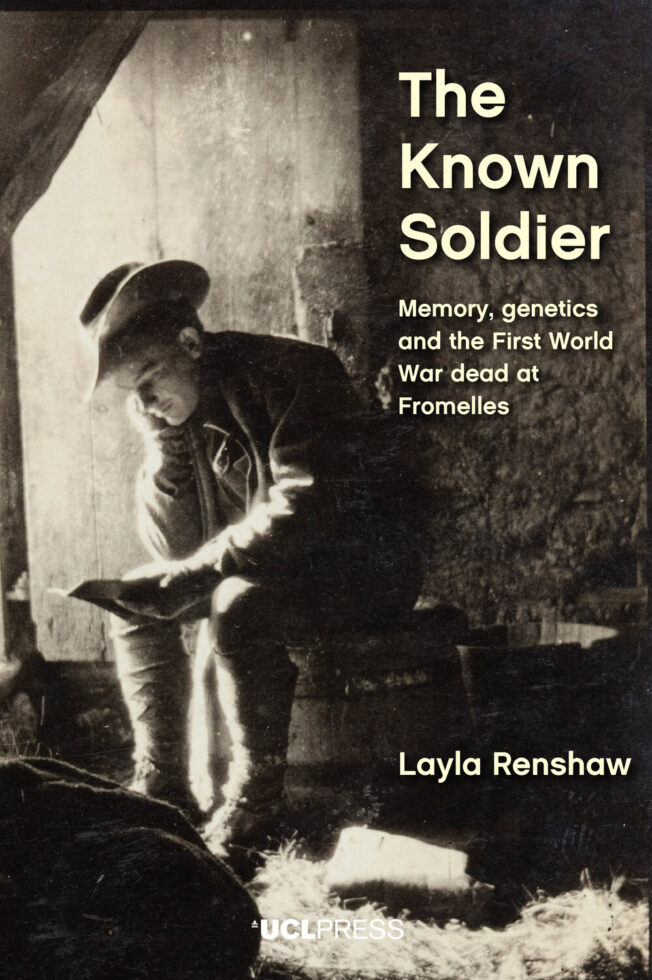
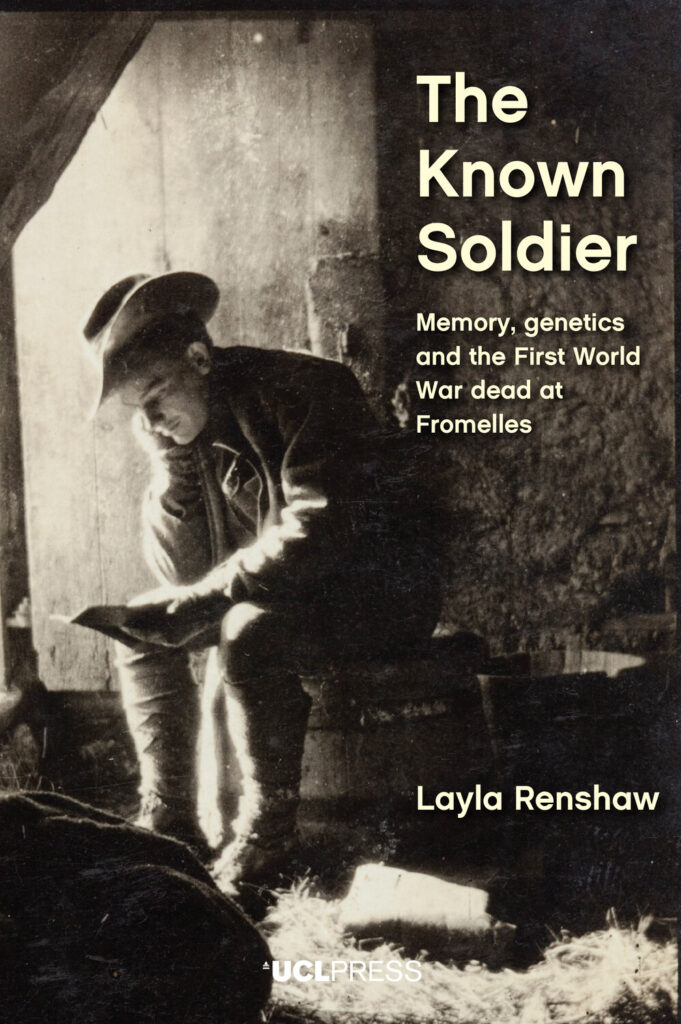
The Known Soldier
Memory, genetics and the First World War dead at Fromelles
Layla Renshaw (Author)
In 2009, the Australian and British governments, in collaboration with French authorities, began a programme of exhumation and DNA-testing of 250 Australian soldiers from the First World War Battle of Fromelles. It was the first large-scale application of modern forensic techniques to a mass grave from the War, and thousands of potential relatives came forward to offer a sample of their DNA for matching with soldiers in the grave. It was a highly successful investigation. Over 70% of the dead were identified and the Commonwealth War Grave Commission constructed a new cemetery to rebury them. A new museum was constructed soon after, and Fromelles was transformed as a heritage site.
The Known Soldier brings this remarkable endeavour to life through interviews with relatives of soldiers who died at Fromelles and undertakes a critical assessment of how genetic testing intersects with memory and mourning. Relatives reflect on the temporal, affective, political and ethical dimensions of DNA-testing war dead, as scientific advances allow these investigations to reach further back in time. This book examines the state’s use of scientific methods in its official commemoration of war, and considers how relatives navigate, and sometimes resist, scientific methods and official narratives. The stories of individual soldiers that emerge shape the historical and political representation of the battle at key moments such as its centenary.
List of figures
Acknowledgements
1 The re-emergence of First World War dead in the twenty-first century
2 Genetics in the wake of war: exploring the political, ethical and memorial implications of postconflict DNA identification
3 Relating to the dead: family history, genealogy and genetics in the Fromelles Project
4 Military memory: the legacy of war, nationalism, and empire in the commemoration of Fromelles
5 Knowing the dead: postmemory, imagination, and emotion in mourning Fromelles
6 Belonging to the dead: bodies and objects from the graves
7 Placing the dead: reburial, repatriation and the spatial imaginary of Europe and Australia at Fromelles
8 Commemorating the dead: official and vernacular remembrance at Fromelles
9 From mass grave to museum: forensic science and memorial diplomacy in the transformation of Fromelles
10 Conclusion
Bibliography
Index
DOI: 10.14324/111.9781800089990
Number of illustrations: 11
Publication date: 01 September 2026
PDF ISBN: 9781800089990
EPUB ISBN: 9781806551460
Hardback ISBN: 9781787356962
Paperback ISBN: 9781800081321
Layla Renshaw (Author) 
Layla Renshaw is an Associate Professor at Kingston University, London, where she teaches forensic archaeology and anthropology. Her research focuses on post-conflict investigations, and the relationship between human remains, forensic evidence, and memory. Layla has carried out fieldwork at multiple sites in Spain and is the author of Exhuming Loss: Memory, Materiality and Mass Graves of the Spanish Civil War. She has participated in the recovery of military casualties in Italy and Germany. Her current projects examine both the commemoration of war dead and the enduring environmental legacies of conflict.
Imperial Science, the Organic Movement and the Path to Shangri-La, 1900-1969
Ashok Malhotra,
23 March 2026

Women’s Labour Activism in Eastern Europe and Beyond
Selin Çağatay, Mátyás Erdélyi, Alexandra Ghiț, Olga Gnydiuk, Veronika Helfert, Ivelina Masheva, Zhanna Popova, Jelena Tešija, Eszter Varsa, Susan Zimmermann,
26 August 2025
The Known Soldier
Memory, genetics and the First World War dead at Fromelles
Publication date: September 1, 2026
Open Access PDF ISBN: 9781800089990
Paperback ISBN: 9781800081321
Hardback ISBN: 9781787356962
Trim size (hardback): 23.4cm x 15.6cm
Trim size (paperback): 23.4cm x 15.6cm
In 2009, the Australian and British governments, in collaboration with French authorities, began a programme of exhumation and DNA-testing of 250 Australian soldiers from the First World War Battle of Fromelles. It was the first large-scale application of modern forensic techniques to a mass grave from the War, and thousands of potential relatives came forward to offer a sample of their DNA for matching with soldiers in the grave. It was a highly successful investigation. Over 70% of the dead were identified and the Commonwealth War Grave Commission constructed a new cemetery to rebury them. A new museum was constructed soon after, and Fromelles was transformed as a heritage site.
The Known Soldier brings this remarkable endeavour to life through interviews with relatives of soldiers who died at Fromelles and undertakes a critical assessment of how genetic testing intersects with memory and mourning. Relatives reflect on the temporal, affective, political and ethical dimensions of DNA-testing war dead, as scientific advances allow these investigations to reach further back in time. This book examines the state’s use of scientific methods in its official commemoration of war, and considers how relatives navigate, and sometimes resist, scientific methods and official narratives. The stories of individual soldiers that emerge shape the historical and political representation of the battle at key moments such as its centenary.