
Publication date: 5 March 2026
DOI: https://doi.org/10.14324/111.9781806550296
Number of illustrations: 45

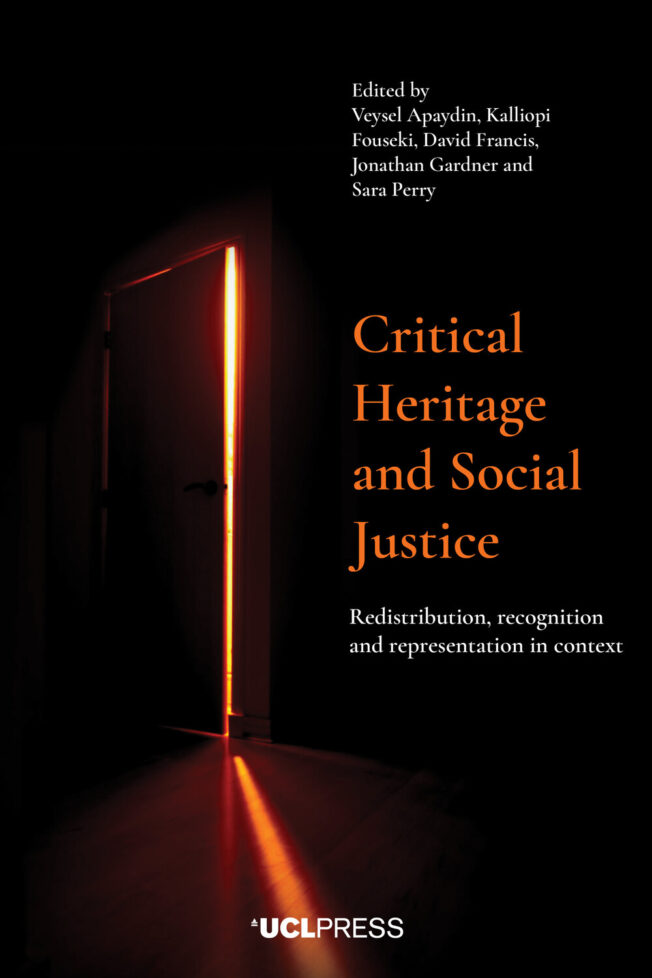
Critical Heritage and Social Justice
Redistribution, recognition and representation in context
Veysel Apaydin (Editor), Kalliopi Fouseki (Editor), David Francis (Editor), Jonathan Gardner (Editor), Sara Perry (Editor)
Critical Heritage and Social Justice brings together insights and experiences of scholars and practitioners working across heritage, museums, galleries, and cultural institutions to explore how principles of social justice can be embedded within these spaces. Bridging theoretical frameworks with practical applications, it presents a range of case studies and critical reflections that illuminate pathways toward transformative, justice-oriented heritage practices. Using Nancy Fraser’s three-dimensional justice framework of redistribution, recognition, and representation, the book situates social justice at the heart of critical heritage studies, highlighting its intersections with urgent global challenges including the climate crisis, conflict, forced migration, and widening social, cultural and economic inequalities. All these issues demand inclusive, equitable and community-engaged approaches within the heritage sector.
Each chapter considers how to support communities, particularly those that are marginalised, by linking heritage to broader social justice struggles, addressing structural inequalities, promoting interdisciplinary collaboration, and fostering inclusive education and curatorial practices. Contributors from diverse disciplinary backgrounds – including anthropology, archaeology, architecture, conservation, education, science communication, and urban planning – offer rich, cross-sectoral perspectives. Through this collaborative and critically engaged approach, the volume articulates new conceptual and methodological directions for advancing social justice through heritage work, responding to the urgent demands of a fragmented and rapidly evolving world.

Toby Butler, Felix Driver, Barbara Brayshay, Chris Church, Jeremy Iles, Oli Mould, Saskia Papadakis,
01 November 2026
Critical Heritage and Social Justice
Veysel Apaydin, Kalliopi Fouseki, David Francis, Jonathan Gardner, Sara Perry,
05 March 2026
Magdalena Buchczyk, Martín Fonck, Tomás J. Usón, Tina Palaić,
24 November 2025

Critical Heritage Studies and the Futures of Europe
Rodney Harrison, Nélia Dias, Kristian Kristiansen,
24 October 2023
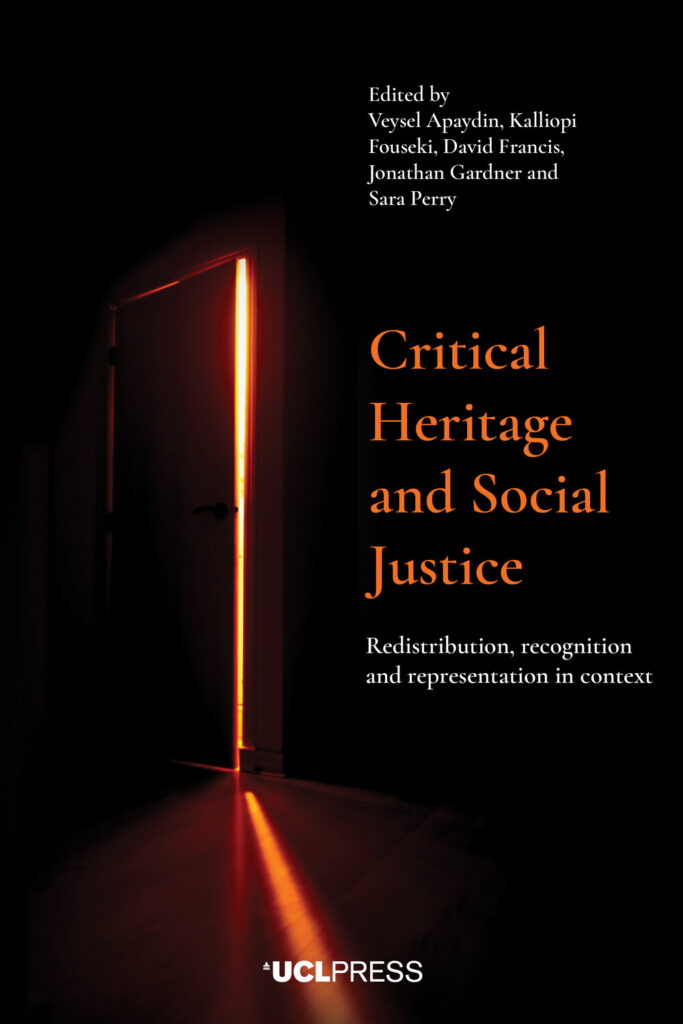
Critical Heritage and Social Justice
Redistribution, recognition and representation in context
Publication date: March 5, 2026
Open Access PDF ISBN: 9781806550296
Paperback ISBN: 9781806550289
Hardback ISBN: 9781806550272
Trim size (hardback): 23.4cm x 15.6cm
Trim size (paperback): 23.4cm x 15.6cm
Critical Heritage and Social Justice brings together insights and experiences of scholars and practitioners working across heritage, museums, galleries, and cultural institutions to explore how principles of social justice can be embedded within these spaces. Bridging theoretical frameworks with practical applications, it presents a range of case studies and critical reflections that illuminate pathways toward transformative, justice-oriented heritage practices. Using Nancy Fraser’s three-dimensional justice framework of redistribution, recognition, and representation, the book situates social justice at the heart of critical heritage studies, highlighting its intersections with urgent global challenges including the climate crisis, conflict, forced migration, and widening social, cultural and economic inequalities. All these issues demand inclusive, equitable and community-engaged approaches within the heritage sector.
Each chapter considers how to support communities, particularly those that are marginalised, by linking heritage to broader social justice struggles, addressing structural inequalities, promoting interdisciplinary collaboration, and fostering inclusive education and curatorial practices. Contributors from diverse disciplinary backgrounds – including anthropology, archaeology, architecture, conservation, education, science communication, and urban planning – offer rich, cross-sectoral perspectives. Through this collaborative and critically engaged approach, the volume articulates new conceptual and methodological directions for advancing social justice through heritage work, responding to the urgent demands of a fragmented and rapidly evolving world.