We are currently upgrading our shopping cart; in the interim all orders are being diverted to Waterstones. If you would like to redeem a promotional code, or are an author wanting to place an order, please email us.

Contact us

The East India Company at Home, 1757-1857

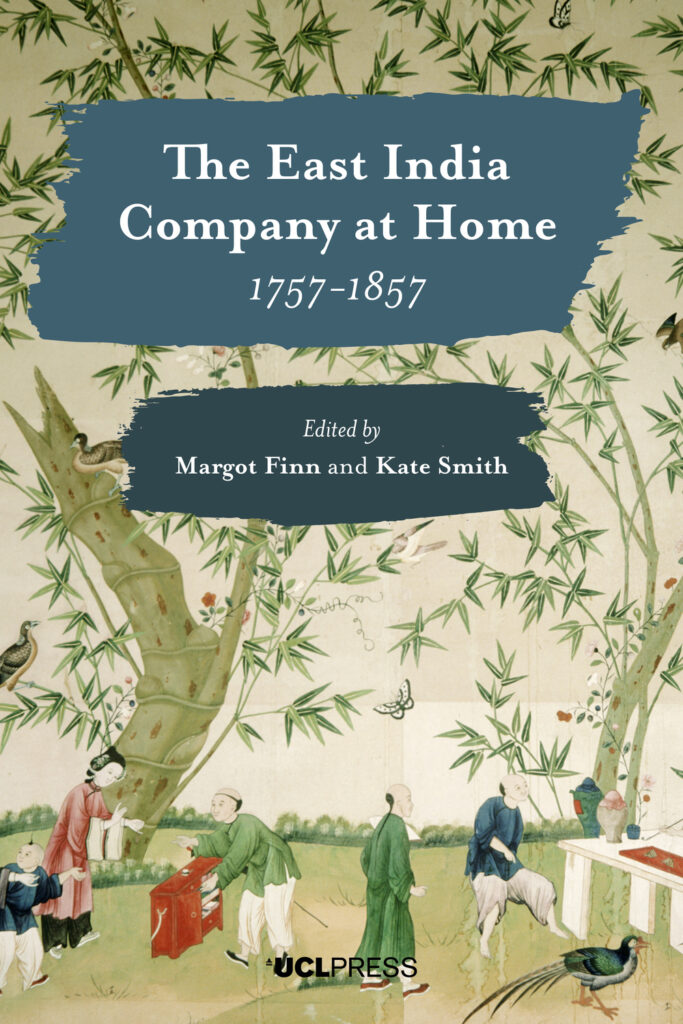
The East India Company at Home, 1757-1857 explores how empire in Asia shaped British country houses, their interiors and the lives of their residents. It includes chapters from researchers based in a wide range of settings such as archives and libraries, museums, heritage organisations, the community of family historians and universities. It moves beyond conventional academic narratives and makes an important contribution to ongoing debates around how empire impacted Britain.

The volume focuses on the propertied families of the East India Company at the height of Company rule. From the Battle of Plassey in 1757 to the outbreak of the Indian Uprising in 1857, objects, people and wealth flowed to Britain from Asia. As men in Company service increasingly shifted their activities from trade to military expansion and political administration, a new population of civil servants, army officers, surveyors and surgeons journeyed to India to make their fortunes. These Company men and their families acquired wealth, tastes and identities in India, which travelled home with them to Britain. Their stories, the biographies of their Indian possessions and the narratives of the stately homes in Britain that came to house them, frame our explorations of imperial culture and its British legacies.
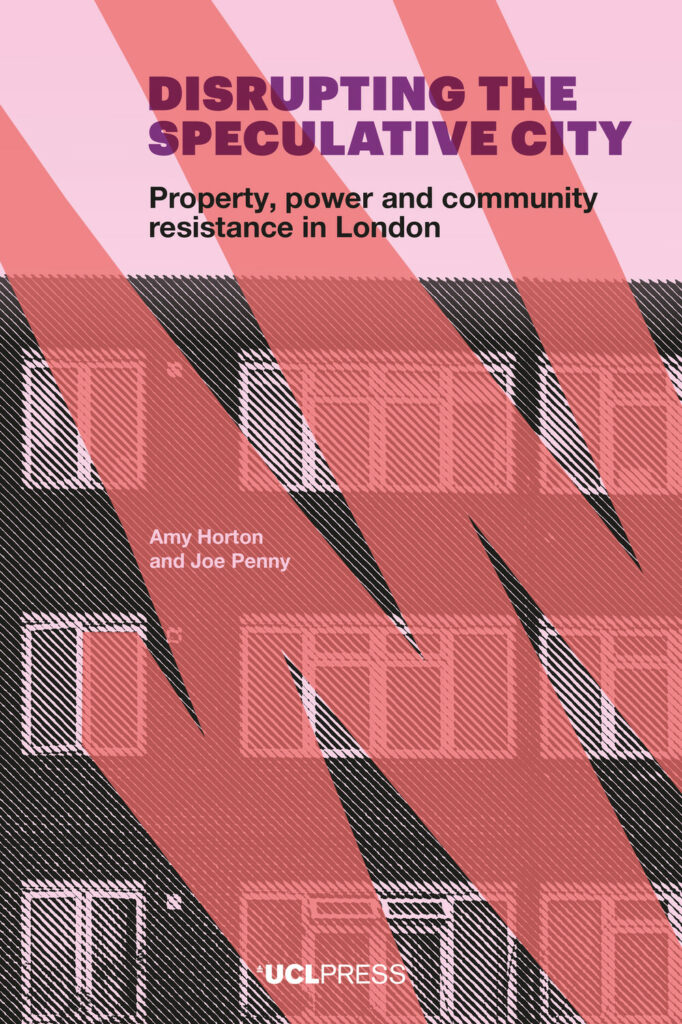
Disrupting the Speculative City

In 2011, police violence triggered an uprising in Tottenham that laid bare decades of neglect and state violence against the area’s racialised communities. In its aftermath, local leaders and corporate developers devised an aggressive redevelopment agenda that would have demolished the homes, workspaces and communities of thousands of council tenants, private renters and traders. Their plan was to transform Tottenham and surrounding areas from a diverse working-class place to a space for wealthy investors, residents and consumers.

Available as a free open access download and in print, Disrupting the Speculative City tells the story of how a community coalition defeated one of the most ambitious programmes of state-led gentrification in London. Known as the ‘Haringey Development Vehicle’ (HDV), it would have been executed through an undemocratic and speculative joint venture between the local council and the notorious international developer Lendlease. Thanks to the political creativity, tactical nous and extraordinary commitment of ordinary people, the HDV was scrapped by the local council in 2018. Drawing on the accounts of those at the heart of the struggle and analysing crucial developments in property investment, local statecraft and grassroots organising, this book explores a significant and inspirational success for campaigners in London, where social cleansing has become the default outcome of redevelopment.

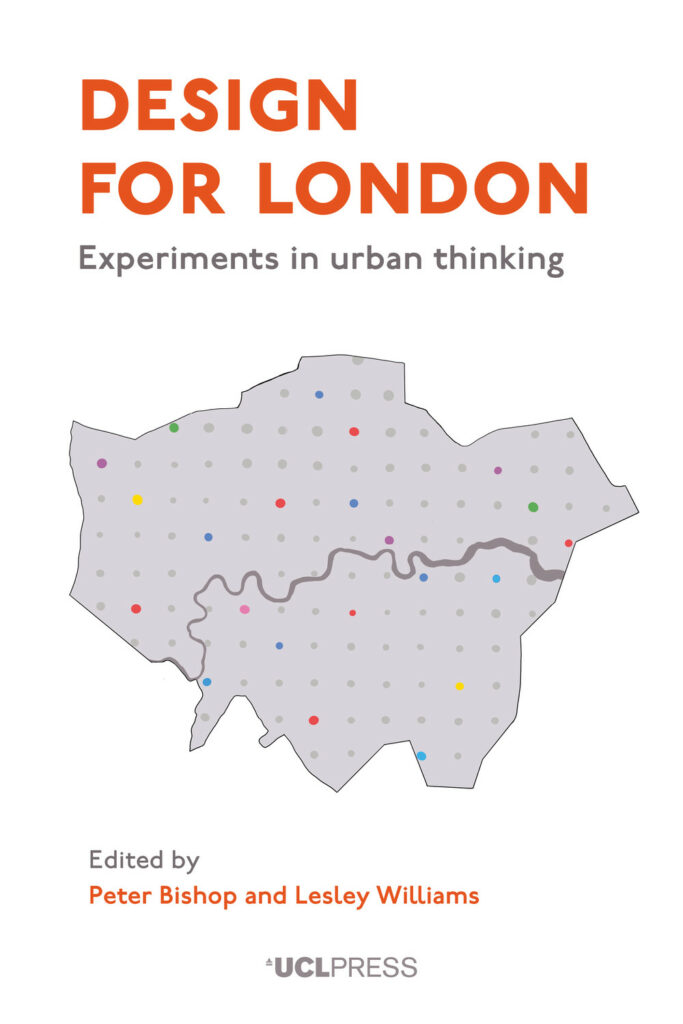
Design for London

Design for London was a unique experiment in urban planning, design and strategic thinking. Set up in 2006 by Mayor Ken Livingstone and his Architectural Advisor, Richard Rogers, the brief for the team was ‘to think about London, what made London unique and how it could be made better’. Sitting within London government but outside its formal statutory responsibilities, it was given freedom to question and challenge. The team had no power or money, but it did have the licence to operate without the usual constraints of government.

With introductions from Ken Livingstone and Richard Rogers, Design for London covers the tumultuous and heady period of the first decade of this century when London was a test bed for new ideas. It outlines how key projects such as the London Olympics, public space programmes, high street regeneration and greening programmes were managed, critically examines the lessons that might be learnt in strategic urban design and considers how a design agenda for London could be developed in the future.

By providing an engaging account of the strategic approaches and work of Design for London, and documenting the particular methodology and approach to urban theory it developed, Design for London will appeal to undergraduate and postgraduate students of planning, urban design and architecture, and to current practitioners from the public, private and community sectors who are struggling to achieve regeneration through poorly understood ‘placemaking’ concepts.

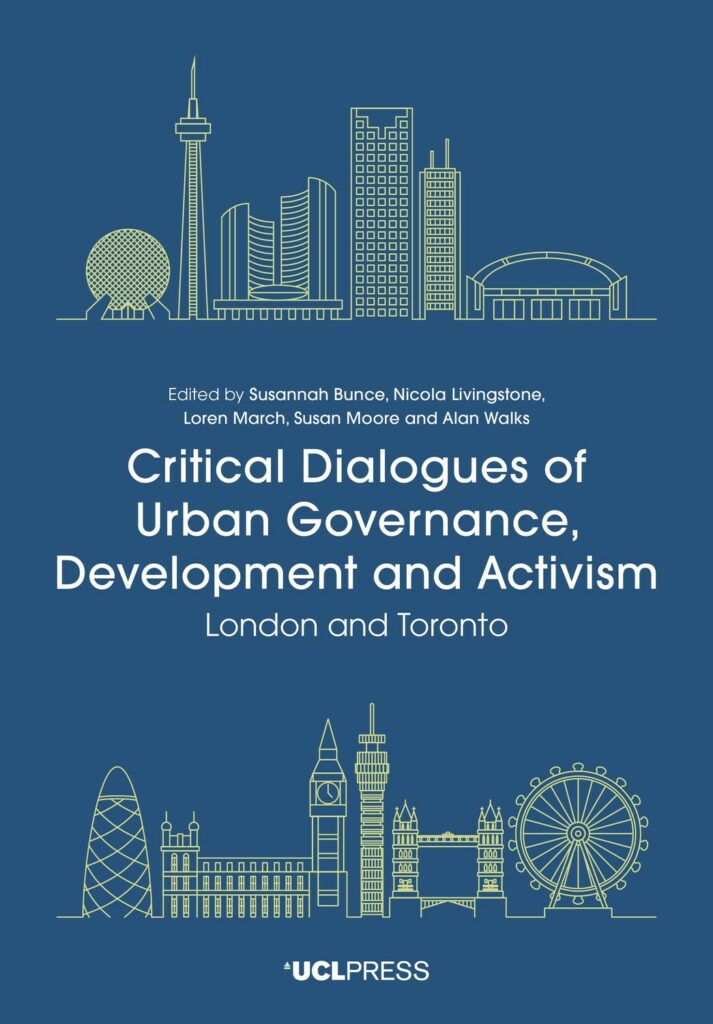
Critical Dialogues of Urban Governance, Development and Activism

Cities have been sites of some of the most visible manifestations of the evolution of processes of globalization and population expansion, and global cities are at the cutting edge of such changes. Critical Dialogues of Urban Governance, Development and Activism examines changes in governance, property development, urban politics and community activism, in two key global cities: London and Toronto.

The analysis is inherently comparative, but not in the traditional sense – the volume does not seek to deliver a like-for-like comparison. Instead, taking these two cities as empirical cases, the chapters engage in constructive dialogues about the contested and variegated built forms, formal and informal governmental mechanisms and practices, and policy and community-based responses to contemporary urban concerns.

The authors position a critical dialogue on three central issues in contemporary urban studies: governance, real estate and housing, and community activism and engagement. Their less traditional approach to comparative framing seeks to understand London and Toronto from a nuanced perspective, promoting critical reflection on the experiences and evaluative critiques of each urban context, providing insight into each city’s urban trajectory and engaging critically with wider phenomena and influences on the urban governance challenges beyond these two cities.

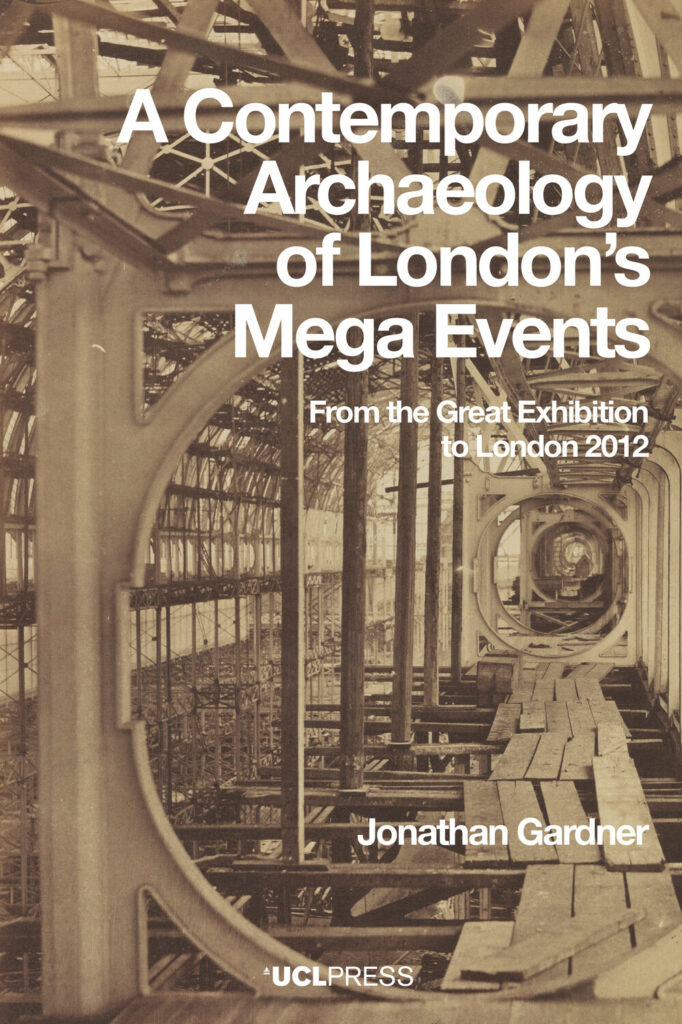
A Contemporary Archaeology of London’s Mega Events

A Contemporary Archaeology of London’s Mega Events explores the traces of London’s most significant modern ‘mega events’. Though only open for a few weeks or months, mega events permanently and disruptively reshape their host cities and societies: they demolish and rebuild whole districts, they draw in materials and participants from around the globe and their organisers self-consciously seek to leave a ‘legacy’ that will endure for decades or more.

With London as his case study, Jonathan Gardner argues that these spectacles must be seen as long-lived and persistent, rather than simply transient or short-term. Using a novel methodology drawn from the field of contemporary archaeology – the archaeology of the recent past and present-day – a broad range of comparative studies are used to explore the long-term history of each event. These include the contents and building materials of the Great Exhibition’s Crystal Palace and their extraordinary ‘afterlife’ at Sydenham, South London; how the Festival of Britain’s South Bank Exhibition employed displays of ancient history to construct a new post-war British identity; and how London 2012, as the latest of London’s mega events, dealt with competing visions of the past as archaeology, waste and heritage in its efforts to create a positive legacy for future generations.

This book offers significant new directions for the study of mega events in its comparison of how three mega events changed London over three centuries. Drawing on a varied selection of theoretical and methodological frameworks and a rich array of sources, it demonstrates the great potential of contemporary archaeology for re-examining recent processes of urban transformation.

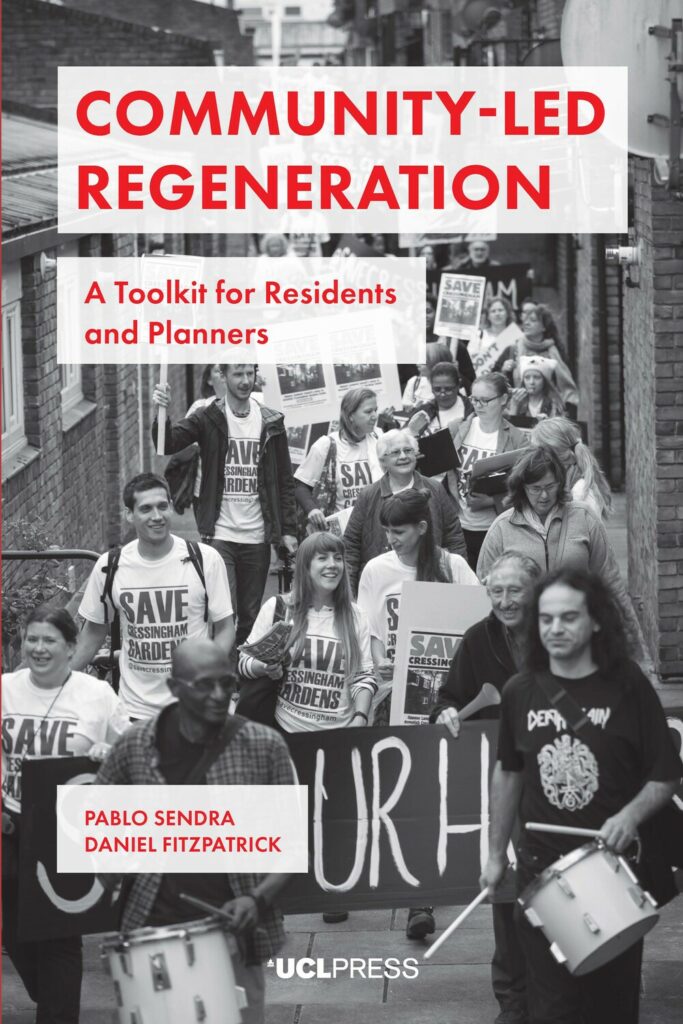
Community-Led Regeneration

***Shortlisted by 2021 National Urban Design Awards***

Through seven London case studies of communities opposing social housing demolition and/or proposing community-led plans, Community-Led Regeneration offers a toolkit of planning mechanisms and other strategies that residents and planners working with communities can use to resist demolition and propose community-led schemes. The case studies are Walterton and Elgins Community Homes, West Ken and Gibbs Green Community Homes, Cressingham Gardens Community, Greater Carpenters Neighbourhood Forum, Focus E15, People’s Empowerment Alliance for Custom House (PEACH), and Alexandra and Ainsworth Estates. Together, these case studies represent a broad overview of groups that formed as a reaction to proposed demolitions of residents’ housing, and groups that formed as a way to manage residents’ homes and public space better.

Drawing from the case studies, the toolkit includes the use of formal planning instruments, as well as other strategies such as sustained campaigning and activism, forms of citizen-led design, and alternative proposals for the management and ownership of housing by communities themselves.

Community-Led Regeneration targets a diverse audience: from planning professionals and scholars working with communities, to housing activists and residents resisting the demolition of their neighbourhoods and proposing their own plans.

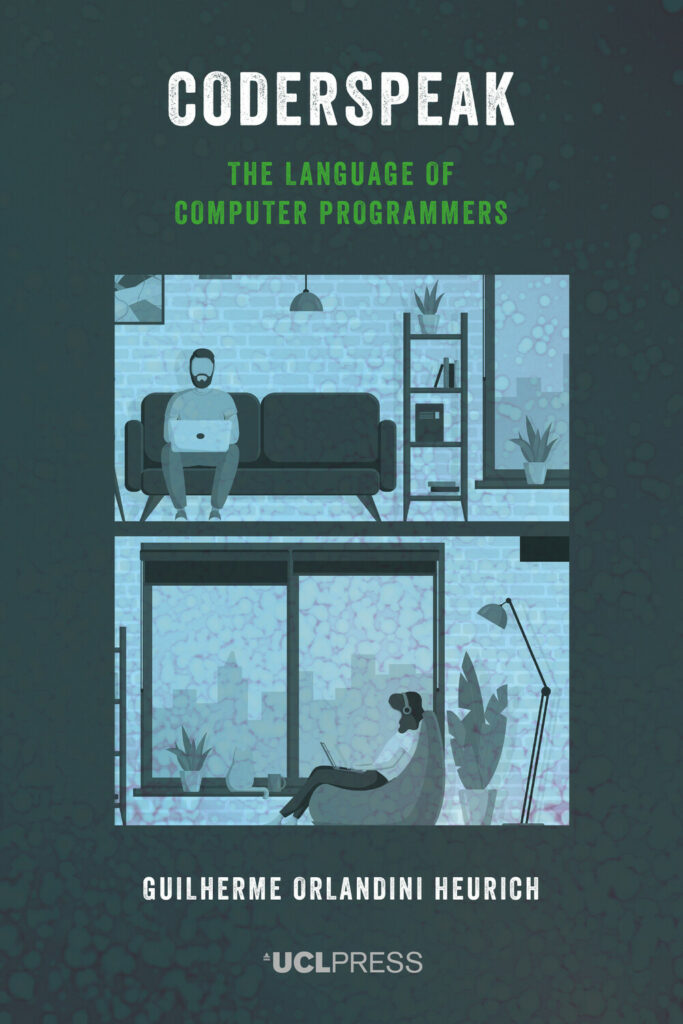
Coderspeak

Software applications have taken over our lives. We use and are used by software many times a day. Nevertheless, we know very little about the invisibly ubiquitous workers who write software. Who are they and how do they perceive their own practice? How does that shape the ways in which they collaborate to build the myriad of apps that we use every day?

Coderspeak provides a critical approach to the digital transformation of our world through an engaging and thoughtful analysis of the people who write software. It is a focused and in-depth look at one programming language and its community – Ruby – based on ethnographic research at a London company and conversations with members of the wider Ruby community in Europe, the Americas and Japan. This book shows that the place people write code, the language they write it in and the stories shared by that community are crucial in questioning and unpacking what it means to be a ‘coder’. Understanding this social group is essential if we are to grasp a future (and a present) in which computer programming increasingly dominates our lives.

Citizenship, Democracy and Belonging in Suburban Britain

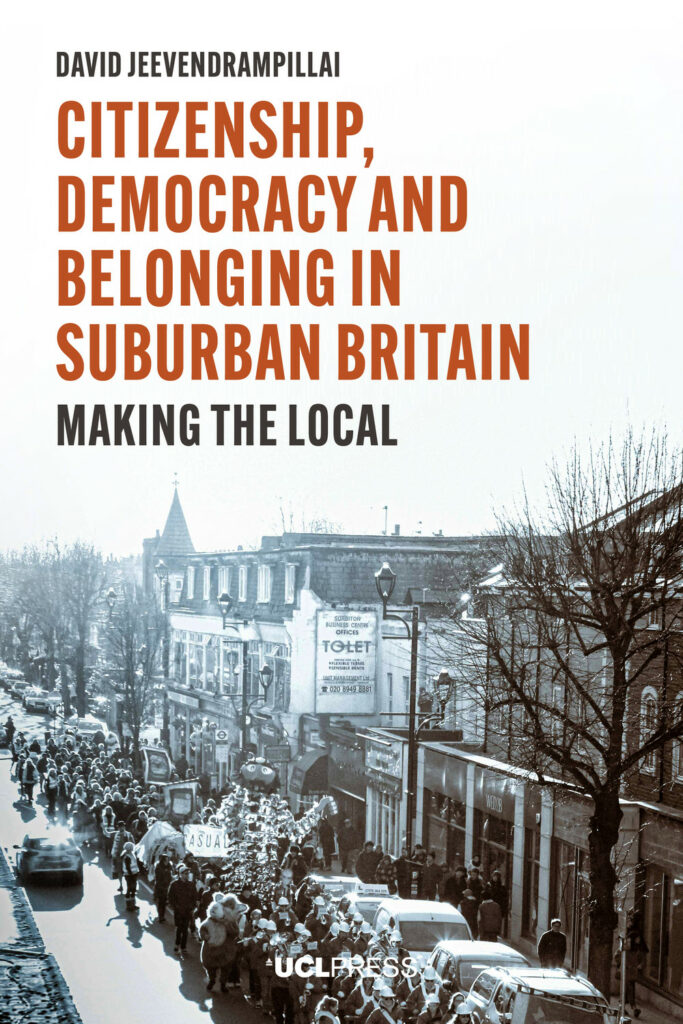
A study of the conditions of being a citizen, belonging and democracy in suburban Britain, this book focuses on understanding how a community takes on the social responsibility and pressures of being a good citizen through what they call ‘stupid’ events, festivals and parades. Building a community is perceived to be an important and necessary act to enable resilience against the perceived threats of neoliberal socio-economic life such as isolation, selfishness and loss of community. Citizenship, Democracy and Belonging in Suburban Britain{::}** explores how authoritative knowledge is developed, maintained and deployed by this group as they encounter other ‘social projects’, such as the local council planning committee or academic projects researching participation in urban planning.The activists, who call themselves the ‘Seething Villagers’, model their community activity on the mythical ancient village of Seething where moral tales of how to work together, love others and be a community are laid out in the Seething Tales. These tales include Seething ‘facts’ such as the fact that the ancient Mountain of Seething was destroyed by a giant. The assertion of fact is central to the mechanisms of play and the refusal of expertise at the heart of the Seething community. The book also stands as a reflexive critique on anthropological practice, as the author examines their role in mobilising knowledge and speaking on behalf of others

Citizenship, Democracy and Belonging in Suburban Britain is of interest to anthropologists, urban studies scholars, geographers and those interested in the notions of democracy, inclusion, citizenship and anthropological practice.

Canaletto’s Camera

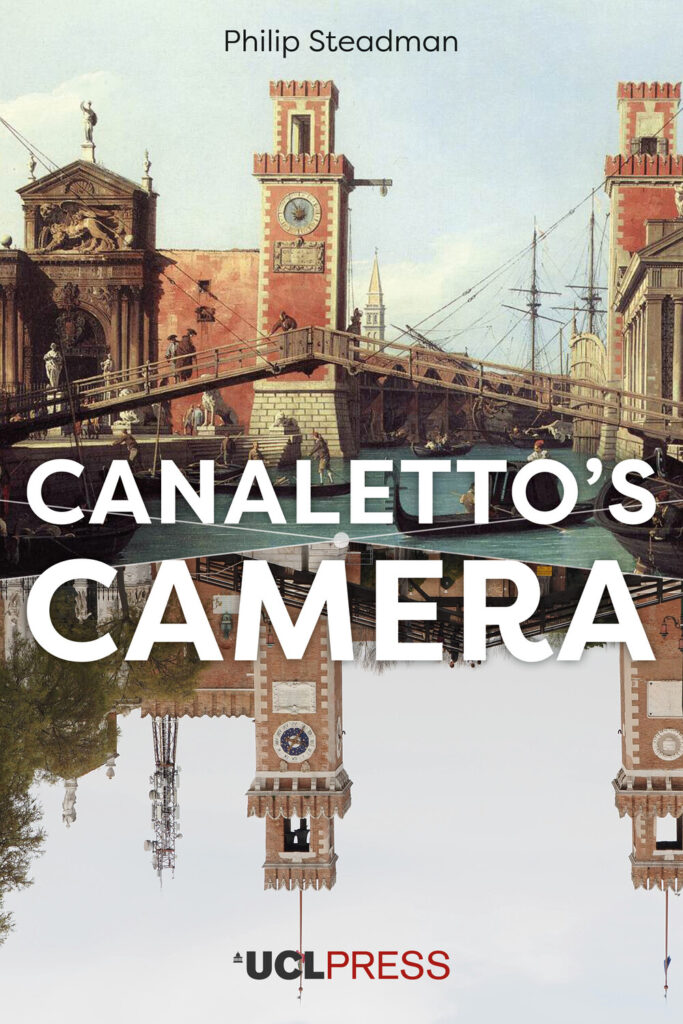
Canaletto’s Camera explores the ways in which the great Venetian artist Antonio Canaletto (1697-1768) made use of the camera obscura – the forerunner of the photographic camera – as an aid to drawing and painting. It surveys Canaletto’s contacts with contemporary Venetian and Paduan scientists, in particular Francesco Algarotti who wrote on Newton’s philosophy and the camera obscura. Canaletto also relied on many measured drawings of Venetian buildings by his colleague Antonio Visentini, a debt that has not previously been recognised.

Steadman proposes that Canaletto used the camera for two purposes: tracing from real scenes, and copying and collaging drawings and engravings by other artists. By analysing camera sketches made by Canaletto in a notebook, he shows how the artist traced views in Venice and then altered the real scenes in his finished drawings and paintings. By using a reconstructed eighteenth-century design of camera obscura, the author and his colleagues have made drawings of views that Canaletto painted in London. Steadman has recreated both a veduta (a real view) and a capriccio (a fantasy) using Canaletto’s processes of ‘photomontage’. The experiments are detailed in the book, shedding new light on the artist’s procedures, and emphasising how weak and permeable the boundary is between the two types of picture.

Bloomsbury Scientists

Bloomsbury Scientists is the story of the network of scientists and artists living in a square mile of London before and after the First World War. This inspired group of men and women viewed creativity and freedom as the driving force behind nature, and each strove to understand this in their own inventive way. Their collective energy changed the social mood of the era and brought a new synthesis of knowledge to ideas in science and art. Class barriers were threatened as power shifted from the landed oligarchy to those with talent and the will to make a difference.

A time of unexpected opportunities, from the new disciplines of Genetics and Ecology to Post-Impressionism and beyond, Michael Boulter seamlessly weaves together the stories originating from Bloomsbury’s laboratories, libraries and studios. He narrates the breakthroughs of scientists such as Ray Lankester and Marie Stopes alongside the creative outputs of H. G. Wells and Virginia Woolf, among many others, and intricately connects them all through personal friendships, grievances, quarrels and affections. Bloomsbury Scientists offers a fresh and crucial perspective on this history at a time when the complex relationship between science and art continues to be debated.

Sign up to our newsletter

Don't miss out!
Subscribe to the UCL Press newsletter for the latest open access books,
journal CfPs, news and views from our authors and much more!