We are currently upgrading our shopping cart; in the interim all orders are being diverted to Waterstones. If you would like to redeem a promotional code, or are an author wanting to place an order, please email us.

Contact us

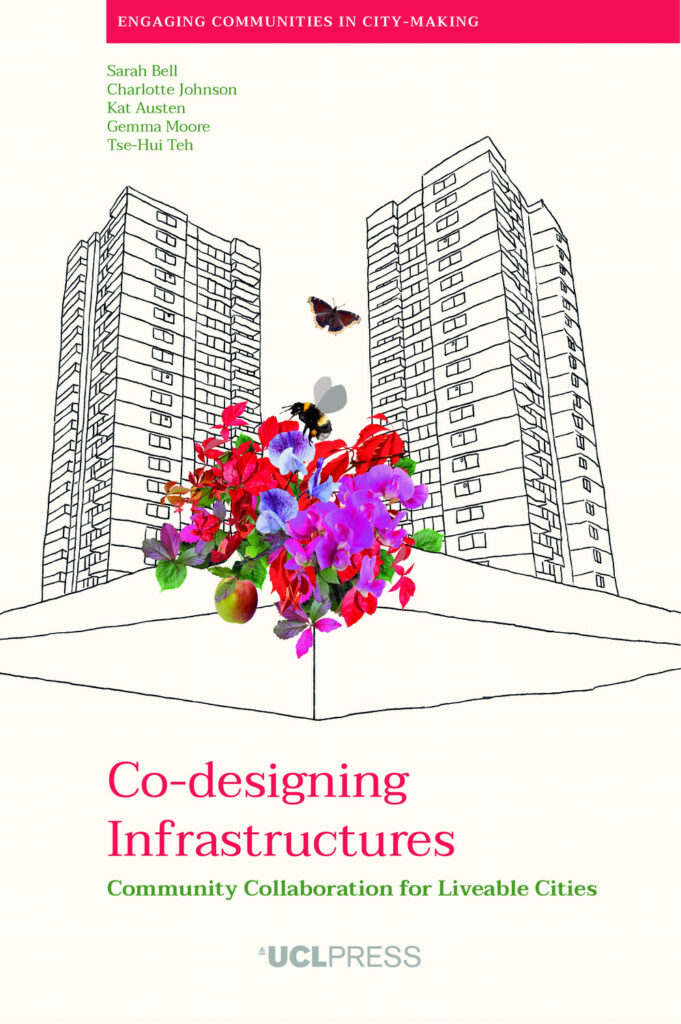
Co-designing Infrastructures

Co-designing Infrastructures tells the story of a research programme designed to bring the power of engineering and technology into the hands of grassroots community groups, to create bottom-up solutions to global crises. Four projects in London are described in detail, exemplifying community collaboration with engineers, designers and scientists to enact urban change. The projects co-designed solutions to air pollution, housing, the water-energy-food nexus, and water management. Rich case-study accounts are underpinned by theories of participation, environmental politics and socio-technical systems. The projects at the heart of the book are grounded in specific settings facing challenges familiar to urban communities throughout the world. This place-based approach to infrastructure is of international relevance as a foundation for urban resilience and sustainability. The authors document the tools used to deliver this work, providing guidance for others who are working to deliver local technical solutions to complex social and environmental problems around the world.

This is a book for engineers, designers, community organisers and researchers. Co-authored by researchers, it includes voices of community collaborators, their experiences, frustrations and aspirations. It explores useful theories about infrastructure, engineering and resilience from international academic research, and situates them in community-based co-design experience, to explain why bottom-up approaches are needed and how they might succeed.
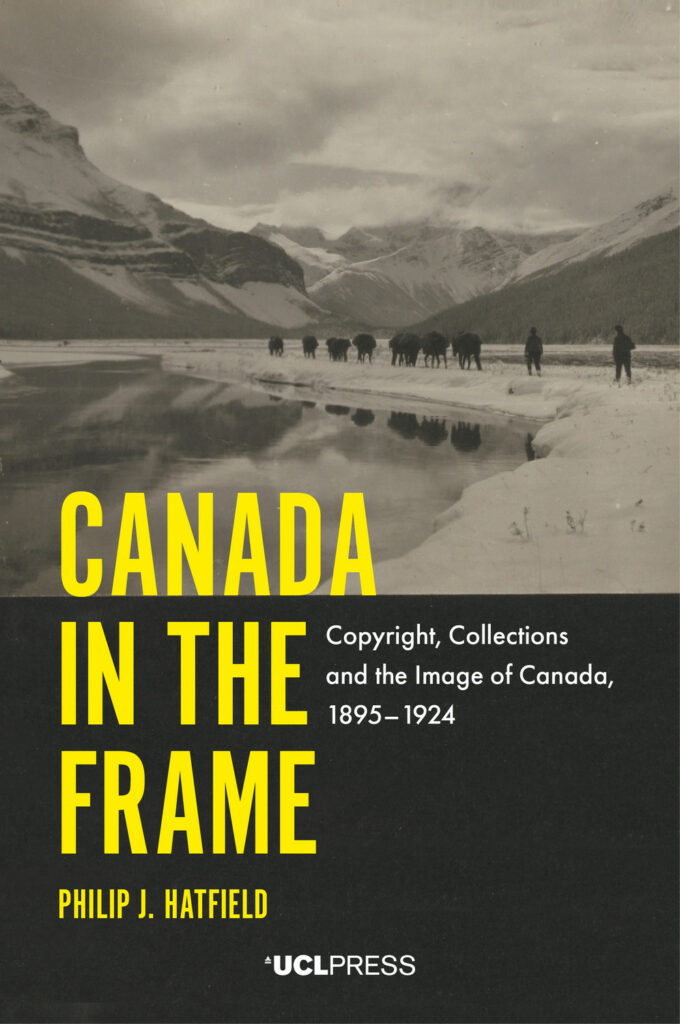
Canada in the Frame

Canada in the Frame explores a photographic collection held at the British Library that offers a unique view of late nineteenth century and early twentieth century Canada. The collection, which contains in excess of 4,500 images, taken between 1895 and 1923, covers a dynamic period in Canada’s national history and provides a variety of views of its landscapes, developing urban areas and peoples. Colonial Copyright Law was the driver by which these photographs were acquired; unmediated by curators, but rather by the eye of the photographer who created the image, they showcase a grass-roots view of Canada during its early history as a Confederation.

Canada in the Frame describes this little-known collection and includes over 100 images from the collection. The author asks key questions about what it shows contemporary viewers of Canada and its photographic history, and about the peculiar view these photographs offer of a former part of the British Empire in a post-colonial age, viewed from the old ‘Heart of Empire’. Case studies are included on subjects such as urban centres, railroads and migration, which analyse the complex ways in which photographers approached their subjects, in the context of the relationship between Canada, the British Empire and photography.

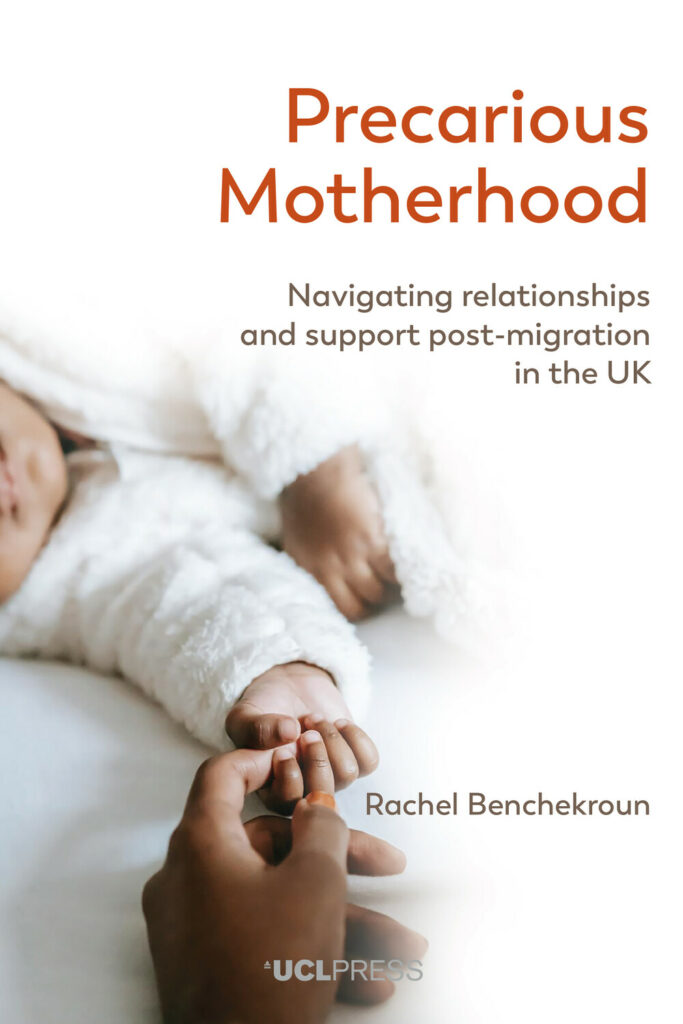
Precarious Motherhood

Precarious Motherhood explores the experiences of racially minoritised mothers living with insecure immigration status and financial hardship in London, UK. It exposes the impact of hostile immigration policies and precarity on mothers’ interpersonal relationships and access to support. The author draws attention to how mothers manage the constraints they face and enact belonging. She then explores the impact on mothers’ couple relationships, friendships, adult kin relationships and faith-based networks. The book underlines the vital role of personal relationships in providing access to resources and support, but also demonstrates how precariously positioned mothers must carefully navigate relational tensions in their everyday lives. It highlights how social infrastructure facilitates relational practices, helping mothers to sustain their children’s wellbeing and their own.

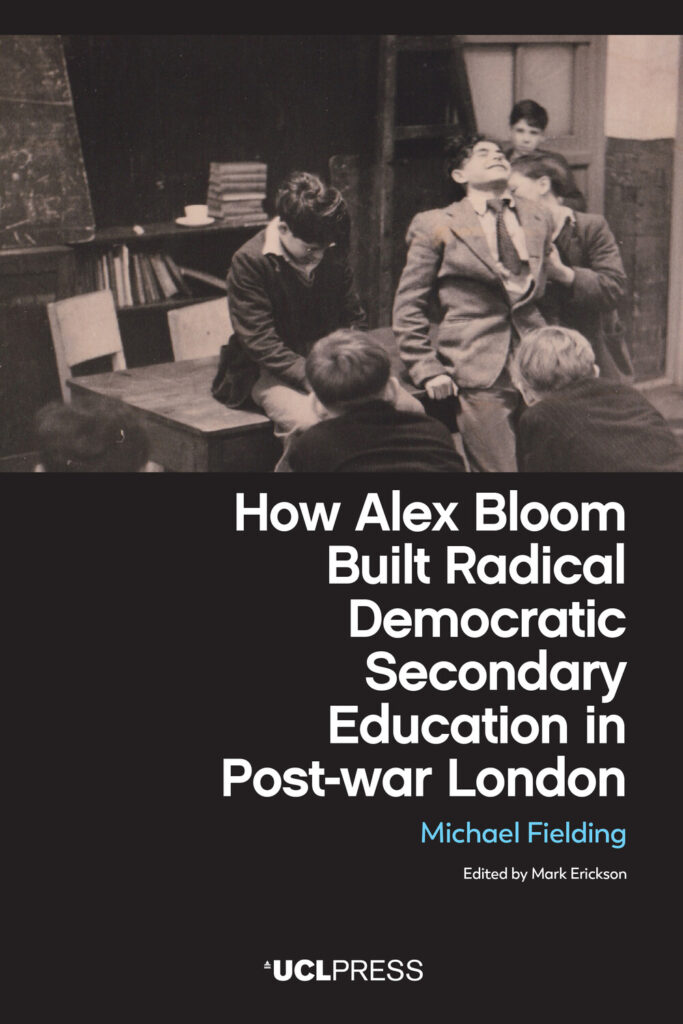
How Alex Bloom Built Radical Democratic Secondary Education in Post-war London

Alex Bloom (1895–1955) was a remarkable school leader whose reputation in his lifetime extended far beyond the UK. Against the odds, in the bomb-damaged remains of London’s East End immediately after the Second World War, he established a school that championed equality, democracy, diversity and creativity. That school – St George-in-the-East Secondary Modern in Cable Street – is known to many as the inspiration for the novel and film To Sir With Love, but its significance for education goes far deeper. An explicit affirmation of Bloom’s progressive values and aspirations, it had no punishments or rewards, no prizes or failures, and no set curriculum. It became a beacon for radical democratic schooling, achieving an astonishing international reputation and a lasting legacy.

Based on primary research with former teachers and pupils of St George-in-the-East, How Alex Bloom Built Radical Democratic Secondary Education in Post-war London recounts the story of the school’s founding, pedagogy and democratic inclusivity. Through the book’s own narrative, and in short contributions from some of today’s leading educators, it examines Bloom’s contemporary and subsequent influence on education in the UK and further afield. Most of all, this book reveals Alex Bloom’s extraordinary dedication and commitment to his staff, his pupils and their community, exemplifying the importance of engaging with the school’s contemporary realities.

Ethics and Aesthetics of Translation

Ethics and Aesthetics of Translation engages with translation, in both theory and practice, as part of an interrogation of ethical as well as political thought in the work of three bilingual European authors: Bernardo Atxaga, Milan Kundera and Jorge Semprún. In approaching the work of these authors, the book draws upon the approaches to translation offered by Benjamin, Derrida, Ricœur and Deleuze to highlight a broad set of ethical questions, focused upon the limitations of the monolingual and the democratic possibilities of linguistic plurality; upon our innate desire to translate difference into similarity; and upon the ways in which translation responds to the challenges of individual and collective remembrance.

Each chapter explores these interlingual but also intercultural, interrelational and interdisciplinary issues, mapping a journey of translation that begins in the impact of translation upon the work of each author, continues into moments of linguistic translation, untranslatability and mistranslation within their texts and ultimately becomes an exploration of social, political and affective (un)translatability. In these journeys, the creative and critical potential of translation emerges as a potent, often violent, but always illuminating, vision of the possibilities of differentiation and connection, generation and memory, in temporal, linguistic, cultural and political terms.

Mobile Museums

Mobile Museums presents an argument for the importance of circulation in the study of museum collections, past and present. It brings together an impressive array of international scholars and curators from a wide variety of disciplines – including the history of science, museum anthropology and postcolonial history – to consider the mobility of collections. The book combines historical perspectives on the circulation of museum objects in the past with contemporary accounts of their re-mobilisation, notably in the context of Indigenous community engagement. Contributors seek to explore processes of circulation historically in order to re-examine, inform and unsettle common assumptions about the way museum collections have evolved over time and through space.

By foregrounding questions of circulation, the chapters in Mobile Museums collectively represent a fundamental shift in the understanding of the history and future uses of museum collections. The book addresses a variety of different types of collection, including the botanical, the ethnographic, the economic and the archaeological. Its perspective is truly global, with case studies drawn from South America, West Africa, Oceania, Australia, the United States, Europe and the UK. Mobile Museums helps us to understand why the mobility of museum collections was a fundamental aspect of their history and why it continues to matter today.

The World of UCL

From its foundation in 1826, UCL embraced a progressive and pioneering spirit. It was the first university in England to admit students regardless of religion, and made higher education affordable and accessible to a much broader section of society. It was also effectively the first university to welcome women on equal terms with men. From the outset, UCL showed a commitment to innovative ideas and new methods of teaching and research.

This book charts the history of UCL from 1826 through to the present day, highlighting its many contributions to society in Britain and around the world. It covers the expansion of the university through the growth in student numbers and institutional mergers. It documents shifts in governance throughout the years, and the changing social and economic context in which UCL operated, including challenging periods of reconstruction after two World Wars.

Today UCL is one of the powerhouses of research and teaching, and a truly global university. It is currently seventh in the QS World University Rankings. This completely revised and updated edition features a new chapter based on interviews with key individuals at UCL. It comes at a time of ambitious development for UCL with the establishment of an entirely new campus in East London, UCL East, and Provost Michael Arthur’s ‘UCL 2034’ strategy which aims to secure the university’s long-term future and commits UCL to delivering global impact.

Urban Claims and the Right to the City

Urban Claims and the Right to the City explores how contested processes of urban development, and the rights of city dwellers, are understood and interpreted from the perspective of women and men working, in different ways, at the grassroots in Salvador da Bahia, Brazil, and London, UK. In doing so, it represents the grounded voices of authors whose work and lives mean that they engage, on a daily basis, with issues related to housing and spatial rights, and identity struggles around race, gender, disability, sexuality, citizenship and class.

Reivindicações Urbanas e o Direito à Cidade investiga como os processos de desenvolvimento urbano em disputa e os direitos de moradores das cidades são compreendidos e interpretados por mulheres e homens que trabalham, de maneiras diferentes, nas bases populares de Salvador da Bahia, no Brasil, e de Londres, no Reino Unido. Ao fazê-lo, o livro representa vozes situadas de autores cujos trabalhos e vidas estão cotidianamente engajados em questões relacionadas aos direitos à moradia e ao espaço, e em lutas pautadas por identidades de raça, gênero, deficiência, sexualidade, cidadania e classe social.

The UCL Institute of Education

The history of the UCL Institute of Education is one of persistent renewal. Since its founding in 1902 as the London Day Training College, through its establishment as a university institute and merger with UCL, the IOE has constantly grown into new areas of learning and social research. As a locus for leadership, it has exerted influence upon the nature and direction of education nationally and internationally.

Drawing upon a wide range of sources, the connections between internal history and external historical developments are sensitively teased out. The result is an elegantly written history, characterised by substantial scholarship and analysis, and enlivened by illustrations and anecdote. The pages of this book are peopled with some of the most influential, and at times controversial, figures of education, including Sidney Webb, Cyril Burt, Susan Isaacs, Sophie Bryant, Richard Peters, Basil Bernstein, Ann Oakley, Celia Hoyles and Stephen Ball.

Two new chapters extend Richard Aldrich’s text to 2020. These examine the extraordinary years of growth in the early 2000s, followed by a period of consolidation, merger with UCL and subsequent expansion. The IOE is unique in successfully pursuing a world-leading research agenda while also supporting a wide range of teacher education, having an impact in London, across Britain and the world.

Sign up to our newsletter

Don't miss out!
Subscribe to the UCL Press newsletter for the latest open access books,
journal CfPs, news and views from our authors and much more!