The East India Company at Home, 1757-1857

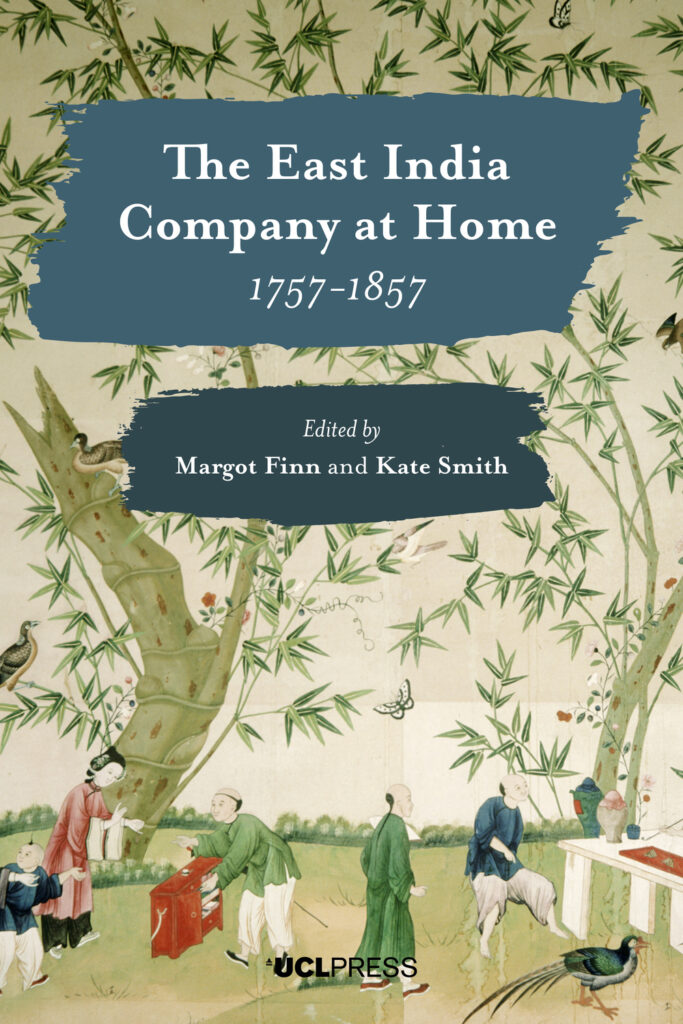
The East India Company at Home, 1757-1857 explores how empire in Asia shaped British country houses, their interiors and the lives of their residents. It includes chapters from researchers based in a wide range of settings such as archives and libraries, museums, heritage organisations, the community of family historians and universities. It moves beyond conventional academic narratives and makes an important contribution to ongoing debates around how empire impacted Britain.

The volume focuses on the propertied families of the East India Company at the height of Company rule. From the Battle of Plassey in 1757 to the outbreak of the Indian Uprising in 1857, objects, people and wealth flowed to Britain from Asia. As men in Company service increasingly shifted their activities from trade to military expansion and political administration, a new population of civil servants, army officers, surveyors and surgeons journeyed to India to make their fortunes. These Company men and their families acquired wealth, tastes and identities in India, which travelled home with them to Britain. Their stories, the biographies of their Indian possessions and the narratives of the stately homes in Britain that came to house them, frame our explorations of imperial culture and its British legacies.
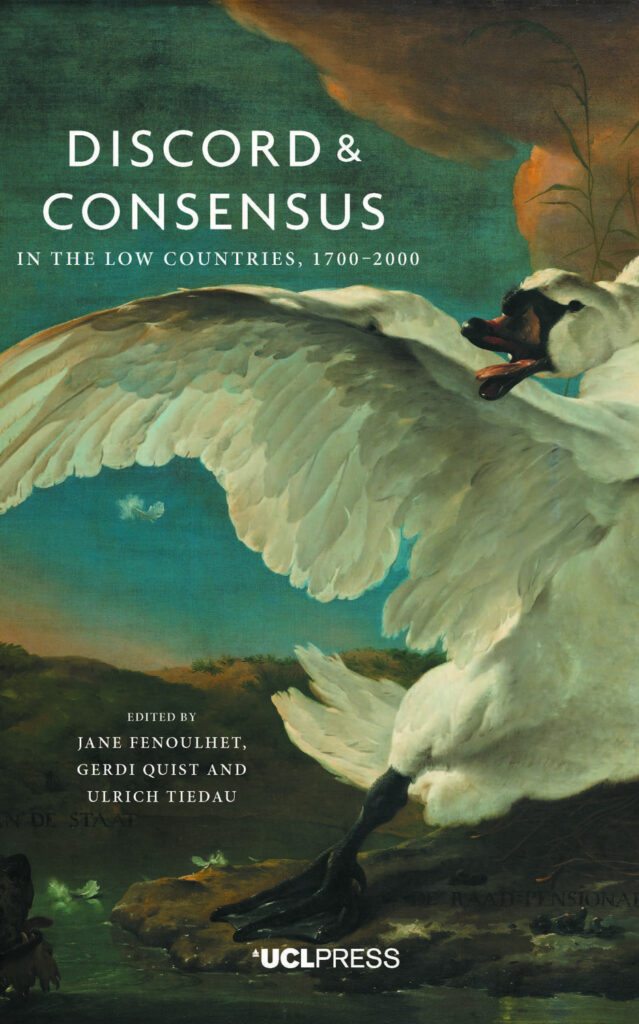
Discord and Consensus in the Low Countries, 1700-2000

All countries, regions and institutions are ultimately built on a degree of consensus, on a collective commitment to a concept, belief or value system. This consensus is continuously rephrased and reinvented through a narrative of cohesion and challenged by expressions of discontent and discord. The history of the Low Countries is characterised by both a striving for consensus and eruptions of discord, both internally and from external challenges. This interdisciplinary volume explores consensus and discord in a Low Countries context along broad cultural, linguistic and historical lines. Disciplines represented include early-modern and contemporary history; art history; film; literature; and translation scholars from both the Low Countries and beyond.

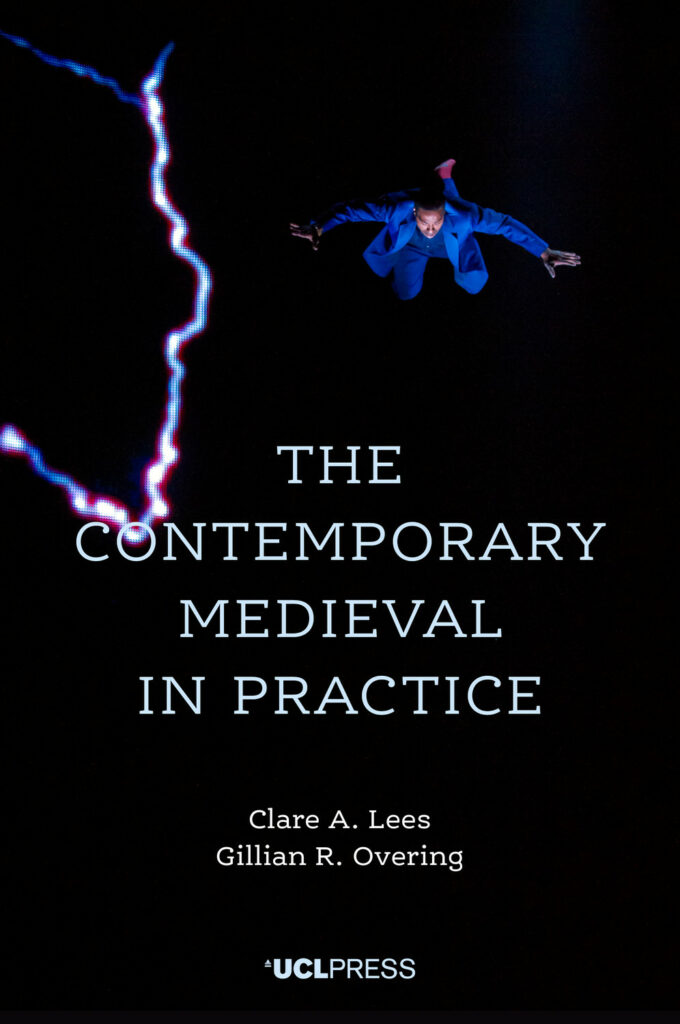
The Contemporary Medieval in Practice

Contemporary arts, both practice and methods, offer medieval scholars innovative ways to examine, explore, and re-frame the past. Medievalists offer contemporary studies insights into cultural works of the past that have been made or re-worked in the present. Creative-critical writing invites the adaptation of scholarly style using forms such as the dialogue, short essay, and the poem; these are, the authors argue, appropriate ways to explore innovative pathways from the contemporary to the medieval, and vice versa. Speculative and non-traditional, The Contemporary Medieval in Practice adapts the conventional scholarly essay to reflect its cross-disciplinary, creative subject.

This book ‘does’ Medieval Studies differently by bringing it into relation with the field of contemporary arts and by making ‘practice’, in the sense used by contemporary arts and by creative-critical writing, central to it. Intersecting with a number of urgent critical discourses and cultural practices, such as the study of the environment and the ethics of understanding bodies, identities, and histories, this short, accessible book offers medievalists a distinctive voice in multi-disciplinary, trans-chronological, collaborative conversations about the Humanities. Its subject is early medieval British culture, often termed Anglo-Saxon Studies (c. 500-1100), and its relation with, use of, and re-working in contemporary visual, poetic, and material culture (after 1950).

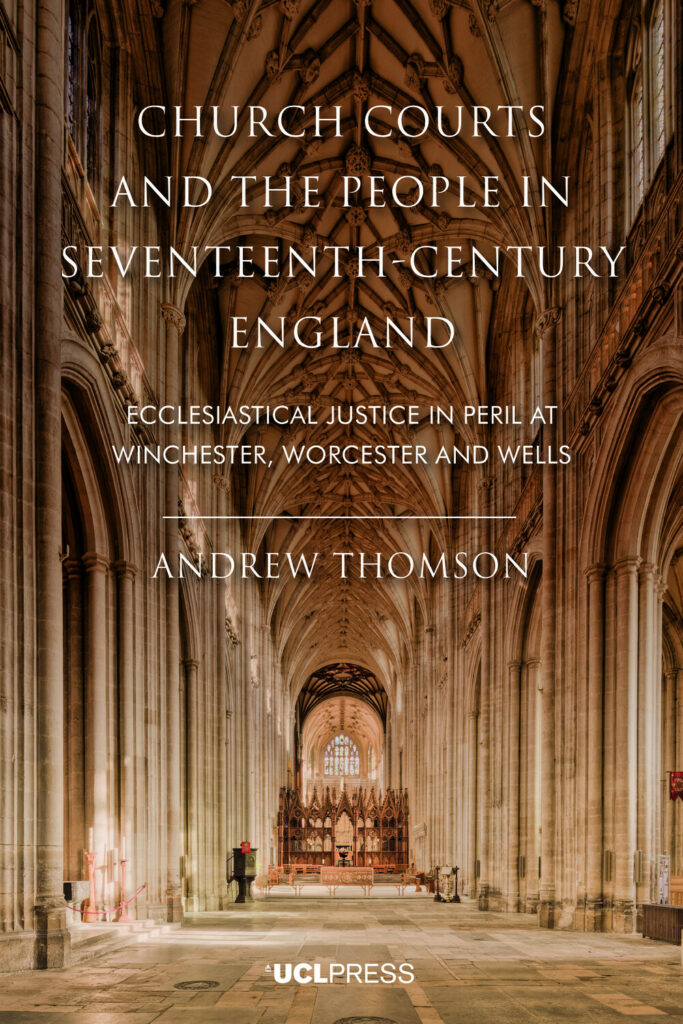
Church Courts and the People in Seventeenth-Century England

Religion meant far more in early modern England than church on Sundays, a baptism, a funeral or a wedding ceremony. The Church was fully enmeshed in the everyday lives of the people; in particular, their morals and religious observance. The Church imposed comprehensive regulations on its flock, and it employed an army of informers and bureaucrats, headed by a diocesan chancellor, to enable its courts to enforce the rules. Church courts lay, thus, at the very intersection of Church and people.

The courts of the seventeenth century – when ‘a cyclonic shattering’ produced a ‘great overturning of everything in England’ – have, surprisingly, had to wait until now for scrutiny. Church Courts and the People in Seventeenth-Century England offers a detailed survey of three dioceses across the whole of the century, examining key aspects such as attendance at court, completion of business and, crucially, the scale of guilt to test the performance of the courts.

While the study will capture the interest of lawyers to clergymen, or from local historians to sociologists, its primary appeal will be to researchers in the field of Church history. For students and researchers of the seventeenth century, it provides a full account of court operations, measuring the extent of control, challenging orthodoxies about excommunication, penance and juries, contextualising ecclesiastical justice within major societal issues of the times and, ultimately, presents powerful evidence for a ‘church in danger’ by the end of the century.

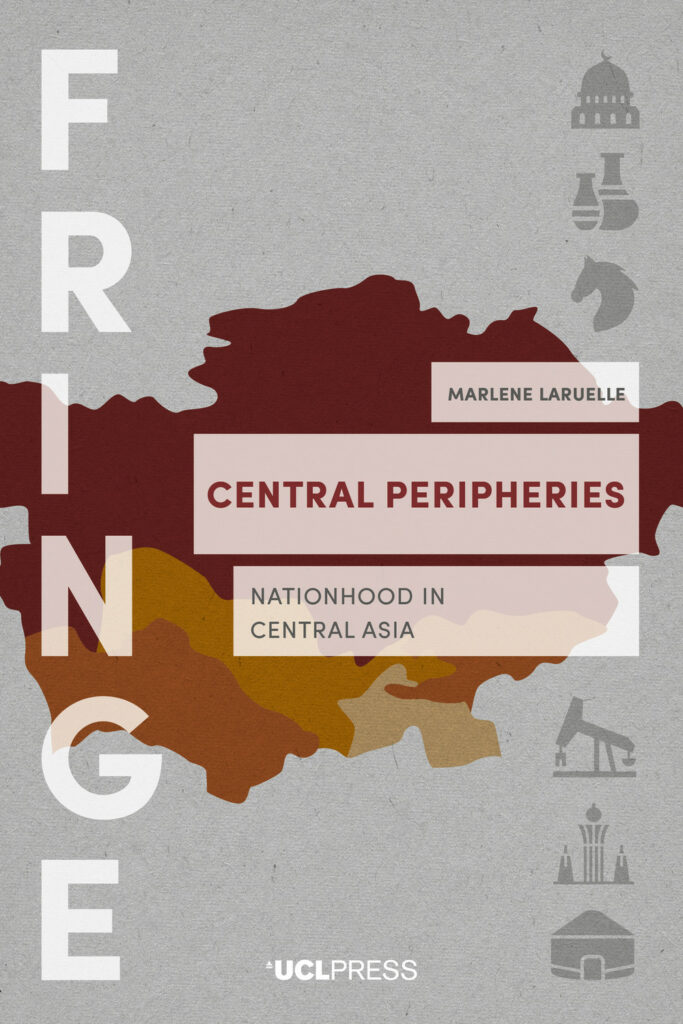
Central Peripheries

Central Peripheries explores post-Soviet Central Asia through the prism of nation-building. Although relative latecomers on the international scene, the Central Asian states see themselves as globalized, and yet in spite of – or perhaps precisely because of – this, they hold a very classical vision of the nation-state, rejecting the abolition of boundaries and the theory of the ‘death of the nation’. Their unabashed celebration of very classical nationhoods built on post-modern premises challenges the Western view of nationalism as a dying ideology that ought to have been transcended by post-national cosmopolitanism.

Marlene Laruelle looks at how states in the region have been navigating the construction of a nation in a post-imperial context where Russia remains the dominant power and cultural reference. She takes into consideration the ways in which the Soviet past has influenced the construction of national storylines, as well as the diversity of each state’s narratives and use of symbolic politics. Exploring state discourses, academic narratives and different forms of popular nationalist storytelling allows Laruelle to depict the complex construction of the national pantheon in the three decades since independence. The second half of the book focuses on Kazakhstan as the most hybrid national construction and a unique case study of nationhood in Eurasia.

Based on the principle that only multidisciplinarity can help us to untangle the puzzle of nationhood, Central Peripheries uses mixed methods, combining political science, intellectual history, sociology and cultural anthropology. It is inspired by two decades of fieldwork in the region and a deep knowledge of the region’s academia and political environment.

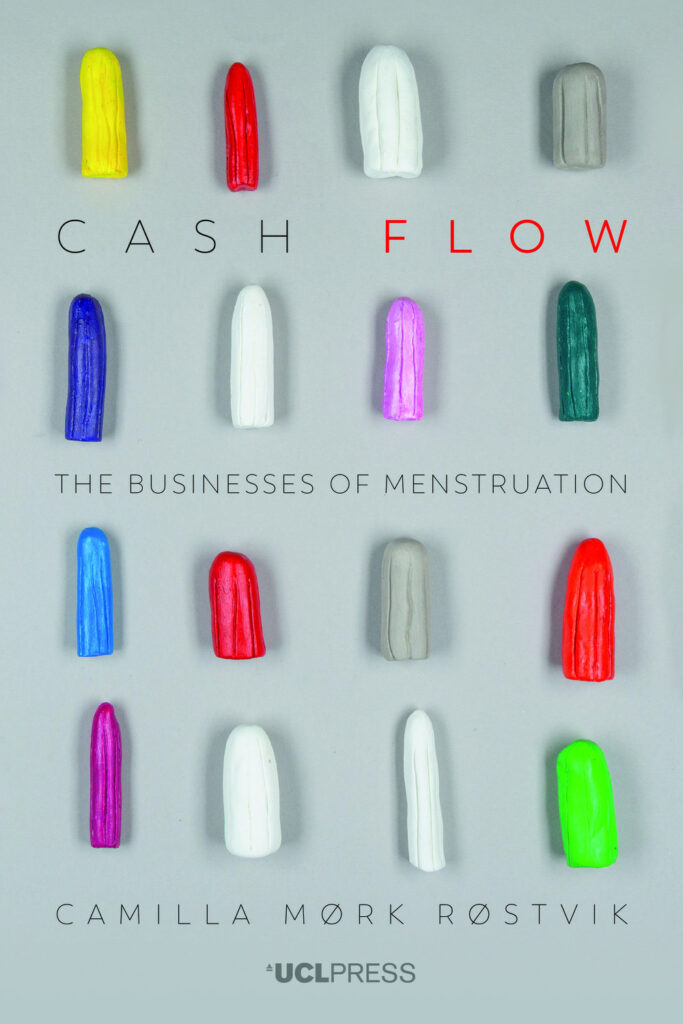
Cash Flow

The menstrual product industry has played a large role in shaping the last hundred years of menstrual culture, from technological innovation to creative advertising, education in classrooms and as employers of thousands in factories around the world. How much do we know about this sector and how has it changed in later decades? What constitutes ‘the industry’, who works in it, and how is it adapting to the current menstrual equity movement?

Cash Flow provides a new academic study of the menstrual corporate landscape that links its twentieth-century origins to the current ‘menstrual moment’. Drawing on a range of previously unexplored archival materials and interviews with industry insiders, each chapter examines one key company and brand: Saba in Norway, Essity in Sweden, Tambrands in the Soviet Union, Procter & Gamble in Britain and Europe, Kimberly-Clark in North America, and start-ups Clue and Thinx. By engaging with these corporate collections, the book highlights how the industry has survived as its consumers continually change.

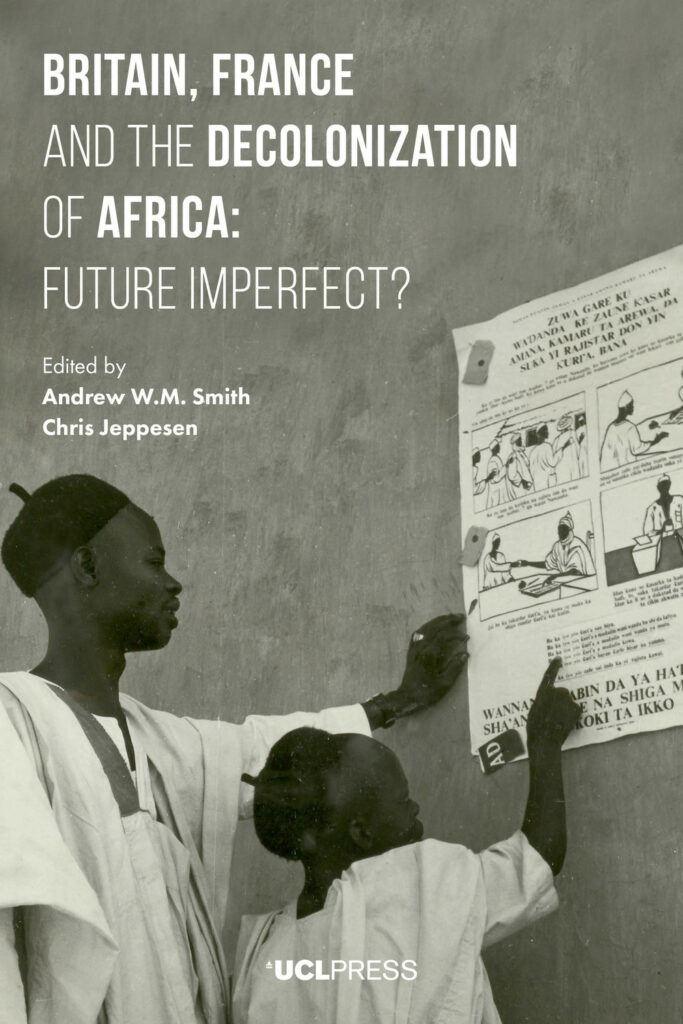
Britain, France and the Decolonization of Africa

Looking at decolonization in the conditional tense, this volume teases out the complex and uncertain ends of British and French empire in Africa during the period of ‘late colonial shift’ after 1945. Rather than view decolonization as an inevitable process, the contributors together explore the crucial historical moments in which change was negotiated, compromises were made, and debates were staged.
Three core themes guide the analysis: development, contingency and entanglement. The chapters consider the ways in which decolonization was governed and moderated by concerns about development and profit. A complementary focus on contingency allows deeper consideration of how colonial powers planned for ‘colonial futures’, and how divergent voices greeted the end of empire. Thinking about entanglements likewise stresses both the connections that existed between the British and French empires in Africa, and those that endured beyond the formal transfer of power.

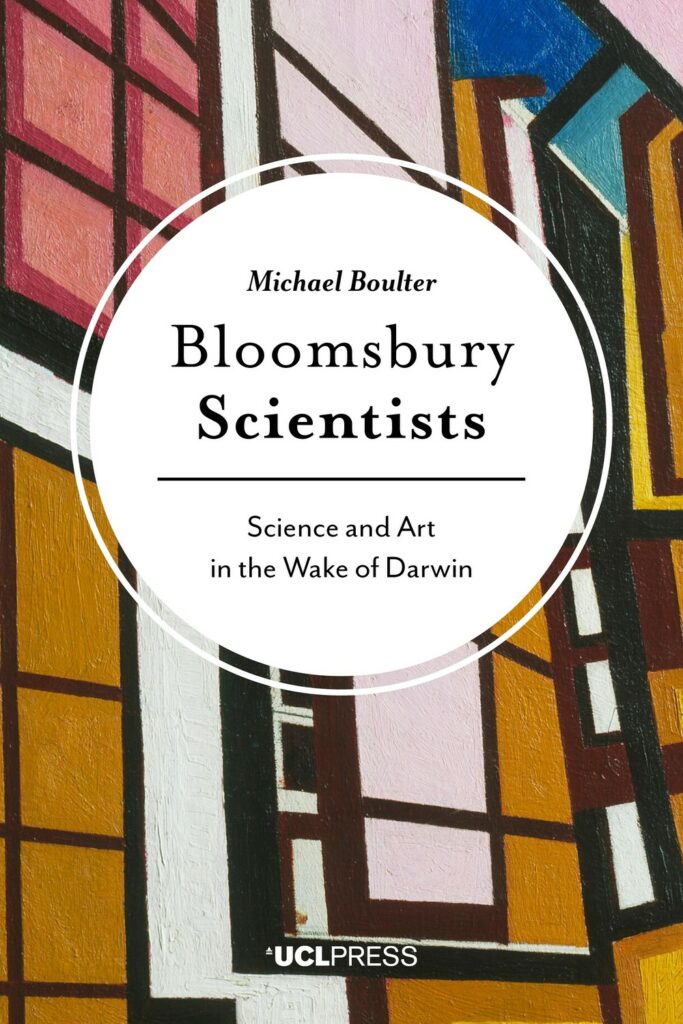
Bloomsbury Scientists

Bloomsbury Scientists is the story of the network of scientists and artists living in a square mile of London before and after the First World War. This inspired group of men and women viewed creativity and freedom as the driving force behind nature, and each strove to understand this in their own inventive way. Their collective energy changed the social mood of the era and brought a new synthesis of knowledge to ideas in science and art. Class barriers were threatened as power shifted from the landed oligarchy to those with talent and the will to make a difference.

A time of unexpected opportunities, from the new disciplines of Genetics and Ecology to Post-Impressionism and beyond, Michael Boulter seamlessly weaves together the stories originating from Bloomsbury’s laboratories, libraries and studios. He narrates the breakthroughs of scientists such as Ray Lankester and Marie Stopes alongside the creative outputs of H. G. Wells and Virginia Woolf, among many others, and intricately connects them all through personal friendships, grievances, quarrels and affections. Bloomsbury Scientists offers a fresh and crucial perspective on this history at a time when the complex relationship between science and art continues to be debated.

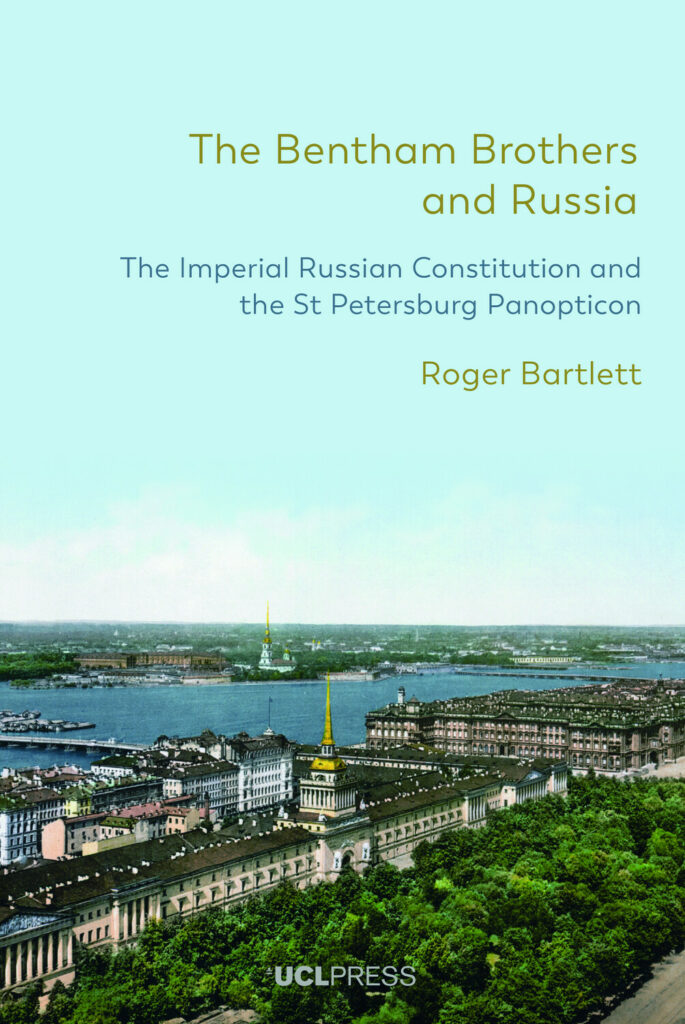
The Bentham Brothers and Russia

The jurist and philosopher, Jeremy Bentham, and his lesser-known brother, Samuel, equally talented but as a naval architect, engineer and inventor, had a long love affair with Russia. Jeremy hoped to assist Empress Catherine II with her legislative projects. Samuel went to St Petersburg to seek his fortune in 1780 and came back with the rank of Brigadier-General and the idea, famously publicised by Jeremy, of the Inspection-House or Panopticon. The Bentham Brothers and Russia chronicles the brothers’ later involvement with the Russian Empire, when Jeremy focused his legislative hopes on Catherine’s grandson Emperor Alexander I (ruled 1801-25) and Samuel found a unique opportunity in 1806 to build a Panopticon in St Petersburg – the only panoptical building ever built by the Benthams themselves.

Setting the Benthams’ projects within an in-depth portrayal of the Russian context, Roger Bartlett illuminates an important facet of their later careers and offers insight into their world view and way of thought. He also contributes towards the history of legal codification in Russia, which reached a significant peak in 1830, and towards the demythologising of the Panopticon, made notorious by Michel Foucault: the St Petersburg building, still relatively unknown, is described here in detail on the basis of archival sources. The Benthams’ interactions with Russia under Alexander I constituted a remarkable episode in Anglo-Russian relations; this book fills a significant gap in their history.

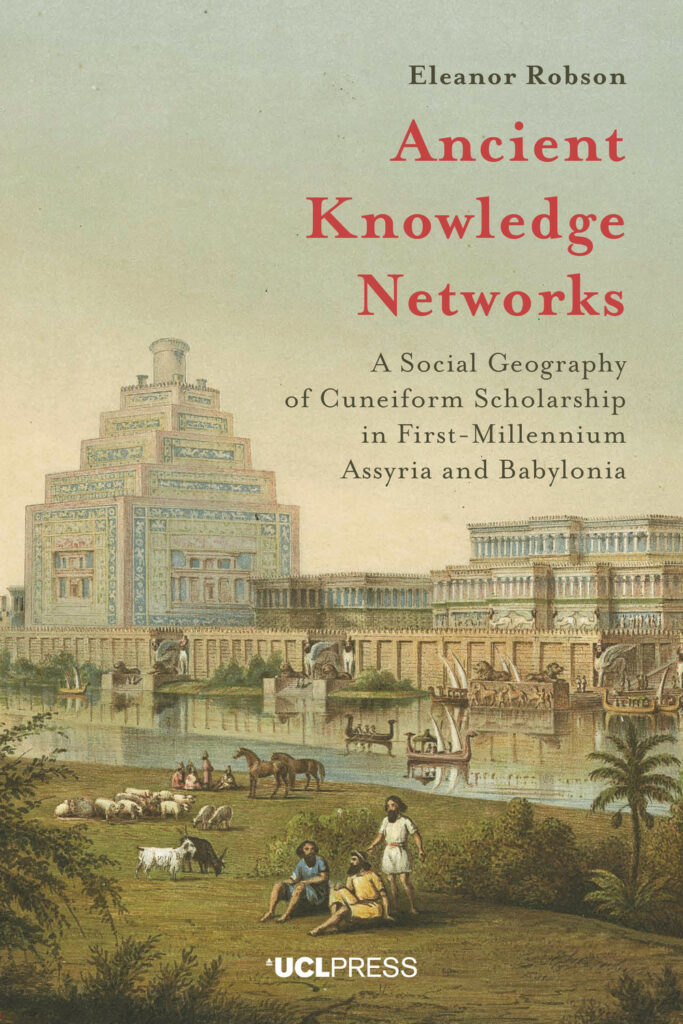
Ancient Knowledge Networks

Ancient Knowledge Networks is a book about how knowledge travels, in minds and bodies as well as in writings. It explores the forms knowledge takes and the meanings it accrues, and how these meanings are shaped by the peoples who use it.

Addressing the relationships between political power, family ties, religious commitments and literate scholarship in the ancient Middle East of the first millennium BC, Eleanor Robson focuses on two regions where cuneiform script was the predominant writing medium: Assyria in the north of modern-day Syria and Iraq, and Babylonia to the south of modern-day Baghdad. She investigates how networks of knowledge enabled cuneiform intellectual culture to endure and adapt over the course of five world empires until its eventual demise in the mid-first century BC. In doing so, she also studies Assyriological and historical method, both now and over the past two centuries, asking how the field has shaped and been shaped by the academic concerns and fashions of the day. Above all, Ancient Knowledge Networks is an experiment in writing about ‘Mesopotamian science’, as it has often been known, using geographical and social approaches to bring new insights into the intellectual history of the world’s first empires.

Sign up to our newsletter

Don't miss out!
Subscribe to the UCL Press newsletter for the latest open access books,
journal CfPs, news and views from our authors and much more!