We are currently upgrading our shopping cart; in the interim all orders are being diverted to Waterstones. If you would like to redeem a promotional code, or are an author wanting to place an order, please email us.

Contact us

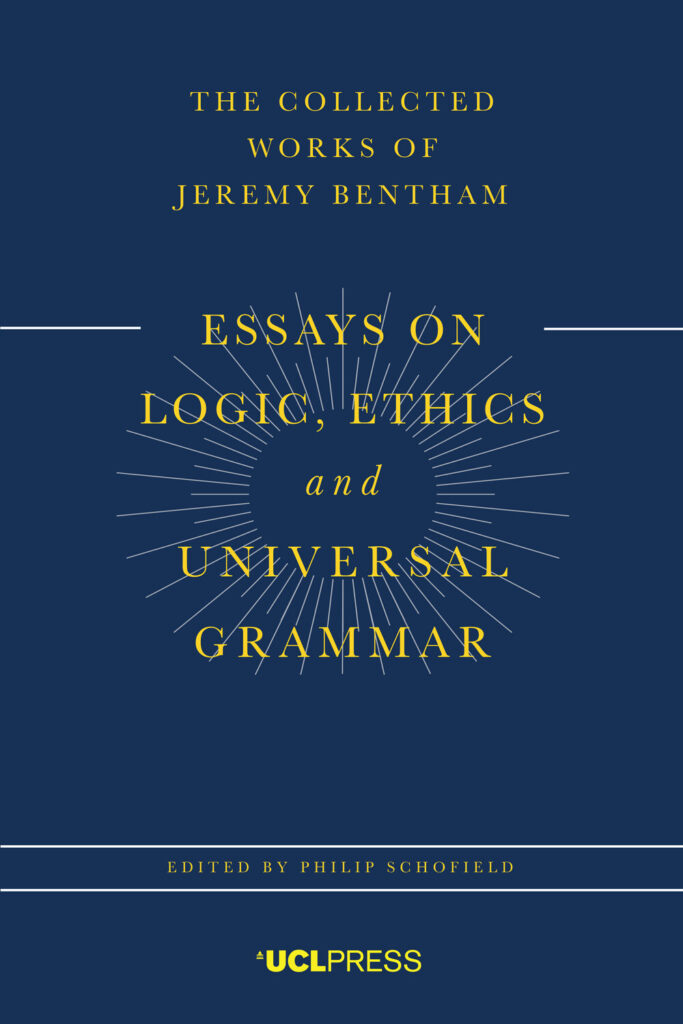
Essays on Logic, Ethics, and Universal Grammar

This new volume of Bentham’s philosophical writings deals with his most fundamental ideas concerning logic, language, ethics, and grammar. It includes four major essays written between 1814 and 1816, namely ‘Essay on Logic’, ‘Essay on Ethics’, ‘Didacologia’, and ‘Universal Grammar’, all of them closely related to Chrestomathia, Bentham’s major work on education.

In ‘Essay on Logic’, Bentham contrasts the præcognita of Aristotle with his own ‘characteristics’ of logic and deals with methodization, ontology, and the relationship between logic and language. In ‘Essay on Ethics’, he offers a critique of the Aristotelian virtues and outlines his own division of ethics into prudence, probity, and benevolence. In ‘Didacologia’, he presents an outline of a comprehensive plan for the division of the arts and sciences based on the method of exhaustive bifurcation and a new nomenclature. In ‘Universal Grammar’, Bentham deals with language as the basis for thought and communication and investigates the nature of the different parts of speech. The volume is completed with an Appendix containing fragmentary material, written in August and September 1813, with a focus on language. All the texts are based on Bentham’s original manuscripts and have never before been published in authentic form.

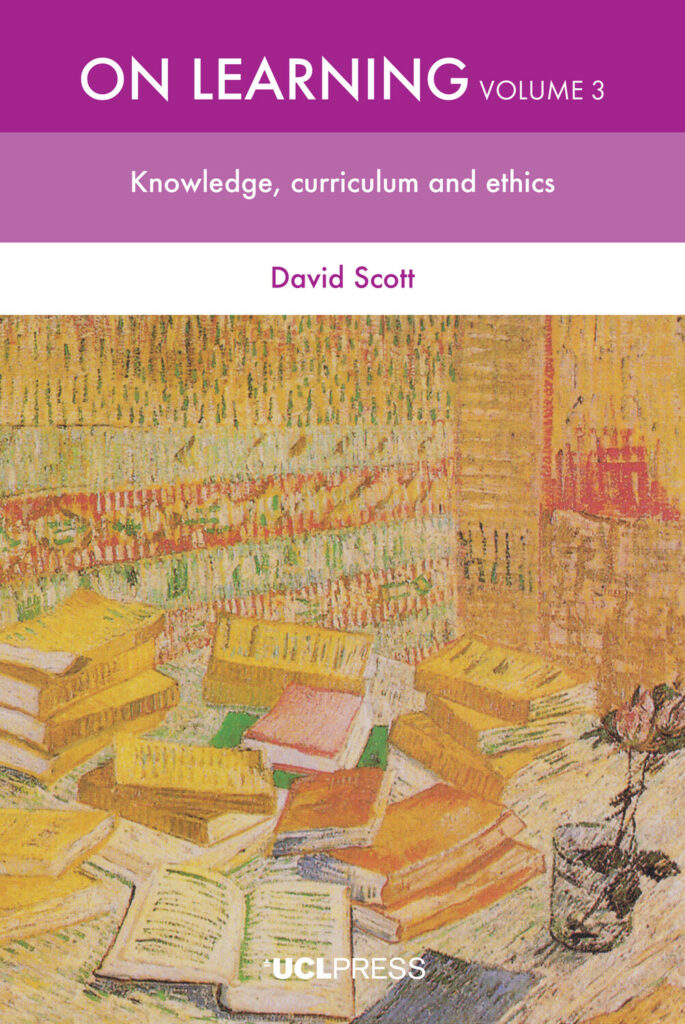
On Learning, Volume 3

This book, as you can see from its title, is about learning, or at least about the concept and practice of learning. It investigates two meta-concepts, knowledge and learning, the relationship between the two, and the way these can be framed in epistemic, social, political and economic terms. Knowledge and learning, as meta-concepts, are positioned in various networks of meaning, principally the antecedents of the concepts, their relations to other relevant concepts, and the way the concepts are used in the lifeworld. This book explores a number of important concepts that are relevant to the idea of learning. These are meta-concepts such as epistemology, semantics, phenomenology, rationality, thinking, hermeneutics, critical realism and pragmatism, and meso-concepts such as a Bildung, justification, mathematical concepts such as averaging, probability, comparison, prediction and correlation, a bureaucratic theory of learning, social categories of learning and knowledge, and the relationship between ethics and learning.

On Learning, Volume 3: Knowledge, curriculum and ethics, like the first two volumes, is a response to empiricist and positivist conceptions of knowledge. The author challenges detheorised and reductionist ideas of learning that have filtered through to the management of our schools, colleges and universities, over-simplified messages about learning, knowledge, curriculum and assessment, and the denial that values are central to understanding how we live and how we should live.

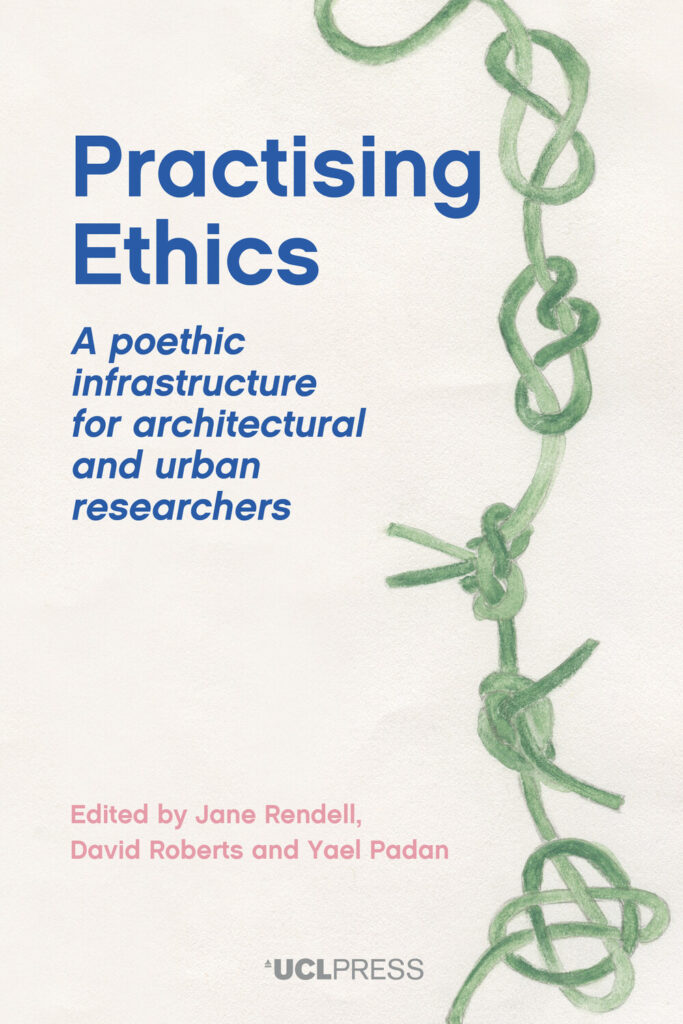
Practising Ethics

Grappling with ethics can disorientate and disturb your peace of mind in the small hours of the night. Practising Ethics transforms ethics from an obstacle to an opportunity by offering a poethic infrastructure to guide the development of ethical practice in architectural and urban research.

Practising Ethics bridges the gap between research volume and textbook. The book’s two-part structure creates a dialogue between ethical concepts derived from decolonial, ecological, feminist and queer theory, and lived ethical experiences that are explored through specific situations. A series of opening essays present hotspots, touchstones, keystones, blindspots, moonshots and milestones as different ethical orientations in a six-point methodology. This is followed by six case studies in which practitioners and researchers navigate these orientations through narrative figurations that describe ethical deliberations arising from social science, humanities, practice-led and participatory art and architectural design research in El Salvador, India, Nigeria, Peru and the United Kingdom.

The book acts as a companion to an award-winning online toolkit and is illustrated by Judit Ferencz who offers creative exercises for readers to develop their own poethic infrastructures.
Bentham and the Arts

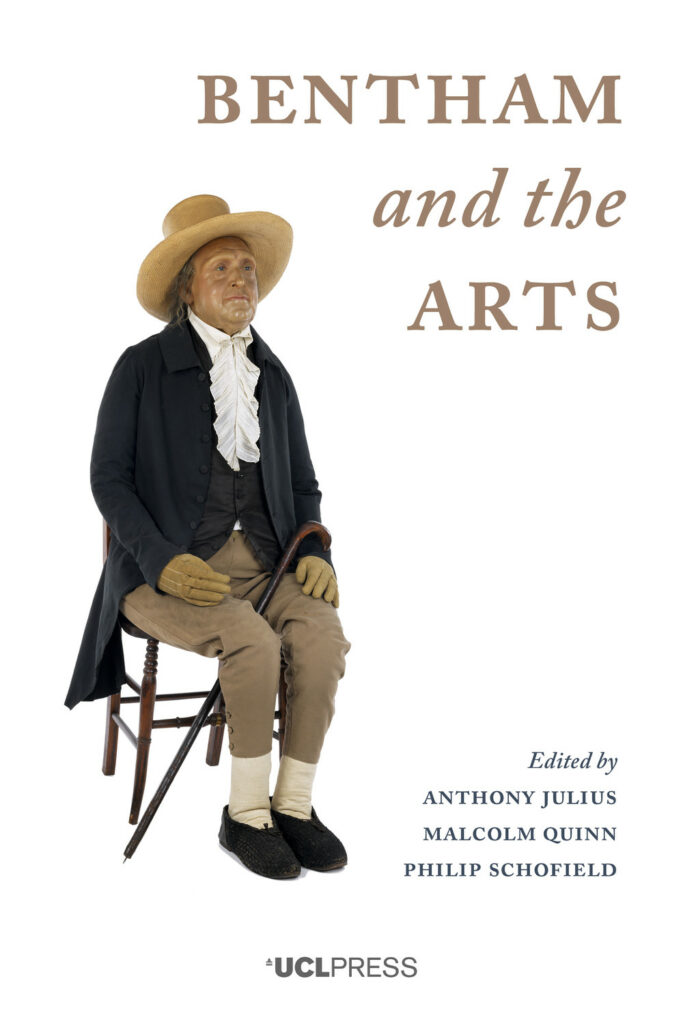
Bentham and the Arts considers the sceptical challenge presented by Bentham’s hedonistic utilitarianism to the existence of the aesthetic, as represented in the oft-quoted statement that, ‘Prejudice apart, the game of push-pin is of equal value with the arts and sciences of music and poetry. If the game of push-pin furnish more pleasure, it is more valuable than either.’ This statement is one part of a complex set of arguments on culture, taste, and utility that Bentham pursued over his lifetime, in which sensations of pleasure and pain were opposed to aesthetic sensibility. Leading scholars from a variety of disciplines reflect on the implications of Bentham’s radical utilitarian approach for our understanding of the history and contemporary nature of art, literature, and aesthetics more generally.

Each contributor takes into account, from the perspective of their own discipline and expertise, the implications for their research area of the views contained in Bentham’s Of Sexual Irregularities, and other writings on Sexual Morality (published in the authoritative edition of The Collected Works of Jeremy Bentham in 2014) and ‘Not Paul, but Jesus: Volume III’ (published online by the Bentham Project in 2014). In these essays, Bentham puts forward the first philosophical defence of sexual liberty. In doing so, he questions the meaning of ‘taste’ and hence the received understanding of aesthetics more generally.

The contributors, moreover, challenge two of the major commonplaces in literary and historical studies of the nineteenth century: first that literature and utilitarianism represented alternative and incompatible views of the world; and second that Bentham’s utilitarianism was somehow emaciated in comparison with that of John Stuart Mill. The volume also includes new reflections on the auto-icon and the panopticon, the latter showing the utilitarian genealogy of a collaborative art and architecture project on the site of the Millbank Penitentiary.

The title ‘Bentham and the Arts’ itself challenges the commonly held notion that Bentham had nothing relevant to say on the subject of the Arts – the essays in this volume show that Bentham remains extraordinarily relevant, both in historical and philosophical terms.

Unearthing Collections

Unearthing Collections invites readers to reconsider the ethics of collections and archives through the lens of temporality. Drawing on case studies that range from community protests over glacial sampling to the ethical dilemmas of housing human remains in museum collections and acquiring ephemeral political art, the authors interrogate the urgent challenges of collecting, displaying and preserving traces.

The book is framed around the concept of ‘unearthing’, the process of revealing hidden truths, excavating layers of history, and uncovering the unknown. It explores how the pursuit of knowledge often comes at the cost of displacement, exploitation, commodification, and the enduring legacies of imperialism and colonialism.

Alongside critique of the extractive practices that shaped many collections and archives, the book proposes a shift towards ‘re-earthing’, a practice that reconfigures how we understand and engage with knowledge about traces. As a critical approach, re-earthing acknowledges the messy, entangled nature of traces of the past, rejecting attempts to purify or control them in collections and archives, so they may evolve into new forms of knowledge. This innovative perspective challenges scholars, archivists, artists, and collection practitioners to rethink their approach to time and trace, urging them to disrupt dominant chronologies and cultivate new ethical approaches for working with collections and archives.

The Things That Really Matter

While being rooted in the academic discourse, The Things That Really Matter comprehensively explores the most fundamental aspects of human life in an accessible, non-technical language, adding fresh perspectives and new arguments and considerations that are designed to stimulate further debate and, in some cases, a deliberate redirection of research interests in the respective areas. It features a series of conversations about the things in our life that we all, in one way or another, wrestle with if we are at all concerned about what kind of world we live in and what our role in it is: things like birth, age, and death, good and evil, the meaning of life, the nature of the self and the role the body plays for our identity, our gendered existence, love and faith, free will, beauty, and our experience of the sacred.

Situating abstract ideas in concrete experience, The Things That Really Matter encourages the reader to participate in an open-ended dialogue involving a variety of thinkers with different backgrounds and orientations. Lively and accessible, it shows thinking as an open-ended process and a collaborative endeavour that benefits from talking to each other rather than against each other, featuring real conversations, where ideas are explored, tested, changed, and occasionally dropped. It is thinking in motion, personal yet universal.

Shaping Urban Futures in Mongolia

What can the generative processes of dynamic ownership reveal about how the urban is experienced, understood and made in Ulaanbaatar, Mongolia? Shaping Urban Futures in Mongolia provides an ethnography of actions, strategies and techniques that form part of how residents precede and underwrite the owning of real estate property – including apartments and land – in a rapidly changing city. In doing so, it charts the types of visions of the future and perceptions of the urban form that are emerging within Ulaanbaatar following a period of investment, urban growth and subsequent economic fluctuation in Mongolia’s extractive economy since the late 2000s.

Following the way that people discuss the ethics of urban change, emerging urban political subjectivities and the seeking of ‘quality’, Plueckhahn explores how conceptualisations of growth, multiplication, and the portioning of wholes influence residents’ interactions with Ulaanbaatar’s urban landscape. Shaping Urban Futures in Mongolia combines a study of changing postsocialist forms of ownership with a study of the lived experience of recent investment-fuelled urban growth within the Asia region. Examining ownership in Mongolia’s capital reveals how residents attempt to understand and make visible the hidden intricacies of this changing landscape.

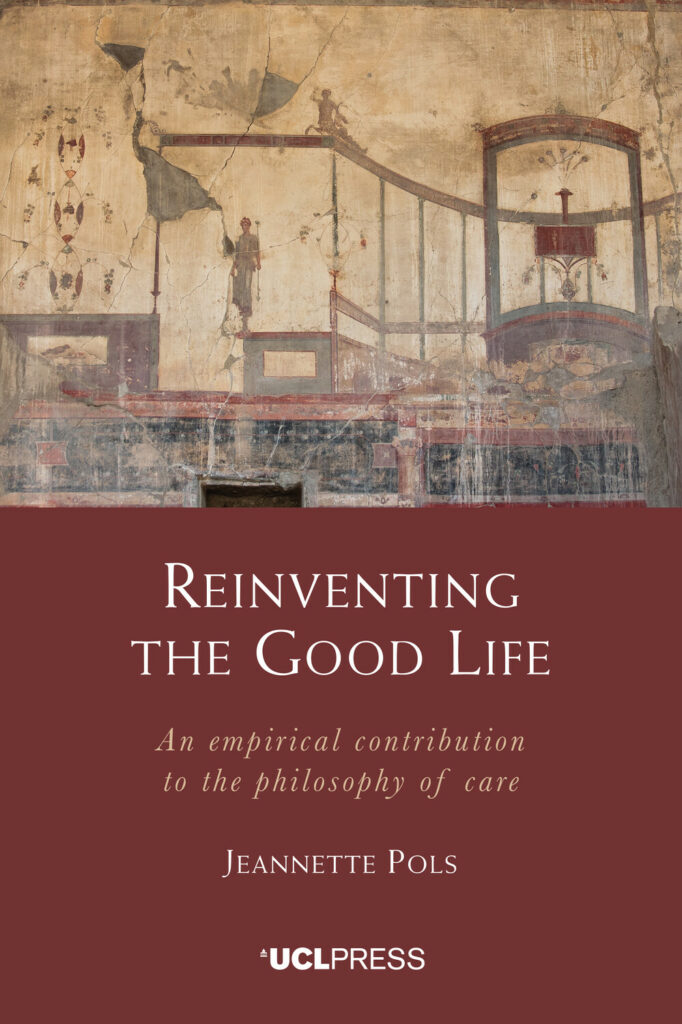
Reinventing the Good Life

Ever since Adam Smith’s musings on ‘the invisible hand’ became more famous than his work on moral sentiments, social theorists have paid less attention to everyday ethics and aesthetics. Smith’s metaphor of the invisible hand posits that social outcomes emerge by dint of the behaviours of individuals rather than their intentions or virtues.

Modernist and scientific approaches to determining the common good or good forms of governance have increasingly relied on techniques of generalisation and rationalisation. This shift has meant that we no longer comprehend why and how people display a deep concern for everyday life values in their social practices. People continue to enact these values and live by them while academics lack the vocabulary and methods to grasp them.

By reconstructing the history of ideas about everyday-life values, and by analysing the role of such values in contemporary care practices for patients with chronic disease in the Netherlands, Reinventing the Good Life explores new ways to study the values of everyday life, particularly in situations where the achievement of a clear cut or uniform good is unlikely. The book presents a practice-based epistemology and methodology for studying everyday care practices and supporting their goodness. This analytical approach ultimately aims to generate ideas that will allow us to relate in more imaginative ways to the many pressing concerns that we are forced to live with today.

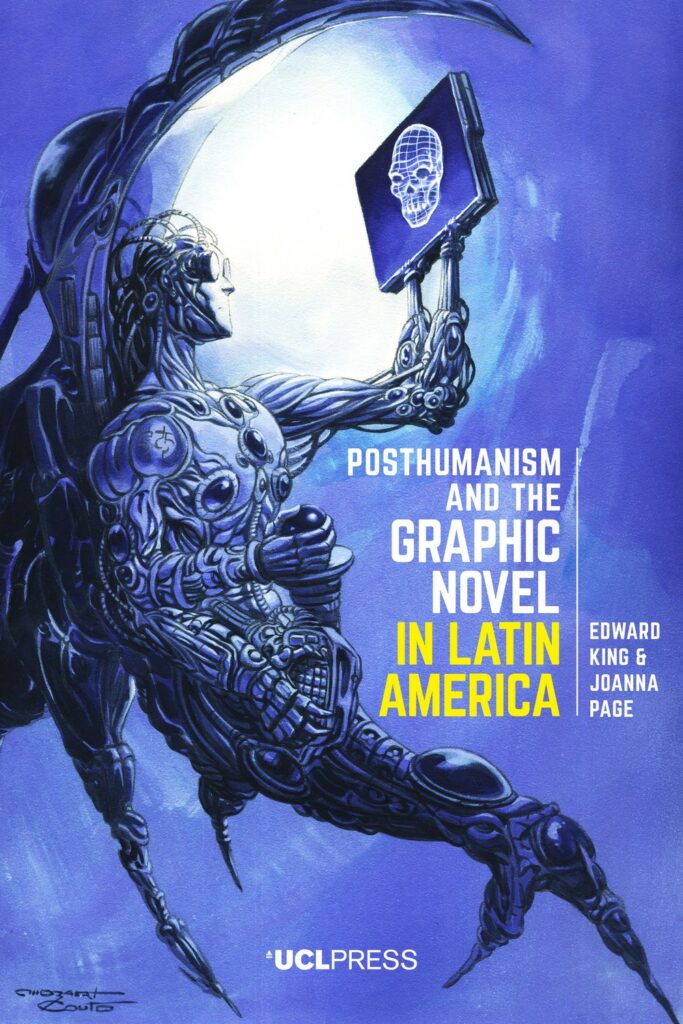
Posthumanism and the Graphic Novel in Latin America

Latin America is experiencing a boom in graphic novels that are highly innovative in their conceptual play and their reworking of the medium. Inventive artwork and sophisticated scripts have combined to satisfy the demand of a growing readership, both at home and abroad. Posthumanism and the Graphic Novel in Latin America, which is the first book-length study of the topic, argues that the graphic novel is emerging in Latin America as a uniquely powerful force to explore the nature of twenty-first century subjectivity. The authors place particular emphasis on the ways in which humans are bound to their non-human environment, and these ideas are productively drawn out in relation to posthuman thought and experience. The book draws together a range of recent graphic novels from Argentina, Brazil, Chile, Mexico and Uruguay, many of which experiment with questions of transmediality, the representation of urban space, modes of perception and cognition, and a new form of ethics for a

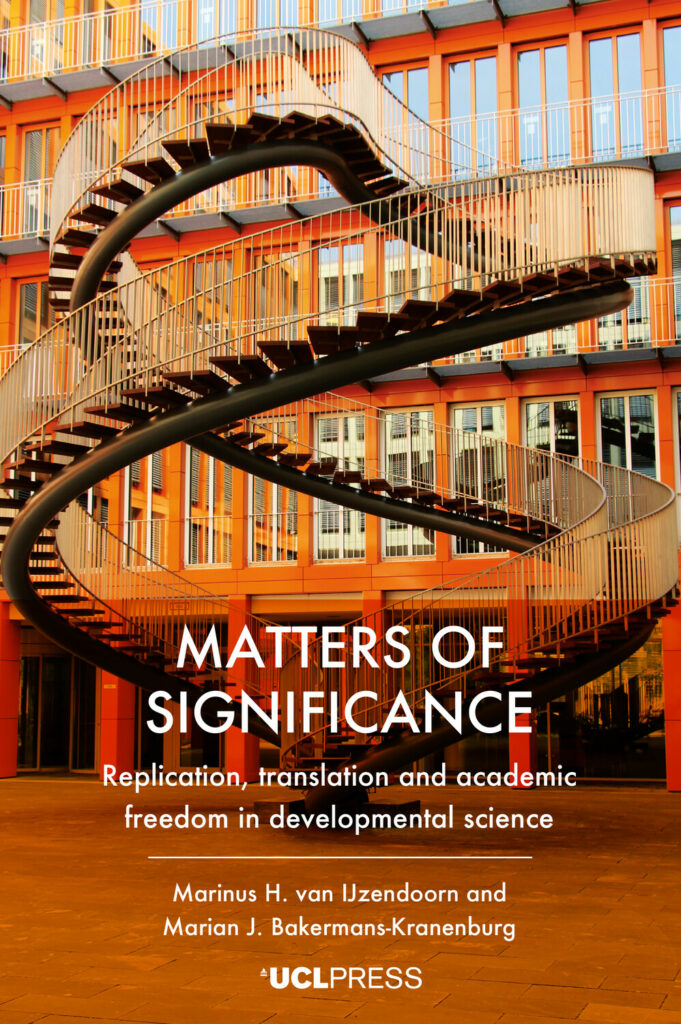
Matters of Significance

Application of scientific findings to effective practice and informed policymaking is an aspiration for much research in the biomedical, behavioural, and developmental sciences. But too often translations of science to practice are conceptually narrow, ethically underspecified, and developed quickly as salves to an urgent problem. For developmental science, widely implemented parenting interventions are prime examples of technical translations from knowledge about the causes of children’s mental distress. Aiming to support family relationships and facilitate adaptive child development, these programmes are rushed through when the scientific findings on which they are based remain contested and without ethical grounding of their aims.

In Matters of Significance, Marinus van IJzendoorn and Marian Bakermans-Kranenburg draw on 40 years of experience with theoretical, empirical, meta-analytic, and translational work in child development research to highlight the complex relations between replication, translation, and academic freedom. They argue that challenging fake facts promulgated by under-replicated and under-powered studies is a critical type of translation beyond technical applications. Such challenges can, in the highlighted field of attachment and emotion regulation research, bust popular myths about the decisive role of genes, hormones, or the brain on parenting and child development, with a balancing impact for practice and policymaking. The authors argue that academic freedom from interference by pressure groups, stakeholders, funders, or university administrators in the core stages of research is a necessary but besieged condition for adversarial research and myth busting.

Sign up to our newsletter

Don't miss out!
Subscribe to the UCL Press newsletter for the latest open access books,
journal CfPs, news and views from our authors and much more!