Introduction to Toby Butler, one of the authors of Voices for Change
Posted on 16th November, 2026
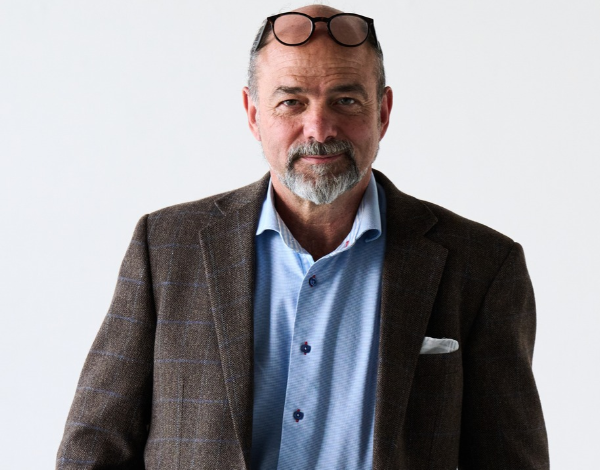
Voices for Change: an Oral History of the Environmental Movement, 1970-2020, out now from UCL Press, is a groundbreaking history of environmental activism across the UK since the early 1970s as revealed in first-hand testimony by some of those who were most closely involved. Interested to learn more? Keep reading to find out some key information from one of the authors, Toby Butler.
Can you introduce yourself to our readers?
I have been working in the field of oral history for 25 years on a wide range of projects. I started out working freelance alongside a career as a journalist, then I took a part-time MA in Public History at Ruskin College in Oxford, where I reflected on how oral history could be a very accessible way for people to connect and share histories. This led to a PhD at Royal Holloway and a career as a lecturer teaching history and heritage studies, as well as teaching various courses and involvement in oral history projects, mostly around East London.
I moved to Birkbeck (University of London) to work as an oral historian on Mapping Museums: a major research project which involved interviewing the founders of small museums all over the UK. Currently, I am still at Birkbeck as the head of the Immersive Learning Centre, where a whole class can experience virtual reality experiences and students can borrow audio recorders and 360 cameras. They can also get access to whole range of exciting technologies like room scanners and object scanners to create their own projects and documentaries. I’m also heavily involved in setting up their new Centre for Creative AI.
Can you also introduce Voices for Change?
Of course. Voices for Change is a study of the history of environmental activism in the UK since the early 1970s. The book draws on a unique archive of 100 in-depth life-history interviews with environmental campaigners involved in action on a wide range of concerns, from conservation and transport to energy and climate change. We recorded the experiences from a range of generations and environmental work, from protesting to writing legislation, and making projects like cycle paths and nature reserve happen. It situates the experience of activism biographically and historically, exploring the role of family, region, class, ethnicity, gender and generation in the lives of participants in the key campaigns of the period.
What makes your book unique?
Voices for Change focuses on the lived experiences through the voices of those involved with environmental campaigning and project work. There are perspectives here that can get overlooked in other studies. The book covers the significant changes that have been achieved over the last 50 years alongside the perspectives of activists whose contributions have never been widely recognised, as well as better-known voices such as Jonathon Porritt, Caroline Lucas, George Monbiot, Jane Goodall and Swampy. It also the first UK-wide history of the modern environmental movement, covering Wales, Scotland and Northern Ireland where things have played out quite differently to England in many respects. We include a wide range of generations – our youngest interviewee, Ella Meek, was a teenager – all the way through to the eldest, who were in their 90s and had a whole lifetime of involvement in environmentalism.
Unusually the book also has an immersive aspect, as each quotation has a web-link to a playable audio clip. This means that the reader can choose to listen to the voice of the person quoted in extended versions of over 260 extracts from the interview recordings. Through this focus on voices from the history of the movement, we hope the book will provide a vital resource for today’s environmental activists; throwing new light on the varied origins, forms and impacts of their campaigns and work in the movement.
Can you tell us a little more about where your interest in your field came from?
My earliest work was as an undergraduate at Aberystwyth, where I led a project interviewing ‘hippy’ settlers who came to West Wales from the 1970s. I met some extraordinary people through those interviews, and became interested in progressive/utopian and alternative culture.
A few years later I had the opportunity to record oral history interviews for Auroville in Tamil Nadu, India; recording the memories of the founders of what was probably the world’s biggest intentional community in India. I was interested to find out how people who were once considered quite radical and unusual had developed and influenced society to consider environmental issues and push them up the political (and social) agenda.
What motivated you to write this book?
I was approached by a small group of experienced environmentalists who were concerned that the history and development of the environmental movement in the UK had not been told, and they felt it was important for present and future generations to learn from those who were involved. I was delighted to get involved and to advise them on building an oral-history based project. I also helped them to develop partnerships with staff at the British Library and Royal Holloway to secure Research Council funding for the project. In the end, we all – environmentalists and academics – had active roles throughout the project, which became the Oral History of the Environmental Movement. I led the project but all major decisions were shared collectively, and the book – alongside the huge archive of recordings and transcripts – were the key outcomes.
Why did you choose to publish your work Open Access?
The whole project was underpinned by the idea that both the interviews and the book should be as freely and widely accessible as possible. As a society, we are at an important place in terms of understanding the extent of climate change and the decisions that need to be made to protect the natural environment. So I think it’s a good moment to reflect on how the environment has climbed up the political agenda over the last 50 years. It has been due to the efforts of a legion of activists, researchers, scientists and communicators. It is wonderful to be able to get their voices heard as widely and freely as possible. We also hope the book will lead people to the archive at the British Library where the complete recordings and interview transcripts are archived they can listen to the whole interviews should they wish to do so.
How do you see your research contributing to a better understanding of the world, and what potential benefits might it offer in the future?
I think there is much here for us to reflect on. Firstly, I hope that some of the experiences and reflections will be inspiring and instructive to those who are interested in the environment and the longer term future of the planet.
I also think that the interview approach we took, capturing ‘whole-life’ stories, is fascinating. Whatever stage of life you are at, you will hear people reflect on past life at a similar stage, and perhaps this might open up ideas and possibilities for the reader. I particularly have students and younger readers in mind here, who are wondering – as I once did – how on earth people get to positions where they can effect some kind of change to the world. We also asked our interviewees for reflections on the past and future of the movement, including its failures and shortcomings as well as successes, which should be useful for those involved in the movement today.
Finally, I think exposing some of the mechanics of how citizens have actually made change happen – be it setting up a community recycling scheme or a campaign for legislation to stop pollution – will be instructive to anyone who feels frustrated and powerless.
What do you think sets your approach apart from others in your field, and how do you stay innovative?
Personally, I think innovation comes from collaboration, listening and keeping an open mind to ideas and practices beyond your own.
Oral history practice has a long and proud tradition of working with (and for) communities, but I think in the academic sphere it is more unusual for research teams to include those outside the academy as paid project members. We have drawn on a vast amount of experience and contacts from the environmentalists on the project and it has been fantastic to have the time and funding to work on immediately accessible things like this book and the educational resources for the Royal Geographical Society.
I am also delighted that half our interviewees identified as female. We have captured life-stories and trajectories that might have otherwise been missed, compared to say traditional industry-based studies that might have been restricted to – historically, mostly male – chief executives.
What was something unexpected that you encountered when researching this book?
Hearing how the movement has played out differently across the UK. Wales has some of the most progressive green policies in the world, such as the Well-being of Future Generations Act. In Scotland, we found some really interesting reflections on how devolution made decision makers more accessible and gave space for distinctive policy-making. Being a part of the EU was also hugely important with the UK leading on many environmental policy areas, as well as conversely being forced to clean up its act because of European legislation. It was fascinating to talk to environmentalists like Nigel Haigh, who – as leading experts in their field – worked extremely closely with civil servants to help them research and write important legislation. I was also surprised by some of the deep connections in the movement between ostensibly very different kinds of people, as campaigns might bring together radicals and Royals, biologists and bureaucrats, into seemingly unlikely alliances.
Perhaps my favourite anecdote was from Sue Christie, then Director of Ulster Wildlife Trust. She recalled how, in the early 1980s, one of the first things that got agreement between both Ian Paisley and Gerry Adams was the need for the Bog Meadows nature reserve. And they both signed up to deliver it. I do think that some topics, like river pollution for example, really can be something that people across the political spectrum can agree on.
What do you see as the most exciting future directions for research in your field, and what breakthroughs do you hope to see in the coming years?
I work with immersive technology, so I’m curious about its possibilities. There has been some fascinating pioneering work in the UK and Japan with using Virtual Reality headsets with dementia patients in care homes to take them to familiar places from their past. Seeing and hearing these places led to some astonishing responses and I’m curious whether it could be used in creative ways as a tool to evoke memories in more conventional life-story interviewing.
What advice would you give to students who are interested in pursuing a career in your field? And what skills or qualities do you think are most important for success?
Use your research skills! Find out everything about the roles you are interested in and skills required for entry level. Use LinkedIn to find contacts and opportunities. Don’t be afraid to make approaches, ask for advice or see if you can do some work experience. In the environmental sector, we found many people got work after building skills through volunteering. Voluntary work might need to happen alongside some paid work to get by, but it’s a great way to get contacts and see if it really is for you.
What do you do to stay motivated and inspired in your work? How do you maintain a positive attitude even in challenging situations?
Almost all the environmentalists we interviewed were, at heart, optimists, despite some deeply depressing scientific predictions about the state of the planet. People had different strategies to manage this, such as compartmentalising home and work life, pursuing unrelated hobbies making sure they mixed socially with people outside their immediate concern. For our older interviewees, going to the pub after work seemed to have a very important role in unwinding and bonding with colleagues. I use all of these, but now so many of us work from home more than ever before, I think socialising, in pretty much any form you can, is probably top of my list.
Thank you for your time, Dr Butler.
Voices for Change: an Oral History of the Environmental Movement, 1970-2020 is available to read now as an Open Access PDF, and to purchase in print. Click the button below to learn more.