COP30 reading list

Close up photograph of a cactus

As COP30 comes to an end, we’ve pulled together a selection of open access books and journals tackling the big questions on climate change, environmental justice and sustainable futures. From practical solutions for greener cities to global perspectives on policy and activism, these titles bring fresh thinking to urgent challenges.

Highlights include Universities and Climate ActionHaste: The slow politics of climate urgencyObstacles to Environmental Progress: A U.S. perspective and our multidisciplinary open science journal UCL Open: Environment. Every title is free to read and share – because knowledge should power action.


Meet the author: The Laissez-Faire Peasant

Silhouette of a tractor on a textured red and brown background, as featured on the cover of The Laissez-faire Peasant

Earlier this month, Jovana Diković’s fascinating open access book The Laissez-Faire Peasant was published.  We caught up with her to talk about her fascinating research in Serbia and Kosovo, why peasants are misunderstood and just why ‘Kill your darlings’ was a useful piece of advice she received when completing her PhD.

Tell us about yourself.

I am an economic anthropologist. At the University of Belgrade, I obtained my Bachelor diploma in social anthropology and Masters diploma in political sciences. In 2012, I moved to Zurich to complete a doctoral degree in economic anthropology.

Since then, my main research interests have centred around agriculture and food systems, peasantry, cooperation, rural economies and sustainability. As an avid rural explorer, I conducted more than two years of fieldwork research in villages in Serbia and Kosovo.

During longer research stays at the University of Ottawa and University of Pittsburgh, I furthered my studies in cooperation, self-governance, and property rights. Since 2022 I have headed a research unit on sustainable development and inclusive growth at the Centre for Corporate Responsibility and Sustainability, at the School of Management in Fribourg. In the past eleven years, I have taught several courses on rural economy, development, environment and sustainability at the University of St. Gallen, University of Fribourg, and University of Zurich.

What motivated you to write and publish The Laissez-Faire Peasant?

Serbian peasants were my main motivation. In the book I attempt to show that peasants are not the victims of state politics or market economy which is a prevailing image of them but are rather autonomous and competent actors. Peasants are the architects of their own and local wellbeing, and their conceptions of development are often opposed to state plans for agriculture and rural development. Moreover, state plans for rural development in Serbian villages have been continuously distorted and interrupted by autonomous actions and values of peasants because the state programs do not provide what peasants seek. It is less known that peasants’ values determine the level of their cooperation with the state and are the main drivers of individual and local wellbeing.

Contrary to this explanation, the rural scholarship predominantly focuses on the diverse forms of peasants’ marginalization, completely neglecting that even when that is being true, such a marginalization is often intentionally sustained in order to protect peasant’s autonomy, their ownership of land, way of doing things, and safe distance from the state. In other words, peasants know how to deal with their marginalization. Such an insight questions mainstream interpretations of power relations between the peasants and the state in the literature and public discussions, and urges rethinking theoretical conceptions of the peasantry, and generally paternalistic agricultural policies.

In a nutshell, the book  questions the broader implications of the purposefulness of state programs for rural development (which are doomed to fail in the local context), and whether peasants need state rural development at all.

How and why did you get into this subject area?

In my mid-twenties, I got an opportunity to accompany an older colleague and conduct research on vernacular architecture in several rural municipalities in Serbia. This allowed me to became familiar with the vernacular building techniques and the ways local people preserve their built heritage.

During that time, I discovered a fascinating world I did not know much about. It was the experience of being and living in villages among villagers – not the results of research – that hooked me. I discovered the world of our co-citizens about which we usually believe we know much, and eventually we either misinterpret or romanticize their realities. I wanted to pick up a village life in its entirety and to explain what matters in rural communities, particularly in regard to local rural development. And so, in my thirties, I undertook research on rural development in three villages in Vojvodina province in Serbia.  

Why did you choose to publish your work Open Access?

Typical university publisher books are often expensive and out of reach for the interested and non-academic audience. I always have hard time deciding to purchase a book that costs more than €50. In some parts of the world people live on a less than a $3a day-  buying books investing in education is often  sacrificed first in those societies.

My intention was to publish a book which is accessible, downloadable, and easily available for anyone with an interest in the topic. Open access has allowed me to do this.

Open access has a noble intention of making the books available for everyone and disrupting the monopolies of publishers who established the system for generating enormous profits at the expense of authors.

How do you see your research contributing to a better understanding of the world, and what potential benefits might it offer in the future?

My contribution is in bridging the gap towards understanding peasants’ motivations and realities; these are generally not understood by outsiders or are subjected to severe criticism.

When peasants are not perceived as victims, they are often accused of being severe polluters and free riders. By getting to know them and their farming practices we can understand their attitudes beter. This has the potential to lead toward sound and effective agricultural and rural policies. If we extend the ideas of my book to agri-environmental context and fixing bad practices in agricultural production, they contain an important moral: subtle and direct coercion of peasants will not force them to work toward environmental goals.

Finding a cooperation threshold for sustainable agriculture will not be possible without a dialogue between peasants, consumers, legislators and policymakers. Without this dialogue, the incentives and agendas of sustainable agricultural policies will be failing, one after another. Policymakers, legislators, and consumers need to have an understanding of those whose practices they intend to change – in this case those of the peasants – and to understand what is realistic on that path.

Surprise us with something unexpected you encountered in your research for this book.

‘Land never stays uncultivated, no matter the political and economic conditions’, was one of the most revealing statements by a peasant. It means that peasants will cultivate their land even when they are facing high costs, bankruptcy, or when it is a complete loss for them. In another words, peasants are not only utility maximisers. That was a turning point which changed my perspective and made me rethink my research questions. It forced me to examine the issue of the relationships between the peasants and land, and peasants and the state from an unorthodox angle and understand their viewpoint freed from layers of scientific knowledge installed by post-socialist and rural studies about peasants. It also inspired me to explain why existing scientific conceptions about peasants are wrong, which occupies a special place in my book.

What do you see as the most exciting future directions for research in your field, and what breakthroughs do you hope to see in the coming years?

I am eager to see how the understanding of land property will develop in the era of vertical farming, GMO production, and speed technological advancements that at least hypothetically might enable satisfactory production on smaller and smaller plots of land, or in a laboratory. That will be indeed an exciting time, both for anthropologists and societies. I wonder how agriculture, practices of farming and farming knowledge will change, when practically anyone given meeting certain conditions such as vertical space, agri- or lab-tech, can become a farmer. So, this will change an image of farmers, who can be an everyman without agricultural knowledge and skills on how to use agricultural mechanisation, without which today’s agriculture cannot be imagined. If development of agriculture follows such a path, it will be a structural transformation urging reconsideration of the modern view of land property, concept of farmers, production, and production ethics.    

What advice would you give to students who are interested in pursuing a career in your field, and what skills or qualities do you think are most important for success?

The worst thing one can do is to become a niche expert. This is important, to the  limited extent which requires technical knowledge of the field and literature but it will not make you a good scholar. ‘Kill your darlings’, was one of the best pieces of advice when I was doing my PhD, and which I still find very useful in my career.  It makes you step down from your ivory tower, challenge the niche knowledge and explore the world outside the domain of your expertise.


About the author

Jovana Diković is an economic anthropologist, publicist, and Head of Sustainable Development and Inclusive Growth at the Center for Corporate Responsibility and Sustainability, School of Management, Fribourg.

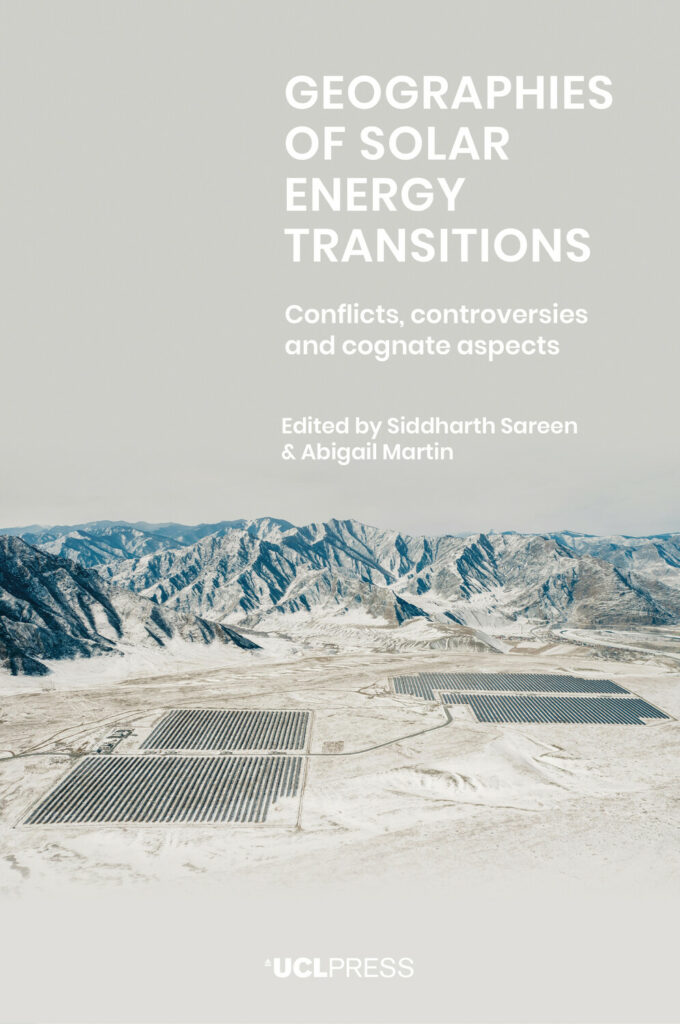
Geographies of Solar Energy Transitions awarded best edited book award by American Energy Society

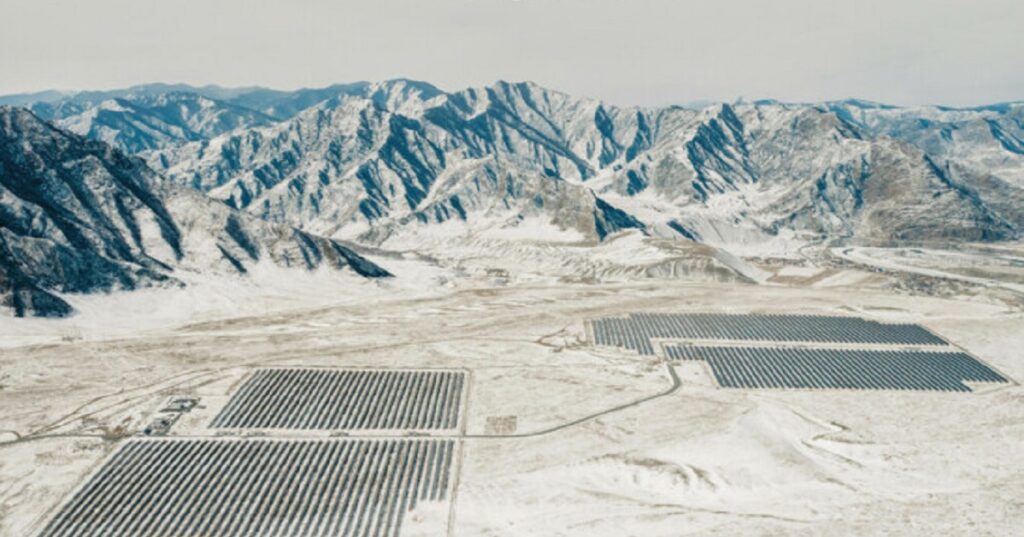
Aerial view of vast solar panel fields in a snowy landscape with rugged mountains in the background.

We are delighted to announce that Geographies of Solar Energy Transitions has been awarded the American Energy Society’s best edited book award for 2024!

Edited by Siddharth Sareen and Abigail Martin, with a host of outstanding contributors, Geographies of Solar Energy Transitions focuses on how solar energy governance (both state-based regulations and more market driven modes of governance) is evolving to address a diverse range of conflicts and challenges.

Each year, the American Energy Society surveys the energy landscape and spotlights the most extraordinary contributions to energy and sustainability. Categories include books, media, people and STEM.

The announcement said that ‘Geographies of Solar Energy Transitions (UCL Press) focuses on how solar energy governance (both state-based regulations and more market-driven modes of governance) is evolving to address these conflicts in diverse settings. Each chapter is well written (especially chapter 4 “Beyond Power” by Karla Cedeño and Ana G. Rincon-Rubio; and also chapter 10 “Governing solar supply chains,” by Dustin Mulvaney.’

Congratulations to the volume’s editors and contributors!

CfP: Urban Africa series

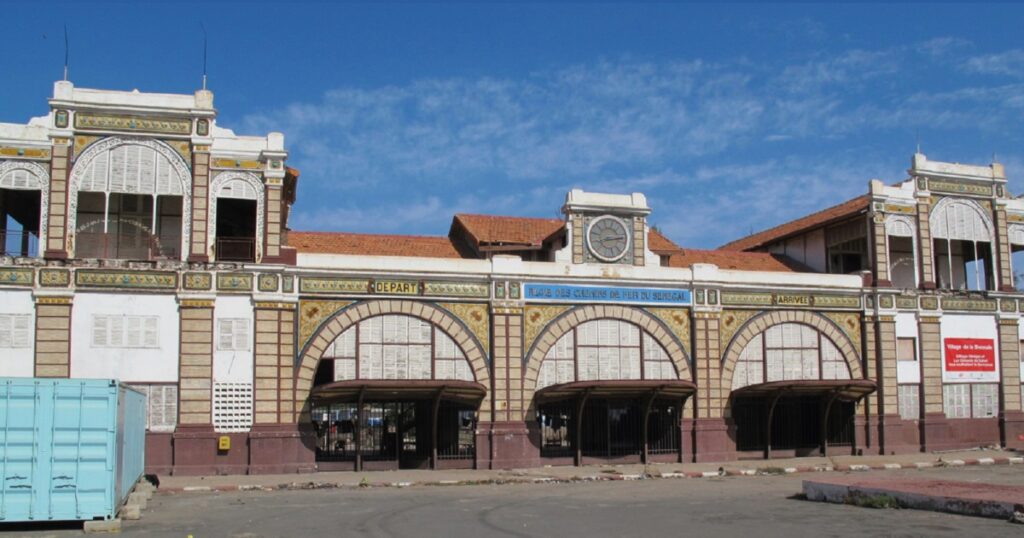
The image shows the Malian market at the railway terminus in Dakar, as featured on the cover of Urban Displacement and Trade in a Senegalese Market.

To celebrate World Urbanism Day, the editors of the open access Urban Africa series, co-published with the International African Institute, have opened a new call for proposals for new books.  The series provides a platform for critical, in-depth analysis of key contemporary issues affecting urban environments across the African continent.

The editors aim to work in close collaboration with African based networks and centres of urban scholarship to publish the best of urban research on Africa, prioritising the publication of work by scholars based in African contexts as well as leading African scholars globally. Their goals are to publish an urban studies series with a distinctive African-centred approach; to provide a high-profile platform to urban scholars from the African continent; to bring the best work in African urban studies globally to African studies audiences; and to make publications widely accessible to African based scholars.

The series tackles the most important issues of the day, such as demographic change; climate change; increasing mobility; major infrastructure investments. It fosters transdisciplinary perspectives, with strong links to all areas of research prominent in urban studies, notably human geography, architecture, ethnography, anthropology, sociology, environmental studies, urban planning, politics and development. It seeks to establish insights from African urbanisms as fundamental to theory development in urban studies and place African cities in conversation with other urban contexts. The series also seeks to showcase the best of urban scholarship emanating from the African continent, and to amplify the voices of scholars who are immersed in the day-to-day realities of African urban life. The series is open to both conventional and innovative formats.

UCL Press books are open access, and manuscripts accepted for this series will incur no book publishing charge.

All proposals and further queries can be directed to Stephanie Kitchen, sk111@soas.ac.uk, or to one of the lead editors, Jennifer Robinson (Jennifer.Robinson@ucl.ac.uk) and Jeffrey Paller (jpaller@usfca.edu).

More details about the series can be found at: https://www.internationalafricaninstitute.org/publishing/urban-africa-book-series

World Food Day interview with with Robert Biel, author of Sustainable Food Systems: Role of the City

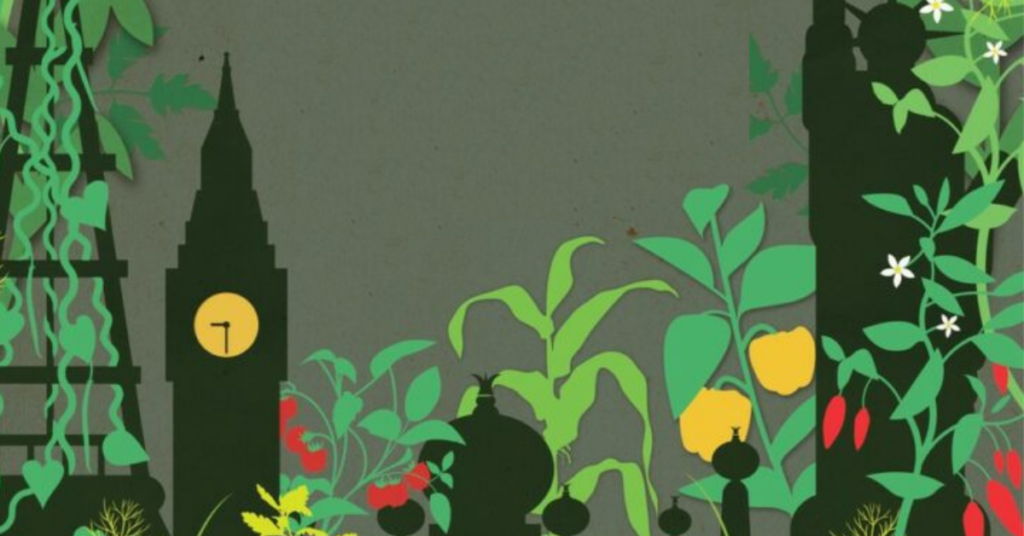
A city skyline with plants growing round it, against a khaki green sky.

To mark World Food Day, we’re re-publishing a chat we had in 2017 with Professor Robert Biel, author of Sustainable Food Systems

UCL Press: We’re intrigued about your pathway into this topic.

Well it converged from two directions. I’ve been an allotment holder for 15 years, experimenting with a low-input, high-productivity method where you work alongside natural systems, not against them.  That was a hobby, something I loved doing.  Professionally, I was teaching international relations theory, which is a lot about how order can emerge from within a system itself.

In the debate following my first book, The New Imperialism, I discovered general systems theory, which tries to identify what’s common to all systems: they have a capacity to self-regulate, but they can also go haywire.  So I began to understand that the ecological problem and the threats to human society are not two separate challenges which just happen to face us simultaneously; rather, we can study them – and look for answers – in an integrated way.

I addressed this in my 2012 book The Entropy of Capitalism, but at that more general level it was easier to write convincingly about all the bad stuff that was happening, than about solutions! The only way to get to grips with positive solutions was to take a very concrete topic and run with it.  With Sustainable Food Systems, this all came together.

UCL Press: Please tell us a bit about the process, from initial conception, to publication

Together with my colleague Yves Cabannes (editor of Integrating Food into Urban Planning) I started teaching a Masters module on Urban Agriculture, and there were also a few small community food-related action research projects.  This suggested a lot of ideas which I felt somehow needed to be written down.

But the project implies an unusual form of knowledge, drawing on both natural and social sciences.  While general systems theory was a help, I had to be respectful to the integrity of each specific discipline – soil science, anthropology etc. – even where I don’t have specialist training.  To ensure the research was solid, I embraced the peer-review process at several levels.  I started with a conference paper, delivered in Paris in 2012, and then split it into five journal articles and book chapters, all exploring different aspects of food-systems issues.  While I received much important feedback from the reviews on these papers, I was also myself doing quite a lot of peer-reviewing for journals.  And I could trust the peer-review system for the quality of research in the leading scientific journals which I was citing.

At the same time, the ‘new paradigm’, also implies deeper issues of fundamental world view.  In this sense, knowledge (or maybe we should say wisdom) should not be reduced to academic research.  The traditional/indigenous spirituality doesn’t see a distinction between nature and society anyway, it understands that our minds are part of nature, and correctly sees farming as intrinsically rooted in the wider ecosystemic context.  In this sense, visioning sustainable futuresis also a return, to a more authentic way of apprehending the world and our place in it.

Finally, the project implied a different publishing model.  Though there were enquiries from conventional publishing, I quickly rejected this when I realised that the form of publication must reflect the content: the book is about emergent order, self-organisation, commons regimes, peer-to-peer, grassroots research … therefore it had to be open-access.  I was delighted that UCL Press was thinking the same way.

UCL Press: What’s your take on organic food? Are you advocating for it?

There are two issues here.  First, from a consumer angle, of course there are dangers from pesticides or loss of nutrients, which are rightly emphasised, but at the end of the day you might just say mainstream agriculture successfully feeds the world and the risk of changing it is too great.  So I would rather approach the question from the production angle: the main thing wrong with conventional farming is that it destroys the complex soil ecosystem and ultimately the soil itself, and therefore the risk of not changing it is too great.  We have a window of opportunity while there’s still enough food around.  That’s why the issue is urgent.

Secondly, ‘organic’ can often seem a negative definition, i.e. we limit ourselves by renouncing chemicals, which makes it seem like we’re farming with one hand tied behind our back.  I’d rather emphasise what we are opting into: a whole new world of biomimicry and self-organisation … that’s why I sometimes prefer a term like Natural Systems Agriculture.  Besides, the problem isn’t just chemicals, but a lot of other stuff: excessive ploughing, monocropping … Much of this is about how we face risk, because natural systems spontaneously evolve in response to shocks, and become stronger in doing so.

UCL Press: Surprise me with something unexpected you encountered in researching this book.

A couple of paradoxes, which are in fact closely linked:

[1] When looking for cutting-edge examples of the new paradigm in action – learning from nature, self-assembly and self-healing, not trying to control systems too much – I found them in areas like industrial design and materials science; farming in contrast, which you might expect to be our interface with nature, is still horribly conservative and stuck in the old ways. Wonderful research is being done, about soil systems for example, but translating this into an innovative, high-productivity, totally biomimicked farming practice: that’s not yet the mainstream, it’s still very peripheral.

[2] The countryside is so heavily depleted by herbicides, pesticides and monocropping, that cities are potentially havens for nature to regenerate itself: this has been beautifully demonstrated by green roofs, for example, and is potentially very encouraging for a programme of greening the city.  We might even pioneer the new paradigm here!

UCL Press: The book has an optimistic vibe, because it’s about solutions, and as you’ve said, some elements of ‘paradigm shift’ already underway.  So what’s blocking it?  And in particular, how do you interpret the recent Right-wing nationalist backlash.

In the book, I paraphrase a quote from Lenin, about the ruling system being dragged against its will into a new social order.  The shift in world politics towards the nationalist Right shows the system digging its heels in, frantically resisting the implications which its very own development has unleashed.  That’s the aspect internal to society.  But then there’s the environmental context: climate – plus soil-degradation and species-loss – forms the backdrop to everything.

So why is the nationalist Right addicted to climate denial? Because if we take climate seriously, we’d have to face up to the social conditions demanded by resilience: decentralised capacity, peer-to-peer networks, modularity, non-monetary exchange, commons regimes.  These are all evident in today’s food-related social movements – seed-sharing for example.  The issue is inevitably political: a new ‘order’ is a self-organised, emergent order.  That’s what scares the ruling interests.

UCL Press: So what about this term ‘food sovereignty’? That sounds nationalistic in a way…

I think it was always more about community autonomy.  But in a deeper sense, I take your point: we must dare to be normative, not just describe a movement like food sovereignty, but discover what it should be.  A lot about the ‘old’ food sovereignty was resisting the extreme neo-liberal agenda of ‘free’ trade and its disastrous implications for food, and that was all very necessary, but it was only a phase.  In the book I try to place this in a much broader historical context. You have millennia of resistance against exploitative agrarian systems, then against colonialism and imperialism, then against the ‘Green Revolution’ of the Cold War; at an English level, there is an unbroken legacy: the peasants’ revolt, the Diggers of 1649, early 19th century Chartists, the Land and Freedom movement of the 1970s, and some inspiring contemporary stuff. If the ruling agenda is today shifting away from ‘free’ trade, the enduring issues of commons and land rights haven’t changed.

At the same time, today’s food sovereignty must also face up to new challenges.  What has gone haywire (in society and its relations with nature) has been a narrowing, homogenisation, simplification.  Physically, this is seen in the shrinking variety of crops being cultivated, in the strains of each crop etc.; socio-politically this is seen in intolerance, xenophopia, the narrowing of discourses.  If that is permitted, we will have a system (in food, in society) which fractures and disintegrates in the face of shocks.

So if we are to respond to this threat, I would say – prolonging the book’s argument – that if political liberalism has in a sense destroyed itself by hitching itself to economic neo-liberalism, then the good things which used to be (very imperfectly) identified with liberalism must be regenerated on a new basis: tolerance, pluralism, what I’d call a ‘new cosmopolitanism’ … in essence a diverse system which can produce innovation from anywhere and which – when it faces shocks – will get stronger.

The movement over land and food can be a flagship for this.  Today, the academic and science community is trying to resist the attacks of obscurantism, but can’t do this alone: it needs mass allies.  This is precisely what the land/food-related struggles – of peasants, indigenous peoples, the urban masses – can supply; the academic world has important knowledge to offer, but it will also be itself transformed by discovering a new social relevance.

In these ways, researching the book, I got some kind of glimpse of a new world coming into being.  It’s exciting to feel part of this.


About the Author

Robert Biel is Professor of the Political Ecology of Sustainable Food at the Bartlett Development Planning Unit, UCL.

Open access books published in September 2024

Books on a wooden bookshelf in UCL library.

September has provided us with a bumper harvest of five new titles covering everything from solar energy transitions to smuggling via a fascinating account of the fight against gentrification in a London suburb.

The Literature and Translation series gave us the month’s first publication. Contemporary Afro-Brazilian Short Fiction is a unique compilation of 21 short stories by established and emerging Afro-Brazilian voices. This anthology emerges from a UCL-sponsored collaborative translation project, bridging Afro-Brazilian literature with a global audience to respond to the worldwide call for Afro-diasporic narratives. Download Contemporary Afro-Brazilian Short Fiction free.

Geographies of Solar Energy Transitions: Conflicts, controversies and cognate aspects focuses on how solar energy governance (both state-based regulations and more market-driven modes of governance) is evolving to address a diverse range of conflicts and challenges. Take a look at the open access version

Modern Americas gave us another absorbing volume: Contraband Cultures: Reframing smuggling across Latin America and the Caribbean. presents narratives, representations, practices and imaginaries of smuggling and extra-legal or informal circulation practices, across and between the Latin American region (including the Caribbean) and its diasporas. If you’re interested in finding out how smuggling and the informal economy and

With government ever more dependent on speculative property developments that come at the expense of diverse working-class communities, Disrupting the Speculative City: Property, power and community resistance in London tells the fascinating story of successful community resistance in Tottenham, a suburb of London, to inspire urban movements and researchers.

We ended the month with a new volume of the Grammars of World and Minority Languages series: A Grammar of Elfdalian. Elfdalian is a unique language raditionally spoken in Övdaln (Älvdalen), central Sweden; this open access book provides a full account of Late Classical Elfdalian from linguistic, historical and sociolinguistic angles.

We’ll be back again next month with a round up of the very best open access books. As always, stay safe!

The Antarcticness of mental health and wellbeing

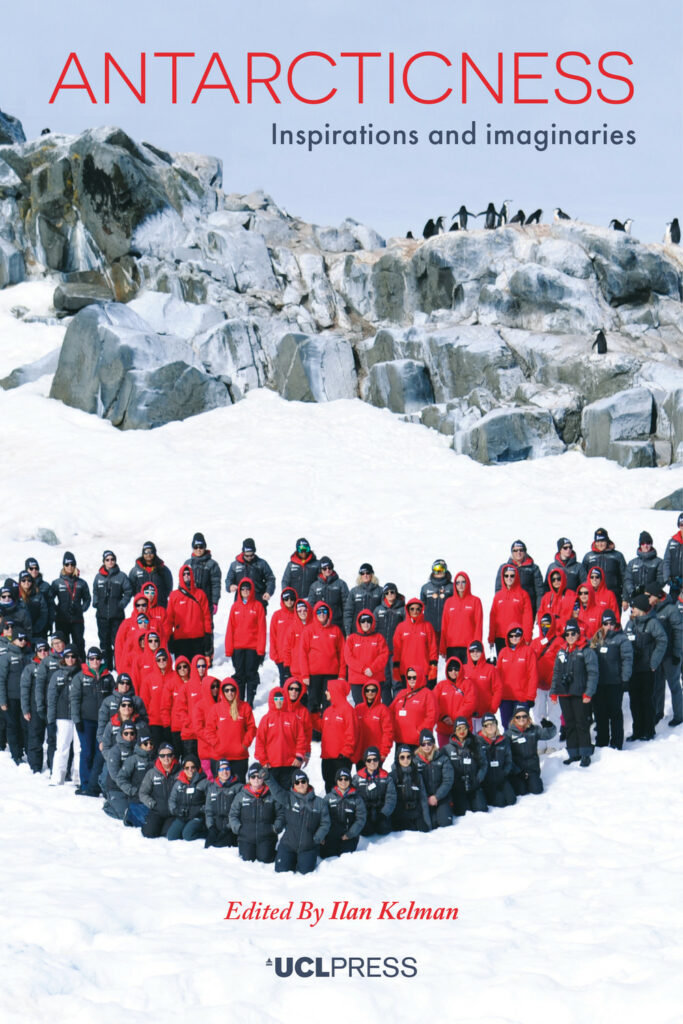
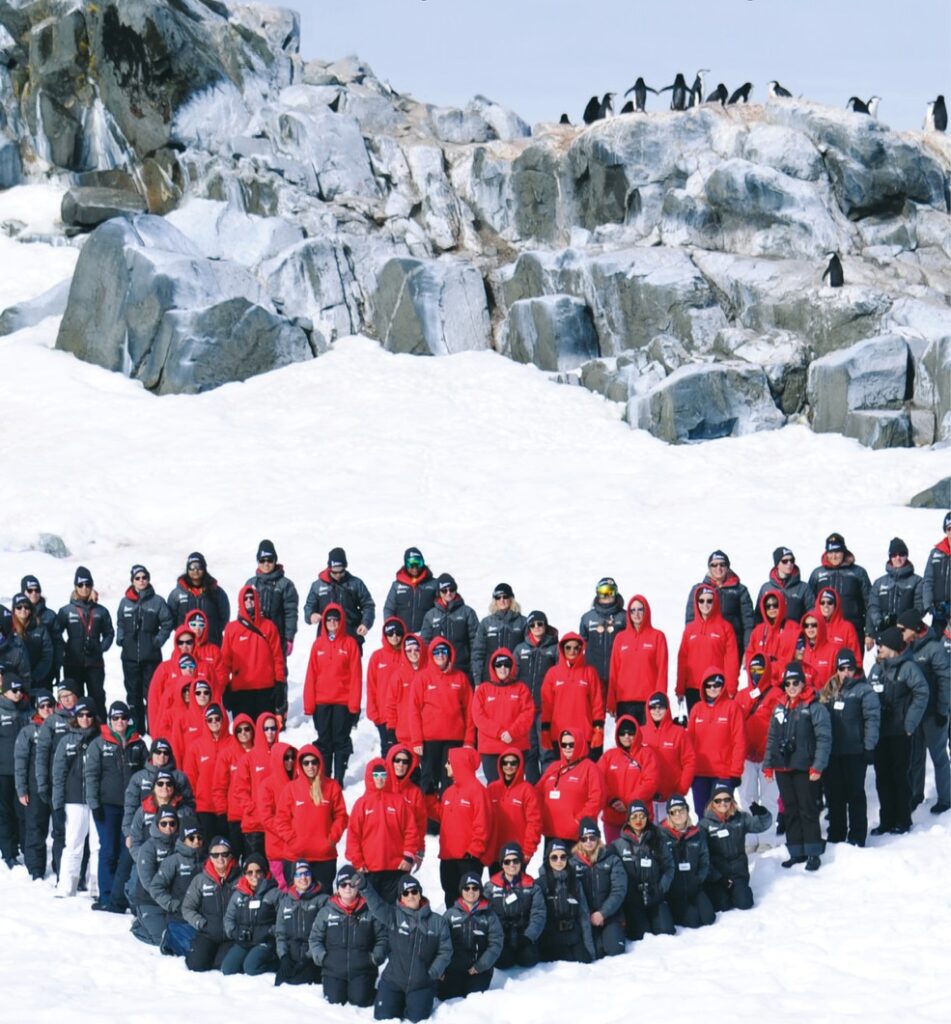
The image depicts a large group of individuals wearing red and black parkas in a heart formation. Those in red parkas are at the centre, and those in black are on the edges. They are gathered on a snowy landscape in front of a rocky area with penguins in the background.

Today’s guest post is by Ilan Kelman, editor of Antarctiness, which published this week. Its companion volume, Arcticness, published in 2017.

The natural environment, we are often told, is good for our mental health and wellbeing. Does this include the remotest, driest, highest, coldest, most isolated, and allegedly most dangerous continent, Antarctica? To try to answer aspects of this question, I edited a new book, Antarcticness: Inspirations and imaginaries, just published by UCL Press and entirely free to download through Open Access!

Antarcticness lessons for survival and caring

Certainly, lessons from Antarctica for mental (and physical) survival emerge clearly.

Jan B. Schmutz led three other co-authors for a chapter on effective teams in an environment where pettiness or slight inattention kills. They lay out the ABCs of being an effective, and surviving, team in Antarctica: anticipation to plan ahead, building social relationships to know and trust each other, and collective reflection to continually examine and resolve concerns and problems.

Then, Andrew J. Avery, describes the culture and perceptions of Antarctic life in UK bases from 1942 to 1982. The Falkland Islands Dependency Survey (FIDS) later became the British Antarctic Survey (BAS), but the volunteer men (only) spending time in Antarctica continued their approach to camaraderie by still calling themselves “Fids”. Avery sums it up with, “The safe place, mentally and emotionally, was on base with your mates”.

Caring emerges in both chapters. Schmutz and colleagues highlight their conclusion’s crux that their work provides “practical advice on caring for their own team”. For Avery, it is the opposite, when he quotes from a “Fids” publication that the Antarctic experience means “caring not for the immense hardships and dangers”. For the Antarcticness of mental health and wellbeing, understandings of caring diverge.

Antarcticness creates fear

Caring is also an element for Wilson (Wai-Yin) Cheung’s chapter on running Antarctic expeditions. He explains the importance of caring for and respecting the people on expeditions and, even more so, the more-than-human of Antarctica given the environment’s conditions. Antarctica’s perils are paramount, given how quickly the weather, or the snow and ice already on the ground, can prove fatal.

Being in and around Antarctica brings home the rhythm and wisdom of nature which, if we miss it, could spell trouble. Cheung describes the risks, the need for awareness, and the potentially serious consequences always keeping expeditioners on edge. Echoing these sentiments, Rosa Jijón, in introducing her art and photo essay, raises “fear of darkness”, “fear of the immense ice”, and “fear of the Other” in relation to Antarcticness.

As Emma Liu writes, “In the Antarctic, there is no margin for error” and perhaps a mentally healthy fear of the environment keeps many people alive there. No matter how gorgeous and majestic the visuals, she accepts that place attachment to Antarctica is always “tempered by apprehension”.

Antarcticness supports mental health and wellbeing

Liu further represents her experiences as “anticipation, exhilaration, distress and finally

triumph”, mirrored by the collective of fifteen authors from the “Homeward Bound” chapter. As a women’s leadership training program, Homeward Bound takes groups to Antarctica to highlight exchange, bonding, stories, and science—all combining to support the enduring Antarcticness theme of caring. Caring for each other and for the Earth.

After Antarctica, one of the Homeward Bound authors explained that “I had become a better version of myself”. Caring for and about oneself must be part of Antarcticness, just as it supports mental health and wellbeing. It succeeds without travel too, as explained by the Homeward Bound group whose trip south has been delayed indefinitely due to the COVID-19 pandemic. Still, “Thinking of Antarctica allows us to believe in a different world, in the road less travelled… a strong sense of togetherness”.

Fear and support thrive side-by-side, overlapping. They can intersect constructively rather than opposing in tension. As I write in the volume’s conclusion, “Emotionalities of Antarcticness sketch the duality of isolation and closeness, both mentally and physically”.

The book Antarcticness will hopefully bring it all to an audience far wider than those privileged travel to the southern limits. Even–or especially–sitting at home, we can learn to survive, to care, to overcome fear, and to support our mental health and well-being through the inspirations and imaginaries of Antarcticness.


About the author

Ilan Kelman is Professor of Disasters and Health at UCL, England, and a Professor II at the University of Agder, Kristiansand, Norway.

Sign up to our newsletter

Don't miss out!
Subscribe to the UCL Press newsletter for the latest open access books,
journal CfPs, news and views from our authors and much more!