UCL Press publishes two major histories to mark UCL’s Bicentenary

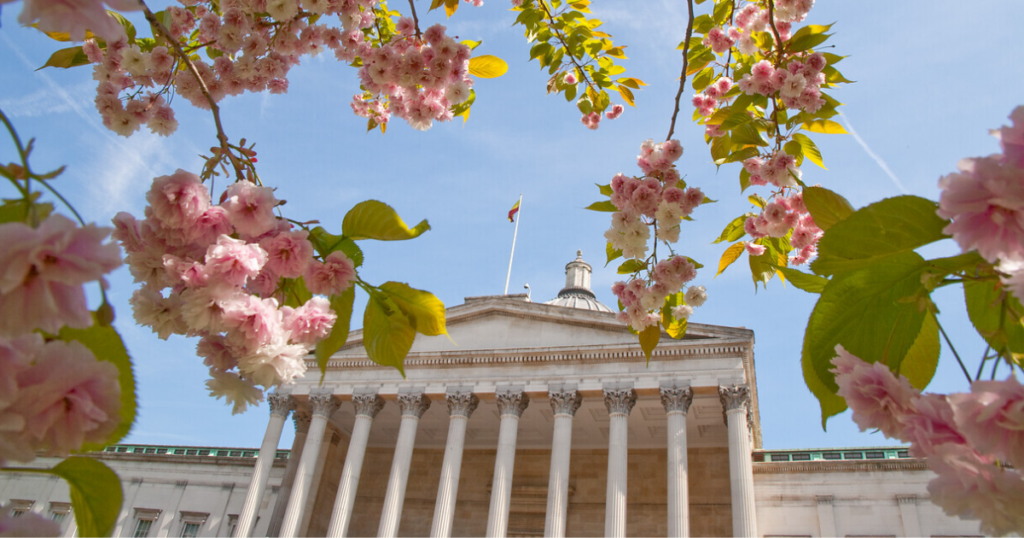
UCL Portico and Cherry Blossom

UCL Press is proud to announce the publication of two significant new open access books to celebrate UCL’s 200th anniversary. Together, they offer fresh insights into the people, places and stories that have shaped the university since 1826.

Student London: A New History of Higher Education in the Capital

Student London is a 200‑year history of student life in London, exploring diverse experiences, culture and activism through rich archival sources.

Students have formed a significant part of London’s population since the foundation of its first university in 1826, and Student London centres their experiences in the city’s history. The book draws on an unusually rich set of sources that include institutional records, college magazines, court reports, secret service files, memoirs and oral histories. Together, these accounts capture life at the original London University, known as UCL since 1836, as well as many other institutions that later became part of it.
The authors explore a wide range of higher education experiences across medical schools, teacher training colleges and specialist institutes. They consider everyday life, funding and student welfare, and follow students into recreation, sports and leisure. The book also reflects on shifting attitudes to class, race, gender, sex and sexuality, and offers a deeper engagement with London’s imperial history than earlier studies of higher education.

Read and download it free from https://uclpress.co.uk/book/student-london/

University College London: The Bloomsbury Campus

University College London: The Bloomsbury Campus is first comprehensive account of UCL’s architectural history and the evolution of its iconic London Bloomsbury campus over the past 200 years, and the first of the iconic Survey of London series to be published in open access by UCL Press.

Since the construction of its iconic neoclassical building in Gower Street, UCL has been an increasingly influential presence in the capital’s Bloomsbury district, shaping the character of its built environment and acting as a magnet for other academic institutions. Over two hundred years UCL has expanded to form an extensive campus, its sprawling footprint and varied building stock reflecting growth in student numbers and advances in education, technology and culture.

Survey of London is a renowned series of volumes running from the 1890s to document the buildings of London. Having been part of UCL’s Bartlett School of Architecture since 2013, it is uniquely placed to offer the first comprehensive account of the university’s buildings and the evolution of its historic Bloomsbury campus.

This Survey of London monograph provides a new understanding of this significant estate in central London, bringing to light a complex and engaging architectural story with many facets that have been previously overlooked or neglected.

Read and download it free: https://uclpress.co.uk/book/university-college-london/

Together, the books provide new perspectives on UCL’s past and form a key part of the university’s Bicentenary programme.

Book talk: Teaching Slavery: New Approaches to Britain’s Colonial Past

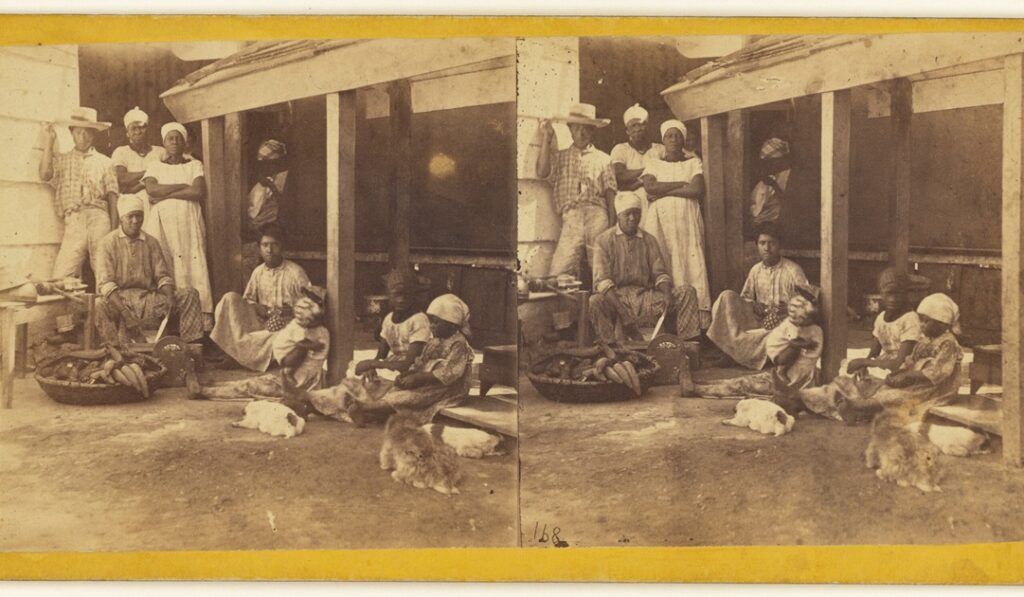
A group of enslaved Black men and women, in the kitchen of a barracoon.

Join the authors of the open access book Teaching Slavery: New Approaches to Britain’s Colonial Past for a hybrid book talk hosted by the Institute of Historical Research.

Date: 11th December 2025
Time: 17:30–19:30 GMT
Location: Hybrid | Online-via Zoom & Room 349, Third Floor, Senate House, Malet Street, London WC1E 7HU
Series: Black British History 

Registration link: https://www.history.ac.uk/news-events/events/book-talk-teaching-slavery-new-approaches-britains-colonial-past

All welcome– this seminar is free to attend but advance registration is required.

This groundbreaking book brings together the latest academic research on Britain’s involvement in transatlantic slavery, with innovative thinking on the teaching of such challenging histories in the classroom. It provides an essential framework for transforming how slavery is conceptualised and taught in British secondary schools by addressing three specific areas of concern: limits of teacher training on historical content and pedagogical approaches; the scarcity of high-quality, appropriate, research-based resources; and the lack of supporting published material to guide teachers on the principles, knowledge and practice for ethical classroom engagement.

Drawing on insights from a long-term partnership between historians and educators Teaching Slavery combines sophisticated historical analysis with practical pedagogical guidance. The early part of the book offers thorough historiographical examination of key themes, including race, the gendering of slavery, resistance and rethinking abolition. These are followed by detailed guidance on overcoming the challenges of teaching these histories, including exemplar enquiries to help teachers establish a classroom where teachers and students can confidently engage in dialogue about key ideas, including the construction of race and racism. Throughout, the authors emphasise the importance of historical specificity and the need to critically engage with Britain’s history of slavery and empire.

World Children’s Day reading list

Paper Model created as part of a Conference workshop.

Today is World Children’s Day – UNICEF’s global day of action for children, led by children. It marks the anniversary of the adoption of the Convention on the Rights of the Child on 20 November.

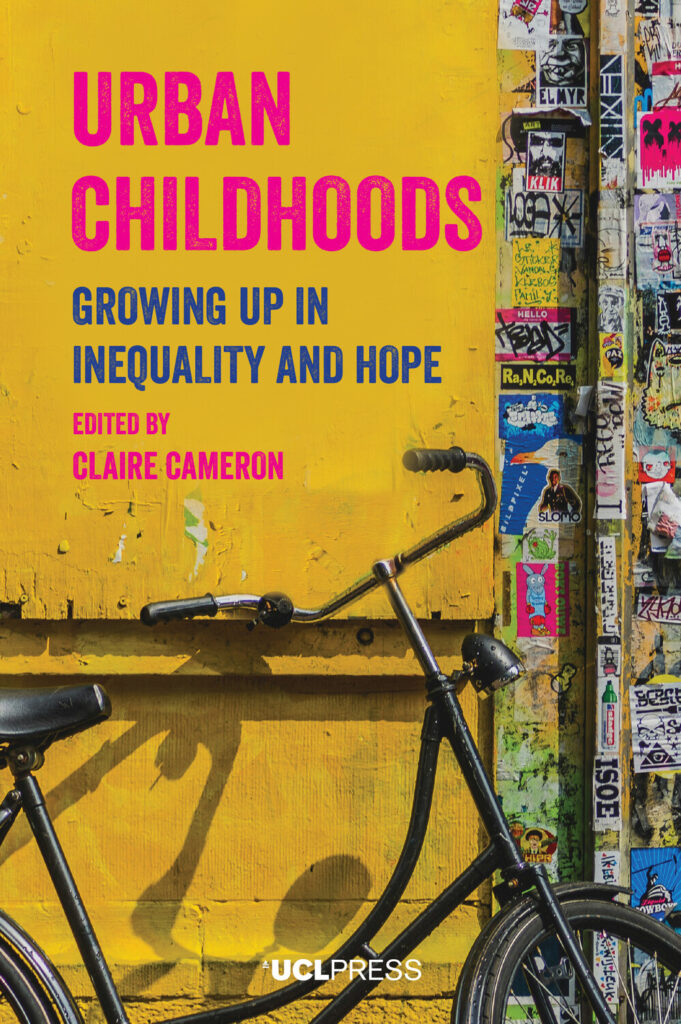
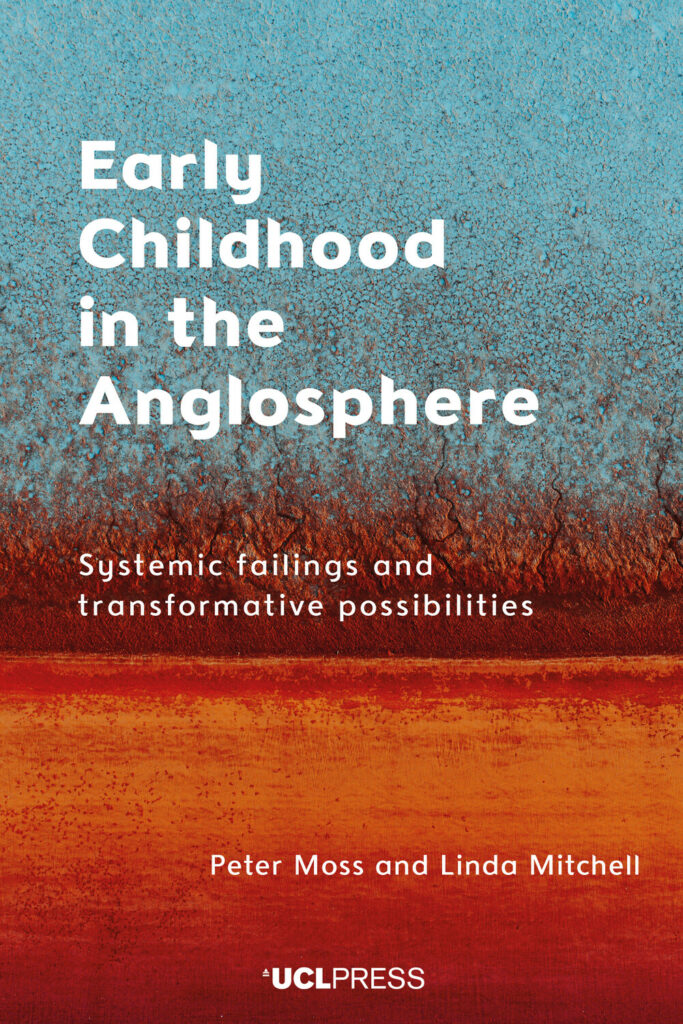
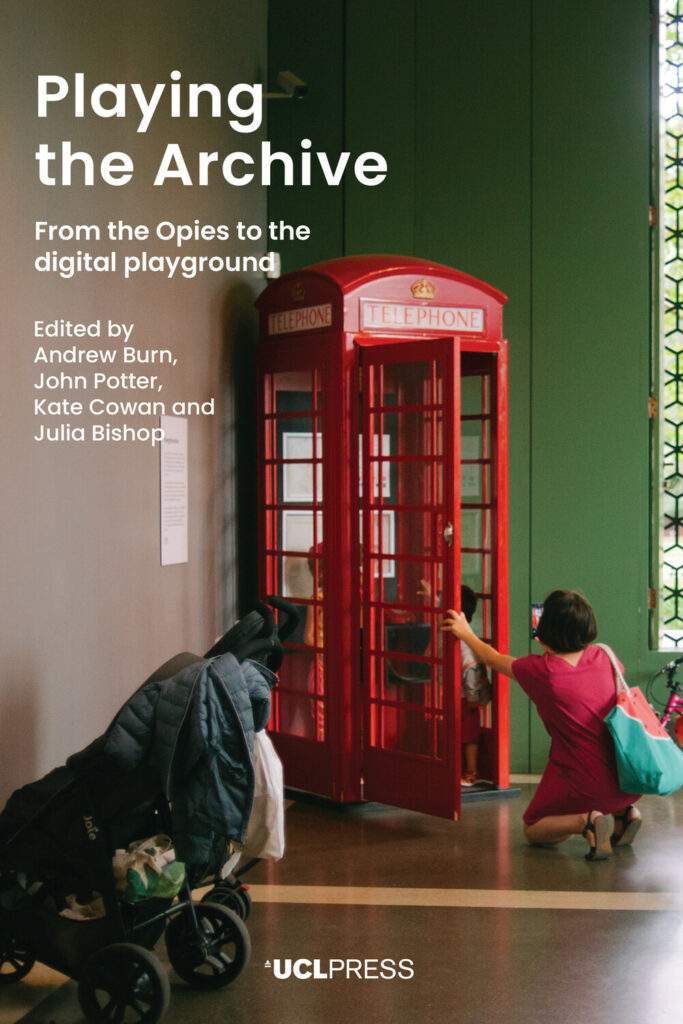
To celebrate, we’ve curated a collection of open access publications that explore childhood from diverse perspectives. Highlights include Urban Childhoods: Growing up in inequality and hopeEarly Childhood in the Anglosphere: Systemic failings and transformative possibilities, and Playing the Archive: From the Opies to the digital playground. Every book is free to read and share because knowledge should inspire action.

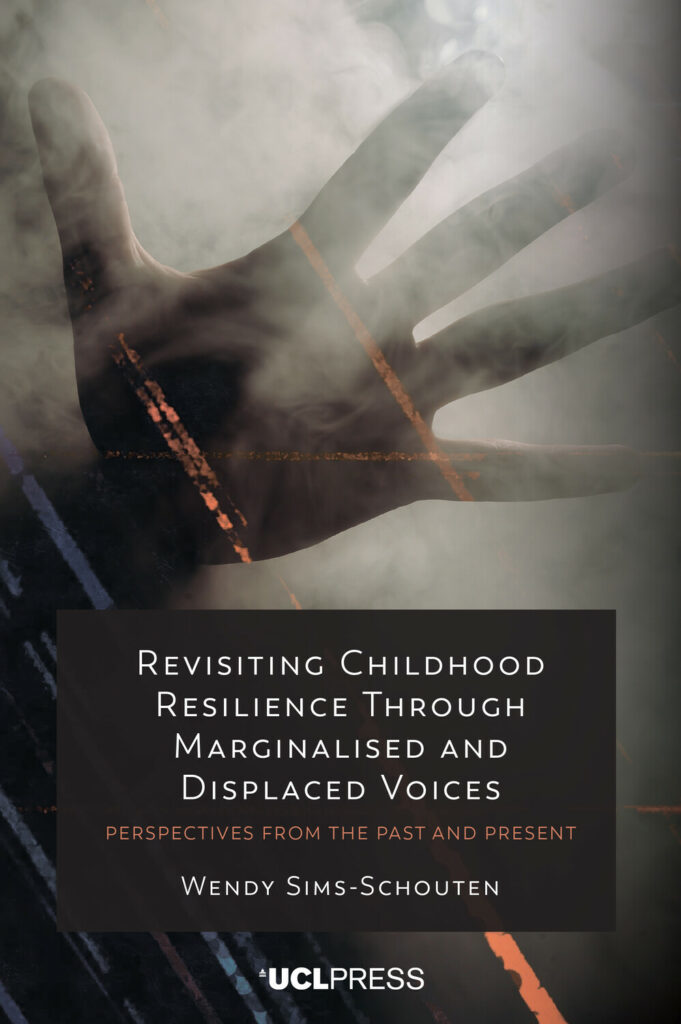
The image displays the cover of the book ‘Revisiting Childhood Resilience Through Marginalised and Displaced Voices: Perspectives from the Past and Present’, authored by Wendy Sims-Schouten. The cover features a blurred background with dark tones and light streaks, with a translucent silhouette of an outstretched hand reaching towards the viewer. The title is in white text, and the UCL Press logo is at the bottom.

New open access books published in September 2025

Rock pool

September marks the start of a new academic year, and UCL Press welcomed it with a selection of five new open access titles. September’s releases spanned museum studies, pedagogy, urban knowledge co-production, Victorian collecting, and children’s wellbeing in cities.

Object-Based Learning: Exploring museums and collections in education

Thomas Kador

Object-Based Learning provides a concise overview of some of the most important approaches to material culture and object analysis in plain and easily understandable language, that is equally accessible to undergraduate and postgraduate students as well as lecturers.

Read and download free.

Millionaire Shopping: The collections of Alfred Morrison, 1821-1897

Edited by Caroline Dakers

Millionaire Shopping is the first full, detailed and original account of the huge and unstoppable collecting and patronage of Alfred Morrison (1821-1897) who was one of the most important Victorian collectors and patrons of the arts. Each chapter is written by an expert in the field and dedicated to a particular aspect of Morrison’s collecting and patronage.

Read and download free,

Urban Childhoods: Growing up in inequality and hope

Edited by Claire Cameron

Urban Childhoods puts children’s and families’ voices centre stage while investigating ways of bringing children’s wellbeing to the fore in planning for urban life. The book explores themes that start from what children find important and details strategies that emerged from a major prevention programme conducted in two English cities.

Read and download free,

Co-production of Knowledge in Action: Emancipatory strategies for urban equality

Cassidy Johnson, Vanesa Castán Broto, Wilbard Kombe, Catalina Ortiz, Barbara Lipietz, Emmanuel Osuteye, Caren Levy

Co-production of Knowledge in Action examines how co-production is articulated and deployed in cities such as Lima, Freetown, Kampala, Dar es Salaam and Delhi. It engages with ongoing experiences of co-production-inspired action, mapping the different aspirations that inform co-production practices and the impacts on urban communities.

Read and download free.

Deconstituting Museums: Participation’s affective work

Helen Graham

Deconstituting Museums argues that participation collides with dominant paradigms of inclusion, diversity and decision-making on behalf of ‘future generations’ and ‘the public’. Participation draws in ideas from direct and horizontal political traditions. How might participation and its affects enable new political structures of heritage?

Read and download free

We’ll be back next month with more open access gems. Until then, stay safe, and happy reading!

Tackling difficult histories with (museum) objects

Animal skull with prominent canines on a tabletop.

What can a preserved animal specimen tell us about colonialism, extinction and even genocide? In this blog post, Thomas Kador reflects on the themes of his recent book Object-Based Learning: Exploring Museums and Collections in Education and considers how museum objects, often seen as neutral or purely scientific, can reveal troubling histories. From the Thylacine skeleton in UCL’s Grant Museum to instruments linked to eugenics, these objects challenge us to confront uncomfortable truths and rethink the role of collections in education.

Object-based learning (OBL) refers to a pedagogy based on working with material culture in support of learning and critical engagement with the world. While object-based approaches can involve all types of objects, there is usually a particular focus on items from museums and other curated collections.

My recent book Object-Based Learning: Exploring Museums and Collections in Education explores the many ways in which we can employ objects in formal and informal educational settings, and the benefits of doing so. Research repeatedly demonstrates that learners find working with objects – especially heritage ones – inspiring. It also shows that working with objects can support the development of subject-specific, transferable, and interdisciplinary skills, as well as benefit learners’ health and wellbeing.

You can probably recall a time when you felt inspired by a beautiful museum object or work of art, but there are museum objects that testify to much darker and challenging parts of human history. This does not diminish their capacity to facilitate learning. On the contrary, such objects represent extremely powerful catalysts for interrogating the past, including power structures, abuses of power, injustices, and even atrocities. 

There are some well-known examples you might be aware of, such as the so-called Benin bronzes in the British Museum, and the artworks that were stolen by Nazi officials from their Jewish owners during the Holocaust. However, many items’ connection to difficult histories is less readily apparent, and we need to scratch a little deeper  below the surface to reveal their stories.

For example, the deep entanglement of many museums and collections in the colonial project is well known. Objects and specimens allow us to lift the curtain on colonial exploits, with much of the discourse focusing  on archaeological, anthropological, and historical museums, and – to a lesser extent – art collections. But what about natural history museums? Often mistakenly seen solely as spaces of scientific study which are unconnected to past or present political situations, these museums can also reveal problematic histories if we dig a little deeper.

UCL’s Grant Museum of Zoology has a collection of animal specimens that stretch back to the university’s foundation in 1826. When the collection was started in the 1820s and 30s, animals which have since become endangered or extinct were still in existence. For example, the museum has a collection of Thylacine – commonly known as the Tasmanian Tiger – material, consisting of a complete skeleton, some skulls, a number of other bones and a fluid specimen (i.e. a dissected animal preserved in alcohol). As Thylacines became extinct nearly 90 years ago,  the remains at the Grant Museum are significant, especially as the fluid specimen is possibly the only one in the world.

But this is where it gets political, as Tasmania – the island from where the Thylacine specimens originate – was declared a British colony in 1825. At the time, the Thylacine, the largest modern day marsupial carnivore, was seen as a threat to European sheep plantations, and a bounty was placed on their pelts. This resulted in perhaps the only documented purposeful extinction of an entire animal species in human history. The mission ‘succeeded’, and by 1936 the last known Thylacine had died in that Australian zoo. The native human population did not fare much better, with the colonisers coming extremely close to exterminating the local Aboriginal people during the 1824-1832 Tasmanian war. It is striking how quickly a seemingly ‘harmless’ specimen in a natural history collection can become an emblem not only of its own species’ extinction, but also a reminder of the genocides perpetrated by Europeans on Tasmanians and other Aboriginal peoples. 

While these are truly dark subjects, museum objects and specimens allow us to explore them closely in a relatively safe and non-confrontational manner. We can interrogate difficult topics from multiple perspectives, including some that differ from our own personal views. This brings us back to the role of objects as conduit for highlighting and critiquing institutional power and violence without being violent in their own right. This allows learners to confront uncomfortable truths, such as our own complicity – or inaction – in local or global injustices.

As an employee of UCL, it would be remiss of me not to mention my institution’s promotion of scientifically racist and ableist ideas through its enthusiastic embrace of eugenics in the early twentieth century. As a legacy of UCL’s involvement, we have a collection of objects, instruments and materials related to the study of eugenics, which recently have found new use as items that allow learners to critically engage with this troubled history. In this context, objects that were once instruments of oppression are now enabling students and researchers to interrogate, challenge, and come to terms with these practices and the mindsets that gave rise to them. The objects remain as tangible connections to these troublesome chapters of human history, but they have been transformed from tools of power and domination to facilitators of dialogue and cultural understanding.

Preparing Generation Z students for a volatile world through language learning

To mark European Day of Languages, Kasia Łanucha and Alexander Bleistein consider the changing needs of ab initio language learners in UK universities in this excerpt from their chapter in Ab Initio Language Teaching in British Higher Education: The Case of German. They argue that teachers need to be aware of the implications of volatility, uncertainty, complexity and ambiguity (VUCA) for their students. As the first generation of digital natives are now at university, these students’ approach to learning is more focused on online materials, and teachers need to adapt in order to maintain the students’ interest. 

How can language teachers support Generation Z students in developing the skill set needed in the post-pandemic VUCA world? Here are six takeaway points based on teaching experiences during German language classes at the Centre for Languages and Inter-Communication (CLIC) within the Engineering Department of the University of Cambridge.

  1. Are the materials and course contents motivating and relevant to the students?

Considering the speed of societal and technological change, it is apparent that a lot of language material is outdated before it has even been published and therefore, it is not always useful for developing self-motivation, sense of purpose and ultimately self-discipline. Do Generation Z students in the 2020s still have to learn how to book a hotel room via phone? Is asking for directions an authentic scenario when navigation apps figure out the best route in seconds? To what extent are translation skills still necessary with the constantly improving accuracy of machine translation? For practical reasons, teachers must rely on existing material but should follow a learner-centred approach and amend exercises and scenarios to make them fit for the situation students currently find themselves in. Also, it is advisable to make resources available and easy to access online, not only to meet the learners’ technological preferences but also to reduce costs for students and universities. Still, considering the saturation with technology, the widespread ‘Zoom fatigue’ (Nadler, 2020: 1) and social media overload, teachers should limit the platforms used and make sure that all of them bring a significant benefit to the classroom. Involving students’ interests in the course design is a factor that increases motivation in the classroom. Various online polling tools are a workable solution to find out about the learners’ preferences during or before the first class. In order to develop a sense of purpose, the practical application of theoretical language and cultural knowledge is key for ab initio learners. For example, teachers are advised to facilitate situations allowing an authentic discourse with speakers of the target language. Online tandem projects with partner universities abroad have proven to be an effective way in language classes at CLIC to enable a meaningful exchange when restrictions make travel abroad unfeasible.

  1. Can students develop learning agility?

Teachers play an important role in developing agility among the learners and moving them out of their comfort zones: they encourage students to take new directions and to approach problems from a different perspective. In language learning, there is no problem that cannot be solved, as long as learners have access to a wide range of techniques, exercises and explanations to tackle them. Ab initio classes offer the opportunity to implement various learning strategies from the very beginning, and the omnipresent technology focus of Generation Z enlarges the pool of resources and platforms. Learning agility also refers to being open to new types of tasks. For example, recording oneself can feel uncomfortable for the first few times, but students get used to it over time and acknowledge the potential of practising speaking and being able to listen back to the audio file. Equally important is the ability to work with and learn from different people, so mixing groups during classes should be a matter of course in ab initio groups.

During the pandemic, being able to switch between different modalities and platforms of communication has become another crucial skill, and one that is likely to gain importance and require agility in the future: students are expected to be confident to converse and collaborate online and in person, adapting to the conventions associated with each medium as well as to different communication styles.

  1. Does the teaching foster learner autonomy and self-reflection?

From our experience, elements of autonomous learning, self-assessment and feedback seem to work particularity well when used with Generation Z students. To provide a comprehensive and personalised pathway, CLIC introduced a reflective portfolio as a new assessment element in language courses from 2020/1 onwards. This serves as a continuous log of the students’ work and gives evidence of all relevant language skills. A viva at the end of the course requires students to defend the portfolio work submitted and allows teachers to check whether the skills meet the corresponding CEFR level (Council of Europe, 2020). Students are also asked to reflect in writing on their learning experiences and to answer questions like the following: ‘Why did you choose this task?’, ‘How difficult was it to complete this task?’, ‘What would you like to work on in your next submissions?’. Answering questions of this sort not only activates a process of self-reflection within the students but also helps teachers develop a stronger connection with them and understand their learning styles and needs better.

While many students enjoy the high degree of flexibility and creativity allowed, a large proportion of learners, especially at beginners’ level, require clear guidance and regular feedback from teachers to shape the personalised learning pathway. It is therefore necessary to establish a lively feedback culture in the classroom and to address the importance of giving and receiving feedback which is different to the act of instant gratification that Generation Z is used to in many scenarios (Kalkhurst, 2018). Altogether, students must learn to take responsibility for their own learning and can be held accountable for their progress, provided that the support and guidance from the teacher’s side is sufficient and effective.

  1. How can teachers help students in becoming more resilient?

Making mistakes is part of every language learning journey and should be considered normal. However, it is much easier to accept in children than in adult learners who are often more reluctant to embrace the fact that they will be wrong in the language course, and in fact, they will be wrong a lot – an inevitable by-product of language acquisition. If a message does not have the expected outcome or the interlocutor cannot understand it, teachers must encourage their students to try again, paraphrasing, or using other means of communication such as body language. Communicating the fact that trial and error is how we learn and that striving for perfection every time can be counterproductive is critical. This kind of stance from a teacher can boost creativity and encourage risktaking (instead of always trying to play it safe) which should be reflected in the assessment and feedback where language accuracy is not the most important factor. In addition, non-native language teachers could also help learners by acknowledging their own vulnerability when they are not always sure of their language accuracy and yet constitute proficient language speakers which can be very empowering for the students. 

Secondly, managing expectations of the learners is key, especially for those who enrol on a language class in hope for an easy gain of a credit. Language classes are often advertised as fun, and anecdotally, students at CLIC would sometimes drop off after a week or two once they realised that language learning is hard work too, especially when grammar is covered, which tends to be harder to make engaging (and therefore sometimes leads teachers to almost being apologetic for even talking about grammar in the class!).

  1. What about critical thinking skills?

Critical thinking skills are particularly important when dealing with an overload of often conflicting and ambiguous information. Can teachers address this challenge in an ab initio language class? Shirkhani and Fahim argue that the best way of fostering critical thinking in the language teaching context is to include it in assignments by integrating language and critical thinking skills (Shirkhani and Fahim, 2011: 113). Although it might prove difficult to enhance critical thinking through engagement with sophisticated input at beginners’ level, meta-reflection on language and cultural conventions (even if partly not in the target language), can form a part of language classes to critically shed a light on the learning contents: ‘What is the benefit of having a system of cases in German?’, ‘Which function has the distinction between a formal and informal address (du/Sie)?’, ‘Do we need a gender-sensitive language?’, ‘Why are Germans considered as direct or even rude compared to the British?’. Cultural and linguistic questions like these could arise when dealing with language contents that touch on these topics explicitly or implicitly Another area to use critical skills is the choice of materials students engage with, such as online dictionaries, translation tools, YouTube videos or language programmes, perhaps by spending some time in the course on discussing the main features of reliable and credible (online) sources and by integrating traditional approaches like literature reviews or discourse analysis on a certain topic.

  1. How can language teaching improve collaboration and communication skills?

Collaboration underpins every interactive language class and is present in different forms: work in pairs, smaller or bigger groups, in person or remotely or by using technology. Teachers can support their students, depending on the task and its length, by helping them establish the ground rules to make sure teamwork goes smoothly. When it comes to communication, it is unlikely that, at beginners’ level, the target language will always be the language of instruction in the classroom. Instead, students have to use a lingua franca in their interactions, both synchronously and asynchronously, which the teacher can also model by setting the tone when interacting with the students as a group and individually.

Intercultural awareness is highly important when dealing with ambiguity and a key element of successful communication in the interconnected world Generation Z inhabit, and it goes beyond facts about a country and the dos and don’ts for visiting. It is also about understanding how national culture can affect the way we think, behave and therefore communicate. Certain cultural differences manifest themselves in German right from the start in a beginners’ course, such as hierarchy and the use of both titles (for example, Herr, Frau, Doktor) and the formal and informal ‘you’. Another one is communication style, especially requests such as Buchstabieren Sie, bitte (Please spell) or Geben Sie mir bitte … (Please give me …), which some students might consider inappropriate or simply rude. Teachers can also address other aspects randomly as the situation arises, for example when talking about how students from different national backgrounds feel about working times stated in teaching materials. Some might find that leaving the office at 5.00pm is late, some find it early. Discussions about what feels right in a given context go far beyond language learning and are closely linked to critical thinking skills (see Question 5). They raise awareness in the students of how their common sense is not at all that common when working across cultures which comes with many challenges in the VUCA world and in a language class, even at an ab initio level. This provides a fantastic opportunity for learning both about the target culture and other cultures (including one’s own). The same applies to intergenerational learning and reflecting societal norms (for example, holding the door by a male for a female, which can be considered both polite and sexist in the same national culture).


About the authors

This is an excerpt from  Ab Initio Language Teaching in British Higher Education: The Case of German, edited by Ulrike Bavendiek, Silke Mentchen, Christian Mossmann and Dagmar Paulus.

Kasia Łanucha gained her Master’s degree in German as a Foreign Language at the University of Dresden before moving to the UK where she has been teaching German at various levels and for specific purposes (engineering students, medical school) for over 15 years at the University of Cambridge.

Alexander Bleistein is DAAD-Lektor and Coordinator of German at the Centre for Languages and Inter-Communication (CLIC) of the Cambridge University Engineering Department. He has been teaching German in the UK at all levels with a focus on languages for specific purposes (LSP) since 2016 and has previously worked with the Goethe Institutes in London and Rotterdam. He is affiliated with Downing College, Cambridge, where he supervises students of German.

Book launch: Revisiting Childhood Resilience

Join the the UCL Institute of Advanced Studies and the Critical Childhood Studies Centre for the launch of new books, including Revisiting Childhood Resilience by Wendy Sims-Schouten on 1st April, 5-7pm.

This event is open to all, and will take place at the UCL Institute of Advanced Studies. Tickets can be booked online at Eventbrite.

Revisiting Childhood Resilience Through Marginalised and Displaced Voices: Perspectives from the past and present

Author: Wendy Sims-Schouten
Revisiting Childhood Resilience Through Marginalised and Displaced Voices uses an interdisciplinary approach to challenge current childhood resilience research and practice. The culmination of ten years of research and publications around childhood resilience, the book draws upon data collected from and co-produced with children, young people and adults from marginalised, disadvantaged and displaced communities. In so doing, it highlights the transformative potential of stories told by marginalised and displaced children, past and present. When these narratives are prioritised, they disrupt, counter and draw critical attention to coping strategies in light of adversity and oppression, to inform creative research and policymaking. Centralising the voices of care leavers, young people who are bullied, members from minority ethnic communities and former migrants/refugees, among others, Wendy Sims-Schouten shines a light on 150 years of marginalised voices and experiences in relation to resilience.

Revisiting Childhood Resilience Through Marginalised and Displaced Voices is published by UCL Press. Click here for more information.


This book launch is part of the Institute of Advanced Studies Book Launch Series and organised by the Critical Childhood Studies Centre. The Centre is a home for world-leading scholarship about childhood as a socio-political, cultural, and historical phenomenon in diverse global contexts. The Centre provides a focal point for faculty and students at all levels in UCL to engage in innovative and multi-disciplinary research, teaching, and public engagement geared towards achieving social justice with and for children and young people.

‘I want to change the world’: Wendy Sims-Schouten on childhood resilience

Professor Wendy Sims-Schouten’s new book Revisiting Childhood Resilience Through Marginalised and Displaced Voices uses an interdisciplinary approach to challenge current childhood resilience research and practice. The culmination of ten years of research and publications around childhood resilience, the book draws upon data collected from and co-produced with children, young people and adults from marginalised, disadvantaged and displaced communities.

We caught up with Wendy to talk about her work on childhood resilience, her interdisciplinary approach to research, and the shortfalls and her desire to change the world for the better.

Tell us more about your background and experience.

I am Professor of Interdisciplinary Psychology and Head of UCL Arts and Sciences, which is the home of new wave liberal arts and sciences degrees, one of the first of its kind in the world. As Head I oversee the running of the department, which is the fastest growing department in the Faculty of Arts and Humanities, and is based across Bloomsbury and UCL East. In addition to this, I undertake research with a focus on wellbeing, eclectic resilience (including resistance and defiance) and coproduction, working collaboratively with members from a range of disadvantaged, displaced and marginalised communities (such as young care leavers, refugees/migrants, as well as members from minority ethnic communities).

How and why did you get into this subject area?

The short answer is because I want to change the world and to do that we should listen to children from diverse backgrounds.

What motivated you to write and publish this book?

After researching childhood wellbeing for 15 years, I felt that we keep missing the boat when it comes to making sense of childhood resilience in light of displacement and marginalisation. This book tries to remedy some of this by presenting stories, memories and experiences of childhood resilience, resistance and compliance, centralising voices of children and young people from a range of marginalised and displaced communities (e.g. care experienced young people, child migrants, children from minority ethnic communities, to name a few),

What do you think sets your approach apart from others in your field, and how do you stay innovative?

I adopt an interdisciplinary approach, drawing on knowledge from the arts, humanities and social sciences, whilst most research around resilience is largely located within health and psychology disciplines. Within my research I include voices, stories and memories, both from the past and present, and keep going back to children and young people to ask what they think, if my approach works and what could be improved.

Surprise us with something unexpected you encountered in your research for this book.

For me the key thing is that I was able to represent individual voices around wellbeing and resilience, something that is often dismissed when it comes to how impact in an academic context is measured. For example, when I completed my impact case study for REF2021 I realised that one particularly impactful event stood out for me. Yet, it was also something that I could not include in my case study, because it only affected one person and one school. Let me explain this. As part of REF impact cases studies, researchers are required to provide evidence of the impact of their research. In my case, this was my research centred on coproducing new understandings and interventions around mental health and wellbeing working collaboratively with care-experienced young people, new mothers with mental health issues and members from minority ethnic communities and related charities and organisations. I was able to show that the research had significant impact, for instance by changing uptake of mental health support among young care leavers in Hampshire from 16% to 60%, as well as young people living in supported accommodation in Scotland. Yet, what I was most proud of was the EDI work that I collaborated on with the lead of the Race Equality Council in the South-West of England, working with a girl with mixed heritage who had been suspended from school due to ‘aggressive behaviour’. Working extensively with the girl in question and the school that had suspended her, we were able to show that what was described by the school as ‘aggressive behaviour’ was in fact a child (she was only 12) who resisted the racist bullying that she had been on the receiving end of since primary school. The school lacked EDI training and understanding, and we were able to support the girl. educate the school and get her education back on track. REF impact is centred on ‘big numbers’ of impact and as such this was not included in my REF case study, yet I could include this in my book.

Why did you choose to publish your work Open Access?

Because Open Access allows for increased visibility and wider dissemination.

How do you see your research contributing to a better understanding of the world, and what potential benefits might it offer in the future?

This book urges us to keep a more open mind when it comes to how we talk about ‘resilience’. Too often children and young people are just told to ‘be more resilient’ and new resilience tools and measures are coming out all the time, as if resilience can just be taught and measured. Yet, within this children and young people are rarely consulted and children who adopt resistant and defiant behaviours in light of adversity are frowned upon.

What do you see as the most exciting future directions for research in your field, and what breakthroughs do you hope to see in the coming years?

I hope we take coproduction with children and young people more seriously and not use this as a ‘tick box’ exercise.

What advice would you give to students who are interested in pursuing a career in your field, and what skills or qualities do you think are most important for success?

For me personally, the mix between research and practice was very beneficial. I first qualified as a psychiatric nurse and worked in various clinics, whilst specialising further in child psychology. Having this practical background and experience was invaluable when I eventually embarked on a PhD and an academic career.

What do you do to stay motivated and inspired in your work, and how do you maintain a positive attitude even in challenging situations?

What inspires and motivates me most is working with the community, whether charities, schools or museums. Since becoming a Head of Department I have had less time for research and I am very keen to pick up the collaborative projects and community work again as soon as I can..

What is something you are never asked, but wish you were?

I am not sure… I think there is still a lack of clarity around and engagement with the arts and humanities when it comes to making sense of concepts, such as mental health, wellbeing and resilience. I would love to have further discussions with people about that.


About the Author

Wendy Sims-Schouten is Professor of Interdisciplinary Psychology and Head of UCL Arts & Sciences.

How a world-class university was founded

UCL Portico and quad

From its foundation on 11 February 1826, UCL embraced a progressive and pioneering spirit. It was the first university in England to admit students regardless of religion, and made higher education affordable and accessible to a much broader section of society. It was also effectively the first university to welcome women on equal terms with men. From the outset, UCL showed a commitment to innovative ideas and new methods of teaching and research.

To mark the 199th anniversary of the university’s foundation, we are proud to share an extract from The World of UCL exploring how the university was founded, and how – though not as its founder, as is commonly believed – utilitarian philosopher Jeremy Bentham was involved.

What we know today as University College London (UCL) was founded in 1826 and first opened its doors to students as the self-styled ‘University of London’ in October 1828. London at that date was the largest city in Europe and almost the only capital without a university. The new institution was intended from the beginning to open higher education to people excluded from the ancient seats of learning in Oxford and Cambridge. Its first students included nonconformists, Jews, Catholics and others. Notoriously described by Thomas Arnold as that ‘godless institution in Gower Street’, England’s third university prompted anxiety, contempt and curiosity among the early nineteenth-century establishment.

It is generally but incorrectly believed that Jeremy Bentham was the founder of UCL. This myth is sustained in a bizarre manner by the display of the body of the great philosopher of ethics, jurisprudence and government, ‘in the attitude in which I am sitting when engaged in thought’, as he instructed before his death in 1832. Besides the box with Bentham in it, UCL possesses over 200 more boxes full of his writings, a collection that has been called ‘one of the most remarkable monuments to the mind of a single man in all its aspects to be found anywhere’.

Prominently displayed in the Flaxman Gallery is the huge painting undertaken in 1922 by Henry Tonks, the then Slade Professor of Fine Art, portraying William Wilkins, the architect, offering the original College plans up to Bentham for his approval, while Henry Brougham, Thomas Campbell and Henry Crabb Robinson look on. The ‘Auto-Icon’ has been in the possession of UCL since 1850, and occasionally attends meetings of the College’s governing body. His most recent appearance was at a Council meeting in July 2013, the minutes recording that Jeremy Bentham was ‘present but not voting’.

In fact Bentham played no such personal role in the establishment of the College and was an old man of 80 when it opened. He did give his blessing and financial support to the venture, however, and the founders certainly owed a very considerable intellectual debt to him. UCL was founded by what Bentham called ‘an association of liberals’ in which the leading roles were played by an improbable duo formed by a poet and a lawyer. Credit for the original proposal must go to Thomas Campbell, the now largely forgotten Scottish poet whose Pleasures of Hope (1799) brought him popular fame and a rapid entrée into London literary society. In 1820, on a visit to Bonn, he was impressed by the religious toleration of the re-founded university there and formed the idea of establishing ‘a great London University’ for ‘effectively and multifariously teaching, examining, exercising and rewarding with honours, in the liberal arts and sciences, the youth of our middling rich people’. In February 1825 The Times printed a powerful open letter on this subject from Campbell to Henry Brougham, another Scot. Brougham was a brilliant man, one of the founders of the Edinburgh Review, who had moved to London to seek commanding outlets for his versatility and energy in the law and politics. First elected as an MP in 1810, he became particularly involved with the cause of popular education, associating himself with George Birkbeck and the mechanics’ institutes and founding in 1826 the Society for the Diffusion of Useful Knowledge.

Brougham regarded himself as a Benthamite, as a believer in the utilitarian principle of ‘the greatest happiness of the greatest number’ – though it has been claimed that in his view the greatest number was number one. His extravagant style smacked of humbug to many, but he was a man who got things done. Under his direction Campbell’s dreams of a ‘great London University’ were turned into reality. A second university which provided a model for UCL was Thomas Jefferson’s carefully planned University of Virginia, which had opened in 1825. The University of Edinburgh was the most powerful model of all, familiar as it was to Brougham and many of the founding professoriate in London.

When Campbell and Brougham began to organise a university for London, the only existing universities in England were those long established at Oxford and Cambridge – described by Bentham as ‘the two great public nuisances … storehouses and nurseries of political corruption’. Membership of the Church of England was necessary for admission to the one and for graduation from the other. All nonconformists, Catholics and Jews were thus excluded, while many Anglicans were kept out by the social restrictiveness, the cost or the institutions’ characteristic intellectual backwardness. The old universities were seen to be increasingly out of touch with a rapidly changing society. The population of England doubled in the first half of the nineteenth century, and the combined effects of industrialisation and urbanisation were producing new social patterns with new pressures and demands. The industrial revolution necessitated an extended system of higher education.

The main appeal of the new university was therefore to the interests excluded from the established system, such as it was, and to the various new social groups. Isaac Lyon Goldsmid, a millionaire financier and later the first Jew to become a baronet, played an especially significant role. He brought Campbell and Brougham together on the project and ensured the considerable support of the Jewish community. The nonconformists were actively led by Francis Augustus Cox, the Baptist minister of Hackney, while a different dissenting strand was represented by the support of Zachary Macaulay, whose main work had been devoted to the
abolition of the slave trade. Catholics were represented by the Duke of Norfolk and the Whig establishment provided a number of other titled luminaries. James Mill, the utilitarian philosopher and father of John Stuart Mill, actively represented Benthamism, and the various progressive influences rubbed shoulders readily with supporters from the City of London.

As the result of a year-long series of public and private meetings chaired by Brougham, the College came into formal existence on 11 February 1826 with the signing of an elaborate Deed of Settlement. It was agreed to raise a substantial sum of between £150,000 and £300,000 by the selling of shares of £100 each. From among the ‘proprietors’, as the shareholders were called, 24 men were to be elected as the Council, the all-powerful body which was to control the University’s property, appoint the Professors and regulate the education of the students. It was a fundamental principle of the new institution that religion in any form should be neither a requirement for entry nor a subject for teaching. As a corollary it was decided that no minister of religion should sit on the Council. The Revd Dr Cox served therefore as Honorary Secretary of that body until he became UCL’s Librarian in 1827.

From the outset the promoters sought incorporation. Brougham’s soundings towards a Royal Charter in 1825 were rebuffed by the Tory government of the day, and his subsequent efforts to achieve an Act of Parliament were defeated by the influence of Oxford and Cambridge. Parliamentary assistance was provided by Joseph Hume, one of the members of the original Council. A leading
radical, Hume was indefatigable in support of the College as well as of those other great progressive causes of the age, Catholic emancipation and parliamentary reform. After 1832 he was joined in the House of Commons by another member of the original Council, William Tooke, a prominent solicitor who became the first Treasurer of the College and of the Hospital.

The strength of the combined opposition of Oxbridge and of the London medical profession to legal recognition of the College as a ‘University’ could not easily be overcome in Parliament, despite the additional efforts of Brougham in the House of Lords, where he had gone in 1830 as Lord Chancellor. When UCL did eventually get its first charter in 1836, it took an unexpected form.

A base in Bloomsbury

One of the first acquisitions for the new University, even before it was officially constituted, was a building site. Nearly eight acres in Bloomsbury were bought in August 1825 for £30,000 by three of the richest promoters, Goldsmid, John Smith and Benjamin Shaw, and held by them until it could be transferred to the new University. Previously the site had served variously as a drilling ground, a place for duelling and a rubbish dump. It had been intended to develop it as Carmarthen Square, a projected addition to the yet unfinished Bloomsbury. By the time of the holding of the first meeting of the proprietors at the end of October 1826, 1,300 shares in the University had been sold, 200 fewer than the minimum believed necessary. Plans for the building were nevertheless being pressed ahead, and the digging of foundations was already underway. Despite the bad weather of the winter of 1826–27, work was sufficiently advanced by 30 April 1827 for the ceremony of laying the foundation stone.

This was undertaken with full masonic rights by the Duke of Sussex; a brother of George IV and the only member of the royal family with any intellectual pretensions, he was well known for his liberal sympathies. A copper plate with an inscription duly read out by Cox was placed in a cavity in the stone together with the traditional coins. Afterwards some 500 people gathered for a dinner at the Freemasons’ Tavern at which many speeches were made and £8,000 was raised. Henry Brougham made a memorably sarcastic oration attacking the opponents of the University, but annoyed Thomas Campbell’s friends by appearing to accept credit for founding the University single-handed. Campbell was absent from the foundation ceremony, being occupied as Lord Rector of the University of Glasgow, and he did not serve on the Council beyond the first year. Squeezed out by Brougham, Campbell’s connection with the University he had proposed ended as it was coming into being.

The architect chosen for the College was William Wilkins, whose fashionable, neo-Grecian design submitted in response to public advertisement in August 1825 was found exceedingly fine. Wilkins had previously designed new college buildings for Downing and King’s College at Cambridge, as well as Haileybury, the East India Company’s college in Hertfordshire. UCL is widely acknowledged to be Wilkins’ greatest work, far more distinguished than the National Gallery he built in Trafalgar Square a few years later. The main entrance was to be at the top of a wide staircase under a ten-column Corinthian portico topped by an elegant dome. A chapel was conspicuous by its absence, the main entrance being intended to give on to the three principal rooms: the Museum of Natural History to the left, the Library to the right and the Great Hall directly ahead. Lecture theatres of various sizes led off generous cloisters running to the impressive wings that contained further suites of rooms. In the event, shortage of money meant that Wilkins’ splendid design was only partially carried out.

The lowest tender received from a builder for the construction of Wilkins’ building was £110,000 – almost as much as the College had raised in total by autumn 1826. It was confidently declared that: ‘the wish of the Council will appear to have been rather to select a great design suited to the wants, the wealth, and the magnitude of the population for whom the Institution is intended, than one commensurate with its present means.’ To this heroic decision the College owes the iconic centrepiece to its present rambling and in many ways unimpressive premises; the Portico has long formed part of UCL’s branding. It was decided to build the central range of the building with the Portico and Dome as envisaged by Wilkins, but to delay the addition of the two wings until the financial position improved. Together with the stone ornamentation, various fittings and the two front lodges, the cost was not to exceed £86,000. Financial stringency also involved postponement of the Great Hall and strict curtailment of expenditure on
the Museum and Library. The steps under the Portico thus became something of a lavish white elephant; ‘the grandest entrance in London’, it has been called, ‘with nothing behind it’.

Augustus Pugin regarded the architecture of the College as pagan, adding acidly that it was ‘in character with the intentions and principles of the institution’. The College had to put up with a good many such snide remarks and attacks, especially in the crucial years between Campbell’s letter in The Times in 1825 and the opening in 1828. Verses and cartoons ridiculing what was quickly dubbed ‘the Cockney College’ or ‘the radical infidel College’ were published in the ultra-Tory John Bull and other papers:

Come bustle, my neighbours, give over your labours,
Leave digging and delving, and churning:
New lights are preparing to set you a staring,
And fill all your noddles with learning.
Each dustman shall speak, both in Latin and Greek,
And tinkers beat bishops in knowledge –
If the opulent tribe will consent to subscribe
To build up a new Cockney College.

‘The Cockney College’ in John Bull, July 1825

The opposition was provoked partly by the apparent pretension of a joint-stock company masquerading as a university in a period of financial speculation and partly by the College’s appeal to social groups excluded from the two old universities – an appeal intolerable to the Establishment. Above all it was provoked by the rejection of financial setbacks, the great hopes held by many for the new institution continued. Before the building had begun, the College was treated to the publication of what the historian Thomas Babington Macaulay called its ‘horoscope’ in the pages of the Edinburgh Review. ‘We predict’, he wrote, ‘that the
clamour by which it has been assailed will die away, that it is destined to a long, a glorious, and a beneficent existence, that, while the spirit of its system remains unchanged, the details will vary with the varying necessities and facilities of every age, that it will be the model of many future establishments, that even those haughty foundations which now treat it with contempt, will in some degree feel its salutary influence.’ A very bold prediction at the time, Macaulay’s words turned out to be remarkably percipient.


About the Authors

This is an excerpt from the open access book The World of UCL.

Negley Harte is Emeritus Senior Lecturer of History at UCL. He is interested in three main areas of British history: the origins of industrialisation; textile production and consumption (sixteenth to nineteenth centuries); and the history of higher education.

John North was appointed Assistant Lecturer in UCL’s Department of History in 1963, where he taught Greek and Roman History for 40 years. Since 2003 he has been Emeritus Professor of History.

Georgina Brewis is Senior Lecturer in the History of Education at the UCL Institute of Education. She is a historian of higher education, youth and voluntary action and teaches History across UCL. She is also a member of the International Centre for Historical Research in Education (ICHRE).
The challenges, issues and controversies of ‘Holocaust education’ 

A notebook with a black pen resting on it sits open on a dark blue surface. The notebook is mostly empty with handwritten notes in the top left corner.

This International Holocaust Remembrance Day, Professor Andy Pearce reflects on the challenges, issues and controversies of Holocaust education in the early twenty-first century. 

Since Holocaust education has become a principal conduit for the transmission of its memory and the object of numerous national and transnational initiatives in recent decades, it would be reasonable to presume there is clarity and consensus around elemental issues. This is, however, far from the case. Following Oliver Plessow, Holocaust education can, indeed, be viewed as a ‘field’ when field is taken to mean

‘a relatively autonomous social system with certain practices, rules, and institutions, which is constituted by a system of relative positions created by competitive interaction between different agents and thus prone to constant reorganization.’

 (Plessow 2017, 317

Even so, because it is ‘part of the wider discourse on the overall significance of the Holocaust’, Plessow suggests Holocaust education ‘is also subject to the conflicts that are being waged around the globe to determine the Shoah’s discursive position in memory and history’. Accordingly, ‘struggles between competing “memory frames” mirror in the debates about suitable pedagogies of the Shoah’ .

A perception of the field of Holocaust education as one characterised by fracture and fragmentation has been borne out by a number of studies conducted in recent years. Research by the Georg Eckert Institute on the position of the Holocaust in curricula and its representation in textbooks around the world uncovered ‘general convergent and divergent tendencies’ and ‘evidence of regional convergent and divergent trends’. Accordingly, its authors described ‘an overlapping multipolar pattern which is partly global, partly regional and partly national’, prompting them to forward the notion of ‘education about Holocausts’.

Meanwhile, a major ‘meta-analysis of existing studies’ on ‘teaching and learning about the Holocaust (TLH)’ conducted under the auspices of the International Holocaust Remembrance Alliance (IHRA) found ‘the field remains in quite different states of development in different linguistic communities of scholars, and it lacks mature exchanges between those language communities’ . Tellingly, among the general conclusions forwarded by the authors of this research was the assertion ‘TLH itself is a broad umbrella with many different approaches and areas of focus. Terms such as “Holocaust education” and “teaching and learning about the Holocaust” encompass such a wide range of content and practices that it is problematic to conceive of them as a single entity’.

Such claims pose particular challenges for an organisation which describes itself as ‘promoting Holocaust education, research and remembrance since 1998’ . Yet, according to a recent policy guide produced by UNESCO, ‘the expression “Teaching and Learning about the Holocaust” is used by the International Holocaust Remembrance Alliance’ and ‘addresses didactics and learning, under the larger umbrella of education about the Holocaust, which also comprises curricula and textbook studies’. Holocaust education, meanwhile, is defined by UNESCO as ‘efforts, in formal and non-formal settings, to teach about the Holocaust’.

One could well be forgiven for finding these developments disorienting. The phrase ‘Holocaust education’ has indeed long been problematic, suffering from the ailments of insufficient conceptualisation, lack of clarity, and imprecision. Despite this, the term has been institutionalised in a number of countries and become currency in international Holocaust politics. This does not mean, of course, that we are obliged to using ‘Holocaust education’ indefinitely; in refocusing attention on pedagogy, the phrase ‘teaching and learning about the Holocaust’ has much to commend it and is arguably preferable. However, because ‘Holocaust education’ has acquired normative dimensions  – partly through transnational initiatives promoted by organisations like the IHRA – it seems unlikely that a change in discursive frames will get good traction very quickly.

Ultimately, umbrella phrases are – by their nature – characterised by breadth and variety. They cease to be useful when they create confusion and handicap common understanding. In making sense of the growing questions around ‘Holocaust education’ it is worth reiterating that it has, for some time, been ‘largely under theorized’. On this Doyle Stevick notes, ‘a field requires a certain critical mass of data and research studies to enable the development of well-supported theory, and teaching and learning about the Holocaust is not yet in that position’. This would suggest that whether we call it ‘Holocaust education’ or ‘Teaching and Learning about the Holocaust’, we are talking about a collection of practices, principles adorned with the garbs associated with a field, but bound together by belief, conviction, and resolution rather than being housed within clear conceptual or empirical frameworks. As Eckmann and Stevick have written, ‘there is much more consensus about the importance of addressing the Holocaust than about “why, what and how to teach” it, and about how to know if those goals have been achieved’.

The coexistence of, on the one hand, consensus around addressing the Holocaust and, on the other, inability to determine what this looks like pedagogically, is both a product and cause of reductive understandings of memory, knowledge and education  – as well as the blurring of lines of separation between mnemonic and educational activity. Changes may be slowly occurring, but it remains to be seen how far new research into teaching and learning about the Holocaust, and new ways of theorising these enterprises, will affect practice in classrooms and at a policy-making level. As the IHRA study revealed, for all the diversity, certain trajectories and prevailing issues can be observed. These include the reality that teachers and students are products of their cultural milieu, the deleterious consequences that follow insufficient specialist training, and the potentially problematic ways in which memory is used to teach history, such as a ‘pedagogy of reverence’. In an ideal world, advances in research and changes in pedagogical approaches would exist in a reciprocal relationship. However, certain long-term trends have combined with more recent unforeseeable developments to add new immediacy and new pressures.


About the Author

This is an excerpt from Holocaust Education: Contemporary challenges and controversies, edited by Stuart Foster, Andy Pearce, and Alice Pettigrew. 

Andy Pearce is Associate Professor in Holocaust and History Education who has worked in Holocaust education for over ten years. He is involved in delivering CPD for teachers, in educational research, and has collaborated with the Imperial War Museum, the Wiener Holocaust Library, and the Organization for Security and Co-operation in Europe.

Sign up to our newsletter

Don't miss out!
Subscribe to the UCL Press newsletter for the latest open access books,
journal CfPs, news and views from our authors and much more!