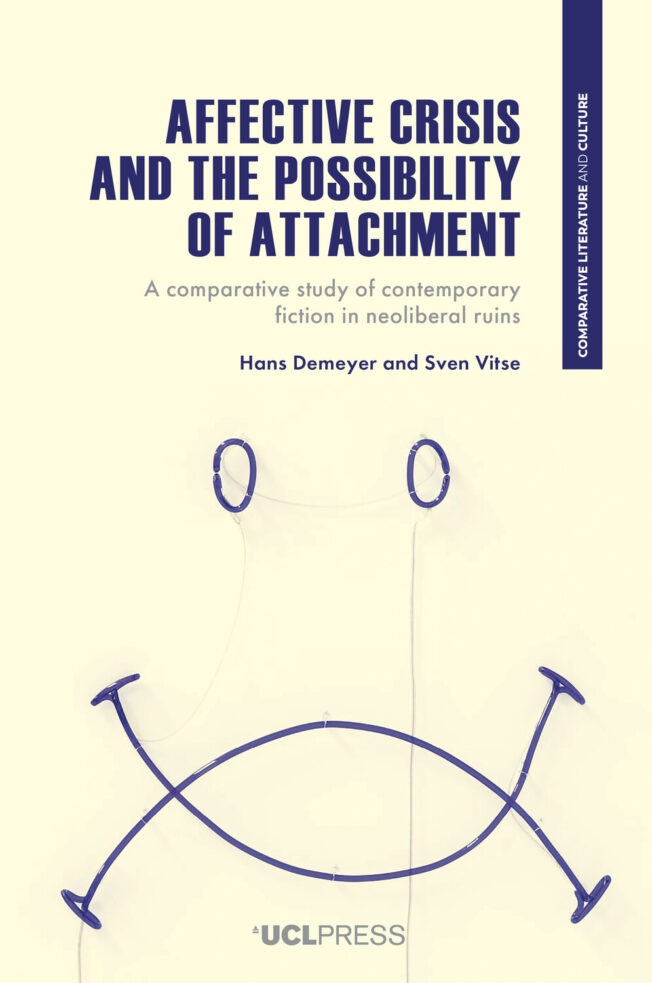

Affective Crisis and the Possibility of Attachment
A comparative study of contemporary fiction in neoliberal ruins
Hans Demeyer (Author), Sven Vitse (Author)
Affective Crisis and the Possibility of Attachment offers a comparative critical study of contemporary fiction. It intervenes in discussions about contemporary fiction in its literary-historical relationship to postmodernism and in its socio-historical relationship to neoliberalism. It argues that contemporary literature is dominated by affective questions that are rooted in, but not fully subsumed by, neoliberalism: ‘How can I experience reality (as real)?’; ‘How can I feel attached to someone?’ This ‘affective dominant’ signals a diachronical shift from postmodernist fiction’s pervasive epistemological and ontological reflections to a focus on questions of an affective nature in contemporary fiction. It also offers a perspective on contemporary fiction as mediating neoliberalism’s double-edged dynamics of commodifying affective experience while privatising collective experience.
The book argues that contemporary fiction develops emergent mediations of neoliberal dynamics, with the affective crises the latter yield. It studies this affective crisis in relation to central themes as identity and climate crisis, and through prevalent contemporary genres as autofiction and coming-of-age narratives. The book explores a transnational corpus, including authors Heike Geissler, Ben Lerner, Édouard Louis, Valeria Luiselli, Ling Ma, Lieke Marsman, Mohamed Mbougar Sarr, Niña Weijers and Alejandro Zambra, amongst others.
Acknowledgements
Introduction: The affective dominant, neoliberalism and friction
1 Autofiction and neoliberal reification
2 Identity and politics: recognition and redistribution; paranoia and repair
3 Disrupted development: Bildung, temporality and mediation
4 History: melancholic mediations of the past
5 The home as transitional infrastructure
6 Affective displacement: environmental crisis, slow violence and attachment
Conclusion: Affective crisis? It could be political
Index
DOI: 10.14324/111.9781806550418
Publication date: 21 April 2026
PDF ISBN: 9781806550418
EPUB ISBN: 9781806550425
Hardback ISBN: 9781806550395
Paperback ISBN: 9781806550401
Hans Demeyer (Author) 
Hans Demeyer is Associate Professor of Dutch and Comparative Literature at University College London. His research revolves around the intersection of literature, affect and society. With Sven Vitse he published Affectieve crisis, literair herstel [Affective Crisis, Literary Repair] (AUP, 2021), a monograph on the contemporary novel with a focus on Dutch-language fiction. Previous collaborations with Vitse include edited volumes on neo-avant-garde writers Willy Roggeman (2013) and J.F Vogelaar (2018). Since 2025, he is co-editor-in-chief of Dutch Crossing: Journal of Low Countries Studies. His current research projects focus on whiteness in Neerlandophone literature, and on literature and destituent power.
Sven Vitse (Author)
Sven Vitse is Assistant Professor at the department of Languages, Literature and Culture at Utrecht University. He has published extensively on Dutch-language avant-garde, postmodern and millennial fiction, and on the literary construction of masculinity in modern Dutch fiction. With Hans Demeyer he published Affectieve crisis, literair herstel (2021), a monograph on the contemporary novel with a focus on Dutch-language fiction. Previous collaborations with Demeyer include an edited volume on Dutch neo-avant-garde writer J.F. Vogelaar. In 2022-2023 Vitse was a fellow at the Netherlands Institute for Advanced Study (NIAS) in Amsterdam.
Hosts, Hospitals and Hospitalities
Susana Araújo, Catarina Nunes de Almeida, Santiago Pérez Isasi,
13 July 2026
Creative Critical Interventions for Social Justice
Natasha Tanna, Abeyamí Ortega Domínguez, Hakan Sandal-Wilson,
04 February 2026



Contemporary Afro-Brazilian Short Fiction
Ana Cláudia Suriani da Silva, Julio Ludemir, Maria Aparecida Andrade Salgueiro,
03 September 2024
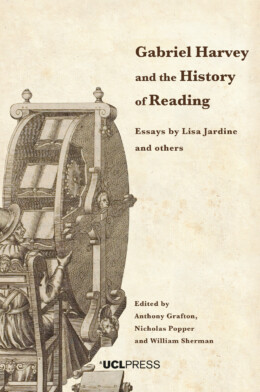
Gabriel Harvey and the History of Reading
Anthony Grafton, Nicholas Popper, William H. Sherman,
08 January 2024

The Bankruptcy
Júlia Lopes de Almeida, Ana Cláudia Suriani da Silva, Cintia Kozonoi Vezzani, Jason Rhys Parry,
17 July 2023

Drama, Poetry and Music in Late-Renaissance Italy
Virginia Cox, Lisa Sampson, Anna Wainwright,
08 June 2023

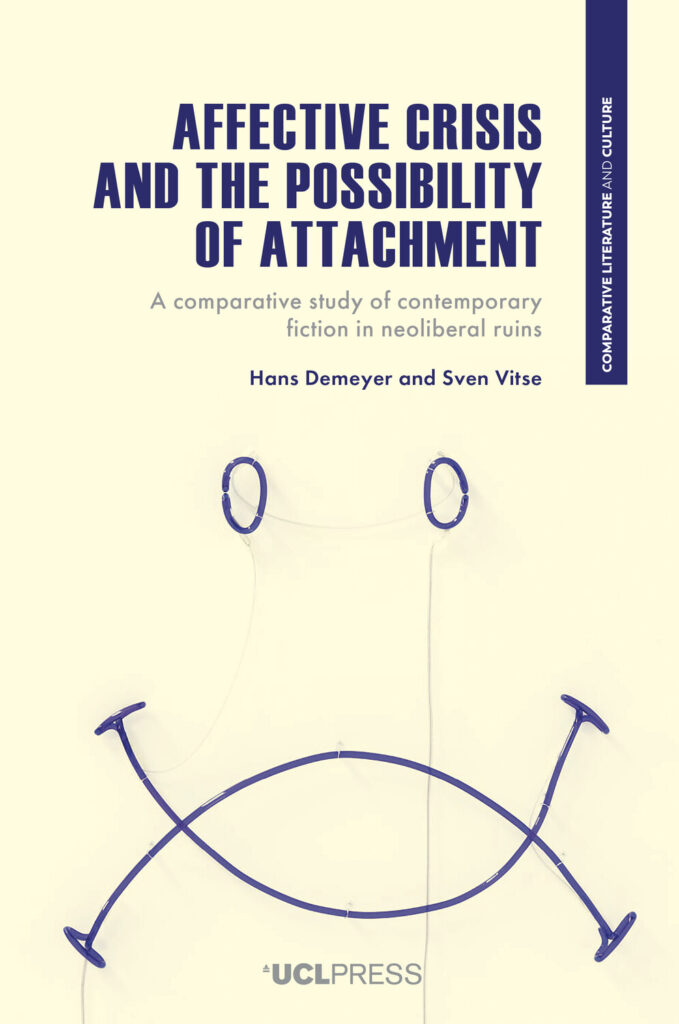
Affective Crisis and the Possibility of Attachment
A comparative study of contemporary fiction in neoliberal ruins
Series: Comparative Literature and Culture
Publication date: April 21, 2026
Open Access PDF ISBN: 9781806550418
Paperback ISBN: 9781806550401
Hardback ISBN: 9781806550395
Trim size (hardback): 23.4cm x 15.6cm
Trim size (paperback): 23.4cm x 15.6cm

Affective Crisis and the Possibility of Attachment offers a comparative critical study of contemporary fiction. It intervenes in discussions about contemporary fiction in its literary-historical relationship to postmodernism and in its socio-historical relationship to neoliberalism. It argues that contemporary literature is dominated by affective questions that are rooted in, but not fully subsumed by, neoliberalism: ‘How can I experience reality (as real)?’; ‘How can I feel attached to someone?’ This ‘affective dominant’ signals a diachronical shift from postmodernist fiction’s pervasive epistemological and ontological reflections to a focus on questions of an affective nature in contemporary fiction. It also offers a perspective on contemporary fiction as mediating neoliberalism’s double-edged dynamics of commodifying affective experience while privatising collective experience.
The book argues that contemporary fiction develops emergent mediations of neoliberal dynamics, with the affective crises the latter yield. It studies this affective crisis in relation to central themes as identity and climate crisis, and through prevalent contemporary genres as autofiction and coming-of-age narratives. The book explores a transnational corpus, including authors Heike Geissler, Ben Lerner, Édouard Louis, Valeria Luiselli, Ling Ma, Lieke Marsman, Mohamed Mbougar Sarr, Niña Weijers and Alejandro Zambra, amongst others.